Leaf Application Fertilizers for Healthier, Stronger Crops
Understanding Leaf Application Fertilizers: Benefits and Types
- Understanding Leaf Application Fertilizers: Benefits and Types
- How to Use Leaf Application Fertilizers Effectively: Best Practices?
- Comparing Leaf Application Fertilizers with Soil Fertilizers: Choosing the Right Approach
- Procurement Guide: How to Buy Leaf Application Fertilizers for Your Business?
- Future Trends and Innovations in Leaf Application Fertilizers
- Conclusion
- FAQ
- Partner with Sciground for Superior Foliar Nutrition Solutions
- References
Leaf application fertilizers are a major advance in modern crop nutrition because they deliver nutrients directly to plants through their leaves rather than just through their roots. This method guarantees fast absorption, fixing shortages in hours instead of days. This makes it very useful during critical growth stages or when soil conditions make nutrients unavailable. Foliar feeding is becoming more and more important to farmers, ranchers, and agricultural traders as a way to make crops stronger, increase yields, and deal with environmental stress. This makes these goods vital in modern agriculture.
Understanding Leaf Application Fertilizers: Benefits and Types
What Makes Foliar Fertilizers Unique?
Foliar nutrition bypasses the roots; nutrients enter through the stomata and leaf layers. This route works especially well when roots can't get to important nutrients because the soil is too salty, compacted, or has an uneven pH level. Foliar sprays help plants that aren't getting enough nutrients right away, and you can often see the results within 48 to 72 hours. This approach is different from traditional fertilizer methods, which need bacterial activity and good soil conditions.
Core Benefits That Matter to Your Operation
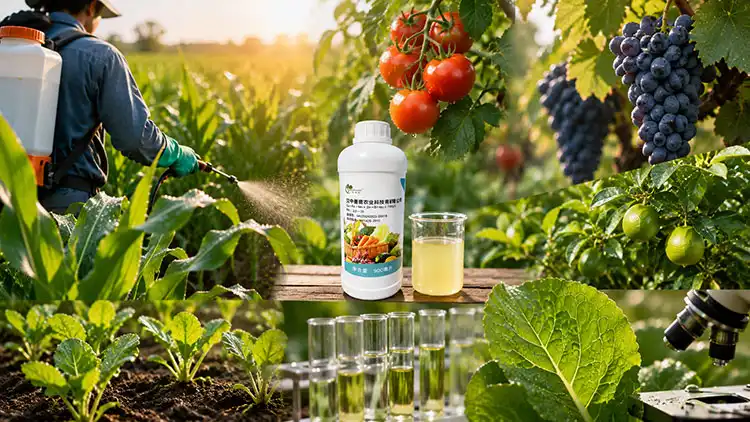
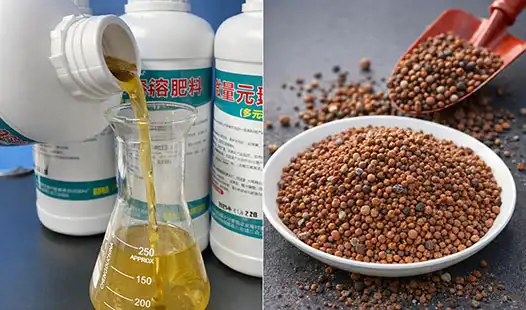
Sciground's multi-element foliar spraying of fertilizer provides all the benefits that modern farming needs. The mixture makes foliar nutrient intake quick and effective, making sure plants get the nutrients they need right when they need them. The product changes the pH of the soil in both ways, which makes it ideal for microbes to work and for roots to grow. This improves the health and growth of plants as a whole. The fertilizer makes plants more resistant to stress and diseases. It also loosens up the soil, which raises the crop's growth potential and improves its quality. These benefits have a direct effect on practical gains. When cold, wet spring soils make it hard for corn fields to get zinc, applying zinc to the leaves of the plants quickly restores normal growth patterns without waiting for the soil temperatures to rise. When there is dry stress in fruit fields, applying potassium to the leaves helps the trees keep their turgor pressure and keep growing fruit even though they can't take in as much water. These focused actions protect the value of crops and get the best return on investment.
Types and Formulations Available
Liquid forms of foliar fertilizer are most popular because they are easy to mix and spray evenly. Because these goods dissolve in water, they can be used with any spray tools, so you don't need to buy special application systems. Concentrated liquids are easier to move and store than ready-to-use solutions, which saves money on shipping costs and room. Powder formulations last longer on the shelf and weigh less when shipped, which makes them appealing to sellers who serve farming areas far away. When mixed according to the directions on the box, good powder products work just like liquids, but they're cheaper when bought in bulk. Which format to use (liquid or powder) depends on how the product will be stored, how often it will be used, and how well it works with other tools.
Businesses that want to get organic approval or use fewer synthetic sources, like organic products made from plant extracts, amino acids, and natural minerals. A lot of the time, these goods contain bioactive compounds and peptides that do more than just restore nutrients in plants' defense systems. Chemical mixtures with chelated micronutrients and easily available macronutrients work quickly and reliably in high-intensity production systems where time is key to making money.
Specialized Solutions for Specific Crop Needs
Micronutrient leaf application fertilizers feed plants that are growing in rocky or high-pH soils what they need. Foliar uses of specific micronutrients have a big effect on iron chlorosis in soybeans, manganese deficiency in wheat, and boron deficiency in alfalfa. Chelated forms with EDTA, DTPA, or EDDHA carriers keep sensitive parts from oxidizing and make sure they reach to leaf tissue that is biologically active.
Peptide fertilizers use small pieces of low-molecular-weight proteins that quickly pass through the leaf layers when the plant is under a lot of stress. When there is damage from hail, frost, or herbicides, peptide treatments start up metabolic processes that have been stopped and speed up tissue repair. These specialized goods are especially useful in high-value veggie and fruit farms where preventing crop loss is worth the extra cost of inputs.
Amino acid nutrients give plants the building blocks they need to make proteins without having to change artificial nitrogen, which takes a lot of energy. During important reproductive stages like flowering in tomatoes, grain fill in corn, and fruit set in apples, amino acid foliar feeding helps plants produce their highest yields by getting rid of biochemical bottlenecks that happen with regular fertilization programs.
How to Use Leaf Application Fertilizers Effectively: Best Practices?
Timing Applications for Maximum Nutrient Uptake
For foliar feeding to work, it needs to be timed with the crop's growth cycle and the weather. Applying the spray solution early in the morning or late at night keeps it from evaporating and gives the solution more time to reach the leaves. During these times, stomata stay open, which makes it easier for nutrients to get into the leaf cells. Applying in the middle of the day when it's hot and sunny speeds up drying and lowers absorption effectiveness, losing product and reducing its usefulness.
The best return from foliar treatments depends on the stage of growth. During vegetative growth stages, nitrogen-rich products help leaves grow and increase their ability to make food through photosynthesis. For blooming, pollination, and fruit growth, reproductive stages need a lot of phosphorus and potassium. Micronutrient treatments work best when there is a lot of growth and the soil can't keep up with the demand.
How often you apply it relies on the type of crop, how easily nutrients move through plants, and your output goals. Nutrients that don't move, like calcium and boron, need to be applied more than once as new growth appears during the growing season. Mobile elements like nitrogen and potassium move around inside plants, so they only need to be applied less often to keep amounts at the right level. Two to four foliar applications spread 10 to 14 days apart during key growth windows make up a normal program.
Equipment Selection and Spraying Techniques
The best way to get nutrients to plants is to use the right spraying tools to make sure of even coverage. Choosing the right nozzle changes the size of the droplets. Medium-sized droplets are best for controlling flow and covering the leaf's surface. Fine mists make it more likely that water will move and evaporate, while large drops bounce off of leaves and don't stick to surfaces. Keeping the spray pressure at the right level, usually between 40 and 60 PSI, creates consistent bubble patterns.
Spray amount is just as important as tip choice. Enough liquid must be present to fully wet the leaf surfaces without causing runoff, which wastes product and lowers efficiency. It takes 15 to 30 gallons of foliar fertilizer per acre for field crops and up to 100 gallons per acre for tree fruit tops that are very dense. Checking the calibration before each application season keeps mistakes from being expensive.
Recognizing Deficiency Symptoms That Signal Foliar Feeding Needs
Foliar fertilizer application is guided by visual analysis. When plants don't have enough nitrogen, the leaves turn yellow all over, beginning with the older leaves and moving up as the nitrogen moves to the younger growth. Lack of phosphorus causes dark green or purple coloring, which is especially clear when it is cool in the spring. Potassium shortage shows up as fringe leaf scorching on older leaves, which means that potassium isn't getting to parts of the plant that are growing.
Micronutrient deficits show specific signs that help guide focused treatments. In high-pH soils, iron chlorosis often leads to bright yellow leaves with green streaks on new growth. When corn plants don't get enough zinc, the internodes get shorter, and the leaves get small and narrow. In fruit trees, the shoots become shorter and take on a rosette shape. When there isn't enough manganese, young leaves get interveinal chlorosis, and when there isn't enough boron, the growing point dies, and the roots become flat.
Tissue testing backs up what you see and keeps you from drawing the wrong conclusion. Lab tests on leaf samples taken at the right time of growth give exact information on nutrient concentrations, which lets you choose the right recipe. Visual tracking and regular tissue testing work together to create a responsive nutrient management system that maintains optimal crop nutrition throughout the season.
Real-World Performance in Commercial Operations
A corn farmer in Iowa saw a 12-bushel rise in yield after applying zinc to the leaves three times during early vegetative growth on high-pH areas. The $18 per acre investment paid off with $60 more in grain value, which is a clear case of economic reason. In the same way, a California tomato farm cut fruit cracking by 30% by consistently applying calcium to the leaves of the plants during times of rapid fruit growth. These methods kept the high quality needed for the premium market.
During veraison, vineyard owners in Washington State often use spray potassium and amino acid mixes to help fruit sugar build up and color develop. This method always results in higher quality wine grapes, which can fetch higher prices that are much higher than the costs of production. These well-researched success stories show that foliar feeding is a method for making money, not an extra cost.
Comparing Leaf Application Fertilizers with Soil Fertilizers: Choosing the Right Approach
Complementary Strategies for Optimal Crop Nutrition
Soil fertilization sets the standard level of nutrients that are available and builds up stores that meet growth needs all season long. Applying nitrogen, phosphorus, and potassium in bands or over a large area sets the stage for healthy plant growth. But soil chemistry, microbial activity, and environmental factors can change when and how much nutrients are released, which can lead to brief shortages during important growth times.
Leaf application fertilizers solve these short-term problems at precise times that soil treatments can't achieve. When plants need more nutrients than they can take in, foliar sprays give them extra nutrients right away, without waiting for the roots to absorb and move those nutrients. This supplemental method combines keeping the soil fertile with responsive foliar action to get the best results for both cost-effectiveness and crop performance.
Efficiency and Speed of Nutrient Delivery
Foliar-applied nutrients start working in plants within hours, while soil-applied elements might need days or weeks to get to deficient cells. This speed advantage is very important during times of rapid growth, when delays can lower the end yield potential. Foliar feeding is like crop insurance because it protects your investment in yield during extreme weather or sudden stress events that hurt root function.
It is common for leaves to absorb more micronutrients than soil does. This is especially true for micronutrients that tend to settle or precipitate in some types of soil. In rocky soils, roots can only take up about 5% of the iron that is there, but aerial iron chelates can absorb 60–80% of that iron. This big difference lowers the total amount of nutrients that plants need while still giving them enough nutrition.
Organic Versus Chemical Formulations
Organic spray fertilizers made from plant products, seaweed, or recycled materials give plants slow-release nutrition and bioactive substances that help them grow. While providing measurable yield reactions, these goods support goals for soil health and meet the standards for organic certification. The nutrient release pattern is softer, which lowers the risk of leaf burn and lets higher application rates be used when needed.
Chemical foliar fertilizers with concentrated salts and synthetic chelates give exact, reliable results that are needed in industrial production systems. These goods give known amounts of nutrients, which lets you accurately plan for crop nutrition budgets and fertilizer costs. Integrated pest control programs let you mix fungicides and insecticides in the same tank, which cuts down on treatment trips and labor costs.
Brand Considerations for B2B Procurement
Well-known suppliers like Yara and Haifa maintain huge study files that back up their product suggestions for different crops and weather situations. These businesses give technical support services that help procurement managers fix performance problems and make application standards work better. Consistency in the product between lots makes sure that the results are stable over multiple application seasons. This lowers the risk of crop damage or bad reactions.
Regional companies, like Sciground, often make unique mixtures that are tailored to the soil and crop needs in a certain area. Because we are close to areas where crops are grown, we can provide quick technical support and open shipping times that big international companies don't always have. Having connections with makers who know about the problems that come up in a region's farming makes the supply chain more stable and gives you access to new recipe technologies.
Procurement Guide: How to Buy Leaf Application Fertilizers for Your Business?
Evaluating Cost Efficiency and Value Metrics
The price per kilogram is a good starting place for comparing, but the real value comes from the cost per acre or cost per unit yield growth. If a good spray fertilizer consistently increases yields by 10%, it is worth the extra money per unit compared to cheaper products that only slightly improve yields. When you do a total cost study, you have to look at things like application work, tool use, and the possible protection of crop value during times of stress.
When you buy in bulk, you save money on each item while still making sure you have enough for the whole season. A lot of sellers offer savings of more than 15% to 20% on pallet or truckload orders. Cost cuts are important, but procurement managers also have to think about how much space is needed, how long products last, and how much capital is locked up in inventory. Setting up yearly purchase deals with orders every three months is the best way to get the best prices and handle your working capital.
Supplier Reliability and Quality Assurance
Foliar fertilizer programs only work if the quality of the products stays high. Reliable providers have strict quality control procedures that check each production batch for correct nutrient quantity, stable pH, and the absence of contaminants. Before making big purchases, make sure you get records of analysis that show that the analysis was done correctly. If a supplier doesn't want to provide good paperwork, they might cut corners that hurt the safety and performance of the crop.
Delivery dependability affects how well operations run and how well crops can be protected. For weather-dependent application times to work, fertilizer must be available exactly when the weather allows spreading. Businesses need suppliers with area warehouses or guaranteed arrival times of 48 to 72 hours so they can respond quickly. Check the transportation skills of the company before signing the contract to avoid costly delays during important application times.
Sourcing Options for Different Business Models
Wholesale wholesalers work with groups and dealers who need a wide range of products for different types of crops. These middlemen bring together goods from many makers, making it easier for stores that serve a wide range of customers to buy what they need. The trade-off is a few higher prices compared to buying directly from the maker, but a wider range and more efficient shipping make up for it.
Large farms, original equipment manufacturers (OEMs) that use fertilizers as part of full crop plans, and distributors that focus on certain crop groups can all benefit from direct manufacturer relationships. Manufacturing partners, such as Sciground at [email protected], offer technical training, the creation of unique formulations, and competitive prices based on lower delivery costs. Our team from the Northwest Academy of Agricultural Sciences has been doing study for more than 20 years, so we can make sure that our products are made with the most up-to-date agricultural science.
Trusted online platforms give you more ways to find products, especially for common basic mixes that may not be easy to find in your area. But procurement pros need to make sure the product is real and the seller is legitimate before buying agricultural inputs through online outlets they don't know much about. There are more major crop safety risks from fake or mislabeled goods than there seem to be cost savings.
Negotiation Strategies That Reduce Total Acquisition Costs
Get reasonable quotes from several providers to get an idea of what the prices will be. Being open about competing offers pushes suppliers to improve their bids, but price alone shouldn't be the only factor used to choose a seller. Long-term supply deals that cover more than one growing season allow for deeper discounts because sellers can predict their income and spend less on marketing.
When you pay quickly or buy early in the season, you can often get extra savings of 2 to 5 percent. Suppliers like loyal customers who help keep cash flow stable during the busy holiday season. When you buy foliar fertilizer and other crop inputs from the same seller, you may be able to get better deals on all of them, which can lower the total cost of your business.
Building Strategic Supplier Partnerships
Changing key providers from routine vendors to strategic partners gives you more than just lower costs; it gives you a competitive edge. Preferred seller programs give you early access to new formulation technologies, priority when there aren't enough supplies, and better expert help for fixing problems with your applications. These partnerships grow when both sides are honest with each other, hold each other accountable for their work, and understand that the success of the grower is good for everyone.
Every year, business reviews with main providers find ways to make product performance, delivery speed, and cost management better. Working together to solve problems makes relationships stronger and makes sure that suppliers can meet the changing needs of operations. Suppliers' goals and procurement goals are aligned by multi-year contracts with performance rewards. This creates stable supply lines that support long-term growth.
Future Trends and Innovations in Leaf Application Fertilizers
Advanced Formulation Technologies
Slow-release spray fertilizers with polymer coats or organic complexing agents make nutrients available for longer after just one application. These innovations lower the number of times that need to be applied while still providing enough nutrients for long growth periods. Controlled-release technology works especially well for crops that have long blooming windows, like tomatoes, peppers, and cucurbits, where regular foliar feeding plans can't keep up with the constant demand for nutrients.
Multi-nutrient mixes that include bioactive substances, micronutrients, and macronutrients in one mixture make application easier and make sure that nutrition is balanced. Instead of mixing multiple goods in one tank, full foliar fertilizers give plants all the nutrients they need in the best amounts. To make formulations that get the most out of synergistic effects, our study team is always looking at how nutrients interact with each other and how fast they are absorbed.
Precision Agriculture Integration
Foliar fertilization is being added more and more to digital farm tools that handle crops as a whole. Remote sensing technologies find patterns of nutrient shortage in fields. This sets off tailored variable-rate spray applications that meet specific needs. This precise method gets rid of blanket uses of nutrients that aren't needed, which cuts costs while improving inputs where lack of them limits crop potential.
To make personalized suggestions for foliar feeding, prescription mapping combines information from tissue tests, output history, and soil fertility. Based on the properties of the field zone, automated systems can even change the amounts of nutrients used in real time while they are being applied. With this level of accuracy made possible by technology, foliar seeding goes from being an art to a science. It also gives a clear return on investment by helping with decision-making based on data.
Sustainability and Regulatory Developments
More attention to the environment is pushing people to use organic and lower-risk spray fertilizers. Products made from organic sources that can be used again and again and that contain recyclable carrier chemicals help reach sustainability goals while still being useful for farming. Regulatory systems around the world are favoring low-impact agricultural inputs more and more. This gives makers who invest in developing eco-friendly formulations a market edge.
Carbon footprint reduction programs look at how fertilizer is made and try to find methods that use the least amount of energy and produce the fewest greenhouse gases. As big food companies expect sustainable sourcing from their suppliers, farmers who use crop nutrition methods that are good for the environment become preferred vendors. Procurement managers who are looking to the future should look at credentials for sustainability along with usual cost and performance measures.
Staying Competitive Through Innovation Adoption
Agricultural companies that keep an eye on new technologies and change their ways of doing things to match keep their effectiveness and crop quality ahead of the competition. Access to cutting-edge developments is made possible by going to industry conferences, taking part in university extension programs, and keeping in touch with new sources like Sciground. Our company motto, "virtue as the foundation, cultivating blessings far and wide," says that we will work with farmers and do thorough study to advance farming science.
When you train your staff on new ways to use modern foliar fertilizer products and how to handle nutrients, you can get more out of them. The most complex mixtures only work at their best when used according to the best standards. Getting everyone in your company up to speed on technology makes it possible to take advantage of new ideas as they come up.
Conclusion
Modern food production needs every competitive edge it can get, and foliar fertilization is a tried-and-true way to improve quality, output, and plant resistance to stress. The rapid release of nutrients through leaf surfaces works with regular soil fertility programs to make sure that plants get the nutrients they need exactly when they need them, even if the soil isn't ideal or there are problems in the environment. The best way to get the most out of your leaf application fertilizer investment is to use specialized formulas that target specific deficits or the needs of each growth stage. As technology in agriculture improves, businesses that use both precise application methods and environmentally friendly formulations will be able to continue to be successful. By working with dependable providers who offer both high-quality goods and technical know-how, you can make sure that your business stays up to date on the latest innovations in agriculture. Leading operations differ from those that simply maintain the status quo because they are committed to continuously improving crop feeding methods.
FAQ
How frequently should foliar fertilizers be applied for maximum effectiveness?
How often you apply it relies on the type of fertilizer, the nutrients you want to use, and the growing factors. Most programs have between two and four applications, which are sent 10 to 14 days apart during important growth stages. Mobile elements, like nitrogen, don't need to be applied as often as nutrients that don't move, like calcium. Keep an eye on the results of tissue tests and sight signs to find the best time to schedule your surgery.
Can foliar feeding completely replace soil fertilization programs?
No, treatments to the leaves don't replace soil fertilizer programs; they add to them. Soil fertilization stores up important nutrients that crops need all season long, while foliar feeding fills in brief gaps or speeds up growth during times when roots can't meet needs. When two or more methods are used together, they produce better results than either one alone.
Which crops benefit most from foliar fertilizer applications?
Fruit trees, grapes, tomatoes, peppers, and specialty veggies are some of the high-value crops that react very well because they need a lot of nutrients. But field crops like corn, soybeans, and wheat also react in important ways, especially when micronutrient deficits lower output potential. The economic reason rests on the value of the crop and the possible rise in growth, not just the type of crop.
Partner with Sciground for Superior Foliar Nutrition Solutions
Sciground uses cutting-edge formulation science and real-world agricultural knowledge to make leaf-application fertilizers that always do better in a wide range of production settings. Our multi-element foliar spraying fertilizer covers all nutritional needs while also improving soil health and stress tolerance. This means that a single proven product can help crops in many ways. With 20 years of experience researching fertilizers, Professor Liang Dejun and our team from the Northwest Academy of Agricultural Sciences can solve real-world farming problems with the scientific accuracy of a university. As a manufacturer of leaf-application fertilizers, we can give you reasonable prices on large orders, expert help all through the growing season, and formulations that can be changed to fit your crops and conditions. Get in touch with us at [email protected] to discuss the specific needs of your business and find out how our quality spray fertilizers can help you make more money and improve the performance of your crops.
References
1. Fernández, V., & Brown, P. H. (2013). "From plant surface to plant metabolism: the uncertain fate of foliar-applied nutrients." Frontiers in Plant Science, 4, 289.
2. Fageria, N. K., Filho, M. P. B., Moreira, A., & Guimarães, C. M. (2009). "Foliar fertilization of crop plants." Journal of Plant Nutrition, 32(6), 1044-1064.
3. Kannan, S. (2010). "Foliar fertilization for sustainable crop production." In Genetic Engineering, Biofertilization, Soil Quality, and Organic Farming (pp. 371-402). Springer, Dordrecht.
4. Havlin, J. L., Tisdale, S. L., Nelson, W. L., & Beaton, J. D. (2014). "Soil Fertility and Fertilizers: An Introduction to Nutrient Management." Pearson Education, 8th Edition.
5. Oosterhuis, D. M., Loka, D. A., Kawakami, E. M., & Pettigrew, W. T. (2014). "The physiology of potassium in crop production." Advances in Agronomy, 126, 203-233.
6. Fageria, N. K., & Stone, L. F. (2008). "Micronutrient deficiency problems in South America." In Micronutrient Deficiencies in Global Crop Production (pp. 245-266). Springer, Dordrecht.

Sciground
Shanrangde, in collaboration with a team of experts from the former Academy of Agricultural Sciences, focuses on developing patented organic fertilizers, including those specifically formulated for Corydalis rhizome. Chief expert Professor Liang Dejun, with over 20 years of industry experience, provides one-stop technical guidance from site selection to field management, helping farmers increase production and income.
Formulated by the original expert team from the Academy of Agricultural Sciences · Focused on organic nutrients specifically for crops
Contact us now to customize a green nutrition solution for your farmland.
Recommended Blog
Micronutrient Water-Soluble Fertilizer vs. General Liquid Fertilizer
Key Benefits of Silybum marianum Specialized Organic Fertilizer
Micronutrient Water-Soluble Fertilizer vs. Granular Fertilizer
Can Fruit Tree Organic Fertilizer Improve Soil Health Long Term?