Organic Fertilizer For Fruit Trees
Features
What is Organic Fertilizer For Fruit Trees?
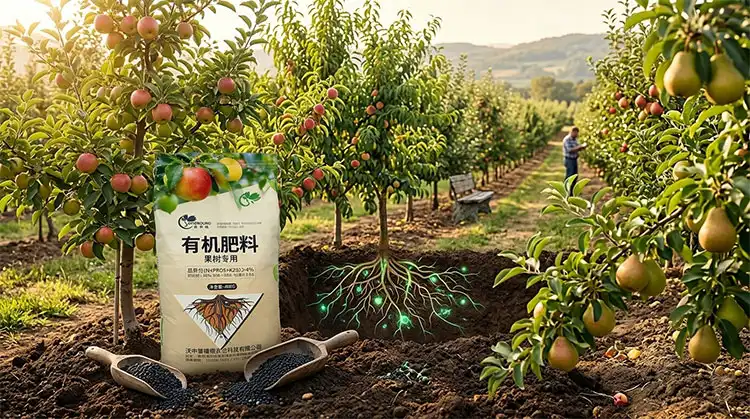
Organic Fertilizer For Fruit Trees is a nutrient-enhanced soil amendment based on natural biological materials (plant residues, animal manure, composted organic matter, and humic substances) that are intended to enhance long-term growth, fruit production, and soil condition in fruit-bearing trees. In comparison to synthetic fertilizers, which offer quick but temporary nutrient supply, organic fertilizers supply nutrients over an extended period of time through the breakdown of microorganisms, which is more in line with the seasonal growth patterns and perennial behavior of fruit trees. They generally provide proportional amounts of both essential macronutrients, such as nitrogen to grow vegetatively, phosphorus to grow roots and flower, and potassium to produce quality fruit, and include secondary nutrients and trace elements to promote enzymatic action and metabolism in the tree overall. An important property is that it helps to improve the structure of the soil by increasing the level of organic matter, which raises the aeration, water retention, and root penetration in orchard soils. The existence of positive microorganisms also leads to nutrient cycling as they can decompose organic compounds into plant-utilizable forms, in addition to creating a healthier rhizosphere environment. This biological activity over time contributes to supporting better root systems, efficiency of nutrient uptake, and resistance to environmental stressors like drought or temperature variations.
Features
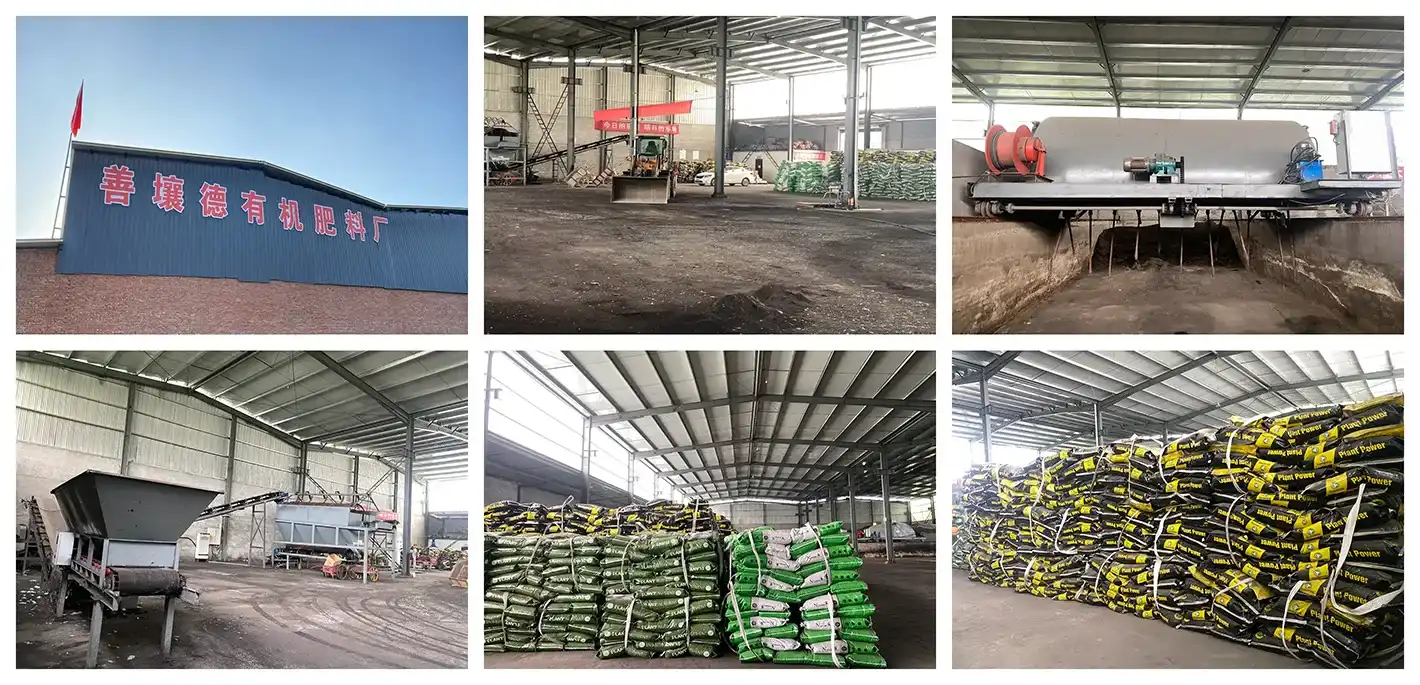
Natural Fertilizer For Fruit Trees is a specialized organic fertilizer that is the result of a sophisticated scientific process that combines high-quality agricultural by-products like crop straw and livestock manure with regulated microbial fermentation and refined technology of activating humic substances to produce a stable, efficient, and highly bioavailable product. Throughout the manufacturing process, organic raw materials are completely fermented under controlled conditions with beneficial microorganisms, efficiently breaking down complex organic matter, removing toxic residues, and stabilizing nutrients and biological activity. Meanwhile, mineral-derived humic acid is subjected to rigorous physical and chemical purification to extract solvent impurities, and to additional processing to a controlled reaction of salinization to convert it into water-soluble humate, overcoming the natural constraint of the insolubility of humic acid, and increasing its absorption efficiency in orchard soils markedly. The resulting product is a combination of active humic compounds, fermented organic matter, and microbial metabolites into a single system that enhances the soil structure, organic matter content, and water-holding capacity and increases beneficial microbial activity in the rhizosphere, as well as stronger root growth and improved nutrient uptake in fruit trees.
To learn more about our products and services, please contact us at [email protected]. Let us help you nurture your farm with the power of science-based organic nutrition.
Benefits
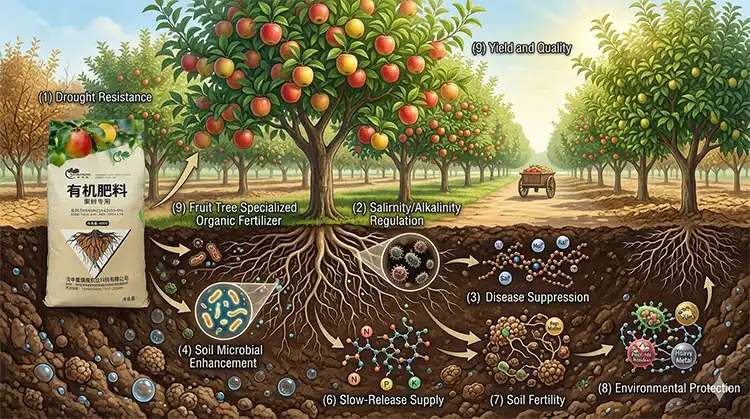
1. Drought Resistance Improvement:
Improves soil aggregation by humic materials and microorganisms, maximizing water storage and minimizing water loss, enabling fruit trees to stay consistently active in dry seasons.
2. Salinity and Alkalinity Regulation:
Humic acid binds harmful salt ions and neutralizes excessive alkalinity in soil, lowers salt stress, and enhances root-zone balance to increase nutrient uptake.
3. Disease Suppression Effect:
Enhance the beneficial microbial populations, which suppress soil-borne pathogens, curbing cases of root rot, wilt, and other prevalent orchard diseases.
4. Soil Microbial Enhancement:
Promotes the development of useful microorganisms, enhancing the biological activity of the soil, and contributing to a healthier rhizosphere ecosystem.
5. Growth Promotion:
Root growth and nutrient uptake are enhanced by bioactive humic components, which result in an increase in tree vigor, green leaves, and photosynthetic efficiency.
6. Slow-Release Nutrient Supply:
The organic structure of the molecules serves to store and slow the release of nutrients like nitrogen, phosphorus, and potassium, making Best Organic Fertilizer For Fruit Trees more efficient and minimizing the loss of nutrients.
7. Soil Fertility Enhancement:
Enhances organic content and soil texture, providing long-term soil conditioning benefits similar to large amounts of conventional organic manure.
8. Environmental Protection Function:
Sequesters and traps pesticide residues and heavy metals, making them less mobile and less harmful to the environment, leading to cleaner and safer soil.
9. Yield and Quality Improvement:
Enhances more stable fruit production, enhancing yield, uniformity of fruits, and the overall quality of crops through balanced nutrition and enhanced soil health.
Application Scope and Usage
1. Application Scope:
This organic manure is very diverse and can be applied to numerous agricultural and horticultural crops, both field crops (wheat, corn, rice, and cotton) and orchard crops (including watermelon and fruit trees). It can also be used in the cultivation of vegetables, asparagus, daylily, tea plants, forage grasses, medicinal herbs, nursery seedlings, and landscape flowers, and is therefore applicable to large-scale farmland or intensive horticultural systems.
2. Base and Topdressing Application Rate:
It may be applied as a base fertilizer and as topdressing with an average application rate of 100-150 kg/mu. It may be used together with 10-15 kg of urea in low-fertility soils in order to enhance nitrogen nutrition and enhance the initial growth performance.
3. Young Fruit Trees (Below 5 Years):
In the case of young trees in the establishment phase, 1-2 kg/plant is recommended. This aids in the growth of roots, formation of canopies, and premature accumulation of nutrients.
4. Medium-Age Fruit Trees (5 Years and Above):
In case of mature trees that have no heavy fruit load, the dosage is raised to 3-5 kg/plant, which assists in maintaining the balance of vegetative growth and soil fertility around the root zone.
5. Bearing Fruit Trees (6–10 Years):
In trees that are in the productive phase, the rate of application is 5-10 kg/plant, which provides an adequate supply of nutrients to facilitate flowering, fruit set, and fruit growth without compromising soil health in the long term.
6. Application Method:
Generally, it is advised to use the Organic Fruit Fertilizer through the application of the ring or strip in the root zone and then cover it with soil and irrigate where possible to maximize the efficiency of nutrient utilization and root uptake.
Corporate Certifications
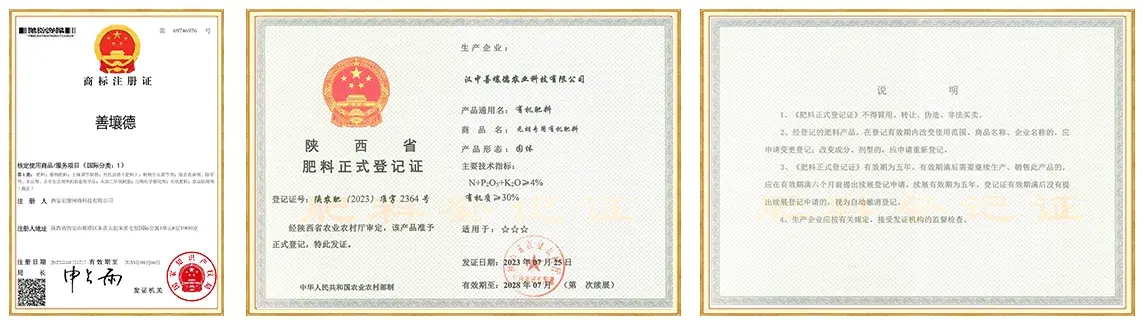
Quality Assurance Center
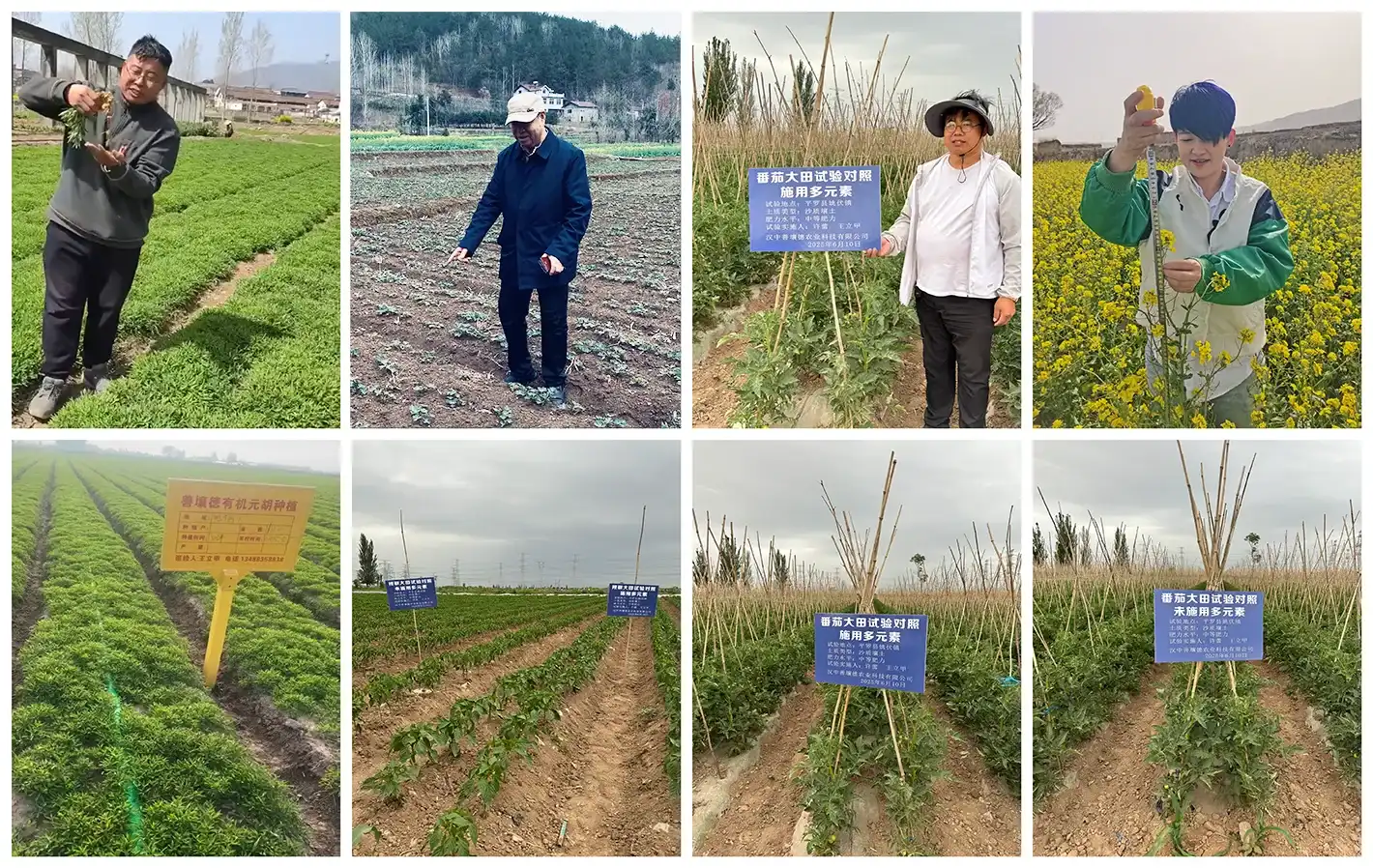
Sciground Manufacturing

Sciground
Shanrangde, in collaboration with a team of experts from the former Academy of Agricultural Sciences, focuses on developing patented organic fertilizers, including those specifically formulated for Corydalis rhizome. Chief expert Professor Liang Dejun, with over 20 years of industry experience, provides one-stop technical guidance from site selection to field management, helping farmers increase production and income.
Formulated by the original expert team from the Academy of Agricultural Sciences · Focused on organic nutrients specifically for crops
Contact us now to customize a green nutrition solution for your farmland.
Recommended Blog
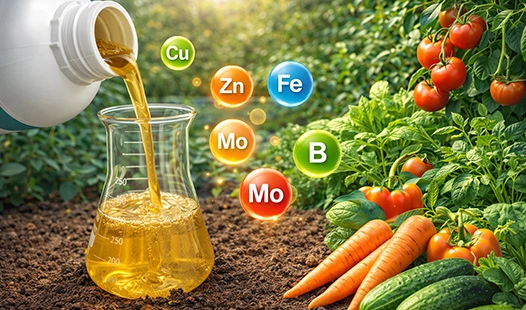
What Are Micronutrient Fertilizers and Why Are They Important for Plants?
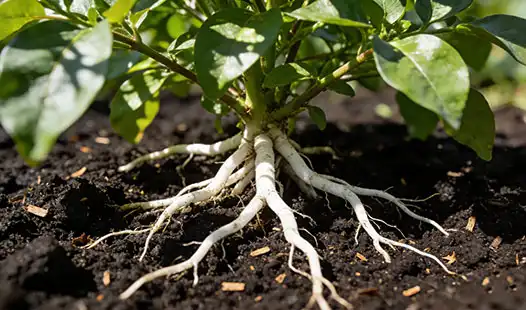
How Do Organic Fertilizers Benefit Soil Health and Plant Growth?
How Does Balanced Liquid Fertilizer Help Plants Resist Disease?
Why Should You Use Balanced Liquid Fertilizer for Your Plants?
How to Increase Gastrodia Root Quality with Specialized Fertilizer?