How to Maximize Results with Leaf Application Fertilizers?
Understanding Leaf Application Fertilizers and Their Advantages
- Understanding Leaf Application Fertilizers and Their Advantages
- Core Principles to Maximize Efficacy of Leaf Application Fertilizers
- Comparing Leaf Application Fertilizers with Soil Fertilizers: What B2B Buyers Need to Know?
- Practical Solutions: How to Incorporate Leaf Application Fertilizers into Commercial Crop Management
- Conclusion
- FAQ
- Partner with Sciground for Premium Foliar Fertilizer Solutions
- References
To get the best results from leaf application fertilizers, you need to use them at the right time, with the right mix of nutrients, and in the best way. Foliar feeding sends nutrients directly to plants through their leaves, so they can be absorbed quickly (within hours) instead of taking days to do so through the soil. Applying during busy growth stages, choosing multi-element formulations that meet the needs of each crop, and using the right spray methods in the early morning or late evening, when stomata are still open, are all important for success. Knowing these basics will help industrial growers get measured gains in crop quality, stress tolerance, and yield.
Understanding Leaf Application Fertilizers and Their Advantages
Farmers and ranchers across the United States are increasingly using foliar feeding, a revolutionary way to feed crops. Unlike regular soil amendments, these special mixtures give important nutrients straight to plant leaves, getting around many of the problems that come with feeding plants from the roots up.
What Makes Foliar Fertilizers Unique?
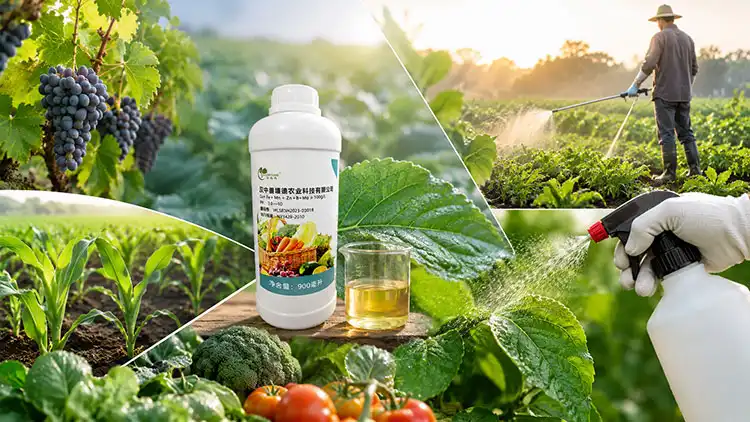
Leaf application fertilizers come in two different forms: liquid solutions and water-soluble powders that are made to be sprayed on plants. These fertilizers have macro and micronutrients in forms that are readily available for plants to receive through their leaves and stomatal holes. Multi-element foliar spraying fertilizers provide full nutritional packages that address multiple deficits at the same time and encourage healthy plant growth. Specialized leaf structures make the soaking process work. Even though plant cuticles are meant to keep water in, they have tiny holes in them that let nutrients get in. Stomata, which are tiny pores that control gas exchange, are the main entry points when the climate is ideal. Soil chemistry problems like pH lockout, compaction, or microbial competition can make it difficult for roots to get nutrients. This direct delivery method circumvents these problems.
Advantages Over Traditional Methods
Agricultural universities have found that leaves take up nutrients 8 to 20 times faster than dirt does. This quick uptake is very helpful when crops need nutrition right away, like during critical growth times. Foliar action at the right time is very helpful for fruit trees when they bloom, veggie crops when they start to reproduce, and broadacre cereals when the flag leaf starts to grow.
Organic spray fertilizers are becoming more and more popular because they are better for the environment. These bio-based products help with safe farming efforts while still working well. Products made from fermented plant matter, seaweed extracts, and amino acid complexes are healthy for the land, improve the health of the land, and lower chemical waste worries that are important for organic certification programs.
Foliar feeding is especially useful for commercial greenhouses because it can fix "hidden hunger"—micronutrient deficits that growers can't see until yield losses happen. Spraying tomatoes with calcium stops blossom-end rot, and spraying oats with zinc during the growing stages makes the grains more protein-rich. You can see a clear return on your investment with these focused treatments, which are faster and more accurate than soil applications.
Core Principles to Maximize Efficacy of Leaf Application Fertilizers
To get the most out of foliar feeding programs, you need to pay attention to several linked factors. When buying things for businesses, procurement managers need to know these rules so they can choose the right goods and application methods.
Timing Applications for Optimal Nutrient Uptake
Key ideas to get the most out of leaf application fertilizers:
The crop's growth stage affects how much nutrition it needs and how well it can absorb it. When you apply aerial fertilizers when cells are actively dividing and expanding, the nutrients support yield formation instead of vegetative bulk. Using amino acid-based foliar sprays during veraison—the color change time when grapes quickly store sugars—has amazing benefits in viticulture. This smart timing raises the Brix level and makes the fruit firmer while preventing heat stress damage.
When foliar feeding happens at the flag-leaf stage for wheat or the V6 stage for corn, the plants react in wonderful ways. Root uptake often can't keep up with nutritional needs during these stages of exponential growth, especially in sustainable agriculture systems that are switching from traditional methods. Foliar nitrogen and zinc additions fill this gap, increasing protein content and food weight without affecting soil health goals.
The environment during treatment greatly affects absorption rates. When temperatures are cooler and humidity is higher, stomata remain open longer. This is when treatments made early in the morning or late at night work best. Do not spray during the middle of the day, right before it rains, or when the wind is blowing faster than 5 mph. These safety measures keep nutrients from being lost through evaporation, wash-off, or spread, and they also lower the risk of phytotoxicity.
Nutrient Composition and Application Rates
To choose the right nutrient amounts, you need to know what your crops need and how fertile the soil is already. Multi-element formulas that include important micronutrients (iron, manganese, zinc, boron) along with appropriate macronutrients (nitrogen, phosphorus, and potassium) meet all of a person's nutritional needs. Organic spray fertilizers with amino acids improve nutrient chelation, which makes uptake more efficient, especially in alkaline soils that are popular in western farming areas.
How much to use depends on the type of food, its stage of growth, and the concentration of the product. Commercial vegetable farms usually use 2 to 4 quarts of liquid concentrates that have been blended in 15 to 30 gallons of water per acre. For orchards, you may need to use larger amounts to cover the whole canopy. When doing small-scale tests before full-field application, you should always follow the manufacturer's instructions. Too much application costs money and time and can cause leaf burn. Not enough applications don't give any benefits that can be seen.
Water quality changes how well spray solutions work. High calcium or magnesium amounts in hard water can cause nutrients to settle to the bottom, making them less available. Solution stability is maintained by checking the water sources and using the right buffers or acidifiers. Testing for compatibility stops unwanted reactions from happening when you mix multiple goods in the same tank. This is a popular way to combine pest control and nutritional sprays.
Application Techniques and Safety Protocols
When you calibrate your spray tools correctly, you get even coverage and exact rates. Nozzle choice affects droplet size; smaller drops touch the leaf surface better but also make drift more likely. For most foliar treatments, flat-fan or hollow-cone nozzles work well, giving even patterns across a wide range of crop tops. Keeping the pressure between 40 and 60 PSI helps droplets form best without making them bounce off of leaf surfaces too much.
Coverage is more important than number. When you can, spray both the top and bottom of the leaves. This is because many plants receive nutrients better through the stomata on the bottom of the leaves. Adjuvants, which are detergents that lower surface tension, make spreading and sticking better, especially on slippery leaf surfaces. When used according to the advice on the package, non-ionic surfactants at a strength of 0.25% improve performance without hurting plants.
When you take safety into account, both applicators and crops are safe. Wearing gloves, eye protection, and the right clothes keeps your skin from touching concentrated products. To avoid cross-contamination, make sure to rinse spray tools well between uses. Keep track of program success and make sure that all applications are properly documented by writing down the dates, rates, and products used for each one.
Comparing Leaf Application Fertilizers with Soil Fertilizers: What B2B Buyers Need to Know?
Knowing the differences between foliar and soil nutrition programs helps buying workers make smart choices about where to buy leaf application fertilizers that are best for both the budget and the crops.
Nutrient Delivery Speed and Plant Response
The main difference between these methods is how fast they serve. Before roots can absorb fertilizers, they have to dissolve in wet soil and then manage a lot of complicated chemical and biological interactions. It could take days or weeks for this process to happen, based on the temperature, wetness, pH, and activity of microbes in the soil. Foliar-applied minerals, on the other hand, start to be absorbed within hours, and the plant's reaction is usually visible within 3 to 7 days.
Because of this difference in speed, foliar feeding is the best way to address serious weaknesses or help plants get through times of stress. Foliar sprays provide timely nutritional support when root function is limited by drought, tissue damage from hail needs to be repaired quickly, or late-season grain fill needs more nitrogen. But plant programs don't replace soil fertility pillars; they work with them. Base nutrient needs still depend on how healthy the land is and what plans are in place to improve it.
Foliar treatments usually meet 5 to 10% of a crop's total nutrient needs, according to research from land-grant colleges. This extra role is most helpful for micronutrients that plants need in small amounts but that are very important for enzyme activity and stress tolerance. Foliar sprays of iron, manganese, and zinc fix deficits faster and cheaper than soil applications. This phenomenon is especially true in high-pH soils where these elements aren't readily available even though the total amounts are high enough.
Logistical and Cost Considerations
When making decisions about what to buy, you have to think about how it will be handled and stored. Liquid foliar nutrients are convenient because they don't need to be mixed, but they need to be stored in a climate-controlled space so they don't freeze or break down. When big companies buy 275-gallon totes in bulk, the cost per acre goes down, but they need more money up front. Water-soluble powder products have a longer shelf life and lower shipping costs because they are more concentrated, but they need special tools to dissolve and good water sources.
Leaf application fertilizers are better for rural areas because they are easier to transport. A single box of concentrated liquid or powder can feed hundreds of acres, while tons of grainy soil amendments would need to be used to feed the same amount of land. This efficiency is especially beneficial for ranches that are making changes to pastures that are spread out or fruit trees in hilly areas where access to equipment makes regular fertilization hard.
A study of return on investment (ROI) shows that foliar programs provide more value when growers cultivate high-value crops. When vineyards spend $40 to $80 per acre on targeted foliar applications during key growth stages, they often see yield and quality gains of $500 to $1,200 per acre. This is because the sugar content goes up, the color develops better, and the grapes store better. Commodity crops have smaller but still positive returns, especially when spray treatments stop yield losses caused by deficiencies during weather stress.
Quality Assurance Through Certified Products
Choosing reliable providers ensures consistent products and compliance with the rules. Organic production methods can use certified organic goods that meet OMRI (Organic Materials Review Institute) standards. This creates possibilities for high-end markets. State fertilizer registration and guaranteed analysis sign checks on claims about nutrient content, which keeps buyers from buying goods that don't work or aren't what they say they are.
When you work with well-known manufacturers, you get expert help that you can't get from generic sources. Companies like Sciground, which are backed by study teams from agricultural science schools, make personalized suggestions based on the needs and growing conditions of each crop. This knowledge helps buyers choose the best goods from portfolios with many elements without having to use expensive trial-and-error methods.
Certifications also apply to products that are not healthy. Products made with ISO quality control systems show that the production process is reliable. Heavy metal tests by a third party improve soil and crop safety. This is especially important for businesses that want to get food safety licenses. Requesting certificates of analysis for each production lot ensures the product you receive meets your needs, which is especially important when buying in bulk.
Practical Solutions: How to Incorporate Leaf Application Fertilizers into Commercial Crop Management
Using these tools as part of larger crop management plans is necessary for foliar feeding programs to work well. Applications in the real world show that these methods have clear benefits in many areas of agriculture.
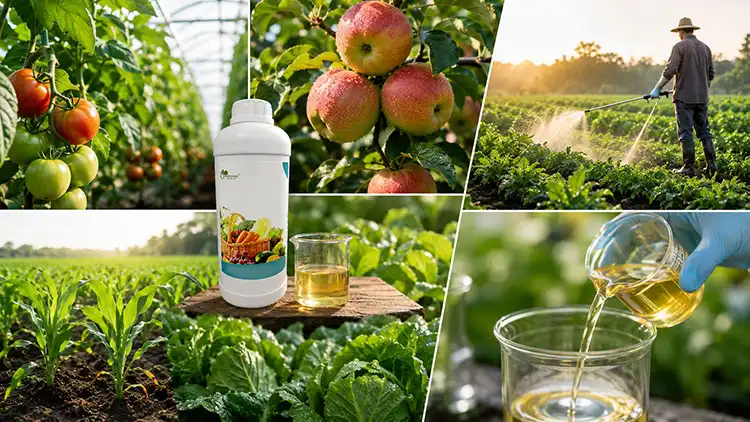
How to use leaf application fertilizers in commercial crop management: real-world examples.
High-Value Crop Case Studies
In soilless growth surfaces, tomato greenhouse businesses have to address special nutritional problems. Low cation exchange capacity makes it harder for nutrients to buffer, and high humidity makes it harder for nutrients to move through evaporation. Growers get around these problems by spraying calcium and potassium mixtures directly on growing fruit and the leaves around it every two weeks. In controlled study trials, this method cut the number of cases of blossom-end rot by 60% and made the fruit firmer and longer-lasting.
In Washington State, apple and pear farms use foliar feeding after harvest to build up carbohydrate stores that will help the plants bloom next year. Using nitrogen and potassium mixtures with amino acid complexes for four weeks after harvest raised return bloom by 15% and made plants more resistant to cold. This smart timing takes advantage of the fact that photosynthesis and nutrient movement can continue after the leaves fall off, giving benefits that can't be matched in the spring.
Midwest grain farmers who use green methods will have short-term drops in yields while the soil's health changes. Adding extra nutrients to the leaves during the reproductive stages fills in nutritional gaps while the soil's biology grows back. In multi-year university studies, corn that got nitrogen, sulfur, and zinc applied to the leaves at the V6 and VT stages had average yields that were 12 bushels per acre higher than corn that wasn't treated. This extra nutrition kept the farm profitable during the changeover, allowing them to continue investing in long-term soil improvement.
Product Recommendations for Commercial Operations
Our multi-element foliar spraying fertilizers meet the needs of a wide range of crops by combining nutrients in scientifically designed packages. These items help plants get nutrients quickly and effectively through their leaves, which also improves their general health and growth. The balanced makeup makes plants more resistant to stress and diseases, which is especially important in growing areas across North America, where the weather is often uncertain.
Before talking about specific product benefits, it's helpful to know that formulation flexibility helps match answers to practical needs. These improved nutrients have the following main benefits:
- Rapid nutrient uptake: Multi-element complexes get into leaf tissues within hours, giving plants instant nutritional support during key growth times when soil uptake isn't enough.
- Comprehensive nutrition: Balanced amounts of macro and micronutrients handle multiple deficiencies at once, so you don't have to use as many different products and pay less for work.
- Ability to control pH: Special mixtures help change the pH of the soil in both ways when they reach the root zone through leaf drip or soil contact, making it easier for plants to get all the nutrients they need.
- Stress tolerance improvement: Mixtures of amino acids and micronutrients boost plant defenses, making them more resistant to stress, heat, and disease.
- Soil structure benefits: When used with organic soil amendments in integrated programs, these items help break up the soil's structure, boost microbial activity, and make it easier for water to soak in.
All of these benefits help with output problems that make it especially challenging for business farms to make money. The better stress response is especially useful now that climate change makes operating risks higher.
Selecting Trusted Suppliers
Working with reputable suppliers guarantees stable product quality and quick expert help. For companies that show they have a lot of knowledge through study partnerships and innovations that are covered by patents, look for them. When factories follow strict quality control procedures and environmental standards, they make sure that every batch of their goods is reliable.
When application windows are small, supply chain stability is important. When weather conditions make opportunity times short, suppliers who keep enough product on hand and quick operations can avoid costly delays. Technical consulting services help figure out why certain things are happening, change programs to adapt to new situations, and make processes work better based on observations made in the field.
Credentials for sustainability are becoming more and more important in buying decisions. Suppliers who are dedicated to advancing organic farming, using natural resources wisely, and minimizing their effect on the environment are in line with market trends toward production that is more eco-friendly. These relationships set up operations to meet the changing needs of retailers and customer tastes while also supporting goals for responsible stewardship.
Conclusion
To get the best results from foliar feeding programs, you need to know what the products can do, how to apply them, when, and how to work with knowledgeable sellers. These extra feeding methods provide quick nutritional reactions that work well with soil fertility foundations, especially during important growth stages or times of stress when regular methods don't work. When commercial growers use combined crop management systems with targeted foliar applications, food growth, quality, and stress tolerance all get better. To be successful, you need to choose the right multi-element formulations, use them when the conditions are best, and work with experienced sellers who can give you both quality goods and professional advice. Foliar feeding programs are useful tools for reaching production goals while also caring for the environment as farming moves toward more precise nutrition and environmentally friendly methods.
FAQ
What application rate should I use for leaf application fertilizers?
How much to use depends on the type of food, its stage of growth, and the concentration of the product. Most liquid spray fertilizers should be mixed with 15 to 30 gallons of water and used at a rate of 2 to 4 quarts per acre. The amount of powder used is usually between 1 and 3 pounds per acre. Always start with what the maker says, do small-scale tests, and make changes based on how the plant reacts. Too much application can burn the leaves, and too little application doesn't seem to have any real effects. The amount of water doesn't matter as much as covering the whole canopy, especially the lower leaf surfaces where the density of stomata is usually higher than the density at the upper surfaces.
Can foliar application fertilizers take the place of soil fertilizers completely?
Foliar treatments should not be used instead of soil fertilization programs. It is true that foliar feeding quickly restores nutrients and effectively fixes deficits, but it only meets 5 to 10% of a crop's overall nutrient needs. Soil nutrients make the soil more fertile over time, support healthy microbial communities, and provide basic nutrition all through the growth season. The best programs combine strong control of soil health with planned applications to the leaves during key growth windows or times of stress. This all-around method improves both the short-term success of crops and the long-term productivity of the land.
What certifications should I verify when purchasing leaf application fertilizers in bulk?
Check your state's fertilizer license to make sure it's allowed to sell in your area. Ask for guaranteed analysis statements that back up promises about nutrient levels. Organic businesses need goods that are listed by the OMRI or proof that they are certified organic by the state. Check the papers of analysis that show the results of the heavy metal tests and prove that the batch is consistent. ISO quality management standards show that the production process is reliable. Also, make sure the seller has the right liability protection and follows the rules in the safety data sheet. These checks keep you safe from low-quality goods and make sure that your whole business follows the rules.
Partner with Sciground for Premium Foliar Fertilizer Solutions
Work with Sciground to get the best solutions for fertilizing leaves.
Sciground sells foliar nutrition products that are backed by studies and are made to meet the needs of industrial agriculture. Our multi-element foliar spraying fertilizers work quickly to deliver nutrients and provide many health benefits for plants. They were created with the help of experts from the Northwest Academy of Agricultural Sciences who have studied organic fertilizers for more than 20 years. As a producer of specialized leaf application fertilizers, we offer personalized technical advice, from choosing the best place to plant to making the most of the product. Because we care about sustainable farming and have a history of helping farmers succeed, we are the perfect partner for businesses that want reliable, high-performance crop feeding programs. Email our team at [email protected] to discuss your crop's needs and get product suggestions that maximize your investment.
References
1. Fernández, V., & Brown, P. H. (2013). "From plant surface to plant metabolism: the uncertain fate of foliar-applied nutrients." Frontiers in Plant Science, 4, 289-302.
2. Kannan, S. (2010). "Foliar fertilization for sustainable crop production." Sustainable Agriculture Reviews, 4, 371-402.
3. Mengel, K., & Kirkby, E. A. (2012). "Principles of Plant Nutrition, Fifth Edition." International Potash Institute, Bern, Switzerland.
4. Oosterhuis, D. M., & Berkowitz, G. A. (1987). "Foliar fertilization of crop plants." Horticultural Reviews, 9, 235-263.
5. Reuveni, M., & Reuveni, R. (1998). "Foliar nutrition and plant disease control." European Journal of Plant Pathology, 104, 365-375.
6. Wojcik, P. (2004). "Uptake of mineral nutrients from foliar fertilization." Journal of Fruit and Ornamental Plant Research, 12, 201-218.

Sciground
Shanrangde, in collaboration with a team of experts from the former Academy of Agricultural Sciences, focuses on developing patented organic fertilizers, including those specifically formulated for Corydalis rhizome. Chief expert Professor Liang Dejun, with over 20 years of industry experience, provides one-stop technical guidance from site selection to field management, helping farmers increase production and income.
Formulated by the original expert team from the Academy of Agricultural Sciences · Focused on organic nutrients specifically for crops
Contact us now to customize a green nutrition solution for your farmland.
Recommended Blog
Can Multi Element Foliar Spraying Fertilizer Reduce Fertilizer Waste?
How to Apply Micronutrient Fertilizers Effectively?
Why Is Fertilizer Important for Cordydalis Tubers?
Can Cordydalis Tuber Organic Fertilizer Prevent Nutrient Deficiency?
Can Multi Element Foliar Spraying Fertilizer Reduce Fertilizer Waste?
How to Apply Micronutrient Fertilizers Effectively?
Why Is Fertilizer Important for Cordydalis Tubers?
Can Cordydalis Tuber Organic Fertilizer Prevent Nutrient Deficiency?
Can Multi Element Foliar Spraying Fertilizer Reduce Fertilizer Waste?
How to Apply Micronutrient Fertilizers Effectively?
Why Is Fertilizer Important for Cordydalis Tubers?
Can Cordydalis Tuber Organic Fertilizer Prevent Nutrient Deficiency?
Can Multi Element Foliar Spraying Fertilizer Reduce Fertilizer Waste?
How to Apply Micronutrient Fertilizers Effectively?
Why Is Fertilizer Important for Cordydalis Tubers?
Can Cordydalis Tuber Organic Fertilizer Prevent Nutrient Deficiency?