How Does a Fruit Tree Organic Fertilizer Manufacturer Support Organic Farming?
How Does a Fruit Tree Organic Fertilizer Manufacturer Support Organic Farming?
Understanding the Role of Organic Fertilizer Manufacturers in Organic Farming
- Understanding the Role of Organic Fertilizer Manufacturers in Organic Farming
- Key Components and Types of Organic Fertilizer for Fruit Trees Provided by Manufacturers
- How Manufacturers Support Effective Application and Yield Improvement
- Comparing Organic Fertilizer Manufacturers: How to Choose the Right Partner
- Future Trends in Organic Fertilizer Manufacturing Supporting Organic Fruit Farming
- Conclusion
- FAQ
- Partner with Sciground for Superior Fruit Tree Nutrition Solutions
- References
A Fruit Tree Organic Fertilizer Manufacturer is essential for long-term farm operations because they create specific nutrient mixes that bring life back to the soil, boost tree health, and improve fruit quality without using synthetic chemicals. These companies offer custom solutions that deal with issues like soil degradation, nutrient loss, and environmental concerns. They bridge the gap between old-fashioned farming knowledge and modern agricultural science. They give farmers and ranchers the tools they need to get better crops and protect the land for future generations through thorough study, approved production standards, and full technical support.
Understanding the Role of Organic Fertilizer Manufacturers in Organic Farming
There are many problems with growing fruit trees in a way that is good for the environment and for productivity. Constant cropping, relying on chemicals, and soil that is losing its natural nutrients all make things harder for people who run orchards. A Fruit Tree Organic Fertilizer Manufacturer deals with these problems head-on by making nutrient-rich products that are perfect for trees that bear fruit.
Addressing Soil Health and Fertility Challenges
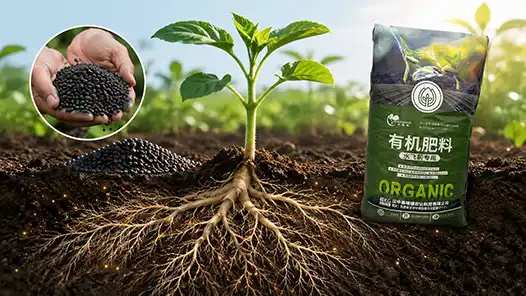
What makes trees profitable is what's below the ground. Conventional farming methods often kill off the soil's natural living things, making it hard and lacking in nutrients. Fruit Tree Organic Fertilizer Manufacturers come up with mixtures that bring back helpful microorganisms and minerals that the body needs. These goods fix the structure of the soil, make it better at holding water, and make environments that do well in the root zone. Universities that study agriculture have found that trees that use good organic fertilizers see a big increase in the amount of organic matter in the soil, usually by 15 to 30 percent within three growing seasons.
Enhancing Disease Resistance and Fruit Quality
In addition to making the earth better, Fruit Tree Organic Fertilizer Manufacturers work to improve the health of trees from the roots to the fruit. Their mixtures have chemicals in them that boost the body's natural defenses, making it less likely that common diseases like root rot and fungus infections will happen. The better mix of nutrients directly leads to better food qualities, such as more color, more sugar, and longer storage life. Commercial apple growers in Washington State have seen their yields rise by 20 to 25 percent after moving to organic fertilizers. The apples are also less likely to get diseases and are easier to sell.
Building Partnerships That Drive Results
Leading makers don't just sell goods; they also build long-term partnerships with farms all over the world. In these partnerships, both companies work together on field trials, make changes to the formulas based on customer needs, and provide ongoing expert advice. B2B clients get clear performance data, seasonal application calendars, and helpful support teams that know how to deal with the changing needs of their area. This level of involvement makes sure that investments in organic fertilizer pay off in terms of both crop quality and the long-term viability of the business.
Key Components and Types of Organic Fertilizer for Fruit Trees Provided by Manufacturers
How well an organic fertilizer works depends a lot on what it's made of and how it was made. Manufacturers with a good reputation pick their raw materials with care and use advanced processing methods to get the most nutrients and biological activity out of them.
Premium Ingredient Selection and Processing
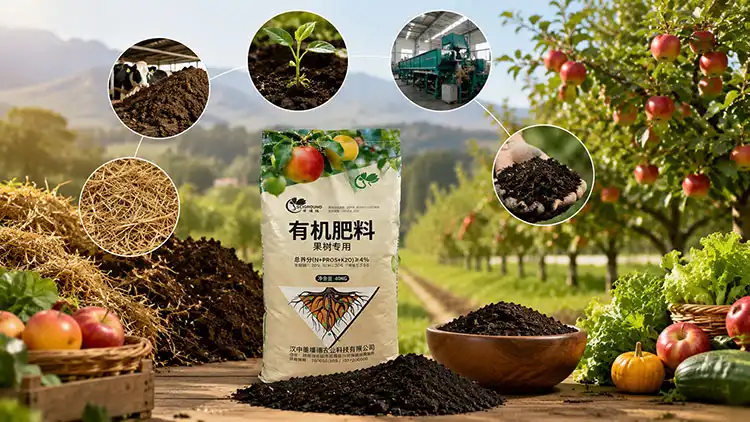
The best Fruit Tree Organic Fertilizer Manufacturers get their raw materials from good places, like peat moss, composted animal manure, and farm waste like straw powder. At Sciground, we use careful fermentation followed by high-temperature cleaning to make our products. This kills germs while leaving good microbes alone. Then, we add carefully measured trace elements like zinc, boron, and manganese to these roots to make them better. These are important nutrients that fruit trees need to flower and produce fruit properly. This multi-step process makes sure that every batch meets strict quality standards and maintains the biological diversity.
Diverse Product Formats for Flexible Application
Manufacturers offer different types of fertilizer because they know that different farms have different needs. Granular formulas provide slow-release nutrition that works well for base treatments while plants are dormant. During key growth stages, water-soluble goods allow fast delivery of nutrients through fertigation systems or foliar sprays. Bio-stimulant-rich choices have certain types of microbes that cover root zones and make it easier for plants to take in nutrients. Liquid fertilizers are useful for large-scale businesses that already have watering systems in place. Each format is used for different things in full orchard feeding plans. This gives growers the freedom to adapt applications to the needs of each tree and the needs of the season.
Certification Standards and Environmental Compliance
Organic fertilizer companies that you can trust keep their certifications up to date with groups like USDA Organic and ECOCERT. For these certifications, the sources of raw materials, the manufacturing methods, and the testing of the end product are all closely looked at. Compliance makes sure that fertilizers don't have any synthetic chemicals that aren't allowed and meet tight levels of heavy metals. When business-to-business sourcing managers work with certified makers, they lower their legal risk and can make more confident marketing claims about organic production methods. Responsible makers keep an eye on environmental measures like carbon footprint, water usage, and sustainable packaging, and make sure their operations are in line with the overall sustainability goals of the company.
How Manufacturers Support Effective Application and Yield Improvement
The quality of the product isn't enough to promise success in organic farming. The best makers offer a wide range of application advice and customization services that help customers get the most out of their fertilizer purchases.
Technical Guidance on Timing and Methods
Using the right methods and applying organic fertilizers at the right time has a huge effect on the results. Manufacturers who know a lot about agronomy can give you advice on when to apply the product based on the seasons and the trees' growth cycles. Before flowering, treatments help flower buds grow, and after harvesting, food restores nutrients that were lost during fruiting. Adding nutrients to the root zone during inactivity builds up nutrient stores, and applying nutrients to the leaves during active growth fills in any gaps right away. Our team at Sciground, led by Chief Expert Professor Liang Dejun, has been researching organic fertilizers for more than 20 years and has written thorough guidelines for many types of fruit. We do live broadcasts about how to grow crops and work with local agricultural education services on a daily basis to make sure farmers get hands-on training in the right way to apply the chemicals.
Customized Solutions for Specific Conditions
Different farms have different problems to deal with. The pH of the soil changes, the weather changes, and different types of trees have different nutrient needs. Modern Fruit Tree Organic Fertilizer Manufacturers offer customization services that let customers make formulas that work best in their own unique situations. Testing the soil shows what nutrients are already there and what nutrients are missing, so makers can make changes to their blends to account for this. In Florida, a citrus field needs different amounts of micronutrients than an apple crop in Michigan. When manufacturers invest in this level of tailoring, they help their customers avoid the loss and inefficiency of generic goods. This gives precision agriculture the benefits that are usually linked to synthetic fertilizer programs.
Data-Driven Performance Verification
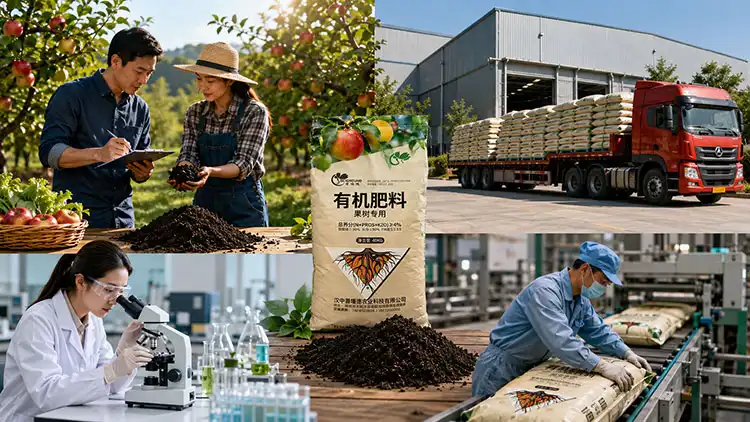
When two businesses deal with each other, trust comes from being honest and getting results. Before putting out new formulations, major makers try them in a lot of different labs and in a lot of different fields. They are open with possible partners about their success data, which includes studies on nutrient analysis, growth comparisons, and yield paperwork. At Sciground, we try our specialized fertilizers all the time in controlled environments and in industrial orchards. We keep track of how they improve soil biology, tree health, and fruit production. This method is based on facts and gives procurement workers faith that their investments will pay off. It also helps internal cases for switching to organic input programs.
Comparing Organic Fertilizer Manufacturers: How to Choose the Right Partner
There's more to choosing an organic fertilizer provider than just comparing prices. Strategic sellers look at a lot of different factors that affect how well a relationship will work right away and how valuable it will be in the long run.
Evaluating Certifications and Research Capabilities
Certifications are a basic way to make sure that a product is safe, but study investments are what set exceptional makers apart from commodity sellers. Find companies that have specialized research and development teams and a history of coming up with new ideas. Sciground works with experts from the Northwest Academy of Agricultural Sciences to create unique products like our fertilizers that are made to work with certain crops. At the moment, we're the only company in China that has patent approval for certain specialized organic fertilizers. This shows how committed we are to making farming technology better. Instead of just repackaging stock products, companies that share research results, attend academic conferences, and keep testing facilities in good shape show that they have real knowledge.
Assessing Production Capacity and Logistics
In agriculture, where time is very important, supply lines that you can count on are very important. Check out possible manufacturers' ability to make things, keep track of their goods, and connect with customers. Can they constantly meet your volume needs throughout the growing season? What is their wait time, and how many items do I need to buy to qualify? Sciground runs a 6,000-square-meter building with up-to-date tools that can quickly make a wide range of formulas. We use quality control procedures to make sure that each batch is the same, which is very important for crops that need stable nutrition profiles. Knowing how a Fruit Tree Organic Fertilizer Manufacturer runs their business can help keep supplies from going down during busy application times, when delays can have a big effect on returns.
Pricing Structures and Total Value Consideration
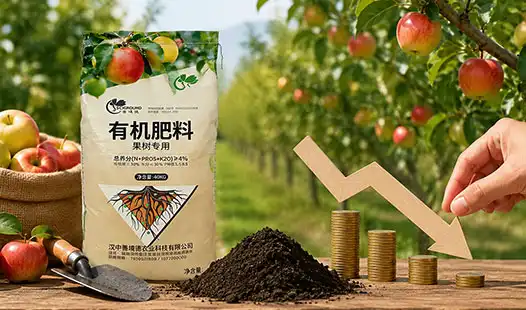
Total value is more than just cost per ton, even though the unit price is important. Think about the professional help that is available, the customization options, the shipping options, and the payment terms. As part of their service package, some makers offer agronomic advice. This is a good way for them to help with things like growth that would normally require hiring more experts. Figure out the real cost of ownership, which should include the cost of transport, storage, and application work. Products with more nutrients may cost more, but they need to be applied at lower rates, which lowers the costs of handling and spreading them. A full evaluation of value often shows that mid-priced goods made by responsive, highly advanced companies offer better returns than cheap options.
Future Trends in Organic Fertilizer Manufacturing Supporting Organic Fruit Farming
The organic fertilizer business is still changing quickly, thanks to both new scientific discoveries and the need to be environmentally friendly. Manufacturers who are ahead of the curve invest in new ideas that make their products work better while leaving smaller marks on the environment.
Advanced Microbial and Biochar Technologies
Next-generation organic fertilizers have complex microbial consortia in them. These are groups of bacteria and fungi that have been carefully chosen to work together to improve nitrogen cycling. These helpful creatures live in mutual relationships with the roots of fruit trees, which increases the trees' ability to gather nutrients. Biochar is a steady, carbon-rich substance made by controlled pyrolysis. It can be used to improve the soil and provide a home for microbes. When added to organic manure, biochar helps the soil hold on to water, stops nutrients from washing away, and gives long-lasting benefits to the structure of the soil. When a Fruit Tree Organic Fertilizer Manufacturer invests in these technologies, they can make goods that have benefits that last longer than just one season.
Circular Economy and Sustainability Integration
Forward-thinking companies that make organic fertilizer follow the principles of the circular economy by turning trash streams from farming and food preparation into useful inputs. This method keeps organic waste out of landfills and turns it into useful goods, ending nutrient loops in local food systems. At Sciground, we use food leftovers and manure from animals as our main raw materials. This way, we turn waste into resources that help build soil. Manufacturers are paying more attention to sustainable packaging, like using biodegradable bags and bulk shipping choices that cut down on plastic trash. Tracking and reducing carbon footprints helps factories follow global climate promises, which is something that institutional buyers with their own environmental requirements are becoming more and more interested in.
Traceability and Digital Integration
In today's business-to-business relationships, supply chains must be open and honest. Traceability methods are used by top Fruit Tree Organic Fertilizer Manufacturers to keep track of where the raw materials come from, how they are processed, and the results of quality control. Digital platforms let customers see paperwork related to a batch, check certifications, and keep an eye on packages in real time. Some companies make decision support tools that help farmers figure out the best time to apply based on weather forecasts and the stage of tree growth. These digital connections make things easier and provide the proof needed for checks of organic certification. More interaction between fertilizer suggestions and soil sensors, drone photos, and other data sources that help with nutrient management decisions is likely to happen as precision agriculture technologies become easier to access.
Conclusion
A specialized Fruit Tree Organic Fertilizer Manufacturer gives you a lot more than just bags of nutrients. They give you advice, a way to work together, and ways to make your farm profitable in the long term. These companies help with all parts of organic fruit production, from fixing up the soil and making it resistant to diseases to making unique formulas and giving expert advice. As the industry moves forward with new microbes, green economy ideas, and digital integration, partners with a lot of knowledge become more valuable. Choosing makers with proven certifications, research skills, and full support systems sets up farms for long-term success in a market that is becoming more focused on sustainability.
FAQ
What makes organic fertilizers better for fruit trees than synthetic options?
Organic fertilizers release nutrients slowly, which is how trees naturally take them in. This keeps nutrients from running off and polluting the environment. They make the soil better by increasing biological activity and soil structure. This makes root areas healthy in a way that synthetic fertilizers can't do. When fruit trees are fertilized with organic matter, they tend to be less likely to get diseases and produce better fruit that tastes better and lasts longer. Organic fertilizers have biological parts that keep the soil healthy from season to season, while synthetic choices only add nutrients temporarily and don't fix the problems that are causing the soil to break down in the first place.
How long does it take to see results from organic fertilizers?
Within 4 to 6 weeks of spraying, trees often start to grow stronger as nutrients become available and good bacteria settle in the root zones. Increases in yield that can be measured usually happen in the second growing season, when the soil's microbes are fully established, and nitrogen levels rise over time. After two to three years of regular use of organic fertilizer, the soil's structure gets a lot better, and the benefits last as long as organic practices are kept up.
Can I switch from synthetic to organic fertilizers immediately?
Planning is best when switching to organic fertilizers, but you don't have to wait a long time. Soil biology can develop over time with gradual changes, but many growers are able to make the switch right away, especially when they work with makers who offer transition help. You can expect a short time of change as the trees get used to the slower-release nutrition rhythms. Testing the soil before and after the shift helps makers make formulas that fix any short-term problems that come up during the adaptation phase.
Partner with Sciground for Superior Fruit Tree Nutrition Solutions
Sciground is ready to help you reach your goals of organic growing by providing you with scientifically advanced fertilizer mixes based on decades of study experience. As a well-known Fruit Tree Organic Fertilizer Manufacturer, we mix old-fashioned farming knowledge with cutting-edge biotechnology to make goods that improve the health of the earth, the strength of trees, and the quality of fruit. Our special mixtures, which we made with the Northwest Academy of Agricultural Sciences, are made to deal with the problems that different types of fruit trees and growing conditions bring. We make sure that every batch of our products works the same way thanks to our 3,500-square-meter production plant and strict quality control. We offer full expert help, including interpreting soil tests, giving advice on when to apply chemicals, and continuing to offer agronomic advice throughout the growing season. Sciground offers a variety of ways to place orders and dependable logistics, whether you're in charge of a business orchard, work as a dealer for multiple farms, or buy for agricultural delivery networks. Contact us today at [email protected] to discuss your specific requirements and discover how partnering with an experienced fruit tree organic fertilizer supplier can transform your operation's productivity and sustainability.
References
1. Chen, J.H. (2006). The combined use of chemical and organic fertilizers and/or biofertilizers for crop growth and soil fertility. International Workshop on Sustained Management of the Soil-Rhizosphere System for Efficient Crop Production and Fertilizer Use, 16, 1-11.
2. Doran, J.W., & Zeiss, M.R. (2000). Soil health and sustainability: managing the biotic component of soil quality. Applied Soil Ecology, 15(1), 3-11.
3. Mäder, P., Fliessbach, A., Dubois, D., Gunst, L., Fried, P., & Niggli, U. (2002). Soil fertility and biodiversity in organic farming. Science, 296(5573), 1694-1697.
4. Reganold, J.P., & Wachter, J.M. (2016). Organic agriculture in the twenty-first century. Nature Plants, 2(2), 15221.
5. Sullivan, P. (2003). Applying the principles of sustainable farming. National Sustainable Agriculture Information Service, Appropriate Technology Transfer for Rural Areas.
6. Stockdale, E.A., Lampkin, N.H., Hovi, M., Keatinge, R., Lennartsson, E.K., Macdonald, D.W., Padel, S., Tattersall, F.H., Wolfe, M.S., & Watson, C.A. (2001). Agronomic and environmental implications of organic farming systems. Advances in Agronomy, 70, 261-327.
Sciground
Shanrangde, in collaboration with a team of experts from the former Academy of Agricultural Sciences, focuses on developing patented organic fertilizers, including those specifically formulated for Corydalis rhizome. Chief expert Professor Liang Dejun, with over 20 years of industry experience, provides one-stop technical guidance from site selection to field management, helping farmers increase production and income.
Formulated by the original expert team from the Academy of Agricultural Sciences · Focused on organic nutrients specifically for crops
Contact us now to customize a green nutrition solution for your farmland.
Recommended Blog
Can Fruit Tree Organic Fertilizer Increase Fruit Size and Sweetness?
Can Silybum marianum Specialized Organic Fertilizer Prevent Nutrient Deficiency?
Is Organic fertilizer for fruit trees Safe for All Fruit Varieties?
Why Choose fruit tree fertilizer for Healthier Fruit Production?