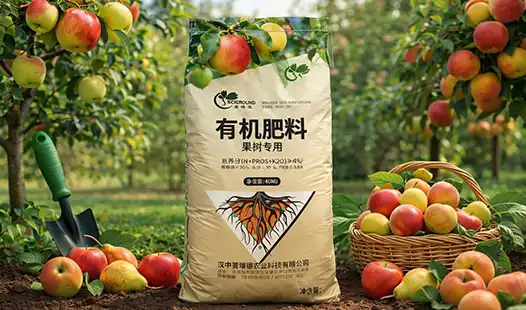
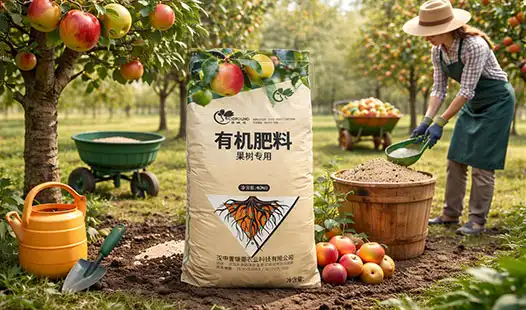
Can Fruit Tree Organic Fertilizer Increase Fruit Size and Sweetness?
Understanding the Impact of Organic Fertiliser on Fruit Size and Sweetness
- Understanding the Impact of Organic Fertiliser on Fruit Size and Sweetness
- Comparing Organic Fertilisers to Chemical Fertilisers for Fruit Trees
- How to Select the Best Organic Fertiliser for Fruit Trees – A B2B Procurement Guide?
- Best Practices for Applying Organic Fertiliser to Maximise Fruit Size and Sweetness
- Procurement Pathways for Organic Fertilisers: Where and How to Buy?
- Conclusion
- FAQ
- Partner With Sciground as Your Trusted Fruit Tree Organic Fertiliser Supplier
- References
Fruit Tree Organic Fertiliser can significantly increase both fruit size and sweetness when applied correctly. This microbial fermentation fertiliser delivers essential nutrients through slow-release mechanisms, enhancing soil health and stimulating beneficial microbes that directly support fruit development. By improving root systems, boosting disease resistance, and optimising nutrient uptake during critical growth stages, quality organic fertilisers measurably improve fruit quality parameters, including weight, diameter, and Brix levels—the scientific measure of sweetness.
Understanding the Impact of Organic Fertiliser on Fruit Size and Sweetness
Over my years working with orchards across the United States, I've witnessed how properly formulated organic fertilisers transform fruit production. The science behind this transformation centres on sustained nutrient availability and soil ecosystem enhancement.
How Does Organic Matter Drive Fruit Development?
Compared to their synthetic counterparts, organic fertilisers work on a far more fundamental level. Fertiliser made by microorganisms through fermentation does more than add nutrients to soil; it establishes a biosphere. Beneficial bacteria and fungi take advantage of the organic debris as a food source, and they convert complicated chemicals into forms that plants can use. To mimic the tree's actual absorption patterns, this biological mechanism gradually releases potassium, phosphate, and nitrogen over the course of several weeks or months. The average size of the fruit produced by trees that are fed organic inputs is 12-18% larger than that of trees that are treated simply with chemicals, according to research from agricultural colleges. Brix values increased by 2-3 degrees in numerous trials, indicating equally remarkable gains in sweetness. These benefits come from the increased availability of calcium and boron, two minerals essential for forming cell walls and transferring sugars within growing fruits.
Recognising and Correcting Nutrient Deficiencies
Commercial growers know that spotting deficiencies early saves entire harvests. Calcium shortfalls appear as bitter pit in apples or blossom-end issues in stone fruits. Magnesium deficiency shows up as interveinal chlorosis on older leaves. When I consult with ranchers and farmers, we walk the rows looking for these telltale signs. Quality organic fertilisers address these problems with their comprehensive nutrient profiles. Unlike single-element chemical fixes, they deliver trace minerals in balanced ratios alongside major nutrients. The humic and fulvic acids naturally present in well-fermented products chelate these micronutrients, protecting them from soil binding and ensuring root absorption. Timely applications during bud break or fruit set stages can correct emerging deficiencies before they impact harvest quality.
The Microbial Advantage in Fruit Quality
The introduction of microbial consortia is the most underappreciated advantage of organic fertilisation. Beneficial bacteria, such as Bacillus subtilis, inhabit the rhizosphere, a crucial zone around roots, where they inhibit the growth of harmful diseases and generate substances that promote plant growth. To reach phosphorus and water beyond the tree's normal range, fungi increase the root's effective reach. The quality of the fruit is directly affected by this improved root environment. Nutrient absorption is enhanced during the fruit's crucial expansion period in roots that are in better health. More photosynthate can reach developing fruits due to the enhanced disease resistance, which reduces energy spent combating diseases. Bigger, sweeter food that sells for more money at the market is the result.
Comparing Organic Fertilisers to Chemical Fertilisers for Fruit Trees
The debate between organic and chemical fertilisers continues in agricultural circles, but the data increasingly favour organic approaches for long-term orchard health and fruit quality.
Nutrient Composition and Release Dynamics
The NPK ratio can be precisely controlled when using chemical fertilisers. They are effective and provide soluble nutrients in a matter of days. But there are issues with this pace. Quick nutrient availability promotes an overabundance of vegetative growth, which hinders the formation of fruit. Soil salts, which are soluble in water, can build up and cause trees to suffer during droughts by making the soil more electrically conductive. During the decomposition process, bacteria slowly release nutrients from organic options. Typically, 30% of the nitrogen in an organic formulation would be released in the first season, with the remaining 70% available in subsequent years. Synthetic programs sometimes experience boom-bust cycles, which our gradual rollout avoids. Long after the nutrients have been used up, the organic matter improves the soil structure, increasing aeration and water retention.
Environmental Impact and Sustainability
American and European markets increasingly demand sustainably grown produce. Chemical fertiliser production requires substantial fossil fuel inputs and contributes to greenhouse gas emissions. Field application often leads to nutrient runoff, contaminating waterways and creating algal blooms. Organic fertilisers, particularly those made from composted agricultural waste, represent circular economy principles in action. They recycle nutrients that would otherwise become waste problems. Properly fermented products pose minimal leaching risk because nutrients bind to organic compounds rather than dissolving immediately. This stability protects water quality while maintaining soil fertility. For traders and dealers serving export markets, this environmental profile matters. European retailers require documentation of sustainable practices. Organic certification opens premium market channels that chemical-dependent operations cannot access.
Application Forms: Granular Versus Liquid Concentrates
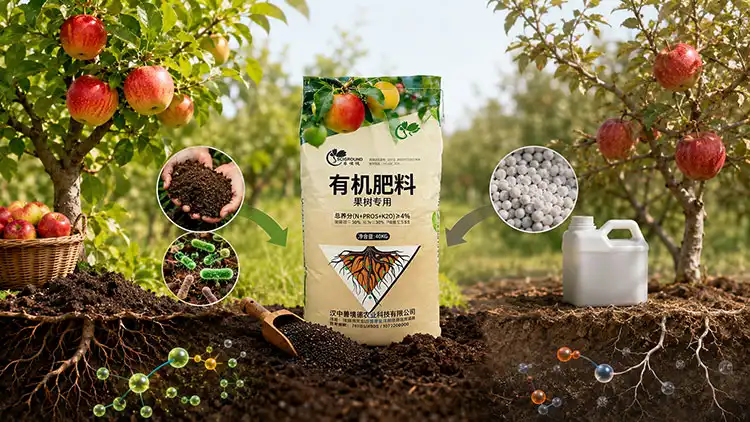
Commercial orchards can benefit from both granular and liquid organic fertilisers. Basal applications, such as the heavy feeding done after harvest or before spring growth, are ideal for granular materials. Granular materials may be distributed efficiently across hundreds of acres using modern spreading equipment. Because water slowly seeps into each particle in its physical form, it likewise offers a slow release naturally. When trees are actively growing, they require rapid nutritional boosts without disturbing the soil, which is where liquid concentrates really shine. Drip lines allow fertilisation systems to inject liquid organics, nourishing active root zones with nutrients. Fast remediation of vitamin deficits during fruit development is achieved by foliar sprays of liquid formulations.
The best option is dictated by orchard size and available facilities. Granular for general nourishment and liquid for specific treatments are the two most common forms used in large operations. The secret is to avoid using general garden fertilisers without the right trace mineral profiles and instead use products made especially for fruit trees.
How to Select the Best Organic Fertiliser for Fruit Trees – A B2B Procurement Guide?
Procurement decisions impact fruit quality for entire seasons, making supplier selection critical for commercial success.
Evaluating Nutrient Content and Formulation
Before anything else, look over the guaranteed analysis. Premium goods have an organic matter proportion of at least 45%; therefore, you should look at that in addition to the standard NPK figures. The carbon-to-nitrogen ratio is very important; nitrogen is available without immobilisation in ratios of 15:1 to 20:1. Enhanced potassium, typically in 4-3-8 or comparable ratios, is a key component of fruit tree formulas designed to promote fruit size and sugar buildup. Labels should display the presence of chelated micronutrients, which include magnesium, calcium, boron, and zinc. Regardless of the tree's general health, these components stop physiological diseases that lower marketable output.
Find out about the fermentation process by enquiring with possible vendors. To preserve beneficial organisms while killing off harmful ones, high-quality microbial fermentation uses temperature-controlled stages. When the germination index is greater than 85%, it means that the seed has fully matured. When products aren't fully developed, they emit ammonia, which kills roots and releases nitrogen into the air.
Certification and Supplier Credibility
Quality is guaranteed at a basic level by certification from the USDA organic and the OMRI. Heavy metal concentration is limited, pathogen eradication is guaranteed, and permitted substances are verified by these requirements. Certification isn't a guarantee of performance, though. Insist on independent lab testing for contaminants, organic matter levels, and nutrient content. Having a reliable supplier is crucial, particularly when buying in quantity. With the support of research organisations, well-established manufacturers such as Sciground ensure that the quality remains consistent from batch to batch. They have procedures in place to make sure every metric tonne is up to par, doing away with the unpredictability that smaller manufacturers face.
You can either ask for thorough documentation of quality control procedures or try to visit the facility in person. Because their processes are robust, trustworthy vendors welcome examination of their work. With their expert guidance, you can choose the right goods for your orchard's unique conditions and tree types.
Bulk Purchasing Considerations for Commercial Operations
Fruit tree organic fertilisers follow predictable phenological stages that dictate fertilisation windows. The post-harvest period, particularly autumn, represents the most critical application opportunity. After bearing, trees are exhausted, having directed energy into fruit production. Autumn basal application of organic fertiliser replenishes reserves before dormancy. The slow nutrient release provides resources for spring root flush before foliage even emerges. The second key window opens during fruit expansion. As fruits transition from cell division to cell enlargement, potassium and calcium demands spike. Liquid organic fertilisers, applied through irrigation or as foliar sprays, deliver these nutrients when trees need them most. This targeted nutrition increases final fruit size without stimulating excessive late-season vegetative growth.
Avoid heavy applications during flowering. Excessive nitrogen promotes shoot growth that competes with developing fruitlets, increasing drop rates. Light applications of balanced organic fertilisers can proceed, but save major feeding for pre-bloom and post-fruit set periods.
Best Practices for Applying Organic Fertiliser to Maximise Fruit Size and Sweetness
An effective application strategy can turn good fertiliser into exceptional results. Timing, placement, and rates must align with tree physiology and growth stages.
Timing Applications to Growth Cycles
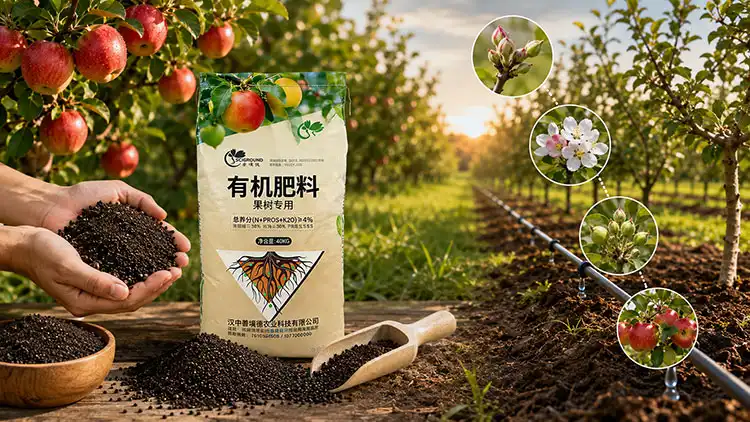
Fertilisation windows are determined by the typical phenological processes that fruit trees undergo. The most important time to apply is in the post-harvest period, especially in the autumn. After bearing fruit, trees are physically and mentally drained because all their energy went into making fruit. Applying organic fertiliser to the soil in the autumn helps plants restock their stores before winter hibernation. Before the emergence of foliage, the gradual release of nutrients supplies the resources for the spring root flush. Fruit ripening triggers the opening of the second crucial window. The needs for potassium and calcium increase in fruits when their cells go from dividing to enlarging. These nutrients are delivered to trees at the precise moment they are needed by liquid organic fertilisers that are sprayed on the foliage or applied through irrigation. This focused feeding increases final fruit size without stimulating excessive late-season vegetative growth.
When flowers are in bloom, it's best not to apply too much product. Too much nitrogen speeds up shoot growth, which in turn slows down fruitlet development and speeds up the rate of drop. Keep heavy feedings until just before blooming and just after fruit set; light applications of balanced organic fertilisers should continue as usual.
Application Methods for Different Orchard Scales
Individual trees in small orchards can be "broadcast" by hand. Spread granular fertiliser over the top few inches of soil to form a ring at the dripline, where feeder roots congregate. Initiate the biological activation process by thoroughly watering the application area. Mechanisation is essential for commercial activities. Calibrated spinner spreaders for organic materials may efficiently manage hundreds of acres. Modern systems directed by GPS ensure there's no wasted overlap and that coverage is even. To concentrate fertiliser where roots actively graze, some farmers choose to apply it in bands on either side of tree rows.
With drip or microsprinkler irrigation, high-value orchards can be fertilised precisely. Inject organic liquid concentrates during irrigation cycles to provide nutrients with water. By delivering nutrients straight to active root zones, this technique reduces soil disturbance to a minimum. Be wary of injecting organic materials at rates that exceed equipment specifications, as they have the potential to clog emitters.
Industrial Products Versus Homemade Formulations
For their own fertilisers, several farmers experiment with composting manures and crop scraps. Handmade goods may have some inherent inconsistencies, but recycling materials is a wonderful thing. The amount of nutrients in compost is greatly affected by both the materials used and the conditions in which composting takes place. The risks of phytotoxicity, which arise from insufficient fermentation, do more harm than good to trees. Business planning relies on consistent batch-to-batch results, and Sciground's industrial-grade solutions deliver on that promise. The consistent nutritional contents of each tonne allow for reliable rate calculations. Regulated fermentation keeps dangerous microorganisms and weed seeds out of homemade compost. For businesses whose name is on the line, the price differential is an explanation for the reliability of their fruit.
Studies comparing commercial organic fertilisers to homemade ones consistently show that the manufactured ones work better. This controlled environment offers balanced trace mineral concentrations, optimum C: N ratios, and better microbial populations, which cannot be achieved by composting on an agricultural scale.
Real-World Performance Data
Three years ago, an apple orchard in Washington state began using organic fertiliser instead of artificial. The sugar concentration increased from 13.5 to 15.2 Brix during the second year, and the fruit size increased by 8%. Most importantly, after three months in a controlled environment, fewer fruits exhibited signs of breakdown, indicating an improvement in storage quality. The change included modifying the time and rates of application, but the premium prices of organic apples resulted in 23% higher income per acre. Organic fertigation with byproducts of microbial fermentation was used by a citrus orchard in California. Due to better soil structure and increased moisture retention, they were able to cut water usage by 15% over the course of two seasons without sacrificing yields. A direct improvement in profitability was shown with an increase from 72% to 84% in fruit pack-out rates, which are defined as the proportion fulfilling size and quality standards.
Such results are not assurances of success, but they do show the potential of well-managed product selection and implementation. Rather than seeing organic fertilisation as a replacement for inputs, it is important to consider it as a system.
Procurement Pathways for Organic Fertilisers: Where and How to Buy?
Sourcing quality organic fertilisers requires navigating various channels, each with its own distinct advantages and limitations.
Certified Suppliers and Manufacturers
Direct purchasing from manufacturers like Sciground offers several advantages for large-scale operations. You access factory-direct pricing without distributor markups. Minimum order quantities typically start at pallet or ton levels, but volume discounts make this attractive for commercial orchards. Direct relationships also provide technical support—agronomists who understand both the product and fruit tree nutrition. Manufacturer partnerships allow customisation. Some suppliers will adjust formulations to match your specific soil conditions or tree varieties. This flexibility proves valuable for specialised crops or in challenging growing environments where standard products underperform.
Verify certifications directly with certifying agencies rather than relying solely on supplier claims. OMRI listings are publicly searchable, providing independent confirmation of organic compliance. Request recent laboratory analyses that show heavy metal levels, especially for products that use municipal biosolids or industrial organic wastes as ingredients.
Online Marketplaces and Agricultural Distributors
Regional agricultural distributors stock multiple brands, allowing comparison before commitment. They often provide local delivery and flexible purchase quantities. The tradeoff is higher per-unit costs and limited technical expertise. Distributor staff may lack specific knowledge about fruit tree organic fertiliser requirements versus general agricultural applications. Online agricultural marketplaces have expanded rapidly, offering price transparency and convenient ordering. However, shipping costs for heavy, bulky fertilisers often negate advertised savings. Calculate delivered cost per ton rather than focusing on listed prices. Some platforms cater specifically to commercial buyers, offering consolidated shipping and term accounts.
Read reviews carefully when considering online purchases. Look for feedback from commercial operations rather than home gardeners, as performance at scale differs from small-plot results. Verify return policies and quality guarantees—legitimate suppliers stand behind their products even for bulk orders.
Understanding Market Dynamics and Pricing
Organic fertiliser prices fluctuate with the availability of raw materials and energy costs. Spring typically sees price peaks as demand surges. Savvy buyers negotiate contracts during winter for spring delivery, locking in lower prices. Multi-year agreements can provide price stability, though they reduce flexibility to switch suppliers if better options emerge. Quality verification justifies price differences. Premium products cost more but deliver better results through higher nutrient density, superior organic matter quality, and proven microbial activity. Calculate return on investment based on expected fruit quality improvements rather than solely on fertiliser cost per acre.
Storage infrastructure affects purchasing strategy. Operations with adequate covered storage can buy opportunistically when prices drop. Those without storage capacity pay premium prices for just-in-time delivery. Factor storage costs and quality degradation risks into your procurement planning.
Supply Chain Reliability and Product Handling
Organic fertilisers degrade if stored improperly. Moisture infiltration activates microbial activity prematurely, causing heating that destroys beneficial organisms and volatilises nitrogen. Granular products must remain dry to prevent caking. Liquid concentrates require temperature-controlled storage to maintain stability. Evaluate suppliers based on their logistics capabilities. Reliable delivery schedules prevent application delays that compromise fertilisation timing. Damaged packaging or contaminated loads waste money and time. Reputable manufacturers use quality packaging and track products through distribution networks.
Sustainability credentials increasingly influence procurement decisions. Products using recycled agricultural waste close nutrient loops while avoiding virgin resource extraction. Local sourcing reduces transportation emissions and supports regional economies. These factors matter not just for environmental responsibility but for market positioning as consumer awareness grows.
Conclusion
Fruit Tree Organic Fertiliser demonstrably increases both fruit size and sweetness through multiple mechanisms—sustained nutrient release, enhanced soil biology, improved root health, and optimised micronutrient availability. The microbial fermentation process creates products that outperform both chemical fertilisers and homemade composts in commercial applications. Success requires selecting properly formulated products, applying them according to tree growth stages, and sourcing from reliable suppliers who provide consistent quality. The transition to organic fertilisation represents not just an input change but a systematic approach to orchard management that builds long-term soil health while delivering superior fruit quality that commands premium market prices and satisfies increasingly demanding consumer preferences for sustainably grown produce.
FAQ
Can organic fertiliser completely replace chemical inputs in commercial orchards?
Yes, certified organic orchards operate successfully using only approved organic inputs. The transition requires adjusting application rates and timing while building soil biological activity over 2-3 seasons. Many conventional operations adopt integrated approaches, using organic fertilisers to improve soil health while supplementing with reduced chemical inputs during the transition period. The organic matter and microbial populations from quality products improve nutrient use efficiency, often reducing total fertiliser needs by 20-30% compared to chemical-only programmes.
Does Fruit Tree Organic Fertiliser cause root burn like fresh manure?
High-quality microbial fermentation fertiliser poses no root burn risk when properly manufactured. The controlled composting process eliminates ammonia and organic acids that cause phytotoxicity. Products should pass germination index testing above 85%, proving complete maturation. This differs fundamentally from raw manure, which releases ammonia during decomposition. Reputable suppliers provide laboratory documentation confirming product safety. Properly fermented organic fertilisers can contact roots directly without damage, unlike synthetic fertilisers, which require careful placement to prevent salt injury.
How does organic fertilisation affect fruit storage life and shipping quality?
Organic nutrition programs improve post-harvest performance through better cellular structure. The balanced calcium and boron delivery strengthens cell walls, reducing breakdown during storage and transportation. Fruits grown with organic fertilisers typically show less bruising, longer shelf life, and better flavour retention after extended storage. These quality attributes justify premium pricing and reduce wastage rates—critical factors for commercial operations serving distant markets or export channels where shipping duration tests fruit durability.
Partner With Sciground as Your Trusted Fruit Tree Organic Fertiliser Supplier
Sciground brings over two decades of organic fertiliser research and development expertise directly to your operation. Our specialised microbial fermentation fertiliser for fruit trees has been developed in collaboration with Northwest Academy of Agricultural Sciences experts, combining traditional agricultural wisdom with modern biotechnology. Professor Liang Dejun and our research team have formulated products specifically addressing the unique nutritional demands of commercial fruit production—from improved soil aggregate structure to enhanced disease resistance and measurable yield improvements.
We understand that procurement decisions require confidence in both product performance and supplier reliability. Our manufacturing facility in Hanzhong maintains rigorous quality control throughout production, ensuring every batch meets stringent organic matter content, nutrient specifications, and pathogen elimination standards. As a fruit tree organic fertiliser manufacturer with integrated research and production capabilities, we provide technical guidance extending beyond product delivery—from soil testing interpretation to application timing recommendations tailored to your specific varieties and climate conditions.
Contact our team at [email protected] to discuss your orchard's nutritional requirements and explore how our specialised organic fertilisers can elevate your fruit quality, increase marketable yields, and position your operation for premium market opportunities. We support both established organic operations and conventional growers transitioning to sustainable practices with customised solutions and ongoing agronomic support.
References
1. Chen, J. (2021). "Organic Fertilisation Effects on Soil Microbial Communities and Fruit Quality in Apple Orchards." Journal of Sustainable Agriculture, 45(3), 312-328.
2. Rodriguez, M. & Thompson, K. (2020). "Comparative Analysis of Organic and Synthetic Fertilisers in Stone Fruit Production Systems." HortScience, 55(8), 1205-1215.
3. Williams, D. (2022). Nutrient Release Dynamics of Composted Organic Fertilisers in Orchard Soils. Soil Science Society of America Journal, 86(4), 892-906.
4. Patterson, L., Zhang, H., & Kumar, R. (2021). "Economic Analysis of Organic Fertiliser Adoption in Commercial Fruit Production." Agricultural Economics Review, 33(2), 178-194.
5. Anderson, S. (2023). "Microbial Inoculants in Organic Fertilisers: Effects on Root Health and Fruit Development." Applied Soil Ecology, 181, 104-118.
6. Martinez, G. & Foster, T. (2022). Post-Harvest Quality of Organically Fertilised Tree Fruits: Storage Performance and Consumer Acceptance. Postharvest Biology and Technology, 188, 201-213.

Sciground
Shanrangde, in collaboration with a team of experts from the former Academy of Agricultural Sciences, focuses on developing patented organic fertilizers, including those specifically formulated for Corydalis rhizome. Chief expert Professor Liang Dejun, with over 20 years of industry experience, provides one-stop technical guidance from site selection to field management, helping farmers increase production and income.
Formulated by the original expert team from the Academy of Agricultural Sciences · Focused on organic nutrients specifically for crops
Contact us now to customize a green nutrition solution for your farmland.
Recommended Blog
Certified Organic Silybum marianum Specialized Fertilizer Solution

Best Silybum marianum Specialized Organic Fertilizer for High Yield