Eco-Friendly Fertilizer for Sustainable Agriculture
Understanding Eco-Friendly Fertilizer: Definition and Benefits
- Understanding Eco-Friendly Fertilizer: Definition and Benefits
- Comparing Eco-Friendly Fertilizers with Traditional Alternatives
- Selecting the Best Eco-Friendly Fertilizer for Your Agricultural Needs
- How to Implement Eco-Friendly Fertilizers for Optimal Results
- Future Trends and Innovations in Eco-Friendly Fertilizers
- Conclusion
- FAQ
- Partner with Sciground for Certified Organic Fertilizer Solutions
- References
These days, buying crops requires more than just high returns. It also needs answers that protect the environment while keeping the business going. This balance is achieved by eco-friendly fertilizer, which adds organic matter, good microbes, and important nutrients to the soil without leaving behind the harmful chemicals that regular fertilizers do. These bio-based goods fix up soil that has been damaged, help it hold on to water, and make it more resistant to drought, cold, and disease—all problems that make it harder for business farms to make money. It is important to understand the strategic benefits of organic and bio-based soil amendments in a time when regulations and customer tastes are moving more toward environmentally friendly practices. This book gives farmers, ranchers, traders, and dealers a lot of information about eco-friendly fertilizers, including what they are, how they work, how to use them, and what new ideas are coming out. This way, they can make smart decisions that balance their immediate needs with long-term sustainability goals.
Understanding Eco-Friendly Fertilizer: Definition and Benefits
What Defines Eco-Friendly Fertilizer
Environmentally friendly fertilizer is a type of carbon-based soil amendments that come from natural sources like plant leftovers, biosolids, mined minerals, and processed animal waste. Synthetic versions give soluble nitrogen-phosphorus-potassium (N-P-K) salts directly to plant roots. These organic options, on the other hand, focus on feeding soil microbiomes, which brings life back to grassland that has been used up. Products usually have more than 45% dry organic matter, along with naturally soluble humic acids, plant-based humic substances, and trace minerals that make nutrients available through microbial action instead of chemical breakdown.
Core Benefits for Modern Agriculture
Adopting bio-based soil amendments solves a number of practical problems that modern farming businesses face. One of the main benefits is better soil structure. This is because organic matter binds mineral particles into solid clumps, which increases permeability and lets root systems get through layers that are packed down. This change to the structure directly leads to better water absorption, which lowers the need for watering by up to 30% in areas that are prone to dryness. Keeping the soil's temperature stable in treated areas helps plants during unexpected cold snaps, keeping microbes active and roots working when synthetic-fed soils freeze and stop growing.
Another important benefit is that it keeps diseases from spreading. Good organic fertilizers introduce beneficial microorganisms that colonize root zones, beating out pathogens and making antibiotics that stop bacterial and fungal diseases. When organic amendments are used instead of chemical-only programs, field tests regularly show that the number of soil-borne diseases drops by twenty to forty percent. Yield increases of fifteen to thirty-five percent across a wide range of crop types support the economic performance of these goods, removing old ideas that organic inputs lower output.
Economic Advantages in B2B Procurement
Bio-based fertilizers have strong financial benefits in addition to their usefulness for plants, making them an ideal eco-friendly fertilizer option for sustainable agriculture. Slow-release nutrition ratios lower the number of times they need to be applied, which saves money on labour and equipment costs that come with doing multiple field passes. Buying in bulk can save you money, and the price per tonne of material is often the same as the price of premium fake mixes when you figure out the cost per useful nutrition unit over the course of a season. The long-term return on investment is especially good when you consider that changes in soil health add up every year, lowering the need for correcting inputs and keeping output costs stable in a market where synthetic fertilizer prices are always changing.
Comparing Eco-Friendly Fertilizers with Traditional Alternatives
Ingredient Profiles and Production Methods
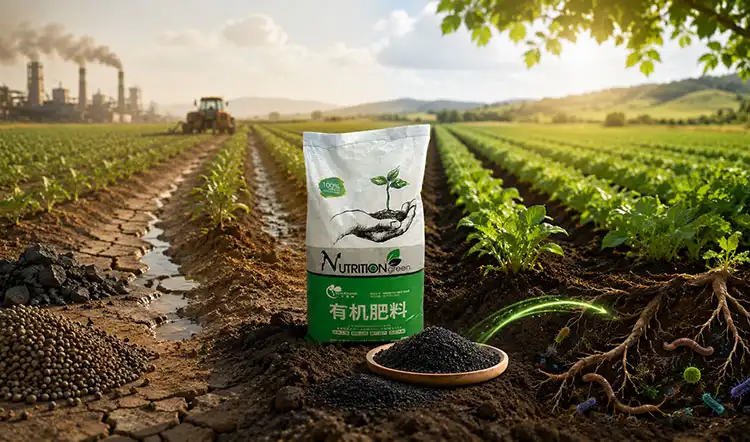
Natural gas (for making ammonia), mined phosphate rock, and potash reserves are used in industrial processes to make traditional chemical fertilizers. These concentrated nutrient salts give plants elements right away, but they don't add anything to the organic matter in the soil or the living groups that live there. Instead, eco-friendly products go through processes like fermentation, composting, or enzymatic hydrolysis, which keep good bacteria but kill pathogens through controlled heating. The carbon base comes from animal waste, peat moss, and crop leftovers, along with minor minerals that are specifically chosen for each crop.
Environmental Footprint Comparison
The difference in the surroundings turns out to be important. Making synthetic nitrogen releases a lot of carbon gases, and digging for phosphate damages the environment and creates dangerous waste streams. Adding artificial salts to soil makes it saltier over time, which lowers its cation exchange capacity and needs to be fixed. These trends can be turned around with organic options that store carbon from the air in stable soil organic matter, stop nitrates from leaching into groundwater by attaching nutrients to humic complexes, and restore the pH buffering capacity that was lost over decades of synthetic use.
Slow-Release Versus Fast-Release Dynamics
Patterns of nutrient release often play a big role in procurement choices. Fast-release chemical fertilizers fill soils with soluble nutrients, which can cause plants to eat too much, nutrients to be lost through volatilization, and contamination of waste. Slow-release organic goods release nutrients slowly over time through microbial breakdown, which fits the plant's uptake curves at different stages of growth. This timing raises the effectiveness of fertilizer use from the usual 40% (chemical) to 65% or higher (organic), lowering the total amount of nutrients needed while keeping output at goal levels. When planning operations, these changes need to be taken into account. For example, organic programs need to be applied ahead of time, but they provide steady food that makes management easier in the middle of the season.
Cost-Benefit Analysis for Large-Scale Operations
Quality organic fertilizers may have higher initial per-ton costs than standard chemical mixes, but a full financial study shows that the economics are in your favour. When you buy in bulk for sales of more than one tonne, price differences get much smaller. Less frequent applications lower operating costs, and better soil health means less need for fungicides, pH stabilizers, and extra minerals. Multi-year forecasts that take into account cumulative soil changes show better net present value, especially when the higher prices for certified organic or sustainably grown food are taken into account. When traders and sellers understand these long-cycle economics, they put themselves in a good situation within supply lines that are becoming more concerned with sustainability.
Selecting the Best Eco-Friendly Fertilizer for Your Agricultural Needs
Certification and Ingredient Transparency
People who work in procurement must give priority to goods that meet strict standards for safety and composition. Good eco-friendly fertilizer products have labels that say how much organic matter they contain, how many basic nutrients they have, and that they don't contain any chemicals that aren't allowed. Limits for heavy metals are especially important. According to international safety standards, lead concentrations must stay below fifty milligrams per kilogram, and cadmium concentrations must stay below three milligrams per kilogram. Pathogen tests showed that Salmonella and E. coli were not present. coli in typical samples keeps them from getting contaminated. Being open with suppliers about where they get their ingredients, how they're processed, and how they check the quality of their products shows that the production process is honest and lowers the risks in the supply chain.
Matching Products to Crops and Soil Conditions
To make good choices, you need to know about special farming situations. Carbon-to-nitrogen ratios of fifteen to one to twenty to one stop nitrogen from becoming immobile, which can slow crop growth in its early stages. Enzymatically processed liquid formulas that give amino acids through fertigation systems without clogging drip emitters are good for high-value veggie crops. Granular goods work well as pre-plant base dressings on row crops and meadows, giving plants access to nutrients all season long. Soils that are salty and alkaline need high-humic acid mixes that get rid of extra sodium and restore the balance of cations. Soils that are acidic need mineral buffers added as additions.
Evaluating Suppliers and Market Options
There are a lot of different seller types in the market in 2024. Established companies that have dedicated research relationships, like when production centers work with farming research institutions, show that they are committed to coming up with new products and providing expert support. Regional farmers often offer practical benefits by cutting down on shipping lengths and being familiar with the problems that come up with the land in the area. Online sites for buying things make it easier to compare prices and handle orders, and membership models make sure that there is a steady supply during key application times. Different types of bulk shipping, from super-sack totes to pneumatic truck delivery, can handle activities of different sizes, making it easier to move and store.
How to Implement Eco-Friendly Fertilizers for Optimal Results
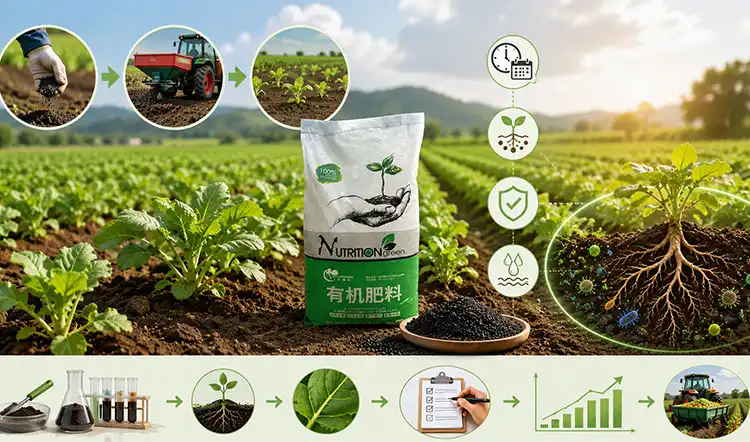
Application Timing and Dosage Best Practices
Timing that is in sync with crop phenology and soil biology is the first step to successful integration. Two to four weeks before planting, incorporating nutrients into the soil before planting helps microbes colonize and mineralize the soil, creating a good environment for seedlings to grow. For field crops, the application rate is usually between two and five tonnes per acre, but it can be changed depending on the amount of organic matter in the soil and the yield goals. To get the best nutrient timing with crop demand curves and avoid tie-ups during early, low-uptake growth stages, split applications—dividing total monthly needs between pre-plant and side-dress timings—across the growing season.
Environmental and Safety Considerations
When used according to the directions on the box, properly processed eco-friendly fertilizer products don't pose many environmental risks. Products that meet standards for reducing pathogens don't pose any danger to animals, livestock, or pets that go into cleaned fields. Enhancing soil biology not only makes the environment safer, but it also creates better growing habitats for pollinators and lessens the damage to water bodies by stopping nutrient waste. To get the most out of preservation and efficiency, operators should keep an eye on buffer zones near bodies of water and avoid applying right before it rains a lot. Keeping things in closed, well-ventilated areas keeps their quality and stops them from clumping or breaking down too quickly because of wetness.
Monitoring Effectiveness and Reapplication Scheduling
Ongoing management choices are based on measurable signs. Soil samples taken every six months show how much organic matter has grown, which is a good way to tell if the soil is getting healthier. Analysis of crop tissues shows that there are enough nutrients, which confirms that the mineralization rates are good. Rapid field estimates can be made by looking at things like leaf colour strength, regular plant groups, and root system vigour. Most organic programs use yearly-based treatment cycles. During times of high demand, lighter upkeep sprays or liquid foliar feeds are added. Keeping track of when, how much, and what kind of yields are achieved after fertilization builds institutional knowledge that improves fertilization methods over multiple seasons, leading to better economic and agricultural results.
Future Trends and Innovations in Eco-Friendly Fertilizers
Technological Advancements in Formulation
More and more, research and development are being done to improve the release accuracy and nutritional density in organic materials. Plasma activation and bio-encapsulation are two new ways of processing that protect nutrients that are easily lost while speeding up the colonization of helpful microbes. Better ways to remove humic acid make goods that are better at chelating, which makes phosphorus and micronutrients available in alkaline soils that weren't there before. Bioactive ingredient development uses specific microbial communities that are adapted to the soil types and crop patterns that are common in the area. This leads to expected performance gains that are on par with synthetic precision.
Global Market Growth and Regional Dynamics
The demand for sustainable soil nutrients from businesses is still growing in many places. North American markets for eco-friendly fertilizer are growing at rates higher than twelve percent each year, thanks to efforts for green agriculture and organic certification. Markets in the European Union gain from policies that encourage carbon farming and the protection of wildlife. Asian markets, especially China and India, see bio-based options as necessary to fix the damage that chemical farming has done to the land over the years. When procurement teams know about these changes ahead of time, they can build good relationships with suppliers before markets get tight and capacity limits and price pressures happen.
Integration with Circular Economy and Regenerative Practices
Businesses that are on the cutting edge include organic fertilizer programs in larger plans for sustainability. In circular economy models, waste streams from farms, like food leftovers, animal beds, and processing results, are used to make custom compost. This closes the loop on nutrients and lowers the cost of importing them. People who practise regenerative agriculture use cover crops, less tilling, and controlled grazing, along with organic amendments, to help the soil store carbon and provide ecosystem services faster. These combined methods put farming businesses in a good position to take advantage of new carbon credit income streams while also making them more resistant to changes in the climate and in the rules that govern farming. Strategic relationships between fertilizer providers, agronomists, and sustainable experts make it possible to make detailed plans for execution that match the facts of operations with the goals of the change.
Conclusion
The switch to eco-friendly fertilizer is both necessary and a good business opportunity in modern farming. These bio-based amendments improve the structure of the soil, its ability to hold water, its resistance to disease, and the yield of crops. They also reduce the need for chemicals and damage to the environment. Comparative research shows that the long-term economics are positive, even though the starting costs are higher. This is especially true when the combined benefits to soil health and premium market access are taken into account. A good execution plan includes choosing the right product based on the needs of the crop, the state of the land, and the reliability of the seller, then applying it at the right time and keeping an eye on its performance over time. New developments in recipe technology and rising demand around the world show that the market will continue to change in a way that is sustainable. By using these solutions, farmers, ranchers, and agricultural suppliers can get ahead in value chains that are becoming more controlled and consumer-focused. They can also make their businesses more resilient and profitable by taking care of the land in a way that makes it grow back.
FAQ
Are eco-friendly fertilizers safe for pets and wildlife?
Properly processed organic fertilizers meeting pathogen reduction standards present no hazards to domestic animals or wildlife. Products passing Salmonella and E. coli testing protocols, with heat treatment eliminating harmful organisms, allow safe field access immediately after application. Unlike chemical fertilizers that can poison animals through ingestion or contact, bio-based amendments pose minimal toxicity risks, making them preferred choices for mixed-use agricultural lands and areas with high wildlife activity.
How does nutrient longevity compare with chemical products?
Organic fertilizers deliver extended nutrient availability through gradual microbial decomposition, typically releasing elements over three to six months compared to weeks for fast-release synthetics. This prolonged feeding reduces application frequency and minimizes luxury consumption or leaching losses, improving overall fertilizer use efficiency and cost-effectiveness across seasonal production cycles.
Can organic amendments completely replace synthetic fertilizers in large-scale agriculture?
Numerous commercial operations achieve full synthetic replacement through properly designed organic programs, often realizing comparable or superior yields within two to three transition years as soil biology recovers. Success depends on adequate organic matter application rates, appropriate product selection for specific crops, and integrated management practices supporting soil health recovery and nutrient cycling efficiency.
Partner with Sciground for Certified Organic Fertilizer Solutions
Sciground manufactures specialized organic fertilizers engineered to restore soil vitality and maximize crop performance across diverse agricultural systems. Our product line, developed through collaboration with Northwest Academy of Agricultural Sciences experts led by Professor Liang Dejun, delivers organic matter exceeding national standards alongside beneficial microorganisms and trace minerals tailored to specific crop requirements. Farmers and dealers sourcing eco-friendly fertilizer suppliers gain access to patented formulations addressing challenges from soil compaction and salinity to cold stress and disease pressure. Our Chenggu County facility produces high-capacity volumes suitable for large-scale commercial operations, with flexible bulk shipping accommodating operational logistics nationwide. Beyond product supply, we provide comprehensive technical support, including soil analysis, application planning, and field monitoring, to optimize agronomic and economic outcomes. Connect with our team at [email protected] to discuss customized fertilizer programs aligned with your sustainability objectives and procurement requirements, accessing two decades of research-backed innovation in organic agriculture.
References
1. Smith, J.L., and Doran, J.W. (2020). Measurement and Use of pH and Electrical Conductivity for Soil Quality Analysis. Agricultural Research Service, USDA.
2. Chen, Y., and Aviad, T. (2019). Effects of Humic Substances on Plant Growth and Nutrient Uptake. Journal of Plant Nutrition and Soil Science, Vol. 182, pp. 320-338.
3. Lal, R. (2021). Soil Organic Matter and Water Retention: Mechanisms and Management for Climate Adaptation. Soil Science Society of America Journal, Vol. 85, pp. 1547-1563.
4. Gaskell, M., and Smith, R. (2018). Nitrogen Sources for Organic Vegetable Crops: A Practical Guide. University of California Agriculture and Natural Resources Publication 8537.
5. Haberle, J., and Svoboda, P. (2022). Long-term Effects of Organic Fertilizers on Soil Fertility and Crop Productivity in Commercial Agriculture. European Journal of Agronomy, Vol. 134, pp. 126-145.
6. Zhao, L., and Wang, F. (2023). Microbial Inoculants in Organic Fertilizers: Impact on Soil Health and Disease Suppression in Intensive Cropping Systems. Applied Soil Ecology, Vol. 187, pp. 104-119.

Sciground
Shanrangde, in collaboration with a team of experts from the former Academy of Agricultural Sciences, focuses on developing patented organic fertilizers, including those specifically formulated for Corydalis rhizome. Chief expert Professor Liang Dejun, with over 20 years of industry experience, provides one-stop technical guidance from site selection to field management, helping farmers increase production and income.
Formulated by the original expert team from the Academy of Agricultural Sciences · Focused on organic nutrients specifically for crops
Contact us now to customize a green nutrition solution for your farmland.
Recommended Blog
Milk Thistle Organic Fertilizer for Sustainable Farming