Can Leaf Application Fertilizers Increase Crop Quality?
Understanding Leaf Application Fertilizers and Their Role in Crop Quality
- Understanding Leaf Application Fertilizers and Their Role in Crop Quality
- Advantages of Using Leaf Application Fertilizers for Crop Quality Improvement
- Comparative Analysis: Foliar Fertilizers vs. Soil Fertilizers
- How to Choose the Right Leaf Application Fertilizer for Your Business Needs
- Future Trends and Innovations in Foliar Fertilizer Technology
- Conclusion
- FAQ
- Transform Your Crop Quality with Sciground's Advanced Foliar Solutions
- References
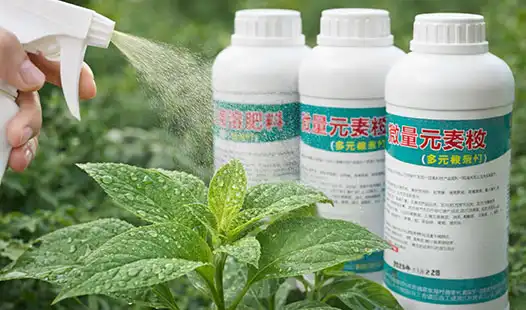
Leaf application fertilizers absolutely can increase crop quality when applied correctly and at optimal timing. These specialized foliar nutrients deliver essential elements directly to plant leaves, bypassing soil limitations and enabling rapid nutrient uptake. Research demonstrates that foliar feeding can improve crop quality parameters, including protein content, sugar levels, and overall nutritional density. By addressing micronutrient deficiencies quickly and enhancing plant stress tolerance, leaf application fertilizers offer farmers a powerful tool for quality improvement, particularly during critical growth stages when conventional soil fertilization may prove insufficient for meeting plant demands.
Understanding Leaf Application Fertilizers and Their Role in Crop Quality
The Science Behind Foliar Nutrient Delivery
Foliar fertilizers feed plants directly, while soil fertilizers add nutrients to the soil. Instead of using traditional methods of fertilizing, these products use the plant's leaves' natural ability to absorb nutrients to send important nutrients straight to the plant. The plant's cuticle and stomata let food into the tissue, so the metabolism can start right away. Many problems with soil make it hard for nutrients to get to where they need to go. This direct delivery system doesn't have to deal with those problems. The soil's pH can change, it can get hard, it can dry out, or roots can get hurt. This can make it hard for plants to get the nutrients they need. So long as you put things on the leaves, the plants will always get the nutrients they need, even if something is wrong with the roots.
Types and Formulations Available
Today, there are a lot of different kinds of fertilizers that are put on plants' leaves. These are made to meet the needs of different crops. For big jobs, powders that mix with water are cheaper, but liquid concentrates are easier to mix and use. For farms that want to stay in business, organic versions that come from natural sources are better. On the other hand, synthetic versions usually have more accurate nutrient ratios. Formulas that focus on micronutrients fix certain problems with deficiencies that make plants taste bad. Things won't grow or turn out well if they don't get enough iron, zinc, manganese, or boron. Applications that are targeted to the leaves, which are done on the soil, can fix these kinds of problems in days instead of weeks.
Advantages of Using Leaf Application Fertilizers for Crop Quality Improvement
Rapid Response and Precision Application
Foliar fertilization works quickly, which is great. Plants can take in foliar nutrients just hours after they are put on them. So, it's a great way to treat sudden signs of a deficiency or help plants that are under a lot of stress. If you want to make sure your crop does well in the end, you need to be able to act quickly during important stages of growth. Pests, drought, or very high temperatures can all put stress on the environment. It might be harder for plants to get food from Leaf application fertilizers in the soil if this is the case. Plants can apply leaf fertilizers to get food from places besides their roots. Even when the roots are having trouble, leaf application of fertilizers keeps them healthy. Taking away stress directly makes plants stronger and helps them keep their quality.
Environmental Benefits and Sustainability
Foetal fertilization is good for the environment because it makes the application work better and lowers the amount of nutrients that run off. When you fertilize the soil the old-fashioned way, a lot of the nutrients can be washed away, especially when it rains a lot. These losses can be cut down as much as possible by putting nutrients on the leaves, where the plants need them. Because it is so accurate, feeding plants through the leaves can help them grow as well as or better than other methods that use fewer nutrients. It is sustainable to farm at this level of efficiency, and it helps farmers save money while still meeting their productivity goals.
Documented Quality Improvements
More than one study has shown that planned foliar fertilization programs improve quality in a way that can be tracked. Farmers say that calcium sprays on the leaves of tomato plants make the fruit firmer and add more lycopene to it while the fruit is growing. If farmers grow wheat and apply nitrogen to the leaves when the flag leaf comes out, the grain will have more protein. It is very helpful for farms that grow fruits and vegetables to have foliar programs that focus on certain quality factors. Putting the right nutrients on the leaves at the right time can make them sweeter, more colorful, last longer, and have more nutrients.
Comparative Analysis: Foliar Fertilizers vs. Soil Fertilizers
Nutrient Delivery Efficiency Differences
Nutrients are usually better used when they are applied to the leaves than when they are put on the soil. Soil fertilizers might not work at all, get clogged up, or wash away if the pH is off. Things never go wrong when it comes to foliar nutrients. This works even better when it's hard to grow, and roots can't take in much. The time it takes to respond is another important difference between the different ways to apply. Soil fertilizers need to break down, connect with roots, and move through the plant's vascular systems before they can do their job. Foliar nutrients are quickly absorbed, so they can help with fast growth processes or make up for sudden weak spots better.
Economic Considerations and Return on Investment
At first glance, it looks like foliar fertilizers cost more per unit than general soil amendments. When you really look at the economy, though, you'll see that the crops are worth the extra money because they are better and make more. Businesses can make a lot more money if they charge more for better goods. Farms can get the most out of their foliar fertilizer costs while still meeting quality standards by buying in bulk. Finding suppliers you can trust is the best way to make sure you always have the things you need and that you can get better deals if you buy more.
Integration with Existing Fertilization Programs
Using leaf application fertilizers alone is not as effective as using them as part of a larger fertility strategy. A big part of giving plants food is making the soil better. This is very true for big nutrients like potassium, nitrogen, and phosphorus. Applying things to the leaves is the best way to fine-tune quality and nutrition. To make a good connection between the two approaches, you need to know how they work with each other. A base level of fertility in the soil helps plants stay healthy, leaf application of fertilizers, and makes more food. Specific applications to the leaves improve quality and fix problems with production.
How to Choose the Right Leaf Application Fertilizer for Your Business Needs
Crop-Specific Considerations and Timing
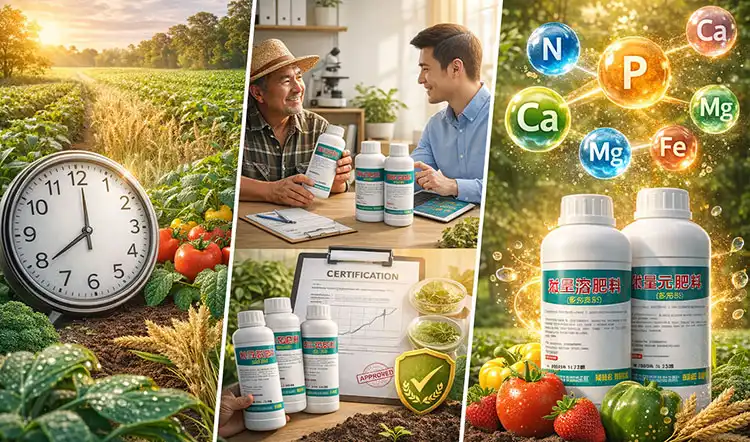
Before you can pick the right foliar fertilizers, you need to know what the crop needs and how fussy it is at each stage of growth. Different crops respond differently to applications that are put on the leaves. Some show big changes in quality, while others only show small ones. It's best to feed plants with leaves instead of roots, but it might not work as well for plants with deep roots. Foliar fertilizer works best when used at the right time. Most of the time, it's best to give plants nutrients while they are growing so they can use them right away. Most of the time, it's best to put on clothes in the morning, when the air is still damp enough to soak them up but not so dry that it could make you sick.
Supplier Evaluation and Product Certification
Their products should always be of good quality, they should offer full technical support, and they should be clear about how they make their products. Customers can be sure that a product is safe and does its job well if it has quality stickers from well-known farming groups. People who work with universities on research projects and have field test results that can be shown are very dedicated to making new products. It's very helpful to have tech support when setting up new foliar programs. Foliar fertilization is widely used and works well because suppliers help with problems, make sure it is compatible, and test for ease of use.
Multi-Element Foliar Spraying Fertilizer Benefits
Plants can get all the nutrients they need from modern mixes and foliar sprays that contain more than one element. These items are good for plants because they have the right amount of macro and micronutrients. This type of formula is helpful because it is easier to use and still gives you all the nutrients you need. It is possible to control the pH of the soil with multi-element formulations. These formulations also help plants absorb nutrients more quickly and effectively. They also make plants more resistant to stress and disease. For farms that want to make their fertility programs easier without hurting the quality of their crops, these items are great. They're great for farms because they can be used for many things.

Future Trends and Innovations in Foliar Fertilizer Technology
Technological Advances and Precision Agriculture
Nanotechnology is being used in new ways to improve foliar fertilizer even more. Nanoscale nutrients break down more slowly, so they stay available for longer. They also get into plant tissues better. With these new ideas, they say they can do less work and get more done. More and more, precision farming tools are being used with programs that apply fertilizer to plants' leaves. This is possible with technologies like monitoring crops in real time and applying them at different rates. Sensors on drones can find places where plants aren't getting enough food. So, you can only use the right amount of fertilizer on the leaves. This method makes the best use of resources and improves the quality of crops the most.
Climate Adaptation and Sustainability
It's more important than ever to use leaf application fertilizers and adaptive nutrition strategies to keep crop quality high when things get tough because climate change is making things worse. When leaf application fertilizers are used, it's easy to make quick changes to feeding plans when the weather changes. Being able to change with the weather is very important as it gets less stable. Since more and more people want farming methods that are better for the environment, formulas that last longer are being made with organic and bio-based ingredients. Some products keep working well and don't harm the environment as much, which helps intensive farming systems last for a long time.
Market Evolution and Procurement Implications
Foliar fertilizer is still in high demand because growers know it improves quality and efficiency. Because of this growth, companies that make things are more likely to compete and think of new ideas. This is good for customers because it means they can save money and get better products. If companies use these new technologies in the way they buy things, they can get a big edge over their rivals. When you connect to digital farming platforms, you can use data to figure out when and how much to feed the leaves. For foliar programs that get better results and the most money back, information from past crops, weather, and crop monitoring is used.
Conclusion
Leaf application fertilizers represent a proven strategy for enhancing crop quality across diverse agricultural operations. Through direct nutrient delivery to plant leaves, these specialized products overcome soil limitations while providing rapid response capabilities during critical growth periods. The combination of improved nutrient use efficiency, environmental benefits, and documented quality improvements makes foliar fertilization an increasingly valuable tool for modern agriculture. Success requires proper product selection, appropriate timing, and integration with comprehensive fertility programs. As technology advances and climate challenges intensify, foliar fertilizers will likely play an expanding role in sustainable crop quality management strategies.
FAQ
1. Which crops benefit most from foliar fertilizer applications?
Most of the time, fertilizer that is spread on the leaves of high-value horticultural crops like fruits, vegetables, and specialty crops works best. This is great for plants that take a long time to grow and have big leaves. But grain crops can also get better at certain points in their growth, especially when it comes to things like protein content.
2. Can foliar fertilizers completely replace soil fertilization programs?
Foliar fertilizers work best as supplements to, rather than replacements for, soil fertilization programs. While excellent for micronutrients and quality enhancement, they cannot economically provide all macronutrient requirements. The most effective programs combine soil applications for base nutrition with targeted foliar applications for quality optimization.
3. What safety protocols should be followed during foliar applications?
If someone wears the right gloves, clothes, and eye protection, they won't be able to touch or be touched on the skin. Putting things down when the weather is calm makes drift less likely. Make sure it works and is safe by following the directions on the label for the right amount, time, and environment. Test the products in a tank to see if they can be mixed before putting them together.
Transform Your Crop Quality with Sciground's Advanced Foliar Solutions
Sciground's multi-element foliar fertilizer gives your plants all the nutrients they need to grow well. These scientifically made products help plants stay healthy, handle stress better, and grow better crops by using cutting-edge leaf absorption technology. Our new thoughts come from the Northwest Academy of Agricultural Sciences' work over more than 20 years. Sciground's leaf application fertilizers are made to meet the high standards of modern farming. Send us an email at [email protected] to find out more about how our supplier of leaf application fertilizers can help you reach your long-term crop quality goals in a way that works every time.
References
1. Fernández, V., & Brown, P. H. (2013). From plant surface to plant metabolism: the uncertain fate of foliar-applied nutrients. Frontiers in Plant Science, 4, 289.
2. Oosterhuis, D. M., & Weir, B. L. (2010). Foliar fertilization of cotton. University of Arkansas Division of Agriculture Research and Extension.
3. Kannan, S. (2010). Foliar fertilization for sustainable crop production. Sustainable Agriculture Reviews, 4, 371-402.
4. Fageria, N. K., Filho, M. P. B., Moreira, A., & Guimarães, C. M. (2009). Foliar fertilization of crop plants. Journal of Plant Nutrition, 32(6), 1044-1064.
5. Reed, D. W., & Tukey Jr, H. B. (1982). Light and scanning electron microscopy of spray deposits and leaf surfaces. Journal of the American Society for Horticultural Science, 107(3), 504-510.
6. Alexander, A. (1986). Optimum timing of foliar nutrient sprays. Proceedings of the 1st International Symposium on Foliar Nutrition, 44, 44-60.

Sciground
Shanrangde, in collaboration with a team of experts from the former Academy of Agricultural Sciences, focuses on developing patented organic fertilizers, including those specifically formulated for Corydalis rhizome. Chief expert Professor Liang Dejun, with over 20 years of industry experience, provides one-stop technical guidance from site selection to field management, helping farmers increase production and income.
Formulated by the original expert team from the Academy of Agricultural Sciences · Focused on organic nutrients specifically for crops
Contact us now to customize a green nutrition solution for your farmland.
Recommended Blog
Micronutrient Water-Soluble Fertilizer vs. General Liquid Fertilizer
Key Benefits of Silybum marianum Specialized Organic Fertilizer
Micronutrient Water-Soluble Fertilizer vs. Granular Fertilizer
Can Fruit Tree Organic Fertilizer Improve Soil Health Long Term?