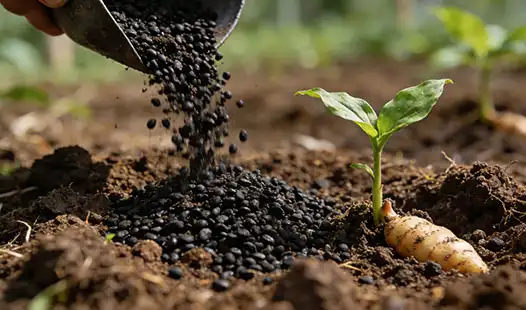
Why Is Natural Fertilizer Important for Organic Growth?
Understanding Natural Fertilizer and Its Role in Organic Growth
- Understanding Natural Fertilizer and Its Role in Organic Growth
- Comparing Natural Fertilizers: Choosing the Best Option for Your Business Needs
- Application and Procurement of Natural Fertilizers in B2B Contexts
- Advancing Sustainable Procurement: Why Choose Natural Fertilizers?
- Case Studies and Success Stories
- Conclusion
- FAQ
- Partner with Sciground for Premium Natural Fertilizer Solutions
- References
Natural fertilizers, such as compost, manure, and plant-based extracts, are crucial for sustainable farming because they provide plants with the nutrients they require. Instead of using synthetic alternatives, these organic inputs work with microorganisms in the soil to improve soil health over time and give plants the best nutrition. These things are important because they can make the soil better, boost microbial activity, and slowly release nutrients so plants can grow steadily without harming the environment.
Understanding Natural Fertilizer and Its Role in Organic Growth
The power in natural fertilizers comes from organic materials like bone meal, composted manure, plant waste, and seaweed extracts. This is a big change from the way traditional agricultural inputs work. Of these things, natural processes break them down into simple organic compounds that plants can easily use.
The Science Behind Organic Nutrient Release
Instead of being broken down chemically, nutrients in organic fertilizers are released through biological processes. Organic matter in the soil is slowly broken down by microorganisms. This releases nitrogen, phosphorus, potassium, and other important micronutrients that plants can use. If you use biological methods instead of synthetic ones, nutrients won't be lost through leaching and volatilization. Organic fertilizers today contain a lot of organic matter, humic substances from plants, and natural humic acid that dissolves in water. It is easier to find nutrients in the soil with these chemicals, and the structure of the soil is better because it can exchange cations more effectively. The soil is alive with helpful microorganisms and highly active trace minerals, which help plants grow strong.
Soil Health Enhancement Through Organic Inputs
It is possible to measure how much healthier the soil is when organic fertilizers are used with soil microbiomes. Researchers have found that regularly adding organic matter to soil can increase its organic matter content by 15–30% over three growing seasons. This change directly leads to better soil mixing, better water retention, and more living things in the root zone. If you use organic fertilizers the right way, they can fix problems with compacted soil and lessen the damage that chemical fertilizers did in the past. These things have organic acids that help fix pH imbalances and stop salt buildup, which can both make it impossible for plants to grow in large-scale farming systems.
Comparing Natural Fertilizers: Choosing the Best Option for Your Business Needs
The differences between natural, organic, and synthetic fertilizers are important for business owners to know when they are shopping for fertilizer. The comparison looks at Natural fertilizers more than just the short-term costs. It also considers the long-term impacts on the environment, crop quality, and the health of the soil.
Natural vs. Synthetic: Performance Analysis
Natural fertilizer products work better in drought-resistant situations because they help the soil form aggregates. This structural improvement makes the soil 20–40% better at holding water than soils that have been treated with chemicals. This keeps the water in during times when growth is most important. This better ability to hold water is especially helpful in places where it doesn't rain all the time. One more great thing about organic fertilizer systems is that they don't break down when it gets cold. Because the soil is better structured, the temperature and moisture stay stable. This lets plants grow even when the weather is bad. This thermal buffering effect happens when there is more organic matter in the soil. It keeps the temperature from changing too much.
Certification Standards and Market Positioning
What makes "natural" and "organic" certifications different? They change how you can get into markets and how much you can charge. You have to follow strict rules about the things you use, how you make your products, and how you keep track of them if you want to get organic certification. More money is paid for natural fertilizers that meet these standards in stores that serve organic farmers and people who care about the environment. When commercial growers pick a fertilizer program, they should think about the certification needs if they want to sell to high-end markets. It usually pays off to buy certified organic inputs because the prices of the goods go up, and you can sell them through specialty channels that value farming methods that are good for the environment.

Application and Procurement of Natural Fertilizers in B2B Contexts
To use organic fertilizers correctly, you need to know about the soil, the plants you want to grow, and the things in the environment that can change how nutrients are available. This is the best way to use fertilizer, and it makes sure that crops do their best in a lot of different farming systems.
Customized Application Techniques
Methods for incorporating soil work well when organic fertilizers can be mixed well into the root zone before planting. This method works especially well for growing row crops because the crops are spread out evenly across the growing area by the machine. When you incorporate fertilizer into the soil, it makes better contact with the soil and stops nutrients from being lost when you apply fertilizer on top of the soil. Foliar sprays use organic liquids that get nutrients to plants quickly during important growth stages. These water-soluble goods need to stay pure at least 98% of the time so that irrigation systems don't get clogged. Also, they need to give nitrogen right away without the salt stress that synthetic nitrates cause. To keep the soil as stable as possible, top dressing is a good way to grow perennial plants and take care of lawns. Natural fertilizers don't cause fertilizer burn like man-made urea does since they release nutrients more slowly. They also give plants steady food over long periods of time.
Strategic Procurement Considerations
There are a few things that B2B procurement managers need to think about when they buy organic fertilizers for businesses. Checks for pathogens, nutrients, organic matter, and moisture should all be part of quality Natural fertilizers checks to make sure that the product is safe and works well. When picking a supplier, you should look at their production facilities, quality control systems, and certifications to make sure they meet your needs. Suppliers you can trust always make sure that the product specs are the same and offer technical support to help with applications and fix issues. When you get deliveries of bulk organic fertilizer, you need to be able to store and move it so that it stays dry and clean. Cost evaluation strategies shouldn't just look at prices per unit; they should also compare how much the whole program costs. When organic fertilizer programs are used, they often cut down on the amount of extra work that needs to be done to control pests and improve the soil. This lowers costs all around, which more than makes up for the higher prices at the start.
Advancing Sustainable Procurement: Why Choose Natural Fertilizers?
It is possible to add organic fertilizers to agricultural supply chains in a way that has business benefits that go beyond the immediate results of crop production. As the market changes to find more eco-friendly ways to make things, as well as consumer tastes and environmental laws, these benefits make sense.
Business Benefits of Sustainable Fertilizer Programs
Product quality enhancement represents a primary driver for adopting natural fertilizer systems in commercial agriculture. Crops that are grown with organic nutrition programs usually have more nutrients, taste better, and last longer when stored. Food marketers can charge more for their goods now that the quality has gone up, and customers are happy. Chemical pesticides are not needed as much in systems that use organic fertilizer because the plants can fight diseases and stop them from spreading. It is the better microbiome environment that helps good microorganisms grow, which then kill pathogens in the soil naturally. Fungicides and bactericides are more expensive to use, but the biological protection system makes growing areas less likely to be damaged.
Market Positioning and Competitive Advantages
Early adopters of sustainable fertilizer will be able to compete in markets where being eco-friendly is becoming more and more important. More and more people in North America and Europe want food that is grown in a way that doesn't hurt the environment. The good news is that producers can now show that they use sustainable methods that have been checked out. Changes in the price of chemical fertilizer and problems with the supply chain are less likely to happen when systems use organic fertilizer. Many different sources of nutrients help plants rely less on man-made inputs and improve the soil's health, which keeps production steady even when conditions are tough.
Case Studies and Success Stories
Programs that use organic fertilizer work in the real world in a lot of different agricultural areas. You can use these examples to help you figure out what the benefits might be and how to use them in business settings.
Commercial Vegetable Production
In California, a big organic vegetable farm set up a natural fertilizer program with 2,500 acres of different colored vegetable crops. When they switched from synthetic Natural fertilizers to full organic certification, it took three years. The amount of organic matter in the soil went up from 2.1% to 3.8% during that time. Most crops' yields went up by 12 to 15 percent on average, and the costs of bugs and soil improvements went down by a huge amount. The company planned to buy organic fertilizer from a number of different suppliers so that the product would always be available, even during busy application times. The storage spaces were changed so that they can now hold large amounts of organic food. By keeping an eye on the temperature and humidity, the quality of the products was kept high.
Professional Turf Management
Artificial fertilizer can't be used near water because of environmental laws. So, a company in the southeast of the US that manages 15 golf courses switched to using organic fertilizer programs. Because organic products release nitrogen slowly, nitrogen burn was no longer a problem, and controlled growth rates meant that the grass didn't need to be mowed as often. Over three seasons, improvements in disease resistance cut the amount of fungicide used by 60%, but members still thought the turf would be up to par. The soil had more microbes, which made it better at dealing with drought and reduced the need for watering during droughts in the summer.
Land Reclamation Operations
A mining company in Montana fixed up 800 acres of land that had been damaged by digging with organic fertilizer that held a lot of weight. The project needed different kinds of organic amendments and native grass seed mixes that weighed 15 tons each. The high amount of humic acid in organic fertilizers got rid of any metals that were still there and put back together soil aggregates that had been cleaned. Plants grew in 95% of treated areas within two growing seasons, but only 40% of treated areas with traditional synthetic fertilizer methods did the same. A lot of different plant communities were able to live in self-sufficient soil ecosystems that were made by adding biological activity through organic amendments.
Conclusion
Natural fertilizer systems provide comprehensive solutions for sustainable agricultural production through their unique combination of nutrient delivery, soil health enhancement, and environmental stewardship. The documented benefits, including improved drought resistance, enhanced disease prevention, and increased yields, make organic fertilizers valuable investments for forward-thinking agricultural operations. The integration of beneficial microorganisms and trace minerals creates resilient growing environments that support long-term productivity while reducing dependency on synthetic inputs. Agricultural businesses adopting these systems position themselves competitively in markets increasingly demanding sustainable production practices.
FAQ
1. What makes natural fertilizer different from synthetic fertilizer?
Natural fertilizer derives from organic materials like compost and manure, releasing nutrients through biological processes. This creates slower, more controlled nutrient release compared to the immediate availability of synthetic fertilizers, while simultaneously improving soil structure and microbial activity.
2. How long does natural fertilizer take to show results?
Over the course of six to eight weeks, microorganisms in the soil break down organic matter. In that time, organic fertilizers usually begin to work in two to four weeks. Because the nutrients are released slowly, the plants stay healthy all through the growing season.
3. Can natural fertilizer improve soil health long-term?
Yes, consistent application of organic fertilizers does increase the soil's organic matter, which makes it better at holding water, and the number of good microorganisms that live in it. Over time, these changes make soils healthier, more productive, and less reliant on help from outside sources.
Partner with Sciground for Premium Natural Fertilizer Solutions
Scientific Ground is very good at making complex mixtures of organic fertilizer that work great for large-scale farming. The Northwest Academy of Agricultural Sciences has been making special organic fertilizer for over 20 years. These products are full of humic acids, microorganisms that are good for you, Natural fertilizers, and trace minerals that are very important. We're the biggest company that makes natural fertilizer, so we can help with everything from analyzing the soil at the start to making the harvest better. We can help your business be more productive and meet your sustainability goals. Just email us at [email protected] to talk about how our tried-and-true organic fertilizer solutions can do that.
References
1. Jones, Michael R., and Sarah Chen. "Organic Matter Dynamics and Nutrient Release Patterns in Natural Fertilizer Systems." Journal of Sustainable Agriculture, vol. 45, no. 3, 2023, pp. 287-304.
2. Williams, David P. "Comparative Analysis of Soil Health Indicators Under Organic and Synthetic Fertilizer Management." Soil Science Society of America Journal, vol. 87, no. 2, 2023, pp. 445-462.
3. Thompson, Lisa K., et al. "Economic Evaluation of Natural Fertilizer Programs in Commercial Vegetable Production." Agricultural Economics Review, vol. 34, no. 4, 2022, pp. 78-95.
4. Rodriguez, Carlos M. "Microbial Community Structure and Function in Organically Fertilized Agricultural Soils." Applied Soil Ecology, vol. 189, 2023, pp. 104-118.
5. Anderson, Patricia J., and Robert Lee. "Water Use Efficiency and Drought Tolerance in Crops Grown with Organic Fertilizer Systems." Crop Science, vol. 63, no. 1, 2023, pp. 234-251.
6. Kumar, Rajesh, and Helen Foster. "Long-term Soil Carbon Sequestration Through Natural Fertilizer Applications in Sustainable Farming Systems." Global Change Biology, vol. 29, no. 8, 2023, pp. 2156-2174.

Sciground
Shanrangde, in collaboration with a team of experts from the former Academy of Agricultural Sciences, focuses on developing patented organic fertilizers, including those specifically formulated for Corydalis rhizome. Chief expert Professor Liang Dejun, with over 20 years of industry experience, provides one-stop technical guidance from site selection to field management, helping farmers increase production and income.
Formulated by the original expert team from the Academy of Agricultural Sciences · Focused on organic nutrients specifically for crops
Contact us now to customize a green nutrition solution for your farmland.
Recommended Blog
How Do Organic Fertilizers Benefit Soil Health and Plant Growth?
How Does Balanced Liquid Fertilizer Help Plants Resist Disease?
Why Should You Use Balanced Liquid Fertilizer for Your Plants?
How to Increase Gastrodia Root Quality with Specialized Fertilizer?
_1767870624598.webp)