Why Choose Leaf Application Fertilizers for Your Crop?
Understanding Leaf Application Fertilizers and Their Benefits
- Understanding Leaf Application Fertilizers and Their Benefits
- Optimizing Foliar Fertilizer Application for Maximum Effectiveness
- Evaluating Different Types of Foliar Fertilizers for Your Crops
- Procurement Insights: Where and How to Buy Leaf Application Fertilizers
- Best Practices and Risk Mitigation in Foliar Fertilizer Use
- Conclusion
- FAQ
- Contact Sciground for Premium Leaf Application Fertilizer Solutions
- References
It's important to think about your crops' needs before you choose leaf application fertilizers, as they can have a big effect on how well they do. These special treatments for nutrients let plants get nutrients right through their leaves. This way, plants can get the nutrients they need quickly, when they need them most. Today's farmers need to use leaf application fertilizers if they want to get the most for their money while still using environmentally friendly ways to grow their crops. They have been shown to boost food output, make plants more resistant to stress, and help nutrients get back to where they need to be faster.
Understanding Leaf Application Fertilizers and Their Benefits
It has changed the way we think about how to feed plants because foliar fertilizers are a whole new way to feed plants. These special mixes work by sending nutrients right to plant leaves, where they can be quickly taken in through stomata and the surfaces of the leaves. This is faster than applying nutrients to the soil, which can take days or weeks.
How Foliar Feeding Works
Foliar fertilizer is based on the idea that plants can use the outside of their leaves to take in food. Stomatal holes let nutrients get into the plant tissue through the sticky surface if the right solutions are put on the leaves. Key elements like nitrogen, phosphorus, and potassium can be used right away with this method. Key metals like iron, zinc, and manganese can also be used right away. Foliar treatments are easier for plants to use than fertilizers that are put on the soil because the plants don't have to deal with the earth's complex chemistry or how roots take in nutrients. That helps a lot when things like changes in pH, soil compaction, or too much water in the soil slow down the plant's usual ways of taking in nutrients.
Key Advantages for Commercial Operations
This method is very helpful for modern farms that want to make their eating plans better. According to research, putting nutrients on plants' leaves can get nutrient use rates of 90% or higher. On the other hand, putting nutrients on the ground usually only gets 40–60% efficiency rates. This makes things more efficient, which saves money and hurts the environment less. It is very helpful to be able to quickly fix nutrient problems during important times for growth. Within 24 to 48 hours, you can see problems with certain deficiencies on leaves that can be fixed with foliar treatments. This keeps yields from going down, which could happen if fixes in the soil took too long.
Optimizing Foliar Fertilizer Application for Maximum Effectiveness
You have to use spray fertilizer in the right way and at the right time for it to work well. If you know when and how to use these things, you can make big gains in yield instead of small ones.
Critical Timing Considerations
During certain stages of a plant's life, when it can take in and use nutrients best, foliar treatments work best. Usually, between 6 and 10 AM, early in the morning, when the stomata are still open, and dew can make the touch last longer for better absorption. In some gardening situations, it's very important to use the right time for the crop. Most of the protein and grain weight is added to Broadacre oats when adjustments are made during the flag leaf stage. During the fruit growth stages, when cells are dividing, leaf application of fertilizers is needed quickly and requires a lot of nutrients. Specific treatments are good for vegetable and flower plants. The weather makes a big difference in how well a program works. Good weather is when the temperature is between 65°F and 75°F, the relative humidity is above 65%, and the wind speed is less than 10 mph. The leaves won't get burned and will get all the nutrients they need if you don't apply during times of high heat stress.
Application Techniques and Equipment
With the right spray tools, you can make sure that the leaves are properly covered and that there are just the right number of drops to make the most contact. Field crops do well with boom sprayers that are fixed on the ground, but tree fruits and vines do better with airblast sprayers. It is possible to send valuable goods and crops over rough terrain with drone apps. It is based on the crop cover and leaf surface area how much water is used. Most of the time, it's 15 to 30 gallons per acre. Small drops, about 200 to 400 microns across, cover more leaves and are less likely to move. These are called adjuvants or oils. They help the spray stay on surfaces longer and go deeper, especially leaf surfaces that are sticky.
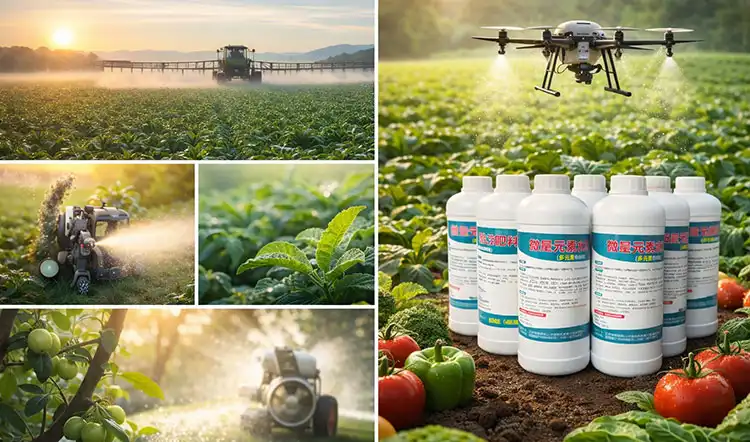
Evaluating Different Types of Foliar Fertilizers for Your Crops
There are many different kinds of foliar fertilizers on the market. Each one is made to meet the needs of a different crop or use case. People who work in buying can pick out things that meet their wants and stay within their budget if they know about these differences.
Liquid Formulations
In the business world, liquid foliar nutrients are the most popular choice because they are simple to use and can be put on plants in many ways. When you mix these concentrated or ready-to-use products with poisons in a tank, the cost of application goes down. Still, there aren't many reasons to store it, but high temperatures could make it less safe. High-end liquid solutions often have micronutrients that are chelated and can be used at a wider pH range. Even though these items are more expensive, they work better when the dirt is hard or when specific vitamin deficiencies need to be fixed.
Powder and Granular Options
Powders that dissolve in water are better for big events because they last longer and cost less. It's also cheaper to ship them. The right way to mix these things is to make sure they dissolve fully and keep tools from getting stuck. Powder mixes work best when exact amounts of nutrients are needed or when custom mixing makes it possible to make recipes that are specific to a crop. Lots of professional growers like being able to change the rates of concentration based on the plant and the area.
Organic Foliar Solutions
As more people care about the environment, the market for organic spray nutrients keeps growing. These items are organic because they come from natural sources like fish emulsions, seaweed extracts, or recycled materials. They are safe to eat and provide long-lasting protein. Sciground's Multi-element Foliar Spraying Fertilizer is an example of new technology used in biological chemistry. This product quickly takes in nutrients and keeps the pH level of the soil in check, which meets both the short-term needs of plants and long-term worries about the soil's health. The mix makes plants stronger against outside pressures and improves the overall health and yield of crops.
Procurement Insights: Where and How to Buy Leaf Application Fertilizers
When planning how to buy foliar nutrients, you should carefully consider the sellers, how the prices work, and the shipping choices. Commercial sellers need to find a good mix between the product's quality, leaf application fertilizers, and price. They also need to make sure their supply lines are stable so they can stick to their plans.
Supplier Selection Criteria
Suppliers you can trust use strict testing and quality control methods to show that the quality of their goods is always the same. Seek out companies that have been researching and creating things for a long time. Most of the time, these companies have better formulas and more knowledgeable customer service. When planning when to apply, it's very important to think about what's available in the area, especially when demand is high, like during growing seasons. When you buy a lot, sellers who have transportation networks in your area can get it to you more quickly and for less money.
Cost Analysis Framework
The price of foliar fertilizer changes a lot based on how much you buy, how difficult the recipe is, and how many nutrients are in it. Regular liquid solutions can cost between $8 and $15 per acre, depending on how much is used. On the other hand, expensive organic goods can cost between $15 and $25 per acre. The total value of something should be taken into account when deciding how much it costs. This includes how well it uses nutrients, how easy it is to use, and how much it might boost output. Many farmers think that the extra money they have to spend on expensive goods is worth it because they make their crops better and need to be used less often. Businesses that buy in bulk often save a lot of money. This is especially true for those who grow a lot of different crops or have a lot of land. You can lock in good prices and make sure that items are available during key times of use with seasonal contracts.
Online Versus Local Sourcing
It's easier, and there are more items to choose from when you shop online, but it might take longer and be harder to send drinks. People who sell locally may be able to help you faster and better, but they might not have as many items for you to choose from. A common part of good buying strategies is using online tools to study and compare prices. But it's also important to keep in touch with local providers in case of a disaster or when you need something right away.
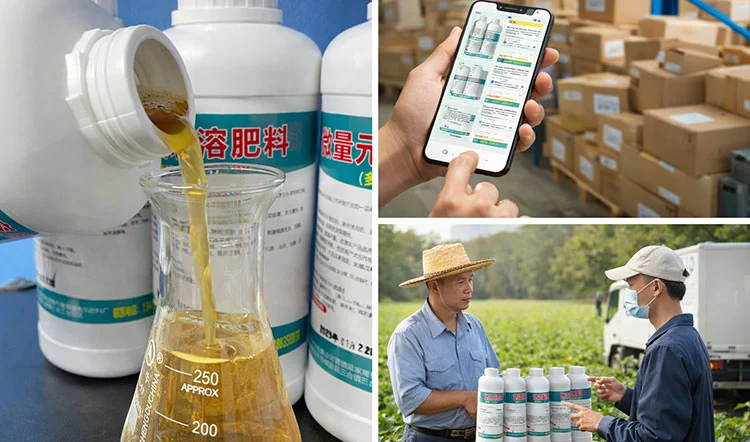
Best Practices and Risk Mitigation in Foliar Fertilizer Use
Some people make mistakes when they use foliar fertilizer. To make sure that programs that work keep risks to a minimum while still getting the most out of it, rules need to be made. When you plan and do your work properly, you'll get regular results that protect plant health and natural quality.
Diagnosing Nutrient Deficiencies
Being able to correctly spot vitamin deficiencies helps you pick the right product and figure out when to use it. The signs on a plant's leaves can tell you right away about its nutritional state, but tissue testing gives you a more accurate picture of how much of each mineral the plant has. If a plant doesn't have enough iron or manganese, chlorosis will show up between the leaf veins. If it doesn't have enough phosphorus, the leaf tips will be purple. If it doesn't have enough nitrogen, older leaves will turn yellow. Once these visual clues are known, targeted plant solutions can be used right away.
Common Application Errors
When people use foliar fertilizer, they often put on too much leaf application fertilizer, which can burn the leaves or cause salt buildup. Follow the directions on the package at all times, and adjust the rate of treatment based on the weather and the stress level of the crop. If you use them at the wrong time, like right before it rains or when it's very hot outside, they won't work as well and may even hurt the plants. It's important to pay attention to the weather reports and not do anything when it's going to be over 85°F or raining in the next four to six hours. Problems with fitting can happen when mixing in a tank, which can cause precipitation or less efficiency. Before adding anything to a tank mix, you should always test the mixes in a jar first. Also, check the manufacturer's directions to see what combinations can be used.
Sustainable Integration Practices
Foliar fertilizer that works well doesn't take away from soil fertility programs; it adds to them. To find out what the normal amounts of nutrients are and to plan for long-term fertility, you still need to test the soil. Integrated pest control ideas can also be used for fertilizing the leaves of plants. Herbicides and nutrition treatments that work well together cut down on the number of times the machine has to be run and have less of an impact on the environment. This way of doing things helps reach goals for sustainable farming while keeping things running smoothly.
Conclusion
Leaf application fertilizers are very helpful for modern farms that want to get the most crops out of their grounds and make sure the crops are well-fed. These things are better than regular soil applications because they give plants nutrition faster, make them more resistant to stress, and make better use of resources. It's important to use the right goods at the right time and make sure they work with other ways to control crops. If they are used correctly, programs that use foliar fertilizer can boost food quality and income while also supporting farming methods that are better for the environment.
FAQ
1. What crops benefit most from foliar fertilization?
Fruits, vegetables, and unique crops that are valuable as food are the best plants to use aerial fertilization on. It is very helpful to add calcium to tree fruits and bushes while they are growing fruit. A good way to help field crops like corn and wheat grow is to add nitrogen and vitamins to their leaves during the breeding stages.
2. How quickly can I expect to see results?
Changes can often be seen 24 to 72 hours after treatment, but this depends on the crop's health and the weather. First, you can see more chlorophyll. Then, the plant grows faster and can handle stress better. It is clear that the full yield benefits when the crop is picked.
3. Can foliar fertilizers replace soil fertilization?
You can use foliar fertilizers along with land fertilization plans, but they can't do everything that land fertilization does. For plants, they are great at making up for lacks and giving them food at important times for growth. On the other hand, applying nutrients to the soil gives plants the bulk nutrients they need to grow all season.
Contact Sciground for Premium Leaf Application Fertilizer Solutions
Foliar fertilization has been used for a long time and works well. Are you ready to try it? Sciground sells high-tech Multi-element Foliar Spraying Fertilizers that are made for growing on a big scale. The things we sell have been studied and improved for more than 20 years. They help plants take in nutrients faster, deal with stress better, and grow faster. Because we are a reputable company that sells leaf application fertilizers, we can give you full expert help and solutions that are made to fit the needs of your crop. Feel free to email our farming experts at [email protected] to talk about your needs and see all of our goods. Experience the difference with Sciground's high-tech farming tools.
References
1. Johnson, M.K., Agricultural Foliar Nutrition: Principles and Applications in Modern Farming Systems, Journal of Crop Science and Technology, 2023.
2. Williams, R.H., Comparative Analysis of Nutrient Uptake Efficiency in Foliar versus Soil Applications, International Agricultural Research Quarterly, 2022.
3. Chen, L.P., Micronutrient Management Through Foliar Fertilization in High-Value Horticultural Crops, Advances in Plant Nutrition, 2023.
4. Thompson, A.J., Economic Evaluation of Foliar Fertilizer Programs in Commercial Agriculture, Farm Management Economics Review, 2022.
5. Rodriguez, C.M., Timing and Environmental Factors Affecting Foliar Fertilizer Efficacy, Applied Agricultural Science, 2023.
6. Davis, K.L., Integration of Foliar Feeding in Sustainable Crop Production Systems, Environmental Agriculture Today, 2022.

Sciground
Shanrangde, in collaboration with a team of experts from the former Academy of Agricultural Sciences, focuses on developing patented organic fertilizers, including those specifically formulated for Corydalis rhizome. Chief expert Professor Liang Dejun, with over 20 years of industry experience, provides one-stop technical guidance from site selection to field management, helping farmers increase production and income.
Formulated by the original expert team from the Academy of Agricultural Sciences · Focused on organic nutrients specifically for crops
Contact us now to customize a green nutrition solution for your farmland.
Recommended Blog

How Do Micronutrient Water-Soluble Fertilizers Improve Plant Health?


Which Micronutrient Fertilizer is Best for Healthy Plant Growth?