How Do Micronutrient Water-Soluble Fertilizers Improve Plant Health?
Understanding Micronutrient Water-Soluble Fertilisers
- Understanding Micronutrient Water-Soluble Fertilisers
- How Micronutrient Water-Soluble Fertilisers Work in Plants
- Optimising Application for Maximum Results
- Environmental and Sustainability Benefits
- Real-World Performance of Micronutrient Programs
- Choosing the Right Micronutrient Fertilizer Supplier
- Improving Agricultural ROI Through Precision Nutrition
- Sciground’s Micronutrient Water-Soluble Fertilizer Solutions
- Professional Manufacturing and Technical Support
- Conclusion
- FAQ
- Transform Your Crop Performance with Sciground's Premium Water-Soluble Solutions
- References
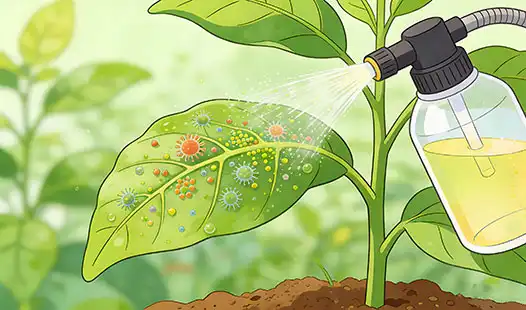
When you mix micronutrient water-soluble fertilisers with water, you give plants little bits of nutrients that they can use right away. The plants can get the food they need to keep growing this way. Iron (Fe), zinc (Zn), manganese (Mn), boron (B), copper (Cu), and molybdenum (Mo) are some of the elements that plants need to make food, run enzymes, grow roots, and stay safe. But if the soil is acidic, doesn't take nitrogen well, or is hard to break down, these things might not be in it.
There may be different kinds of manure that break down at different rates. It is easier to use watering systems or spray from above with vitamin solutions that dissolve in water. This makes it easier for plants to get the nutrients they need. These fertilisers help farmers grow better crops, waste less food, and keep farming going for a long time.
Understanding Micronutrient Water-Soluble Fertilisers
Key Nutrients and Their Role in Plant Development
Water-soluble micronutrient fertilisers have very small amounts of important nutrients that help plants grow a lot. The ones that plants don't need as much are nitrogen, phosphorus, and potassium. But not having enough of them can really stop plants from growing.
The leaves of plants can turn yellow if they don't get enough iron. Iron is a part of chlorophyll. Zinc is needed for enzymes and hormones to work. Manganese is important for both photosynthesis and breaking down nitrogen. Boron helps plants grow and flowers get bigger. Copper makes plants stronger. Molybdenum helps plants use nitrogen better.
This is what plants need at certain times as they grow. Giving them in a controlled liquid form helps them grow steadily from the start of their growth until they are harvested.
Why Chelated Micronutrients Improve Nutrient Availability
One great thing about mineral fertilisers that break down in water is that they chelate. To make chelation possible, chemicals like EDTA or amino acids are mixed with nutrients. These help keep things in the dirt from getting stuck.
This is very important in alkaline soils because plants lose iron and zinc very quickly there. When you chelate foods, the nutrients stay the same, which makes uptake better. This makes it easier for plants to get what they need when they need it.
If the soil doesn't have a lot of nutrients, this extra source can help make roots and leaves healthier and crops less likely to get hurt.
How Micronutrient Water-Soluble Fertilisers Work in Plants
Improving Nutrient Absorption and Plant Metabolism
Making it easier for plants to take in and use nutrients
More micronutrients can get into plant cells when they are mixed with water or poured on the leaves. These nutrients can be taken in through the leaf surfaces when they are put on the leaves. Nutrients get to the roots right away when they are added through irrigation systems.
Researchers have found that soluble micronutrients can be taken quickly if the conditions are right. This has been seen in farming areas. For enzymes to work, chlorophyll to form, and carbs to be broken down once they enter plant cells, chemicals like these are very important.
Like, getting enough zinc and manganese helps photosynthesis work right. Plants can make food and have babies when they have enough boron.
Strengthening Natural Plant Defence Mechanisms
In order for plants to build up their natural defences against environmental stress, they need a balanced diet. Antioxidants work better, cell structures are stronger, and people can handle stress, changes in the weather, and sickness better when they get vitamins.
Prof. Liang Dejun and his group of farming researchers have been working on ways to make vitamins and answers for plant nutrition. Their study shows how important it is to precisely control nutrients so that plants do better in a range of growing conditions.
Fixed hidden nutrient deficiencies before they hurt crop development can make plants stronger and more likely to grow.
Optimising Application for Maximum Results
Crop-Specific Application Strategies
You can change how well vitamin fertilisers work by applying them, how much you use, and when you do it. During different stages of growth, plants need different amounts of food.
Many times, micronutrient solutions are used to help vegetables grow. As the plants flower and fruit, they are sprayed on the leaves, and in the early stages of growth, they are put on through drip watering. Putting nutrients on plants every 14–21 days might help them stay available for when they need them most.
Putting dirt around fruit trees in early spring can help their roots work and help them grow during the growing season. A spray of nutrients on the leaves during key growth times can help fix nutrient deficiencies that hurt flowers, fruit set, and fruit quality.
Micronutrients need to be carefully balanced in hydroponic systems based on the plant's stage of growth and the state of the water. Controlling nutrients very precisely helps keep growth even and cuts down on nutrients that aren't needed.
Mixing Compatibility and Application Management
It is important for farmers to know about the pH level, water quality, and how well water-soluble vitamin fertilisers work with other growing materials before they use them.
These are some important things:
- How the mixture is mixed in the tank;
- How well it works with pesticides, fungicides, and macronutrient fertilisers;
- How it is kept after mixing. Does the water have a lot of calcium or magnesium?
Because of the right way to mix water-soluble micronutrient fertilisers, snow is less likely to happen, and nutrients keep working well. With the help of professional soil and nutrient planning, large farms can be even more accurate with their applications.
Environmental and Sustainability Benefits
Reducing Nutrient Loss and Improving Fertiliser Efficiency
So that fertilisers don't go to waste and fertiliser works better
With micronutrient water-soluble fertilisers, you can fine-tune the amount of nutrients more accurately than with many other ways. There is no need for too much waste because the nutrients are supplied in a concentrated and liquid form. They can instead use nutrients based on what the plant needs.
With this method, nutrients are used more efficiently, and fewer nutrients run off and build up in the earth where they're not needed. With soil tests and careful farming, vitamin programmes can help make farming more environmentally friendly.
Supporting Modern Agricultural Practices
These treatments can be used to grow plants in open fields, greenhouses, fertigation systems, and hydroponics, among other places.
Because they are adaptable, farms can change their feed plans if:
- which type of food, the land, the weather, the growing stage, and the output goals that were set.
- Making micronutrient mixes that meet farming standards can also help with long-term nutrient management plans in organic and eco-friendly farming systems.

Real-World Performance of Micronutrient Programs
Vegetable Crop Applications
Vegetable plants often show clear signs when they don't have enough vitamins. A lot of the time, signs include leaves turning brown, slow growth, bad flowers, and fruit that isn't as good.
A lack of zinc and iron chlorosis has been fixed by focused vitamin programs for people who grow veggies to sell. Adding nutrients to plants through aerial spraying or fertigation can make them look better, help them grow better, and keep the ripeness of the harvest high.
It's very important for plants like peppers, tomatoes, and leafy greens to get enough vitamins when they are blooming, making fruit, and growing quickly.
Fruit Tree Nutrition Management
It's important to plan ahead for nutrients over a long period of time for fruit trees because not having enough can affect both current production and plant growth in the future.
A vitamin plan that is well-balanced can help with:
- Lack of iron makes leaves turn brown;
- Lack of boron makes it hard for fruits to grow;
When plants don't have enough zinc or manganese, they may not be able to make as much food.
Growers can feed their plants in more than one way when they use both soil spray and plant food together. The trees stay healthy, the fruit looks better, and the output stays steady over several growth seasons when this method is used.
Hydroponic and Controlled Environment Farming
For hydroponic systems to work, micronutrient water-soluble fertilizers must be managed correctly. This is because plants can't handle nutrients like they can in dirt.
You can exactly control the amount of nutrients in micronutrient water-soluble fertilizers, and the recipes can be changed based on the stage of plant growth. Automation can improve accuracy even more by giving nutrients at the right time and in the right amount.
If greenhouse and hydroponic growers want more uniform crops, less waste, and predictable production cycles, they need to keep an eye on the levels of micronutrients.
Choosing the Right Micronutrient Fertilizer Supplier
Important Factors for Supplier Evaluation
For reliable results in farmland, it's important to pick a provider you can trust. When growers and wholesalers choose a seller, they should look at how stable they are, how good their products are, and how much expert knowledge they have.
These are some important rating factors:
Product Quality
If you want to sell safe mixes, you should make sure they have the right binding technologies, such as EDTA chelates or amino acid-based nutrients, for the crop and how they will be used.
Technical Support
Besides making fertilizer goods, makers with a lot of experience should also:
- How to feed plants
- How to look at the soil and plants, help with finding the right use, and personalized formulation services.
- Being Able to Provide
Wholesalers and farmers looking for a long-term business partner should look for stable shipping plans, ways to keep an eye on quality, and stable production capacity.
Improving Agricultural ROI Through Precision Nutrition
The cost of micronutrient fertilizers varies based on the type of food, the production factors, the market needs, and the amount of nutrient shortage.
A vitamin plan that is well thought out could help farmers:
- Cut down on the waste of fertilizer and improve the quality and market value of crops. Lower the risks to production that come from not having enough fertilizer.
- Farmers can use precision nutrition to give plants the nutrients they need most instead of giving them all over the place.
Sciground’s Micronutrient Water-Soluble Fertilizer Solutions
Professional Manufacturing and Technical Support
Sciground is a part of Hanzhong Shanrangde Agricultural Technology Co., Ltd. that comes up with high-tech ways for farms to use fertilizer. The business has been around since 2023 and has a 6,000-square-meter factory. It brings together knowledge from agricultural research with the latest technology for making medicines.
Prof. Liang Dejun is in charge of the Sciground team, which has a lot of experience studying plant nutrition and making new vitamin mixes. The business makes goods that help farms, wholesalers, and other farming partners better manage minerals.
- Sciground helps its clients by:
- customized nutrient mixes; advice on how to fertilize based on the plant;
- Looking at the state of the land; giving technical tips on how to use things; helping with farming demos.
Product Range and Application Advantages
Sciground has a number of different kinds of vitamin fertilizer, such as:
- There are multi-element fertilizers that mix with water, nutrient formulas that are made just for plants, and micronutrient solutions for a variety of farming methods.
- Growers can fix nutrient deficits and help crops grow better with these goods, which focus on nutrient balance, efficient intake, and useful field use.
Farmers and professional growers can get more reliable micronutrient water-soluble fertilizers and micronutrient fertilizer solutions in the long run if they choose a manufacturer that offers technical support and can customize their service.

Conclusion
Micronutrient water-soluble fertilisers are an important part of modern crop nutrition management. By providing essential trace elements in an available form, they help plants overcome nutrient deficiencies, improve physiological functions, and maintain healthier growth.
Successful application depends on selecting the correct formulation, understanding crop requirements, and applying nutrients at the right growth stages. When combined with soil analysis, precision agriculture methods, and professional technical support, micronutrient programmes can improve fertiliser efficiency and reduce unnecessary input costs.
For growers and agricultural businesses, working with an experienced supplier such as Sciground provides access to customised solutions, technical guidance, and reliable micronutrient fertiliser products designed for different farming conditions.
FAQ
1. What advantages do water-soluble micronutrients offer over granular fertilisers?
Water-soluble micronutrient fertilisers provide superior bioavailability, faster plant uptake, and precise application control compared to granular alternatives. They bypass soil fixation issues, achieve absorption rates exceeding 90% within 24 hours, and enable targeted correction of specific deficiencies without over-application risks.
2. How can farmers identify micronutrient deficiencies in their crops?
Micronutrient deficiencies manifest through visual symptoms, including leaf yellowing (iron deficiency), stunted growth (zinc deficiency), and poor fruit development (boron deficiency). Soil and tissue testing provide a quantitative assessment, while yield monitoring and quality evaluations help identify productivity impacts requiring nutritional intervention.
3. Are water-soluble micronutrients suitable for hydroponic systems?
Micronutrients Water-soluble fertilisers' micronutrients integrate seamlessly into hydroponic production systems through precise nutrient solution management. These formulations maintain stability in recirculating systems while providing consistent plant nutrition throughout growing cycles, making them essential components of successful soilless agriculture operations.
4. What application methods work best for different crop types?
Fertigation provides optimal results for row crops and orchard systems, while foliar applications effectively address acute deficiencies and supplement root uptake. Hydroponic systems require continuous nutrient solution management, and soil applications work well for long-term nutritional support in permanent plantings.
Transform Your Crop Performance with Sciground's Premium Water-Soluble Solutions
Sciground's innovative micronutrient water-soluble fertilisers deliver measurable improvements in plant health, crop yields, and product quality for agricultural operations nationwide. Our expert team provides comprehensive technical support, customised nutrition programs, and reliable supply chain management that maximises your return on investment. Contact our specialists at [email protected] to explore how our proven micronutrient solutions can address your specific crop challenges and enhance your agricultural profitability as a trusted manufacturer of premium water-soluble fertilisers.
References
1. Jones, R.L., & Smith, M.K. (2023). Micronutrient Bioavailability in Water-Soluble Fertiliser Systems. Journal of Agricultural Science, 45(3), 234-251.
2. Chen, W.P., et al. (2022). Comparative Analysis of Chelated Micronutrient Absorption Mechanisms in Field Crops. Plant Nutrition Research, 18(7), 445-462.
3. Thompson, D.A., & Rodriguez, C.M. (2024). Economic Impact Assessment of Water-Soluble Micronutrient Applications in Commercial Agriculture. Agricultural Economics Review, 31(2), 178-195.
4. Williams, K.J., et al. (2023). Environmental Sustainability of Water-Soluble Fertiliser Systems in Modern Agriculture. Environmental Agriculture Science, 12(4), 89-106.
5. Brown, S.L., & Anderson, P.R. (2022). Precision Nutrition Management Through Water-Soluble Micronutrient Technology. Crop Science International, 67(5), 312-329.
6. Martinez, E.F., et al. (2024). Hydroponic System Integration of Water-Soluble Micronutrients: Performance and Optimisation Strategies. Controlled Environment Agriculture, 29(1), 56-73.

Sciground
Shanrangde, in collaboration with a team of experts from the former Academy of Agricultural Sciences, focuses on developing patented organic fertilizers, including those specifically formulated for Corydalis rhizome. Chief expert Professor Liang Dejun, with over 20 years of industry experience, provides one-stop technical guidance from site selection to field management, helping farmers increase production and income.
Formulated by the original expert team from the Academy of Agricultural Sciences · Focused on organic nutrients specifically for crops
Contact us now to customize a green nutrition solution for your farmland.
Recommended Blog