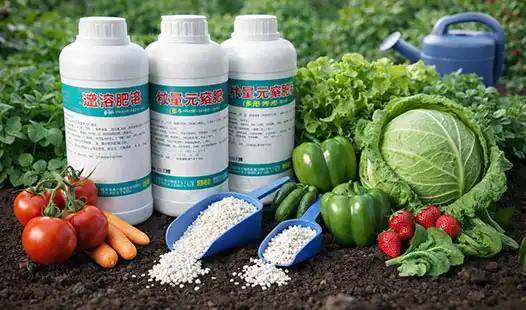
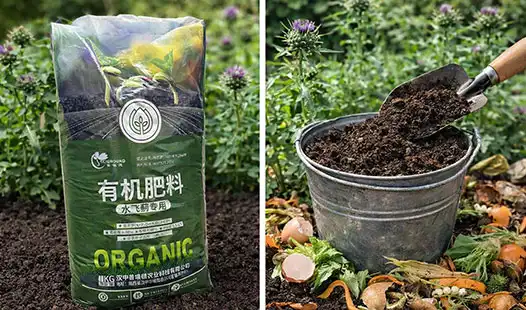
When Should You Apply Foliar Fertilizers for Best Results?
Understanding Foliar Fertilizers and Their Benefits
- Understanding Foliar Fertilizers and Their Benefits
- When Is the Best Time to Apply Foliar Fertilizers?
- Foliar Fertilizer Application Methods and Dosage Guidelines
- Comparing Foliar Fertilizers to Soil Fertilizers for Decision-Making
- Troubleshooting and Optimizing Foliar Fertilizer Use
- Conclusion
- FAQ
- Partner with Sciground for Superior Foliar Nutrition Solutions
- References
Foliar fertilizers work best when used at the right time. Applying these nutrient solutions in the early morning (between 6:00 and 9:00 AM) or late evening, when stomata are open and humidity is above 60%, gives the best results. Foliar fertilizers work best during key growth stages like early vegetative development, pre-flowering, and fruit set, when plants need the most nutrients. Do not apply when the temperature is above 77°F (25°C) or right before it rains, as these conditions make it harder for the plant to absorb the chemical and may cause leaf burn. When you time the application of foliar feeding to coincide with your crop's physiological needs, it goes from being an extra step to a smart output tool that has a direct effect on your bottom line.
Understanding Foliar Fertilizers and Their Benefits
Foliar fertilizers have changed the way we feed crops in industrial agriculture. Unlike most soil additions, these special mixtures give nutrients directly to plants through their leaves, making a fast route that gets around common soil problems. Working with Professor Liang Dejun and our team at Sciground for 20 years, I've seen how this technology solves problems that soil-based feeding can't handle quickly enough during key growth times.
What Makes Foliar Fertilizers Different?
A very interesting biological process makes foliar food work. Through stomata and the tiny holes in the leaf surface, nutrients move through the plant and directly enter its vascular system. This process is very important when the chemistry of the soil creates obstacles. Micronutrients like iron, zinc, and manganese become chemically locked up in alkaline or limestone soils that are common in many farming areas in the United States. This means that roots can't get them, even if there are a lot of them in the soil. Foliar spray completely gets around this chemistry.
There are real-world uses for knowing the difference between manufactured and organic foliar fertilizers. As natural chelating agents, L-amino acids or low-molecular-weight peptides are often used in organic products. Compared to manmade EDTA-based chelation, this bio-complexation lowers the metabolic energy plants need to use nutrients. Sciground's multi-element foliar spraying fertilizer uses enzymatic hydrolysis to protect biologically active L-amino acids. This way, plants can use the nutrients right away without having to wait for microbes to break them down.
Key Benefits for Commercial Operations
Foliar feeding plans that are planned ahead of time are very helpful for commercial farming. These perks go beyond just getting nutrients to cells:
• Foliar fertilizers can quickly fix problems that happen when nutrients are missing. For root uptake, the time range is measured in weeks, while for foliar absorption, changes in tissue levels can be seen in 48 to 72 hours. This speed difference stops yield losses that soil treatments can't fix fast enough during times of high demand, like when fruit sets or grains fill up.
• Environmental stewardship improves through accurate aiming. Broadcasting fertilizer on the earth in the traditional way always results in nutrients running off, especially nitrogen and other elements that are mobile. Foliar spray puts nutrients right where plants need them, which is better for the environment and works better. Foliar feeding can cut the amount of fertilizer needed by 15-20% when properly combined into full nutrient management systems, according to research from agricultural colleges.
• Root system compromise situations benefit dramatically from foliar nutrients. When too much water makes the soil hypoxic or when bugs like worms or root rot hurt the plant's ability to take in food, foliar feeding is a very important emergency way to get the plant food. I've worked with farmers who had to deal with short-term floods and kept their crops alive only with foliar programs until the soil conditions returned to normal.
Our multi-element foliar spraying fertilizer also balances the soil's pH in both directions and breaks up the soil's structure, which is good for both the plants' and the soil's health in the long run. Foliar fertilizers are essential for businesses moving toward sustainable farming methods because they do two things at once.
When Is the Best Time to Apply Foliar Fertilizers?
Foliar fertilizers should be used at certain times. Foliar food programs that work and those that don't depend on strategic timing. The best application windows are made when plant physiology, weather factors, and crop-specific needs all come together.
Growth Stage Considerations
During different stages of their growth, plants have different food needs. Nitrogen is most important for leaf and stem growth in the early green stages. This is a great time to apply nitrogen to the leaves. During setup, seedlings and transplants benefit most from gentle foliar feeding because their roots are not fully developed yet and can't access nutrients effectively.
Plants need more phosphorus, potassium, and certain micronutrients like boron during the pre-flowering and blooming stages. These micronutrients directly affect the success of fertilisation and fruit set. Foliar treatments made during these times have a direct effect on the amount of fruit that grows, so planning is very important for getting the most out of the crop.
At different stages of fruit growth, different nutrients are needed. Calcium foliar sprays keep tomato and pepper blossom-end rot from happening, especially in greenhouses where the ground makes it hard for calcium to move around. The Multi-Element Foliar Spraying Fertilizer we made meets these stage-specific needs with adjusted formulas that make sure nutrients get to plants quickly at all stages of growth.
Environmental Factors That Determine Success
Temperature and humidity have a big effect on how well leaf uptake works. When applied in the morning, when stomata are open and humidity is high, spray drops stay wet longer, which increases the time they take to be absorbed. When temperatures rise above 77°F, fast drainage makes salt build up on the surfaces of leaves, which can cause burns even when solutions are properly dampened.
Predicting the weather becomes an important part of preparing. If it rains within six hours of application, the nutrients are washed away before they can be absorbed, which wastes both the product and the work. In the same way, high winds during application make covering less even and increase drift, which could hurt nearby crops that are sensitive.
Don't spray when there is a lot of direct sunlight. Direct sunlight warms the surfaces of leaves, which speeds up the loss of water and raises the risk of phytotoxicity. Also, the water droplets in the air can work as tiny magnifying glasses, focusing light and burning the cells of leaves.
Crop-Specific Timing Examples
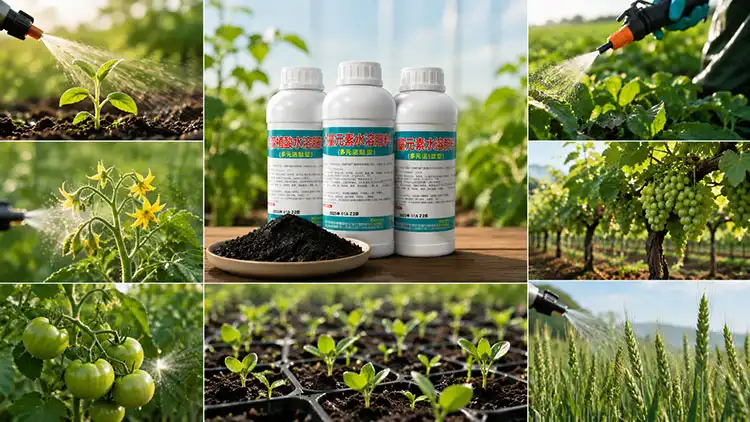
Different crops have different needs that affect the best times to apply. Foliar feeding works best for tomato farms when the plants are newly transplanted, early in the flowering season, and again when the fruits are getting bigger. These uses meet the needs for calcium and potassium and fix micronutrient deficiencies that hurt the quality of food.
Orchards with fruit trees should get aerial nutrition after the flowers have died and while the fruit is still growing. By helping metabolic processes during this important changeover phase, applications made during veraison in grapes increase sugar buildup and make the fruit firmer.
When treated at the flag-leaf stage for wheat or the V6 stage for corn, broadacre grain crops respond very well. These uses add nitrogen and zinc to the soil just at the right time when plants are growing quickly and the soil isn't mineralizing at the same rate. This closes the output gap that biological systems often have during exponential growth phases.
Foliar Fertilizer Application Methods and Dosage Guidelines
Foliar fertilizers can either do what they're supposed to do or do expensive damage to crops if they are not applied correctly. Care must be taken when choosing equipment, dilution rates, and adjuvants.
Application Equipment and Techniques
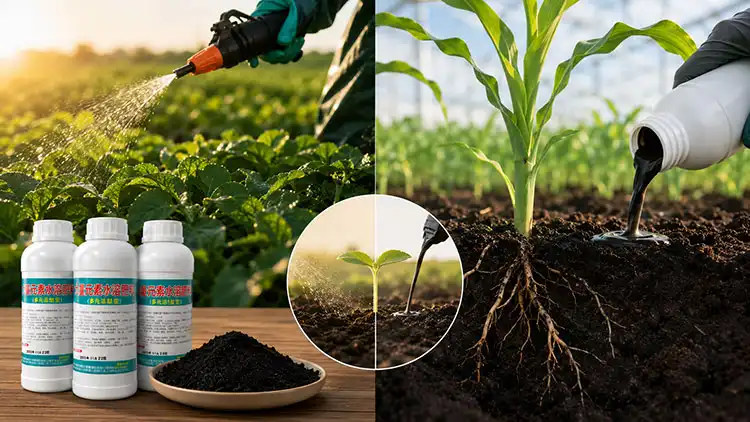
Spray systems are very different in how complex they are and how well they work. Backpack sprayers are good for small jobs and spot treatments, but they don't cover evenly enough for large-scale industrial use. Boom sprayers on tractors work well on row crops, while airblast sprayers work well in trees and vines because they can get through thick canopies.
Precision sprayers are the current standard in the business for companies that care about quality. These systems keep the pressure and size of the droplets constant, which is important to keep the nozzles from getting clogged and make sure there is even covering. At Sciground, our formulas are micro-filtered below 75 microns so that they don't get stuck in high-precision equipment.
The choice of nozzle changes the patterns of coverage and the spread of droplet sizes. Coarse droplets don't move as easily as fine droplets, but fine droplets cover more ground. Coarse droplets may roll off waxy leaf surfaces, though. Most foliar fertilizers work best with medium-sized drops that keep these factors from being too strong of a force.
Dosage Recommendations and Concentration Guidelines
The most common problem with foliar feeding is leaf burn from too much salt concentration. This can be avoided by diluting the solution properly. Foliar fertilizers sold in stores usually need to be diluted between 1:200 and 1:500, but this depends on how strong the recipe is and how sensitive the crop is. Don't assume that bigger concentrations will give you better results; always follow what the maker says.
Pay close attention to the amounts of micronutrients. For iron, manganese, zinc, and copper, the percentage of the solution should be between 0.1% and 0.5%. Micronutrients become toxic at relatively low amounts compared to macronutrients, so going over these levels can be damaging.
Concentration is not as important as volume per acre. For field crops, 20 to 30 gallons per acre are usually enough, but up to 100 gallons per acre are needed for thick tree canopies. Not enough volume leaves covering holes, and too much volume leads to runoff that wastes product and causes problems for the environment.
Adjuvants and Absorption Enhancement
Surfactants lower the surface tension, which lets spray solutions cover the leaves equally instead of clumping together and rolling off. This is especially important for onions, oranges, brassicas, and other plants with waxy walls. Most foliar fertilizers don't have any problems when mixed with non-ionic detergents.
Stickers make it longer for nutrients to stay on the surface of leaves before they break down in the sun or get washed off by dew. Total absorption goes up when touch time is longer, which makes the process more efficient. Our Multi-Element Foliar Spraying Fertilizer has surface tension qualities that make it better at wetting and spreading, so you don't always need to add extra adjuvants.
Spray solutions with pH buffering agents stay stable in the 4.5–6.5 range, which makes them more compatible with leaf tissue pH and ensures tank-mix stability when foliar fertilizers are mixed with suitable pesticides.
Comparing Foliar Fertilizers to Soil Fertilizers for Decision-Making
If you want to know when to use aerial feeding or soil treatment, or how to combine the two, you need to look at more than just how well they work for crops.
Speed and Precision Advantages
Speed and precision advantages are apparent because foliar fertilizers get nutrients to plant tissue in hours to days, while soil applications need weeks for roots to take in the nutrients, microbes to process them, and blood vessels to carry them to the plant. This difference in speed is very important when there is fast growth or when fixing quick signs of shortage that threaten quality or yield.
Precision targeting accurately cuts down on waste by a large amount. Nutrients that are mixed into the soil often wash away below the root zone, evaporate into the air, or become stuck in the soil, making them inaccessible. Foliar application puts nutrients right where plants can use them, which makes the application of nutrients much more effective per pound.
Cost and Labor Considerations
Cost and labour considerations must be weighed carefully. Foliar fertilizers usually cost more per unit of nitrogen than soil amendments that are mixed in bulk. But the total cost of the program has to take into account how well the application works, how much time is needed, and what tools are needed. Foliar programs need to be applied more often, but they use less each time. They also often work with current spray plans for pest control, which spreads fixed costs over more than one operation.
Labour efficiency depends on the size of the business and the assets that are already in place. Foliar feeding doesn't add much to the cost of farming for farms that already have spray equipment, but it does require a lot of new equipment for farms that don't have spray equipment.
Organic Versus Synthetic Formulations
Organic versus synthetic formulations offer different benefits. Foliar fertilizers that are organic, like the ones we make at Sciground, get their nutrients from plants or animals in a way that meets the standards for organic approval. These formulations help growers switch to organic production or keep their place as a top organic producer in the market. Synthetic formulas usually have higher amounts of nutrients and lower prices per unit of nutrients, but they don't include organic market benefits.
There are differences in performance that go beyond license standing. Some manufactured products use chemical hydrolysis to make D-amino acids, which plants can't use properly. Good organic products, on the other hand, use enzyme hydrolysis to keep the L-amino acids that plants can directly process. Purchasing managers should check sellers' production methods to make sure that the biological effectiveness of the products they sell fits what they say they can do.
Brand Reputation and Supplier Reliability
Brand reputation and supplier reliability are critical for success. Well-known names like Yara and Haifa make sure their products are of high quality and use a lot of study to back up their formulas. Regional manufacturers, on the other hand, like Sciground, often offer better expert help and can make changes to fit local crop systems and soil conditions. Because we work with the Northwest Academy of Agricultural Sciences, we can be sure that our formulas solve the problems that American farmers face.
When choosing a supplier, you should pay special attention to the quality control paperwork, heavy metal analysis results, and solubility tests. To keep tools from breaking and to make sure of uniform performance, products must show that they dissolve in 99.9% of water and don't form any precipitation after 24 hours. Our Hanzhong plant follows strict testing procedures, such as ICP-MS screening for arsenic, cadmium, lead, and mercury that are well below the standards set by the industry.
Troubleshooting and Optimizing Foliar Fertilizer Use
Foliar feeding programs sometimes run into problems, even when they are well planned. Small problems don't have to turn into expensive ones if you notice the signs early and take action to fix them.
Identifying Deficiency Symptoms Suitable for Foliar Treatment
Nitrogen deficiency appears as yellowing of older leaves while new growth stays green. This mobile nutrient moves from old tissue to support new growth, which is what makes the bottom-up yellowing pattern so distinctive. Adding nitrogen to the leaves during the green growth stages fixes this well, but adding nitrogen to the soil is still a cheaper way to keep plants healthy.
Iron deficiency causes interveinal chlorosis, where young leaves don't get enough iron, and the areas between the veins turn yellow while the veins stay green. This mineral is fixed and can't move around inside plants, so symptoms show up first in new growth. It is usual for alkaline soils to make iron unavailable. Foliar feeding is a better way to fix this problem than adding iron to the unavailable iron pool through soil amendments.
Calcium deficiency manifests as blossom-end rot in fruiting veggies, and cabbage will get tip burn if they don't get enough calcium. These signs happen even when the soil has the right amount of calcium. This is because of things in the environment, like low humidity or uneven watering, that stop calcium from moving through the soil through transpiration. When roots can't keep up with the delivery rates, these problems can be avoided by spraying calcium directly on growing fruit.
Preventing and Addressing Leaf Burn
Leaf burn results from excessive salt concentration on leaf surfaces. Leaf burn happens when there is too much salt on the surface of the leaf. It shows up as brown, crispy edges or spots that grow and join if the damage is serious. Paying attention to concentration limits, application time, and external factors is important for prevention. Do not dilute more than what is suggested, and lower concentrations even more for plants that are delicate or when heat stress is present.
By using small test sprays on a few plants before applying the full treatment to an entire area, problems with sensitivity can be found before they cause damage to many plants. Foliar applications can have different effects on different types of the same food species, so trying each variety is important.
Burn risk is greatly affected by the quality of the water. Hard water with a lot of calcium and magnesium raises the total dissolved solids in spray solutions. This makes the nutrients that are sprayed more concentrated than what was meant. In places with alkaline water sources, this problem can be avoided by checking the water and making the necessary changes.
Real-World Performance Data
Real-world performance data shows that foliar feeding programs that are set right have been shown to consistently increase crop yields in field studies that used a variety of crop systems. When corn farms apply zinc to the leaves at the V6 stage, the yield goes up by 3 to 8 per cent compared to when nutrients are only added to the soil. Using calcium foliar sprays on tomato plants during fruit growth lowers the risk of blossom-end rot by 60–80%, which directly increases the usable yield.
When amino acid-based foliar fertilizers were added to organic grape operations in California during veraison, the Brix level rose by 1.5 to 2 degrees compared to control blocks. This increase in sugar concentration led to higher prices that were much higher than the costs of the program, clearly showing a return on investment.
Our work with people who grow herbs for traditional Chinese medicine, especially those who grow Corydalis yanhusuo, has yielded amazing results. Our special organic mixtures and giving the leaves during important growth stages raised both yield and active chemical levels, which had a direct effect on market value. These results come from the unique way we combine our knowledge of farming studies with help with real-world field applications.
Conclusion
To get the most out of foliar fertilizer, you need to apply it at the right time for the plant's growth stage, the weather, and its unique needs. When applied early in the morning or late at night, when the temperature is calm and the humidity is just right, absorption is best and stress is lowest. Foliar feeding planned during important stages like foundation, flowering, and fruit development helps soil nutrition programs by correcting quickly when plants need it the most. Good fertilizers, like our Multi-Element Foliar Spraying Fertilizer, get nutrients to plants quickly and effectively, which boosts their health, ability to handle stress, and yield while also helping to improve the quality of the soil. Foliar nutrition and soil nutrition should not be seen as opposites but as methods that work together to make plans that are successful. These integrated approaches take care of both short-term problems and long-term soil fertility control.
FAQ
Can soil-based fertilization systems be fully replaced by foliar fertilizers?
Foliar fertilizers work best when used as extras instead of replacing all the nutrients in the soil. They are great at providing vitamins and quickly fixing deficiencies, but they aren't very good at giving plants the large amounts of nitrogen, phosphorus, and potassium they need during the growing season. According to industry standards, about 80% of all nutrients should be applied to the soil and 20% should be applied to the leaves. These amounts can be changed depending on the needs of the crop and the conditions of the soil.
What frequency of treatment gives the best effects at each stage of growth?
How often you apply it depends on the type of food, how fast it grows, and your nutritional plan. Fruit trees usually get treatments once a month during the growing season, while vegetable crops that are growing quickly may benefit from treatments once a week. Using sap analysis or tissue testing to check the nutrient amounts in plant tissue gives you reliable information for changing the frequency. Most business operations find that three to five treatments per season during key growth stages give them the best results at the lowest cost and without requiring too much work.
When combined with pesticides or fungicides, do foliar fertilizers function effectively?
Compatibility is very different depending on the products that are used together. Organic foliar fertilizers based on amino acids should not be combined with copper fungicides because amino acids make copper more permeable and can be very harmful to plants. Before tank-mixing, you should always do jar tests. Put the products in a small container at the use reduction rates and watch them for 30 minutes. If there is precipitation, flocculation, or separation, it means that the two substances are not compatible, which will make application difficult and could even damage the crop.
Partner with Sciground for Superior Foliar Nutrition Solutions
Sciground is ready to help you with your crop nutrition plan by providing foliar fertilizer options based on research and made especially for American farming environments. Through carefully designed mineral nutrition, our Multi-Element Foliar Spraying Fertilizer helps plants absorb nutrients better, stay healthy, and handle stress better, all while increasing yields. As a dedicated foliar fertilizer producer with direct ties to the Northwest Academy of Agricultural Sciences, we offer more than just goods. Our team also provides full technical advice from the first field survey to tracking after the application.
Professor Liang Dejun and our study team have been working on organic fertilizers for more than 20 years. They bring this knowledge to every client relationship. We know the unique problems that farmers, ranchers, and agricultural traders in the United States' many growing areas face. Whether you need to buy bulk foliar fertilizer for large-scale operations or custom formulations for specific crops, our plant follows strict quality control standards that go above and beyond what the industry requires. These standards include heavy metal screening and solubility testing.
Email our team at [email protected] to talk about your unique crop needs, get product samples, or look into bulk prices for businesses. We give buying managers the technical know-how and dependable supply chain they need to spend with confidence in precision foliar feeding programs.
References
1. Fernández, V., & Brown, P. H. (2013). "From plant surface to plant metabolism: the uncertain fate of foliar-applied nutrients." Frontiers in Plant Science, 4, 289.
2. Fageria, N. K., Filho, M. P. B., Moreira, A., & Guimarães, C. M. (2009). "Foliar fertilization of crop plants." Journal of Plant Nutrition, 32(6), 1044-1064.
3. Bondada, B. R., & Oosterhuis, D. M. (2001). "Canopy photosynthesis, specific leaf weight, and yield components of cotton under varying nitrogen supply." Journal of Plant Nutrition, 24(3), 469-477.
4. Marschner, H. (2011). "Mineral Nutrition of Higher Plants." Third Edition. Academic Press, London.
5. Johnson, R. S., Rosecrance, R., Weinbaum, S., Andris, H., & Wang, J. (2001). "Can we approach complete dependence on foliar-applied urea nitrogen in an early-maturing peach?" Journal of the American Society for Horticultural Science, 126(3), 364-370.
6. Troeh, F. R., & Thompson, L. M. (2005). "Soils and Soil Fertility." Sixth Edition. Blackwell Publishing, Ames, Iowa.

Sciground
Shanrangde, in collaboration with a team of experts from the former Academy of Agricultural Sciences, focuses on developing patented organic fertilizers, including those specifically formulated for Corydalis rhizome. Chief expert Professor Liang Dejun, with over 20 years of industry experience, provides one-stop technical guidance from site selection to field management, helping farmers increase production and income.
Formulated by the original expert team from the Academy of Agricultural Sciences · Focused on organic nutrients specifically for crops
Contact us now to customize a green nutrition solution for your farmland.
Recommended Blog
Micronutrient Water-Soluble Fertilizer vs. Granular Fertilizer
Can Fruit Tree Organic Fertilizer Improve Soil Health Long Term?