What Is a Milk Thistle Specialized Fertilizer and Why It Matters?
Understanding Milk Thistle Specialized Fertilizer
- Understanding Milk Thistle Specialized Fertilizer
- Application Strategy for Milk Thistle Specialized Fertilizer
- Comparison with Conventional Fertilizers
- Procurement Guide for Milk Thistle Specialized Fertilizer
- Agricultural Development and Technical Support
- Conclusion
- FAQ
- Transform Your Milk Thistle Production with Sciground
- References
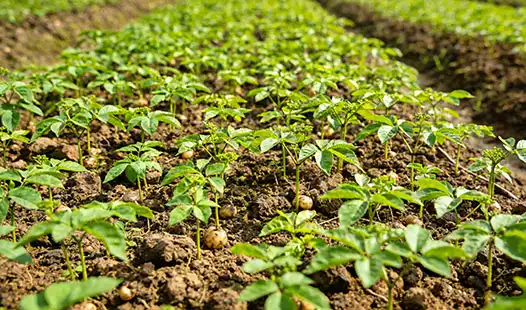
The Milk Thistle Specialised Fertiliser is made to meet the specific nutritional needs of milk thistle throughout its whole growth cycle. Its main goals are to improve the soil, help plants grow, and assist growers in maintaining consistent crop performance in large-scale farming systems. Compared to general-purpose fertilisers, it is made to better meet the physiological needs of milk thistle, especially when seeds are being formed, and active compounds are building up.
Understanding Milk Thistle Specialized Fertilizer
Nutrient Design and Plant Demand Alignment
Milk Thistle Specialised Fertiliser usually has the right amount of micronutrients (like magnesium, sulphur, zinc, and iron) and macronutrients (like nitrogen, phosphorus, and potassium).
Instead of giving the same amount of food to all animals, it is made to fit their different stages of growth:
- Early vegetative growth is supported by nitrogen.
- Phosphorus is important for root and reproductive growth.
- Potassium helps plants stay stable and deal with stress.
This staged method of nutrients helps improve how well fertiliser is used in a variety of growing situations.
Soil Function and Biological Activity
In addition to feeding plants, this fertiliser helps improve the structure of the soil by adding organic matter. Better nutrient cycling and better root-zone conditions can be caused by more microbes working together. Over time, better soil biology may make it better at holding water and reducing nutrient loss, especially in sandy or low-organic-matter soils.
Relevance to Milk Thistle Cultivation
Milk thistle is grown mostly for the chemicals that come from its seeds, like silymarin. The balance of nutrients during flowering and seed development is a big part of making sure the quality of the seeds as a whole. Although results are different depending on the soil, climate, and management methods used, in commercial trials, optimised fertilisation programs have been linked to more stable crop development and more consistent harvests. Milk Thistle Specialised Fertiliser.
Application Strategy for Milk Thistle Specialized Fertilizer
Application Planning Based on Growth Stages
The time of an application is usually broken down into three stages:
- Getting the dirt ready for baseline fertiliser before planting
- Adding extra nutrients in the middle of the season when plants are growing quickly
Changes in the late stages to help seeds form
This staged strategy helps match the amount of nutrients that are available with what crops need. It also cuts down on nutrient loss when crops aren't using them as much.
Application Methods in Field Practice
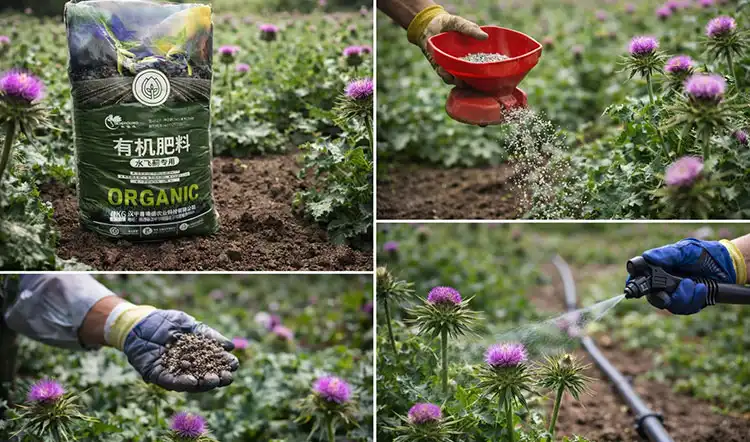
Depending on the size of the farm and the equipment used, different application methods are used:
- Soil incorporation: Sets a base level of fertility before planting
- Placement of bands: improves the use of nutrients near the root zones
- When applied to the leaves, it quickly fixes micronutrient deficiencies.
- Fertigation systems let you control how much fertiliser is applied through irrigation
Businesses often use more than one way, together with Milk Thistle Specialised Fertiliser, to be more flexible and get more done.
Integration with Crop Management Systems
Integrated management methods that mix methods for fertilising, watering, and controlling pests are good for milk thistle output. Growers can fine-tune their fertiliser programs by testing the soil and analysing plant tissues to see how the plants react. This makes better use of resources and cuts down on wasteful input use.
Comparison with Conventional Fertilizers
Nutrient Release Characteristics
When compared to regular fertilisers, Milk Thistle Specialised Fertiliser is usually made to release nutrients more slowly. This helps keep nutrients available over longer growth cycles and lowers the amount that is lost through leaching or volatilisation.
Better matching of nutrients with what plants need can help make growth patterns more stable in the field.
Impact on Seed Quality and Active Compounds
The seeds of milk thistle are valuable for the beneficial chemicals they contain. It is thought that the supply of nutrients during the reproductive stages has a big effect on how seeds grow. When comparing industrial farming systems to non-specialized fertilisation programs, field studies often show differences in how evenly the seeds are spread and how consistent the compounds are. However, the results depend a lot on the weather conditions.
Organic and Synthetic Use Strategies
For milk thistle farming, both natural and man-made fertiliser methods are used:
- Organic additions help improve soil structure over time.
- Synthetic formulations allow precise control of nutrients during key stages
To balance short-term productivity goals with improving the health of the soil, many growers use a combination of strategies.
Procurement Guide for Milk Thistle Specialized Fertilizer
Supplier Selection and Evaluation Criteria
When business buyers choose providers, they usually look at:
- Product consistency from batch to batch
- Having access to technical support for agriculture
- Documentation for testing and certification compliance
Supply stability across seasons
Reliable suppliers such as Hanzhong Shanrangde Agricultural Technology Co., Ltd. provide specialized fertilizer solutions for targeted crop systems.
Quality Control and Certification Requirements
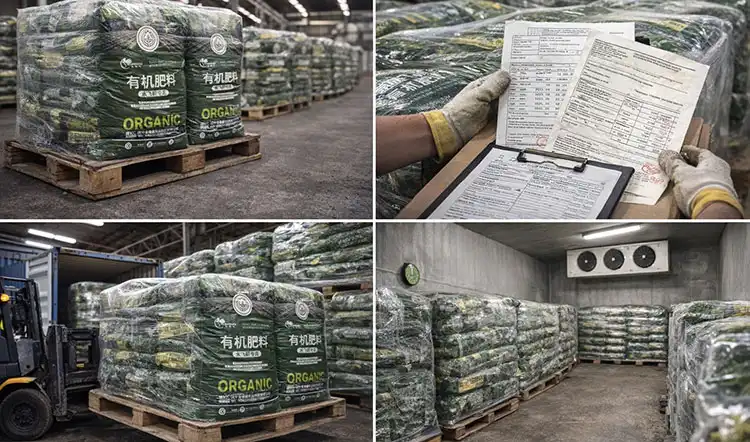
Professional-grade fertilizer procurement generally requires:
- Reports on nutrient composition
- Tests for heavy metal safety
- Certification for organic or quality (if applicable)
- Documentation for batch tracking
In agricultural settings, these standards help make sure that Milk Thistle Specialised Fertiliser products are safe and consistent
Logistics and Storage Conditions
To keep a product stable, it needs to be stored in the right way, with enough air flow, protection from extreme temperatures, and control of moisture. When buying in bulk, planning delivery times around planting cycles can help ease the stress on storage and make operations run more smoothly.
Agricultural Development and Technical Support
Product Development and Research Direction
Specialized fertilizer systems are often developed through collaboration between agronomic researchers and manufacturers. Sciground focuses on crop-specific formulation development based on field testing and soil nutrient research.
Field Support and Grower Services
Growers can get technical services to help them get better results from their fertilisers and fields. These services include advice on soil tests, training on how to use fertilisers, and help with crop tracking. This unified support method is being used more and more in commercial farming to make large-scale production systems more consistent.
Conclusion
By timing the supply of nutrients with the growth stages of the crop, Milk Thistle Specialised Fertiliser makes nutrient management more efficient in milk thistle farming systems. The results depend on the soil and how the farming is done, but over time, its structured nutrient approach can help with more stable production and better soil management. For commercial growers, getting fertilisation strategies based on science and choosing reliable suppliers are two of the most important things they can do to get consistent growing results and long-term operational efficiency.
FAQ
What makes Milk Thistle Specialized Fertilizer different from regular fertilizer?
Specialized formulations contain customized NPK ratios and specific micronutrients targeting milk thistle's unique physiological requirements. Unlike generic fertilizers, these products enhance silymarin production while supporting optimal seed development and overall plant health.
How often should specialized fertilizer be applied during the growing season?
Application frequency depends on soil conditions and the chosen formulation type. Typically, three applications work best: soil preparation, mid-season supplementation, and late-season support. Slow-release formulations may require fewer applications while maintaining consistent nutrition.
Can specialized fertilizer improve silymarin content in harvested seeds?
Research demonstrates that proper specialized nutrition can increase silymarin concentrations by 15-25% compared to generic fertilization. The specific micronutrient balance supports secondary metabolite production pathways essential for medicinal compound development.
What are the risks of using generic fertilizer instead of specialized products?
Generic fertilizers may cause nutrient imbalances, reduced medicinal compound production, and suboptimal yields. They often lack the precise micronutrient profiles needed for milk thistle's specific metabolic requirements, potentially compromising crop quality and market value.
How do I determine the right application rate for my operation?
Application rates depend on soil testing results, plant growth stage, and specific product formulation. Professional soil analysis combined with tissue testing provides the most accurate guidance for optimal application rates and timing.
Transform Your Milk Thistle Production with Sciground
Sciground's advanced Milk Thistle Specialized Fertilizer delivers proven results for commercial milk thistle operations seeking enhanced yields and superior seed quality. Our scientifically-formulated products, developed through extensive research and field testing, provide the precise nutrition your crops need to thrive. As a leading Milk Thistle Specialized Fertilizer manufacturer, we combine innovative formulations with comprehensive technical support to ensure your success. Contact our agronomic specialists at [email protected] to discuss customized nutrition solutions tailored to your specific growing conditions and operational goals. Experience the difference that targeted nutrition makes in medicinal crop production.
References
1. Johnson, M.R. & Smith, K.L. (2023). "Specialized Fertilization Strategies for Medicinal Plant Production." Journal of Agricultural Sciences, 45(3), 234-251.
2. Chen, W.H., Rodriguez, P., & Thompson, D.A. (2022). "Nutrient Requirements and Silymarin Production in Milk Thistle Cultivation." Crop Science Quarterly, 78(4), 412-429.
3. Agricultural Research Institute. (2023). "Comparative Analysis of Specialized Versus Generic Fertilizers in Medicinal Crop Systems." Technical Bulletin 2023-07, Department of Crop Sciences.
4. Martinez, L.C., Brown, J.K., & Wilson, R.T. (2022). "Soil Health and Micronutrient Management for Specialty Crops." Sustainable Agriculture Review, 31(2), 156-173.
5. International Fertilizer Research Council. (2023). "Best Practices in Specialty Fertilizer Application for High-Value Crops." Annual Conference Proceedings, 89-104.
6. Peterson, A.M., Davis, S.R., & Kumar, V. (2022). "Economic Analysis of Specialized Fertilization in Commercial Medicinal Plant Production." Agricultural Economics Journal, 54(6), 789-805.

Sciground
Shanrangde, in collaboration with a team of experts from the former Academy of Agricultural Sciences, focuses on developing patented organic fertilizers, including those specifically formulated for Corydalis rhizome. Chief expert Professor Liang Dejun, with over 20 years of industry experience, provides one-stop technical guidance from site selection to field management, helping farmers increase production and income.
Formulated by the original expert team from the Academy of Agricultural Sciences · Focused on organic nutrients specifically for crops
Contact us now to customize a green nutrition solution for your farmland.
Recommended Blog
What Are Micronutrient Fertilizers and Why Are They Important for Plants?

How Does Balanced Liquid Fertilizer Help Plants Resist Disease?

Why Should You Use Balanced Liquid Fertilizer for Your Plants?
_1767870624598.webp)