Why Should You Use Balanced Liquid Fertilizer for Your Plants?
How do you know if a liquid fertiliser is "balanced"?
- How do you know if a liquid fertiliser is "balanced"?
- Quick uptake and use of nutrients
- Health of the Soil and Longevity
- Guide for Buying Balanced Liquid Fertilizer
- Getting along with modern farming systems
- Introduction to the company and a list of its products
- Conclusion
- FAQ
- Talk to Sciground about getting the best liquid fertiliser.
- References
To keep crops safe and the land healthy, farmers need to be more careful about how they use chemicals these days. At different stages of growing, plants need different kinds of chemicals. The nutrients might not always be spread out right if you use regular fertiliser. Balanced liquid fertilisers are a good option. It is easy for plants to take in these nutrients through their roots or leaves.
They can decide how much fertiliser to use, when to use it, and where to put it more easily with liquid fertiliser systems than with many solid ones. So, nutrients don't go to waste, plants grow faster, and farmers are more likely to use methods that are better for the environment. If you use the right mix of liquid fertiliser, farm suppliers, large farms, and skilled growers can get more done and keep the soil's long-term quality.
How do you know if a liquid fertiliser is "balanced"?
Equipped liquid fertilisers are meant to give plants the right amount of all the nutrients they need. Some of the main nutrients that balanced recipes usually have are nitrogen (N), phosphorus (P), and potassium (K). They also have secondary nutrients or vitamins when they are needed.
The exact number is based on the plant's stage of growth, the food it is fed, and the soil it is in. When it comes to nutrients, flowering, vegetable, and medicinal plants may need different amounts than fruit trees do. A skilled fertiliser source can change the parts so that each farm can use them.
How Can You Identify a Balanced Liquid Fertiliser Formula?
A good liquid fertiliser should have these things in it:
-
How to tell the plant how much NPK to use.
-
Tiny bits of zinc, iron, boron, calcium, magnesium, or other things can be used when it needs them.
-
Because it is stable, the nutrients won't separate while it is being stored.
-
It can be used with a number of different devices that water or spray plants.
Farmers should look at a soil test and a list of the nutrients plants need before they use a lot of fertiliser. This makes sure that plants get enough food without having to throw away fertiliser that they don't need.
Quick uptake and use of nutrients
One of the best things about mixing liquid fertilisers is that nutrients can be used faster. There are times when plants can get nutrients more easily through their roots or leaves. This is because the nutrients have already been broken down.
When it comes to getting nutrients to plants quickly, liquid fertilisers are the best. Heavy fertilisers take longer to break down and move through the soil. These are great for plants when they need extra food during key times of growth.
Faster Nutrient Absorption Supports Stronger Crops
What nutrients should you give plants at what time? They will grow faster, have better roots, and have stronger leaves. Not only that, but plants are better against things like weather, temperature changes, and not getting enough nutrients.
For leaves and roots to grow, plants need nitrogen. It helps roots grow and moves energy around. Potassium makes the plant stronger and helps it keep its water balance.
Precision Application Reduces Nutrient Loss
When farmers use appropriate liquid fertilisers, they can get more nitrogen for each crop. Farmers can decide how much manure goes to each area by using watering systems, washing the leaves, or some other way.
You can use this level of accuracy to:
-
Do not spread too much.
-
Get more from the food you already have.
-
Lower the cost of fertiliser that isn't needed.
-
Do not hurt the land as much.
When you grow a lot of food, how you handle the fertiliser can make a big difference in how much you get.
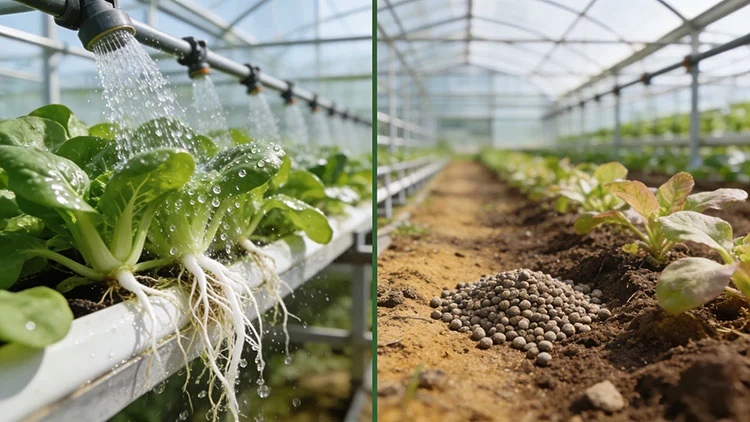
Health of the Soil and Longevity
Choosing the right fertiliser affects not only how well crops grow, but also how the soil stays healthy over time. Liquid fertilisers that are made correctly can help with better land management by balancing nutrients and preventing too much fertiliser use.
Precision liquid fertiliser programmes, on the other hand, including balanced liquid fertilisers, focus on giving plants the nutrients they need based on what they actually need. This method helps keep the dirt in better shape over several growing seasons.
Supporting Beneficial Soil Activity
Microorganisms in healthy soil help the soil cycle nutrients and help plants grow. Managing nutrients in a balanced way helps make conditions where good microbes can keep working well.
If plants get the right food, they can also add more organic matter to the soil through root growth and plant waste, which helps the soil's structure over time.
Making farming more environmentally friendly
More and more, farmers are looking for fertiliser options that boost crop yields while also being better for the environment. To help farms last, balanced liquid fertilisers do the following:
-
Increasing the use of nutrients.
-
Getting rid of fertiliser waste that isn't needed.
-
Helping with accurate crop control.
-
Helping to keep farms useful.
If you want to be successful in farming in the long term, you need to choose the right fertiliser programme for your valuable crops.
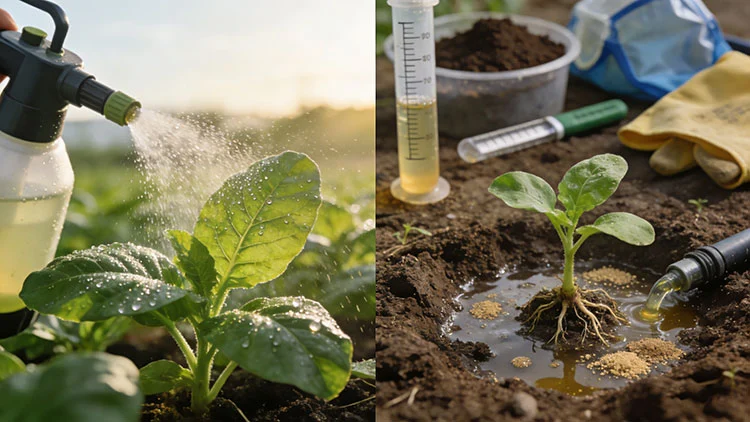
Guide for Buying Balanced Liquid Fertilizer
It takes more than just looking at prices to find the right blended liquid fertilizer. Farmers, farm companies, and wholesalers should look at the supplier's production knowledge, expert help, quality control system, and ability to make solutions that fit their needs.
A trustworthy supplier should know that different plants need different amounts of nutrients. If a fertilizer formula works for fruit trees, it might not work as well for flowers, vegetables, or medicinal plants. So, suppliers who have done agricultural research and know how to make formulas can offer better solutions for certain growing conditions.
How to Choose Suppliers and Make Sure Quality
Buyers should think about the following things when choosing a balanced liquid fertilizer supplier:
-
Production experience: Suppliers who have been in the business for a long time usually know more about how to make fertilizer and feed for crops.
-
Quality control: Expert sellers should give you information about the products they sell, including nutritional analysis results and proof that the products have been checked for quality.
-
Customized formulation: Different types of soil and crops may need different amounts of nutrients, so services that offer flexible formulation are useful.
-
Technical support: A provider that gives advice on how to use fertilizer properly can help customers get better results.
Quality control is very important for farming projects that are meant to make money. Before buying in bulk, buyers should make sure that the product is consistent, that it will keep well in storage, and that it will work with their current farming methods.
Buying in bulk and logistics issues to think about
Balanced liquid fertilizers are often bought in bulk by big farms and farming dealers to save money and keep a steady supply. But there are a few things that should be thought about before making big orders.
You should think about how the product will be stored, how it will be transported, and how long it will last on the shelf. To keep their quality over time, liquid fertilizers may need to be stored in the right cases and in the right surroundings.
Managing Logistics and Long-Term Supply
A reliable fertilizer provider should be able to keep to regular supply times, especially when planting and growth seasons are busy.
When buyers work with international sellers, they should also think about:
-
Time for transportation.
-
Rules for importing.
-
Needs for packaging.
-
Documentation for products.
-
Quality that stays the same from batch to batch.
Agricultural businesses can keep stable fertilizer supplies and lower supply risks by building long-term relationships with suppliers who have been in the business for a while.
Getting along with modern farming systems
Accurate nutrient management technologies are becoming more and more important in modern farming. Different farming methods can use balanced liquid fertilizers to make application more efficient and require less work from hand.
Examples of common uses are
-
Systems for drip irrigation.
-
Programs for spraying leaves.
-
Systems for fertilization.
-
Growing plants in greenhouses.
-
Growing a lot of garden crops.
Growers can more accurately deliver nutrients to plants throughout the crop cycle when they use modern farming tools with fertilizer solutions.
Improving Crop Production Through Better Nutrient Management
Many farmers say things are better now that they use more accurate liquid fertilizer applications instead of standard fertilizer plans. Better control of nutrients can help with:
-
More even growth of plants.
-
Bettered the look and quality of the crop.
-
Less loss of nutrients.
-
Better management of farms.
For instance, tomato growers might change the nutrient mixes during the flowering and fruit development stages to help make more fruit. In the same way, growers of decorative plants can use focused feeding plans to make their plants better and shorten the time it takes to grow them.
Best Practices for Liquid Fertilizer Application
When and how fertilizer is applied affects how well it works. Foliar watering is usually done when it is cooler, like early in the morning or late in the afternoon, when plants are less likely to be stressed by their surroundings.
Also, farmers shouldn't use too much of it and should stick to the dosage standards. Managing fertilizer correctly helps plants receive nutrients well and keeps resources from being used for no reason.
Introduction to the company and a list of its products
Hanzhong Shanrangde Farming Technology Co., Ltd.'s Sciground name is a farming company that focuses on making fertilizer options for current crop production. In 2023, the company built a 6,000-square-meter factory in Chenggu County to focus on researching, making, and managing the quality of fertilizer.
Professor Liang Dejun and his research team have been studying soil nutrients and agricultural uses for more than 20 years. They have come up with fertilizer solutions that are tailored to the nutritional needs of different crops and growing conditions.
Customized Fertilizer Solutions for Different Crops
Sciground sells liquid fertilizer products that are made based on the needs of the crop, the land, and the way it is grown. Fertilizer options for fruit trees, medical plants, and other specialty crops are among the company's goods.
Before they are used to make something, raw materials go through tight processing steps, such as fermentation and quality testing, to help make sure the finished product is stable and works well.
Not only does the business make fertilizer, but it also gives advice to farmers on things like
-
Advice on how to feed crops.
-
Methods for applying fertilizer.
-
Suggestions for managing the soil.
-
Analysis of growing conditions.
Instead of using the same recipe for all crops, this service method helps customers choose the right fertilizer plans.
Supporting Sustainable Agricultural Development
Sciground keeps working on balanced liquid fertilizers that help farmers use nutrients more efficiently and improve the soil, all while being good for the environment.
The company works with farming groups and does ongoing product research to find useful fertilizer solutions for farmers who want to improve food quality and use environmentally friendly ways to grow their crops.
Conclusion
Balanced liquid fertilizers provide an effective approach for modern agriculture by improving nutrient availability, supporting precise application, and helping farmers manage crop nutrition more efficiently. Compared with traditional fertilizer methods, liquid formulations allow growers to adjust nutrient delivery according to crop requirements, growth stages, and soil conditions.
For farms, agricultural distributors, and professional growers, choosing a reliable fertilizer supplier is essential for achieving consistent results. A supplier with strong production capabilities, quality control systems, and customized formulation experience can help customers develop more effective fertilization programs.
With proper selection and application, balanced liquid fertilizer programs can support healthier plants, improved nutrient efficiency, and more sustainable agricultural production. As farming continues to adopt precision management practices, liquid fertilizer solutions will remain an important tool for improving productivity and maintaining long-term soil health.
FAQ
1. How should the chemicals be mixed for vegetable crops grown in factories?
Most big vegetable farms do best with NPK rates between 20-10-20 and 15-15-15. This depends on the type of food and its stage of growth. When plants are growing leaves, they need more nitrogen. When plants are growing fruits and vegetables, they need more phosphorus and potassium. To find the best nutrition levels for your growing conditions, you must first test the soil.
2. How should you use liquid and dry fertilizers differently?
It is thought that liquid fertilizers need 25–40% less overall fertilizer amount than solid ones because they are better at being absorbed. The nutrients are available right away and are spread out widely when liquid treatments are used, which is why this drop happens. Stick to what the package says and test the dirt to find out how much you need to plant.
3. Can liquid fertilizers be used with organic farming?
A lot of different kinds of liquid fertilizer can be labeled as organic if they come from approved organic sources. There are times when these things have good bacteria and nutrients that help plants grow and keep the soil healthy. Organic farms should check with the group that gave them the certification to make sure they are still organic before starting a new fertilizer program.
Talk to Sciground about getting the best liquid fertiliser.
With our advanced, well-balanced knowledge of how to make Balanced liquid fertilizers and liquid fertiliser and full range of support services, Sciground is ready to change your farming business.Because they are based on more than 20 years of research, our formulations always work in a wide range of growing conditions and crop types. Send an email to [email protected] to talk to our agricultural experts about custom formulations, bulk pricing, and technical support services that are made to fit your needs. You can get an edge with Sciground because we care about quality, new ideas, and farms' success.
References
1. Journal of Agricultural Science and Technology, "Nutrient Uptake Efficiency in Liquid versus Granular Fertilizer Systems," Volume 45, Issue 3, 2023.
2. International Fertilizer Development Association, "Global Trends in Liquid Fertilizer Applications for Commercial Agriculture," Annual Report 2023.
3. American Society of Agronomy, "Soil Health Impacts of Modern Liquid Fertilizer Technologies," Agronomy Journal, Volume 115, 2023.
4. Agricultural Research Institute, "Economic Analysis of Liquid Fertilizer Systems in Large-Scale Crop Production," Economic Research Bulletin, 2023.
5. Plant Nutrition Research Foundation, "Micronutrient Bioavailability in Balanced Liquid Fertilizer Formulations," Plant and Soil Science, Volume 389, 2023.
6. Sustainable Agriculture Technology Review, "Environmental Benefits of Precision Liquid Fertilizer Applications," Environmental Agriculture Journal, Issue 12, 2023.

Sciground
Shanrangde, in collaboration with a team of experts from the former Academy of Agricultural Sciences, focuses on developing patented organic fertilizers, including those specifically formulated for Corydalis rhizome. Chief expert Professor Liang Dejun, with over 20 years of industry experience, provides one-stop technical guidance from site selection to field management, helping farmers increase production and income.
Formulated by the original expert team from the Academy of Agricultural Sciences · Focused on organic nutrients specifically for crops
Contact us now to customize a green nutrition solution for your farmland.
Recommended Blog
What Are Micronutrient Fertilizers and Why Are They Important for Plants?
How Do Organic Fertilizers Benefit Soil Health and Plant Growth?