Fruit Tree Fertilizer Supplier – Get Best Price
Understanding Fruit Tree Fertilizers – Types and Key Features
- Understanding Fruit Tree Fertilizers – Types and Key Features
- How to Choose the Right Fruit Tree Fertilizer Supplier for B2B Procurement
- Best Practices for Fruit Tree Fertilizer Application to Maximize ROI
- Cost-Effective Procurement Strategies for Fruit Tree Fertilizer
- Why Trust Our Recommended Fruit Tree Fertilizer Suppliers
- Conclusion
- FAQ
- Partner with Sciground for Premium Fruit Tree Fertilizer Supply
- References
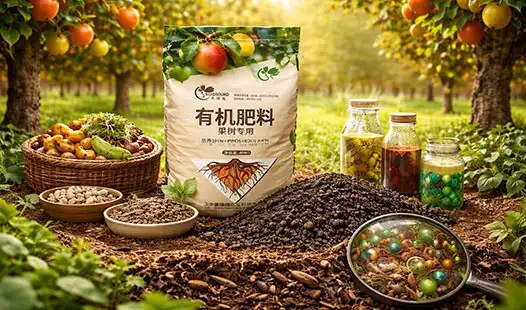
When farmers and ranchers are looking for a trusted source of fruit tree fertilizer, they need options that balance price, quality, and results that have been seen before. Using the right fertiliser can greatly increase the yield of an orchard, improving the health of the soil and protecting the quality of the fruit from growth to harvest. Microbial fermentation fertilisers provide complete organic nutrition, building strong root systems and making plants resistant to disease at all stages of growth. You can get low prices without losing the performance your business needs if you know about your purchasing choices, such as organic formulas and custom vitamin mixes.
Understanding Fruit Tree Fertilizers – Types and Key Features
To get around in the world of fertiliser, you need to know about the different types of products and what makes them better. Knowing the differences between the recipe types helps you use your resources wisely while getting the most out of your crop.
Organic Versus Chemical Fertilizers: What Works for Your Orchard
Compost and bacterial fermentation are used to make organic fertilisers. These fertilisers release nutrients slowly, which helps the soil rebuild its structure over time. These products raise the amount of organic matter, boost the number of helpful microbes, and lower the chance of nutrients running off and hurting the environment nearby. Chemical fertilisers make nutrients available right away, which can make up for severe deficits during key growth times. A lot of industrial trees use a mix of organic base amendments and specific manufactured additions to make sure that short-term needs are met while also meeting long-term soil fertilisation goals.
Slow-Release Versus Fast-Release Formulations
Slow-release fertilisers put nutrients in coats that break down slowly. This lets the nutrients get to the trees at the right time throughout the season. This method cuts down on the number of times it needs to be applied, on the cost of labour, and on the loss of nutrients during times of heavy rain. Fast-release formulas break down quickly and are great for making up for shortages during fruit growth or healing after harvest. Which of these choices you choose will depend on how often you water, the type of soil you have, and what stage of growth your trees are in.
Liquid Versus Granular Forms: Application Considerations
Granular fertilisers work well in broadcast or banded applications in trees that are already established. Mechanical spreaders make sure that the fertiliser is spread evenly over large areas. Liquid versions work perfectly with fertigation systems, sending exact amounts of nutrients to root zones through drip lines. This method cuts down on waste and lets changes be made right away based on the results of soil tests or signs of crop stress. Traders and dealers usually keep both types in stock so they can meet the needs of a wide range of customers and their own business needs.
Essential Nutrient Components: NPK Ratios and Micronutrients
Nitrogen helps plants grow leaves and make chlorophyll, phosphorus helps roots grow and flowers bloom, and potassium makes fruits bigger and sweeter. For general crop care, balanced NPK ratios like 5-5-5 work best. On the other hand, high-potassium mixes (4-3-8) improve fruit quality as it ripens. Micronutrients, such as zinc, boron, and iron, keep physical problems like cork spot and bitter pit from happening, which makes the product less marketable. Premium organic fertilisers have chelated vitamins that make them more bioavailable. This means that trees can get these important nutrients even when the soil pH is low.
Specialty Fertilizers for Citrus, Apple, and Stone Fruits
Acidifying fertilisers help citrus trees grow by keeping the soil's pH between 5.5 and 6.5, which helps plants absorb iron and stops chlorosis. Apple farms need products that are high in calcium to make fruit cell walls stronger and increase shelf life. Stone fruits like plums and peaches do best with mixes that are high in potassium. These blends make the fruit sweeter and less likely to get brown rot. Speciality goods made just for these crops make feeding plans easier to follow, so there is less trial and error and more consistency between harvest cycles.
How to Choose the Right Fruit Tree Fertilizer Supplier for B2B Procurement
When choosing a provider, you need to look at more than just the unit price. To keep supply lines safe and farm performance standards high, procurement teams have to look at things like product stability, dependability, and service capabilities.
Defining Volume, Frequency, and Delivery Requirements
Large businesses benefit from providers who can handle large orders, which are usually measured in tonnes, and who can deliver on a plan that works with regular application dates for fruit tree fertilizer. Setting minimum order amounts and wait times keeps you from running out of stock during times of high demand. Suppliers with regional distribution hubs offer just-in-time delivery, which lowers freight costs and reduces the need for storage on farms. Clear information about the different types of packaging—whether they are bulk bags, palletised grains, or totes with liquids inside—ensures that your handling tools can work with them.
Quality Certifications and Product Consistency
Suppliers with a good reputation keep certifications like OMRI (Organic Materials Review Institute) for organic products or state department of agriculture licenses that check claims about nutritional content. Ask for test results for each batch of output that prove the NPK values, organic matter rates, and lack of heavy metal toxins. Consistency across packages keeps crops from reacting in ways that were not expected and makes feeding planning easier. When suppliers put money into quality control systems, it shows that they want long-term ties instead of short-term deals.
Assessing Product Range Flexibility and Pricing Models
With a wide range of products, you can get all the things you need for your garden from a single supplier, which saves time and money on shipping. Prices must be clear. To find the real value, compare the cost per pound of active food instead of per bag. Bulk prices usually go up at 1-ton, 5-ton, and 10-ton levels, but each seller sets their own exact break points. Seasonal sales often happen after harvest, when farmers are making plans for the next year. This gives them a chance to lock in good rates.
Supply Chain Robustness and Delivery Options
Suppliers who can make things in the United States and have more than one way to get raw materials lower the risks that come with import delays or shortages. Check out their backup plans for when transportation stops working, especially if your farm is in a remote area. White-glove services, like moving pallets and giving advice on storage on-site, are useful for businesses that don't have their own transportation staff. Tracking systems that let you see shipments in real time work well with inventory management software, which cuts down on the work that needs to be done by hand.
Comparative Insights: Established Suppliers
Miracle-Gro has a well-known name and is sold in many stores, which makes it easier for smaller businesses to find what they need when they buy through farm retail outlets. But their product lines are geared toward consumers, which could make it harder for them to compete on bulk prices. Osmocote focuses on controlled-release technologies that give nutrients in exact ways. These are perfect for high-value crops where regularity is worth the extra cost. Smaller regional providers often offer personalised technical support and unique mixes, but during busy times, their production volume may make it harder to get their products. To balance these trade-offs, you need to make sure that the strengths of your suppliers match your business goals and risk tolerance.
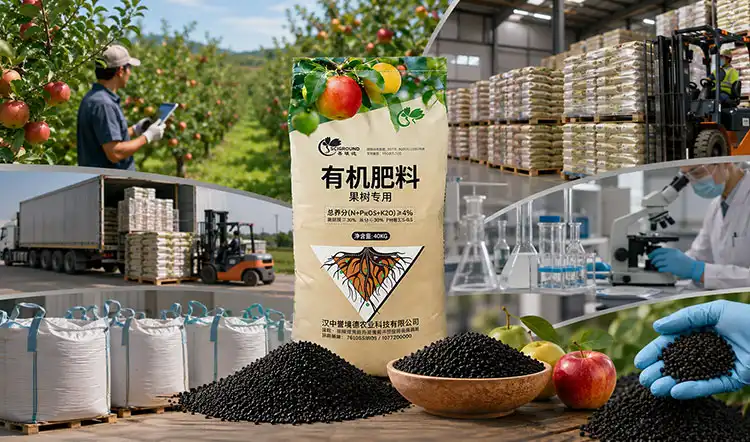
Best Practices for Fruit Tree Fertilizer Application to Maximize ROI
When and how you apply fertiliser determines whether your investments pay off in the form of higher yields. Mistakes in performance lose time and money and could even hurt the health of trees, which shows how important evidence-based methods are.
Timing and Frequency Across Growth Stages
Post-harvest treatments in the autumn replenish energy stores that were used up by fruit production, which helps plants start blooming strongly in the spring. In this step of basal fertilisation, slow-release organics are put in circular ditches at the tree's dripline, which is where food roots gather. Applying nitrogen before flowers bloom in the spring makes it easy for plants and flowers to grow. Fertilisation with potassium-rich vitamins every two to three weeks helps fruit grow bigger and sweeter without encouraging too much plant growth that takes resources away from the fruit. Don't use nitrogen late in the season because it makes plants more vulnerable to winter damage by making them grow weaker.
Common Application Errors and Troubleshooting
When you use too much, the roots get burnt, and nutrients get into the groundwater, which wastes money and hurts the earth. Underapplication, on the other hand, makes trees hungry, which lowers output and fruit quality below market standards. Testing the soil every three years makes sure that the rates of treatment are based on real fertiliser deficiencies instead of general suggestions. When leaves turn yellow between the veins, it means they don't have enough iron or manganese. This is usually caused by alkaline soil, which chelates fertilisers. Early fruit drop is a sign of a calcium shortage that can be fixed with foliar sprays or soil amendments added months before bloom.
Application Methodologies for Different Fertilizer Forms
Broadcast grain applications work well in big, open fields with plenty of space between old trees. However, nutrients need to be mixed in or watered into the soil after surface placement. Banded treatments focus fruit tree fertilizer along the rows of trees, which cuts down on waste in the area between the rows. With liquid fertigation, nutrients are spread out evenly through drip systems. The rate of application is figured out by the amount of water used for watering and the percentage of nutrients that are wanted. Foliar sprays quickly fix vitamin deficiencies, but they can't replace macronutrients that are given to the soil because they can't be absorbed through leaf surfaces as well. By matching the method to the type of fertiliser and the structures of the garden, the most nutrients can be taken in, which directly increases the return on investment.
Cost-Effective Procurement Strategies for Fruit Tree Fertilizer
By using strategic buying, you can stretch your budget without lowering the quality of the goods you buy. When you combine volume leverage with market time knowledge, you can save a lot of money compared to buying things on the spot.
Bulk Purchasing and Price Negotiation
By signing yearly volume contracts, you can lock in prices before seasonal demand spikes and be sure of a supply when markets are tight. When an order is over five tonnes, suppliers often lower the price per unit by 15 to 25 per cent. This is because they have lower overhead costs for marketing and handling. Group buying groups combine the needs of many farms to get better prices that individuals would not be able to get. Payment terms are important. For example, some sellers offer discounts on bills paid within ten days, which lowers costs even more. Suppliers value stable lines of income, so building ties that last more than one year gives you more bargaining power.
Online Sourcing Versus Regional Suppliers
Digital markets collect products from many sellers and let you compare prices and read reviews from other customers to help you decide what to buy. Online platforms make it easier to reorder by remembering your tastes and setting up automatic delivery times. Regional sellers respond with products that are available right away, which cuts down on shipping delays that could affect the timing of an application. Local sellers offer expert advice in person and can make last-minute changes, which is helpful for businesses that have to deal with unpredictable weather or pest problems. Combining the two channels—online for common inputs and local for unique needs—finds a good mix between service timeliness and cost-effectiveness.
Leveraging Seasonal Promotions and Price Comparison Tools
During the fall after harvest, prices are lowered as sellers try to get rid of their stock before the end of the year. Discounts for paying early and deals that group products further lower the actual costs. Price comparison tools scrape seller websites and let procurement managers know when prices for certain goods drop below set levels. Coupon codes that are sent out through farm trade magazines or seller email lists can save you even more money, but you have to act quickly because they only work for a short time. Digital buying systems bring these chances together, so you don't have to keep an eye on multiple source channels by hand. This way, your business can make sure it's getting the most out of the opportunities that come up.
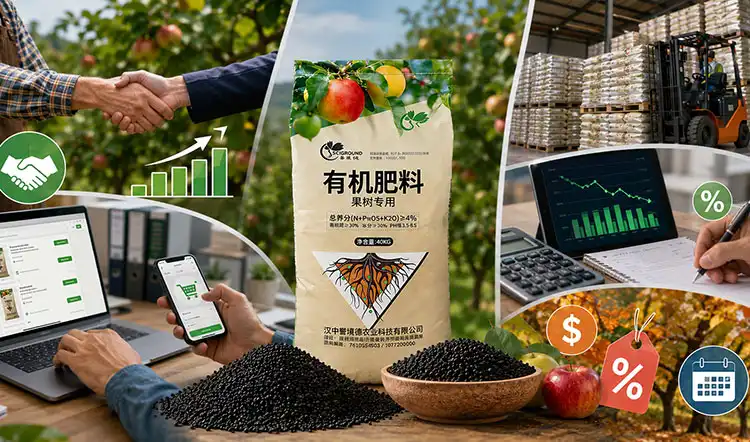
Why Trust Our Recommended Fruit Tree Fertilizer Suppliers
People trust supplier relationships more when the quality standards can be checked, the business practices are clear, and the suppliers meet the environmental standards that buyers further down the supply chain are demanding more and more.
Rigorous Quality Assurance and Certifications
Leading sellers send every batch of fruit tree fertilizer to a third-party lab for testing. This makes sure that the nutrients are exactly what the labels say they are within ±5%. Certifications from groups like OMRI or CDFA (California Department of Food and Agriculture) show that a business is organic and follows the rules for using certain inputs. Customer reviews from well-known farms show how well a product works in real-life conditions with different types of land and climates. Suppliers who share these quality measures show responsibility that is missing from suppliers who only rely on marketing claims.
Innovation and Long-Term Consistency
Leading sellers send every batch of their products to a third-party lab for testing. This makes sure that the nutrients are exactly what the labels say they are within ±5%. Certifications from groups like OMRI or CDFA (California Department of Food and Agriculture) show that a business is organic and follows the rules for using certain inputs. Customer reviews from well-known farms show how well a product works in real life conditions with different types of land and climates. Suppliers who share these quality measures show responsibility that is missing from suppliers who only rely on marketing claims.
Technical Support and Customised Formulations
Account managers who are dedicated to your business and know its details make personalised suggestions instead of general product pitches. The services that analyse soil tests turn lab results into fertilisation plans that can be used and are tailored to your tree types and yield goals. Off-the-shelf goods can't fully meet the needs of certain crops or soil shortages that customised mixes can. This is what makes sellers who treat customers like partners instead of transactions stand out. On-site field visits during key stages of growth provide fixing knowledge that keeps small problems from getting worse and reducing yield.
Sustainability and Green Procurement Compliance
Suppliers sourcing raw materials from verified sustainable channels—such as composted livestock manure from certified operations—support environmental stewardship goals increasingly required by export markets and corporate sustainability mandates. Carbon footprint disclosures for product manufacturing and distribution enable downstream reporting compliance. Products removing harmful soil ions and improving aggregate structure contribute to long-term ecosystem health, aligning with regenerative agriculture principles gaining traction among forward-thinking producers. These credentials differentiate suppliers positioned for evolving regulatory landscapes and consumer preferences.
Conclusion
Comparing unit costs isn't enough to get the best deal on fruit tree fertiliser. Cost-effectiveness, quality guarantee, source dependability, and application support must all be balanced for buying to be successful. This is what maximises garden ROI. Knowing the different kinds of products, like organic microbe formulas and speciality mixes for certain foods, helps you make smart choices that meet your business's needs. Strategic bulk buying, timing based on the seasons, and managing relationships with suppliers can help you save money while keeping your supply going. Suppliers with quality licenses, professional know-how, and pledges to sustainability become useful long-term partners in the success of your farm. By following best practices for when and how to apply fertiliser, you can be sure that every dollar you spend will result in better trees and higher fruit returns.
FAQ
What makes microbial fermentation fertilizers different from standard organic options?
Microbial fermentation fertilizers undergo controlled biological processing that breaks down raw organic materials more completely than traditional composting. This process introduces beneficial bacterial consortia such as Bacillus subtilis, which continue colonising the soil after application. These microbes enhance nutrient cycling, suppress root pathogens, and improve soil structure more effectively than passive organic matter alone. The fermentation process also eliminates weed seeds and harmful pathogens through thermophilic phases, ensuring safer application compared to raw manure products.
Can I use the same fertilizer for citrus, apples, and stone fruits?
While broad-spectrum organic fertilizers suit multiple fruit types, specialized formulations optimise results. Citrus requires higher nitrogen and acidifying amendments to maintain lower pH preferences. Apples benefit from elevated calcium to prevent storage disorders. Stone fruits need potassium-heavy blends during fruit development. A base organic fertilizer works across varieties during vegetative growth phases, supplemented with targeted nutrients during crop-specific critical periods. Consult with your supplier about blending strategies that balance inventory simplicity against crop-specific optimisation.
How do I calculate the true cost per acre for different fertilizer products?
Convert product prices to cost per pound of actual nutrient rather than per bag. A 50-pound bag with 5% nitrogen contains 2.5 pounds of nitrogen; divide the bag price by 2.5 to determine the cost per pound of nitrogen. Multiply this by your per-acre nitrogen requirement (often 80-120 pounds for mature fruit trees) to calculate total nitrogen cost. Repeat for phosphorus and potassium, then sum these to compare products accurately. This method reveals that higher-priced concentrated fertilizers often cost less per acre than cheaper dilute alternatives.
Partner with Sciground for Premium Fruit Tree Fertilizer Supply
Sciground specialises as a trusted fruit tree fertilizer manufacturer, delivering microbial fermentation formulations engineered by experts with over 20 years of organic fertiliser research. Our specialised organic fertiliser provides comprehensive nutrition across all growth stages, promoting vigorous root development while enhancing disease resistance and soil fertility. Located in Hanzhong City with 6,000 square meters of production capacity, we combine traditional agricultural wisdom with modern biotechnology to create eco-friendly solutions that effectively remove harmful ions and improve aggregate structure. Bulk procurement options ensure competitive pricing for large-scale operations, supported by technical guidance from our Northwest Academy of Agricultural Sciences team. Contact us at [email protected] to discuss customised formulations and volume pricing tailored to your orchard's specific needs.
References
1. Smith, J.R., & Thompson, L.M. (2021). Sustainable Orchard Nutrition: Organic Fertilizer Strategies for Commercial Fruit Production. American Society for Horticultural Science Press.
2. Chen, W., Rodriguez, P., & Kim, S.H. (2022). "Microbial Consortia in Organic Amendments: Impact on Soil Health and Fruit Tree Productivity," Journal of Applied Agricultural Research, 48(3), 267-284.
3. National Organic Standards Board. (2023). Guidelines for Organic Fertiliser Certification and Quality Standards. U.S. Department of Agriculture.
4. Martinez, D.L. (2020). "Economic Analysis of Bulk Fertilizer Procurement in Large-Scale Orchards," Agricultural Economics Quarterly, 35(2), 145-162.
5. Wang, Y., & Foster, K.T. (2022). Nutrient Management in Perennial Fruit Systems: Best Practices for Maximising ROI. International Society of Arboriculture Publishing.
6. Green, A.P., & Wilson, R.C. (2023). "Chelated Micronutrients and Fruit Quality: Field Trial Results Across North American Orchards," HortTechnology, 33(1), 89-103.

Sciground
Shanrangde, in collaboration with a team of experts from the former Academy of Agricultural Sciences, focuses on developing patented organic fertilizers, including those specifically formulated for Corydalis rhizome. Chief expert Professor Liang Dejun, with over 20 years of industry experience, provides one-stop technical guidance from site selection to field management, helping farmers increase production and income.
Formulated by the original expert team from the Academy of Agricultural Sciences · Focused on organic nutrients specifically for crops
Contact us now to customize a green nutrition solution for your farmland.
Recommended Blog
Can Fruit Tree Fertilizer Improve Fruit Size and Taste?
Fruit Tree Fertilizer Ideas to Boost Orchard Profitability
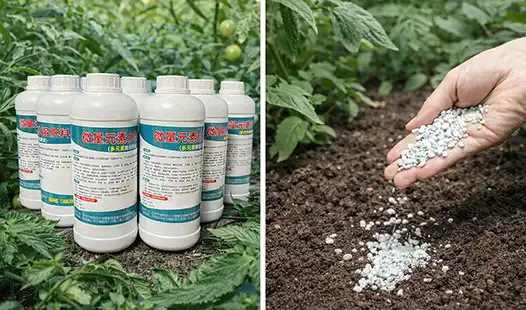
Foliar Fertilizers vs Soil Feeding: Key Differences
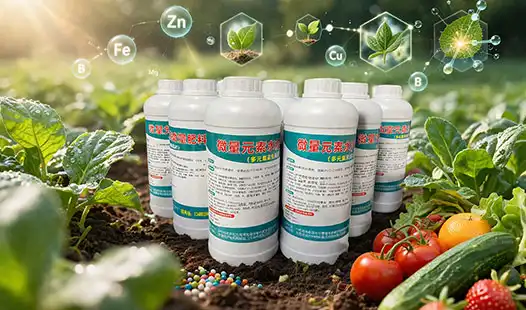
Best Formulas of Micronutrient Fertilizers for Quality Growth
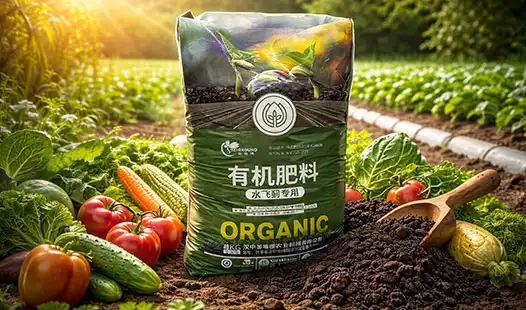
Milk Thistle Organic Fertilizer for Stronger Crop Growth