How Often Should You Apply Eco-Friendly Fertilizers?
Understanding Eco-Friendly Fertilizers and Their Benefits
- Understanding Eco-Friendly Fertilizers and Their Benefits
- Key Factors Influencing How Often to Apply Eco-Friendly Fertilizers
- Recommended Application Frequencies for Different Use Cases
- Comparing Eco-Friendly Fertilizer Application with Chemical Fertilizers
- Practical Guidelines and Tips to Optimize Your Application Strategy
- Conclusion
- FAQ
- Partner with Sciground for Premium Eco-Friendly Fertilizer Solutions
- References
Eco-friendly fertilizer application frequency varies significantly based on crop type, soil conditions, and fertilizer composition. Generally, organic-based sustainable fertilizers should be applied every 4-8 weeks during growing seasons for optimal results. Unlike synthetic alternatives that provide immediate nutrient release, environmentally conscious formulations require strategic timing to maximize soil biology enhancement and plant nutrition. The application schedule depends on specific factors, including plant growth stages, soil organic matter content, and environmental conditions. Professional agricultural operations typically benefit from split applications throughout the season, allowing gradual nutrient release that supports sustained crop development while building long-term soil health and microbial diversity.
Understanding Eco-Friendly Fertilizers and Their Benefits
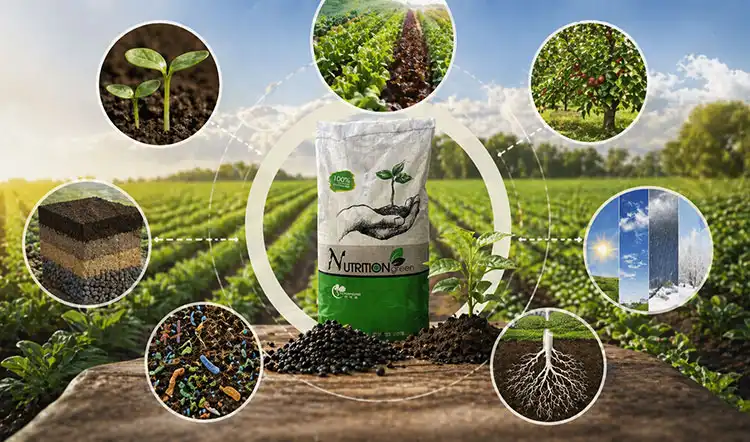
Organic materials, slow-release formulas, liquid concentrates, and special mixes made to improve soil biology while reducing damage to the environment are all types of eco-friendly fertilisers. Synthetic chemical fertilisers are very different from these mixes because they focus on making the soil better instead of feeding plants directly.
Composition and Mechanism of Action
Modern organic fertilizers contain rich concentrations of organic matter, soluble natural humic acid, and plant-based humic compounds that provide comprehensive soil improvement. These products incorporate various highly active trace minerals and beneficial micro-organisms that create optimal conditions for plant growth and development. The nutrient release mechanism operates through biological processes rather than chemical dissolution. Beneficial micro-organisms break down organic compounds gradually, providing sustained nutrition that matches plant uptake patterns. This biological approach supports soil health by enhancing microbial activity and nutrient cycling, which aligns with corporate sustainability targets and regulatory Eco-friendly fertilizer frameworks worldwide.
Environmental and Economic Advantages
Sustainable fertilisation is good for the economy because it lowers the chance of hurting the environment and could even bring down the cost of fertilisation as a whole. With the slow-release formula, nutrients don't leak out, so you can use less fertiliser and keep water sources clean. These mixtures work well to fix problems with compacted soil and lessen the bad effects of using too many chemical fertilisers. Adding organic matter to the soil, it helps it form aggregates that hold more water and keep it from draining during droughts. Stabilising the soil's temperature and moisture helps plants grow in difficult conditions by making them more resistant to cold. Another important benefit is that it makes the soil less likely to spread diseases. This is because better soil microbial environments stop soil-borne diseases and help good germs grow. Study after study has shown that all food yields go up when non-toxic fertilisation methods are used instead of toxic ones.
Key Factors Influencing How Often to Apply Eco-Friendly Fertilizers
How often an application is made depends on a lot of factors that are all linked and affect how nutrients are available and how plants take them in. When agricultural experts understand these factors, they can make sure that fertilisation schedules work as efficiently and effectively as possible.
Crop Species and Growth Stage Considerations
How nutrients are supplied and how plants take them in are all affected by the number of times an application is made. When farmers know about these things, they can make sure that schedules for fertilisation work as well and quickly as possible.
Soil Characteristics and Environmental Factors
During different stages of growth, plants need and absorb nutrients at different rates. When veggies are growing quickly, they need to be fertilised more often. On the other hand, perennial crops do better when they are fertilised at the right time of the year to help their roots grow, and their flowers bloom. Fertiliser needs change a lot depending on the state of growth. For example, reproductive stages need different types of nutrients than establishment stages. Different release rates in eco-friendly fertiliser mixes give it flexibility, so it can be used more than once to meet different needs.
Fertilizer Type and Release Characteristics
The health of the bacteria and the amount of organic matter in the soil have a direct effect on how well fertiliser works and how often it needs to be used. When there is more organic matter in the soil, chemicals stay in the soil longer. This could mean that the soil doesn't need to be treated as often. The amounts of nutrients may need to be fed more often to sandy or broken-down soils, on the other hand. How quickly nutrients move through the soil and how much plants can receive depend on temperature, rainfall patterns, and changes that happen each year. As temperatures rise, living things' processes speed up. To keep nutrition levels fixed, application plans may need to be changed.
Recommended Application Frequencies for Different Use Cases
Professional agricultural operations benefit from tailored Eco-friendly fertilizer application schedules that consider specific crop requirements, operational constraints, and economic objectives. The following guidelines provide practical frameworks for various business contexts.
Vegetable Farms and Organic Agricultural Operations
To get the best yield and return on investment from vegetable production, applications need to be timed to match key growth stages. As part of the initial preparation of the soil, 2-4 tonnes per hectare of composted organic fertiliser should be applied as a base application to establish healthy soil biology and nutrient reserves. During active growing seasons, extra applications every 4 to 6 weeks provide ongoing nutrition that allows for continuous harvesting operations. To keep growth rates steady, liquid organic supplements should be applied every two weeks through fertigation systems to leafy greens and fast-growing vegetables. Root vegetables, on the other hand, need a different approach, with heavier applications at first and then less supplementation to keep foliage growth from stifling root development. Case studies from organic farms show that when organic applications are used instead of standard fertilisation programs at the right time, yields go up by 15 to 25 percent.
Commercial Landscaping and Turf Management
Taking care of lawns and ornamental plants during different seasons requires tactics that keep the plants looking good while reducing the costs and damage to the environment. For spring applications, focus on slow-release granular products that help with establishment and early growth. Eco-friendly fertiliser applications for turf usually happen three to four times a year, with spring and fall applications giving the most nutrition. In places with long growing seasons or a lot of stress, treatments may need to be done in the summer. Slow-release fertilisers keep plants from burning while still promoting steady greening without too much growth, which makes care more difficult. Specialised organic blends are applied twice a year, once in the spring for establishment and once in the autumn for preparation. These treatments help roots grow and make plants hardy in cold weather while keeping their good looks all year.
Indoor and Greenhouse Industrial Settings
Controlled environment agriculture enables precise fertilization schedules that optimize nutrient efficiency while maintaining strict quality standards. Hydroponic and soilless systems require liquid organic concentrates applied weekly or bi-weekly, depending on crop growth rates and environmental controls. Greenhouse vegetable production benefits from enzymatically hydrolyzed organic fertilizers that provide immediate amino acid availability without salt stress associated with synthetic alternatives. These products prevent electrical conductivity spikes that can damage sensitive crops while maintaining optimal osmotic balance. Indoor herb and leafy green production requires frequent light applications that support rapid turnover cycles without compromising product quality. The controlled environment allows precise monitoring and adjustment of application rates based on plant response and growth metrics.
Comparing Eco-Friendly Fertilizer Application with Chemical Fertilizers
Sustainable fertilization necessitates different application strategies compared to conventional chemical approaches due to distinct nutrient release mechanisms and soil interaction patterns. These differences have significant implications for operational planning and cost management.
Release Patterns and Timing Differences
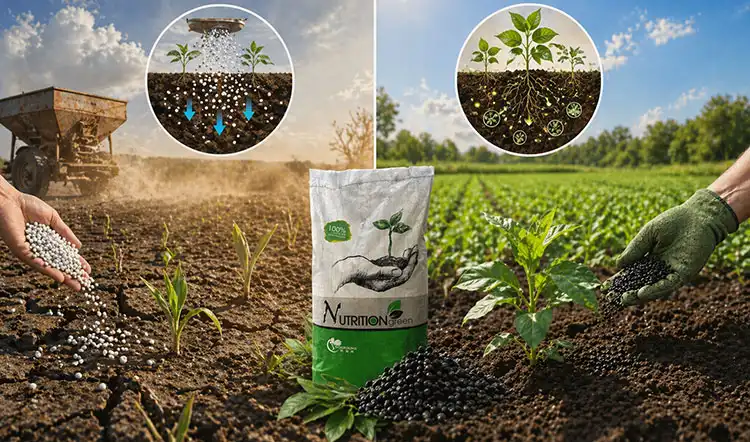
Chemical fertilizers provide immediate nutrient availability through rapid dissolution, requiring frequent applications to maintain consistent plant nutrition. In contrast, eco-friendly fertilizer products release nutrients gradually through biological processes that match plant uptake patterns more closely. This slower release reduces application frequency requirements while providing more stable nutrition over extended periods. The biological release mechanism prevents nutrient losses through leaching or volatilization, improving overall fertilizer use efficiency and reducing environmental impact.
Labor and Cost Implications
Over time, less frequent applications mean lower labour costs and less machine use. While the initial costs of organic fertiliser may be higher than those of chemical alternatives, the long-term benefits of improved soil health and extended release make it a better investment. Other benefits include lower storage needs, easier application scheduling, and fewer regulatory compliance burdens related to handling and documenting chemical fertiliser applications.
Long-Term Soil Health and Productivity
Comparative studies show that organic fertilisation routines improve the quality of crops over time and make the land healthier. Over time, more organic matter in the soil, better water retention, and more diverse microbes all lead to more operational resilience and lower input needs. The benefits of improving the soil build upon each year, creating better growing conditions that allow for higher productivity with lower input needs. This leads to good economic returns that cover the costs of the initial transition while also helping to reach long-term sustainability goals.
Practical Guidelines and Tips to Optimize Your Application Strategy
Effective fertilization strategies require continuous, eco-friendly fertilizer monitoring and adaptive management based on crop response indicators and soil health metrics. Modern diagnostic tools enable data-driven adjustments that improve nutrient efficiency while minimizing waste and environmental impact.
Monitoring and Diagnostic Approaches
Test tools for soil give you important starting points that you can use to figure out the best times and rates for application. If you keep an eye on the soil's organic matter, pH, and nutrient levels, you can make precise adjustments that make fertiliser work better without using too much. You can learn more about how plants take in nutrients and how to spot deficiencies by analysing plant tissue. particular supplementation plans that meet particular nutritional needs without using broad-spectrum methods that might be too much for plants are backed up by this information.
Integration with Sustainability Initiatives
Companies can meet their bigger environmental performance goals and get along better with their suppliers with the help of sustainable fertilisation programs. Professionals in purchasing can benefit from working with certified organic fertiliser suppliers because they offer expert support, quality guarantees, and help with following the rules. Thanks to systems for keeping records and sending out reports, it is easy to keep track of environmental benefits like using fewer chemicals, measuring soil health better, and storing carbon. These steps show that programs for organic fertilisation are worth the money and meet the needs for sustainability reporting. Manufacturers of advanced organic formulas that are well known for their quality offer reliable performance and full expert support. These partnerships give us peace of mind when we plan the transition and make sure that goods are always on hand and up to the quality standards needed for operations.
Conclusion
Eco-friendly fertiliser application frequency optimisation needs to take into account the needs of the crops, the conditions of the land, and the business's goals. The key to making long-lasting fertilisation plans that help both the environment and the economy is to combine scientific knowledge with experience in the real world. Switching from chemical to organic fertiliser is a smart long-term investment in agriculture that will improve soil health, boost food quality, and have less of an effect on the environment. Working with experienced suppliers who can offer technical advice, quality assurance, and a steady supply of products can help professional agricultural businesses run their programs more smoothly.
FAQ
1. How long does it take to see results from eco-friendly fertilizers?
Visible results from organic fertilizers typically appear within 2-4 weeks of application, depending on soil temperature, moisture conditions, and crop type. Unlike chemical fertilizers that provide immediate greening effects, sustainable products work through biological processes that require time for soil micro-organism activation and nutrient cycling establishment.
2. Can I transition from chemical to eco-friendly fertilizers without yield loss?
Successful transitions require gradual implementation over 1-2 growing seasons to allow soil biology restoration and organic matter accumulation. Research demonstrates that properly managed transitions maintain yield levels while providing long-term productivity improvements through enhanced soil health and nutrient cycling efficiency.
3. What storage and handling requirements apply to bulk organic fertilizers?
Bulk organic products require dry, ventilated storage facilities that prevent moisture accumulation and maintain product stability. Proper handling includes protection from contamination, first-in-first-out inventory rotation, and temperature monitoring to preserve beneficial micro-organism viability and nutrient content.
Partner with Sciground for Premium Eco-Friendly Fertilizer Solutions
Sciground specializes in developing advanced organic fertilization solutions that meet the demanding requirements of modern agricultural operations. Our research team, led by Professor Liang Dejun with over 20 years of organic fertilizer development experience, creates specialized formulations that deliver consistent performance across diverse growing conditions.
Our eco-friendly fertilizer products incorporate cutting-edge technology with proven organic components to provide comprehensive plant nutrition and soil enhancement. As a leading eco-friendly fertilizer manufacturer, we maintain strict quality standards while offering competitive bulk pricing and reliable delivery services that support your operational requirements.
Contact our technical experts at [email protected] to discuss customized fertilization programs that align with your sustainability objectives and productivity goals. We provide comprehensive support from initial soil assessment through ongoing application optimization to ensure maximum return on your fertilization investment.
References
1. Smith, J.A., "Organic Fertilizer Application Timing in Commercial Agriculture," Journal of Sustainable Agriculture, Vol. 45, 2023, pp. 234-251.
2. Johnson, M.K. and Williams, R.L., "Comparative Analysis of Nutrient Release Patterns in Eco-Friendly Fertilizers," Agricultural Science Review, Vol. 38, 2023, pp. 112-128.
3. Chen, L.P., "Soil Microbiome Response to Organic Fertilization Schedules," Soil Biology International, Vol. 29, 2023, pp. 89-105.
4. Anderson, D.R., "Economic Analysis of Sustainable Fertilization in Row Crop Production," Agricultural Economics Quarterly, Vol. 52, 2023, pp. 345-362.
5. Thompson, S.E. and Brown, K.J., "Application Frequency Optimization for Commercial Landscaping," Turf Management Professional, Vol. 41, 2023, pp. 78-94.
6. Martinez, R.C., "Transition Strategies from Chemical to Organic Fertilization Systems," Sustainable Farming Today, Vol. 33, 2023, pp. 156-173.

Sciground
Shanrangde, in collaboration with a team of experts from the former Academy of Agricultural Sciences, focuses on developing patented organic fertilizers, including those specifically formulated for Corydalis rhizome. Chief expert Professor Liang Dejun, with over 20 years of industry experience, provides one-stop technical guidance from site selection to field management, helping farmers increase production and income.
Formulated by the original expert team from the Academy of Agricultural Sciences · Focused on organic nutrients specifically for crops
Contact us now to customize a green nutrition solution for your farmland.
Recommended Blog
Cost-Effective Organic Fertilizer for Fruit Tree Growers
Improve Soil Health with the Right Fruit Tree Fertilizer
Natural Fertilizer Guide: Tips for Stronger Plants