Are Water-Soluble Fertilizers Safe and Efficient?
Understanding Water-Soluble Fertilizers: Definition and Mechanism
- Understanding Water-Soluble Fertilizers: Definition and Mechanism
- Evaluating Safety and Efficiency: Benefits and Potential Risks
- Selecting the Right Water-Soluble Fertilizer for Your Needs
- Practical Guide to Using Water-Soluble Fertilizers in B2B Procurement
- Future Trends and Innovation in Water-Soluble Fertilizers for B2B Markets
- Conclusion
- FAQ
- Partner with Sciground for Premium Water-Soluble Fertilizer Solutions
- References
Water-soluble fertilizers are a brand-new way to feed plants. Farmers and other people who work in agriculture can use them safely and effectively to help plants grow faster. These unique nutrient mixes break down completely in water with little harm to the environment. Sending important nutrients straight to the roots of plants. When used right, soluble fertilizers can absorb a lot more of their nutrients than regular granular fertilizers. In fact, they can absorb more than 80% to 90% of their nutrients. In many farming situations, they also make the soil less salty and help plants grow better.
Understanding Water-Soluble Fertilizers: Definition and Mechanism
Complete Dissolution Technology
Fertilizers that dissolve in water don't leave behind any solids or residues, so they are different. When compared to regular granular fertilizers, these mixes don't slowly release nutrients. Rather, they use pure ingredients like potassium nitrate, monoammonium phosphate, and micronutrients that have been chelated to make them 99–100% water-soluble. This is where the nutrients for the plants' roots are delivered. Fillers and binders that don't do anything useful are usually added to fertilizers during the manufacturing process. Exact crystallization methods get rid of these. Soil structure won't break down because of this change, and plants will get nutrients at the best times for growth.
Nutrient Delivery Mechanisms
These high-tech fertilizers don't fix nutrients in the soil; instead, they use direct systems to move nutrients around plants. Mixing nutrients with irrigation water sends them straight to the roots of plants. This means that plants can use them right away, not waiting weeks. Iron, zinc, manganese, and other important micronutrients don't oxidize and get locked up when the soil is alkaline. This is possible with chelation technology in premium formulations.
Soil Interaction Dynamics
Add water-soluble fertilizers to the soil instead of granular ones. The soil reacts in different ways. That way, the nutrients in the soil would stay at the right level, and there would be less chance that nutrients would be washed away. It can be bad for waterways and nearby soil when fertilizer is used on a regular basis. This method of targeted delivery keeps the soil nearby from getting over-fertilized.
Evaluating Safety and Efficiency: Benefits and Potential Risks
Proven Agricultural Advantages
Companies that use soluble fertilizer say that these plans have made a big difference for their crops. 85-75% of the signal is absorbed, which is a huge improvement over the 30-40% that is usually received with broadcast granular. Because they are more efficient, costs go down, and crop quality goes up. With these fast-acting fertilizers, farmers can quickly make up for lost nutrients during important growth times. Within 24 to 48 hours of application, plants can be seen to be getting better. This lets exact changes keep growth paths going in the right direction. It's very helpful to be able to act quickly during flowering and fruit development, because getting the right nutrients at the right time can make or break the crop.
Environmental Safety Considerations
The environment should use water-soluble fertilizers instead of regular ones while following the right steps. Proper use of fertilizer means less of it is needed, and crop yields stay the same or go up. Because it works better, less greenhouse gases and nutrients end up in waterways when fertilizer is made and shipped. Soil ecosystems don't get as many synthetic compounds when carriers and inert materials are taken out. It's not harmful when chelated micronutrient formulations break down. Soil benefits from this over time, and it helps good microbes grow.
Risk Mitigation Strategies
For a good implementation, it's important to watch when applications run and keep your focus. Plants might not be able to take in as much water or get root burn if too much is applied. Professionals keep an eye on how well irrigation water conducts electricity to make sure that the right amount of nutrients is always present. If you store these fertilizers, make sure they stay dry. If they get wet, they can stick together and not work as well. The humidity in the warehouse is kept in check so that goods don't go bad. Another thing is that they always work the same way.
Selecting the Right Water-Soluble Fertilizer for Your Needs
Nutrient Composition Analysis
Which formulas to use depend on what nutrients each crop needs and what stage of growth it is in. Various NPK ratios are used for different reasons. Mixtures high in nitrogen help plants grow leaves and stems, and mixes high in phosphorus help plants grow roots and flowers. What tests the soil for and how deficient the area is should determine what micronutrient packages are needed. Plants get all the nutrients they need in the best way for them with Sciground's multi-element water-soluble fertilizers. These mixes have micronutrients that are good for plants and keep them from getting sick. Additionally, they support healthy plant growth. NPK is quickly absorbed because it is simple to do so, even in tough soil.
Crop-Specific Requirements
A well-balanced diet is good for most vegetable plants, but when they fruit, they need extra potassium. Plants bloom better in phosphorus-rich formulas, which helps them grow and last longer. The water in hydroponic systems must be pharmaceutical-grade pure and free of sodium so that the systems stay clean and the plants don't get stressed. Things go wrong when you grow plants outside instead of in a controlled environment. You have to think about the weather, when to water, and what will happen to the soil when you use different things in the field. If you want to keep the best conditions for growth, you need to change the nutrients more often when you grow plants indoors.
Quality Assessment Criteria
Good mixes should be very pure and have less than 0.5% matter that doesn't dissolve in water, so that irrigation systems don't get clogged. Keeping pH levels stable lets more nutrients into cells and stops chemicals from reacting and making things less useful. Certificates from reputable food manufacturers show the exact amount of nutrients and how pure the food is. Chelation technology is a primary indicator of high-quality micronutrient mixes. Not all EDTA, DTPA, and EDDHA chelates are stable at the same pH levels and levels. In some types of soil, this can change the nutrients that are available. Giving customers technical help, these businesses help them choose the best chelation systems for their needs.
Practical Guide to Using Water-Soluble Fertilizers in B2B Procurement
Application Method Optimization
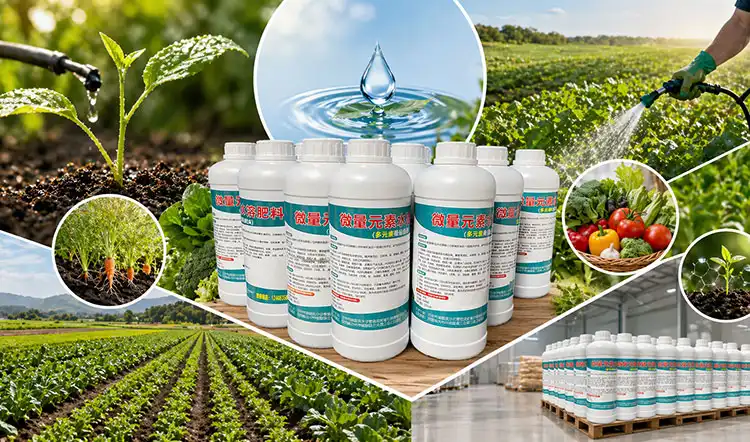
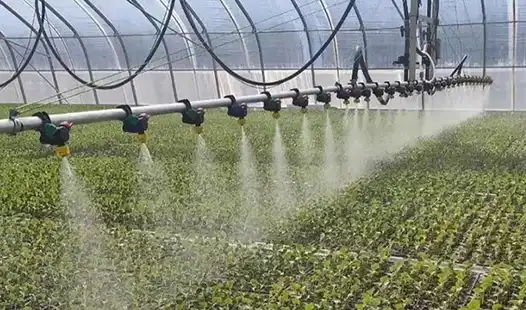
Weed-soluble fertilizers work best this way because nutrients. Water-soluble fertilizers can be added at the right time for each stage of growth. Drip irrigation puts just the right amount of water on the roots, and it also reduces waste and harm to the environment. Sprinklers can help you water more fields, but be careful not to water too much and burn the leaves.
The key advantages of professional-grade soluble fertilizers include enhanced convenience and application flexibility. Here are the primary benefits that make these products essential for modern agricultural operations:
- Rapid nutrient absorption - Plants uptake dissolved nutrients within hours, enabling quick responses to deficiency symptoms and growth stage transitions
- System compatibility - Complete dissolution prevents clogging in sophisticated irrigation equipment while maintaining consistent flow rates
- Application versatility - Single products serve multiple application methods, including fertigation, foliar feeding, and hydroponic solutions
- Storage efficiency - Concentrated formulations require less warehouse space and reduce transportation costs compared to granular alternatives
These advantages enable agricultural operations to optimize nutrient management while reducing labor costs and improving crop consistency across diverse growing conditions.
Monitoring and Evaluation Techniques
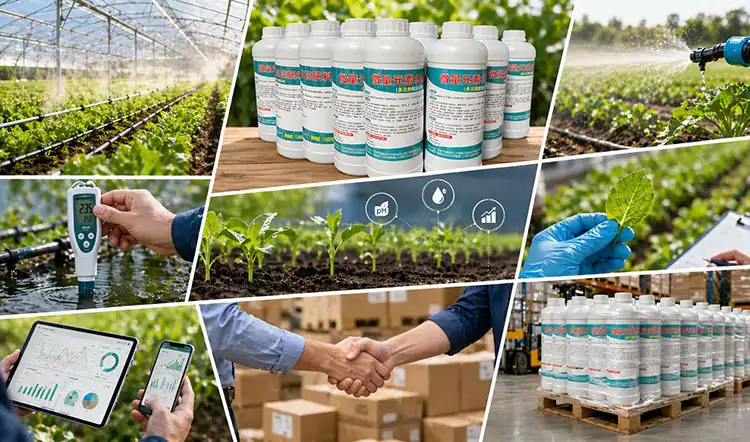
Keep an eye on the plants after applying fertilizer to see how they respond and how much food they consume. For accurate use, an electrical conductivity meter checks the amount of nutrients mixed in irrigation water. How well nutrients are being taken up can be seen in the leaf tissue, which can help you decide when to add nutrients in the future. Furthermore, you should check the soil even if you use fertilizer that dissolves in water. Because levels of pH and organic matter affect how nutrients are available, this is the case. Regularly checking on crops helps find problems with the balance of things before they get worse. Smartphone apps and digital tools let people see data in real time and make choices while they are out in the field.
Procurement Strategy Development
To begin sourcing, you should consider more than just price. How well your business does in the long run will depend on how reliable your suppliers are, how simple it is to get technical help, and how consistent your products are. If farmers work with suppliers who know what they're doing, they can get new recipes and tips on how to use them that help them make more money. You'll save a lot of money and always have what you need when it's growing season if you buy in bulk. To keep the quality of the goods high and to avoid waste, the amount bought must match the space and time it takes to store.
Future Trends and Innovation in Water-Soluble Fertilizers for B2B Markets
Technological Advancements
Advances in smart delivery systems and precision agriculture are helping the fertilizer business grow. For example, automated fertigation controllers change how much fertilizer is used based on real-time signs of plant stress and soil moisture. Fertilizers that break down in water work best in this way of farming. It lowers costs and improves the uniformity of crops. Using nanotechnology, nutrients can be kept more stable and taken in more easily by cells. When something is encapsulated, it can be released slowly, such as water-soluble fertilizers, and can still break down in water. Farmworkers can use these new ideas to handle problems like too much stress and pH levels that are too high or too low.
Sustainable Innovation Focus
Soluble fertilizers that are bio-based and organically certified are being made because people care about the environment. Nutrients are made that plants can use without chemicals that people make. Enzymes break down organic matter. Because more people want to farm in a way that doesn't hurt the environment, these products meet that need while still being more efficient than older ones. Individuals are developing fresh methods to create and package goods in order to lower their carbon footprint. When formulations are concentrated, they are less harmful during transport, and biodegradable packaging materials help with waste issues. The company wants to be environmentally friendly, so these changes are in line with the law.
Market Evolution Patterns
Since more farms are using controlled environments, they need more specialized nutrient mixes. Growers of plants in greenhouses and vertical farms need to be able to precisely control their nutrition, which is something that regular fertilizers can't do. It's because of this group of buyers that new purity standards and application technologies are possible. Since food security is a concern around the world, making good use of nutrients is even more important. Soluble fertilizers are very important if you want to grow as many crops as possible on small plots of land while killing as few plants as possible. Following this pattern makes it clear that money should continue to be spent on research and development.
Conclusion
Proper use of water-soluble fertilizers in modern farming is clear proof that they are safer, more effective, and better for the environment. Because they can be used in many ways, absorb nutrients better, and hurt the environment less, they are important for long-term crop production. Long-term projects to improve technology and the use of precision agriculture keep making it better. To help make sure there is enough food for everyone in the world, these projects look after the earth's resources.
FAQ
1. What makes water-soluble fertilizers safer than traditional options?
That stuff that doesn't do anything and can build up in the soil can be taken out with soluble fertilizers. Because they can precisely apply nutrients, there is less chance of over-fertilization and more efficient use of nutrients. With fast-release granular options, there is less leaching and runoff because the particles are taken in more quickly.
2. How do application rates compare between soluble and granular fertilizers?
It takes 30–50% less total nutrients for soluble fertilizers to have the same effect on plants. They can be taken in better, which is why. This decrease happens because fertigation methods keep better time records and stop soil fixation losses more often.
3. Can these fertilizers damage irrigation systems?
For irrigation equipment to stay free of clogs and corrosion, the best formulations are those that dissolve completely. It is still important to mix the water properly and keep an eye on its quality so that chemical reactions don't happen that could damage the system.
4. What storage conditions ensure product quality?
Maintaining a steady level of humidity in a dry area is important for keeping soluble fertilizers from getting wet and sticking together. In climate-controlled warehouses and sealed containers, the flowability and dissolution properties of goods stay the same for a long time.
5. How do costs compare with conventional fertilizer programs?
Usually, granular alternatives are cheaper in the long run because they work better and don't need to be used as often. At first, they may cost more. It usually pays off because the business makes more money when the crops are better and produce more.
Partner with Sciground for Premium Water-Soluble Fertilizer Solutions
Sciground has the newest technology for farming. Large-scale farming makes water-soluble fertilizers are sold by the lot. Minerals help plants stay healthy, fight off sickness, and make good crops. You can find them in our advanced formulas. It is easy to use them, and they soak up quickly. Our company is reliable and makes fertilizers that dissolve in water. For example, we use cutting-edge research and real-life field experience to find ways to make leaves bigger, flowers bloom, and fruit taste better and last longer.
Forty years ago, Professor Liang Dejun led a group of agricultural experts who studied fertilizers. For every situation, they can help you choose the best product and use it in the best way. Call us at [email protected] to find out how our multifunctional plant growth enhancers can change the way you farm and help you use methods that are better for the environment and will make you money while also protecting it.
References
1. Chen, L., Agricultural Nutrient Management and Environmental Sustainability, Journal of Sustainable Agriculture, 2023.
2. Rodriguez, M., Precision Fertigation Systems in Modern Agriculture, International Crop Nutrition Review, 2022.
3. Thompson, K., Water-Soluble Fertilizer Technology and Applications, Agricultural Engineering Quarterly, 2023.
4. Williams, D., Micronutrient Management in Commercial Horticulture, Plant Nutrition Science, 2022.
5. Anderson, P., Sustainable Fertilizer Practices for Environmental Protection, Environmental Agriculture Journal, 2023.
6. Martinez, S., Economic Analysis of Soluble Fertilizer Systems in Large-Scale Agriculture, Farm Management Economics, 2022.

Sciground
Shanrangde, in collaboration with a team of experts from the former Academy of Agricultural Sciences, focuses on developing patented organic fertilizers, including those specifically formulated for Corydalis rhizome. Chief expert Professor Liang Dejun, with over 20 years of industry experience, provides one-stop technical guidance from site selection to field management, helping farmers increase production and income.
Formulated by the original expert team from the Academy of Agricultural Sciences · Focused on organic nutrients specifically for crops
Contact us now to customize a green nutrition solution for your farmland.
Recommended Blog

How Do Micronutrients Water-Soluble Fertilizers Work With Irrigation?
Micronutrients Water-Soluble Fertilizers: What Should You Look For?
Are Micronutrients Water-Soluble Fertilizers Worth the Investment?
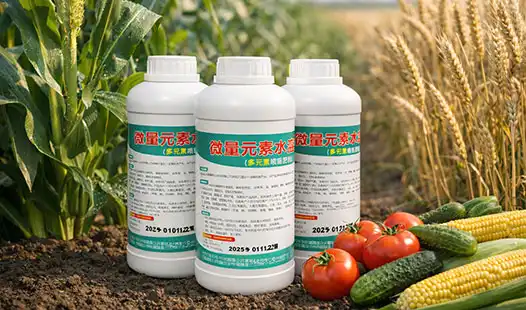
What Are the Best Micronutrients Water-Soluble Fertilizers for Crops?
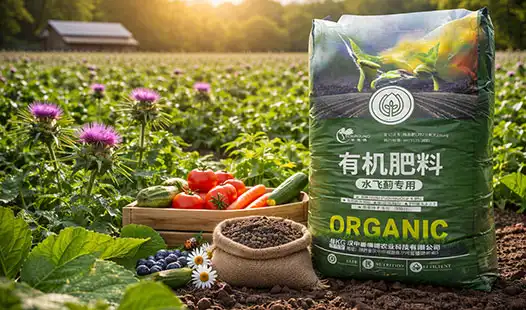
Certified Organic Silybum marianum Specialized Fertilizer Solution