Why Work with a Certified Organic Fertilizer Supplier for Soil Health?
Understanding the Role of Certified Organic Fertilizer Suppliers
- Understanding the Role of Certified Organic Fertilizer Suppliers
- Comparing Certified Organic Fertilizer Suppliers with Non-Certified and Chemical Fertilizer Providers
- How to Choose the Right Certified Organic Fertilizer Supplier for Your Business Needs
- The Process and Benefits of Working with Certified Organic Fertilizer Suppliers
- Environmental and Business Benefits of Partnering with Certified Organic Fertilizer Suppliers
- Conclusion
- FAQ
- Partner with Sciground for Certified Organic Fertilizer Solutions
- References
Working with a certified Organic fertilizer supplier turns managing the health of the soil from guesswork to a plan based on science. Certified suppliers give goods that have been checked by strict standards like OMRI and ECOCERT. This makes sure that the nutrients are consistent, that pathogens are gone, and that heavy metals are not present. Certified organic fertilizers, unlike generic options, rebuild soil structure and support microbial variety. They also lower crop input costs over time and meet strict organic certification standards for markets further down the line.
Understanding the Role of Certified Organic Fertilizer Suppliers
What Certifications Mean for Product Integrity
Certified Organic fertilizer suppliers are closely watched by groups that are known all over the world. Products on the OMRI list meet the standards of the USDA National Organic Program, and products with ECOCERT approval show that they follow European organic rules. These systems require that raw materials can be tracked, that manufactured additives are not allowed, and that thermophilic composting processes hit temperatures of 55–65°C to kill pathogens. When procurement teams buy from certified suppliers, they can get goods that have been checked by a third-party lab. This includes heavy metal analysis using ICP-MS testing and pathogen screening for Salmonella and E. coli.
Soil Microbiome Protection Through Certification Standards
A gram of healthy soil has billions of germs that are important for recycling nutrients and keeping diseases at bay. Certified organic fertilizers protect this living environment by not containing drug residues and endocrine disruptors that are common in manure-based goods that aren't certified. Aerobic fermentation methods, which are needed by certification standards, break down pet medicine residues using heat while keeping helpful microbial spores. The goods that are made encourage naturally occurring bacteria and fungi, which increases the activity of soil enzymes and increases the availability of nutrients without causing chemical changes.
Supply Chain Risk Reduction for B2B Buyers
Buying from certified Organic fertilizer suppliers lowers the chances of not following the rules across foreign lines. Certified goods come with Certificates of Analysis that list the NPK ratios, organic matter rates (usually above 45%), and carbon-to-nitrogen ratios that are best between 15:1 and 25:1. This paperwork makes it easier to get through customs and passes checks for organic crop approval. Purchasing pros try to avoid the expensive problems that come with non-compliant inputs, like product rejections, shipping delays, and damage to the company's image.
Comparing Certified Organic Fertilizer Suppliers with Non-Certified and Chemical Fertilizer Providers
Nutrient Release Dynamics and Soil Structure Improvement
Certified organic fertilizers have controlled absorption of nutrients that happens at the right time for plant growth. Unlike quick-release chemical mixtures that cause salt to build up and EC levels to rise, organic sources slowly release nitrogen as bacteria break down organic matter in the soil. The high amount of organic matter makes the soil stick together better, which increases its ability to hold water by 15–25% in sandy soils and makes it easier for water to drain in clay soils. This structural change makes the land less likely to wash away and requires less tilling, which lowers costs over several growth seasons.
Transparency and Quality Consistency Advantages
Certified Organic fertilizer suppliers follow strict quality control rules that non-certified businesses don't. Solvita development index testing is done on every production batch to make sure that all aerobic breakdown has occurred, which stops the release of phytotoxic ammonia. With Size Guide Numbers (SGN) between 200 and 250 for motorized spreaders, particle size distribution research makes sure that the spread is even. It's common for non-certified goods to have different amounts of moisture, nutrients, and maturity from batch to batch. This makes it harder to figure out the right application rate and makes crop performance less consistent.
Environmental Risk Mitigation Compared to Synthetic Options
Making chemical fertilizer releases a lot of carbon into the air. On the other hand, approved organic production uses farm waste streams to reduce the amount of trash that ends up in landfills. Certified organic fertilizers have low salt index values, which lowers the risk of root burn in saline-alkaline soils that are typical in the western U.S. When used to fix high-pH soils (above 8.5), the fulvic and humic acids in good organic fertilizers balance out the alkalinity and boost the cation exchange capacity, which makes it easier for sodium to leave the root zones.
Local Versus International Supplier Considerations
For yearly application slots, domestic certified Organic fertilizer suppliers provide faster lead times and lower freight costs. International suppliers may have unique mixtures that can't be found in the United States. For example, they may have liquid organic fertilizers that have been broken down by enzymes that can be used in greenhouse fertigation systems. It's important to look at the minimum order sizes because local suppliers can usually handle smaller bulk orders (5–10 tons), but foreign deals usually need commitments for container-loads (20 tons or more). An evaluation of the security of the supply chain should include checking the production capacity of suppliers and making plans for what to do if something goes wrong.
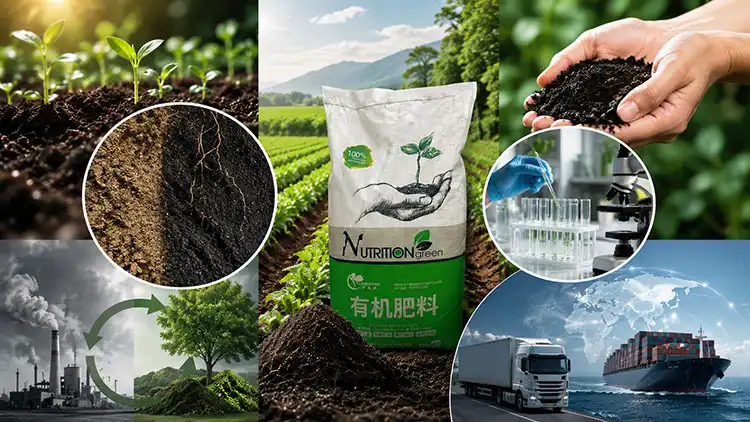
How to Choose the Right Certified Organic Fertilizer Supplier for Your Business Needs
Certification Authenticity Verification Steps
Legitimate certified Organic fertilizer suppliers put up-to-date certification papers and give the certifying agency's contact information for independent verification. Purchasing teams should ask for test results that are unique to each batch and show the levels of arsenic, cadmium, lead, and mercury in the heavy metals. Reliable suppliers keep cadmium levels below 1 ppm, which is higher than the legal minimum. Documentation from HPLC tests showing that the products are antibiotic-free shows that pharmaceutical residues are managed in products made from waste. Suppliers who don't want to be open and honest during the vetting process probably don't have real approval or set uneven quality standards.
Product Portfolio Assessment for Application Diversity
For different farming tasks, different kinds of organic fertilizer are needed. High amino acid liquid concentrates that are 100% soluble and have particle sizes below 100 mesh are good for commercial garden operations because they can be used for drip watering. For field crop treatments, slow-release granular goods with biochar added to them may be the best choice because they help keep water in. Professionals who take care of lawns need seasonal pellets that stop nitrogen burn during busy times. Certified suppliers with a wide range of products, including compost-based, manure-based, plant-based, and blended formulas, give buyers the freedom to choose the right products for different soil types and crop needs across all of their operations.
Bulk Procurement Capacity and Pricing Structure Analysis
Reliable certified Organic fertilizer suppliers show regular store availability to support multi-season contracts. Ask for proof of production capacity and details about the storage facility to make sure that you can meet repeat orders without lowering the quality. Pricing models should include clear costs for things like getting the raw materials, the time it takes to ferment, certification fees, and the cost of packing. Volume discount rates encourage bigger pledges while keeping unit economics better than chemical alternatives when figuring out the total cost of ownership, which includes less need for soil amendment over time.
Customer Service and Technical Consultation Value
Superior approved suppliers offer agronomic help that goes beyond just delivering products. Technical teams should be able to read soil tests, change application rates based on crop nutrient demand curves, and give field management advice on how to deal with problems like fixing salt soil or stopping continuous cropping. Clients can improve input efficiency and prevent application problems by talking to experts with qualifications like Professor Liang Dejun's, who has over 20 years of experience researching organic fertilizers on Sciground.
The Process and Benefits of Working with Certified Organic Fertilizer Suppliers
Manufacturing and Certification Verification Protocols
Before they are used to make approved organic fertilizer, raw materials like animal manure, peat moss, crop leftovers, and protein-rich plant materials are checked for contaminants. Aerobic composting keeps thermophilic temperatures stable for at least 15 days, which meets the requirements for pathogen reduction. Materials that have been through fermentation are given extra nutrients by adding rock phosphate, potassium sulfate, and trace mineral combinations that are specifically designed for the needs of the crop. Controlling the moisture level of finished goods to 15–20% stops the growth of mold during bulk storage. The products then go through checks by a certification group to make sure they follow the process correctly before they are put on the market.
Transparent Pricing and Flexible Delivery Benefits
Price lists showing input costs and seasonal availability are maintained by certified Organic fertilizer suppliers who do business honestly. Logistics for transportation allow for different delivery sizes, such as pallet loads for testing purposes, truckload packages for seasonal needs, and big rail moves for large-scale operations. Cash flow management is easier when you have flexible payment terms, such as net-30 agreements and bulk refunds. Long-term relationships with suppliers allow them to give advice on when to use their products, which increases their effectiveness by time deliveries to coincide with the best soil temperatures for microbes to work.
Documented Success Through Case Studies
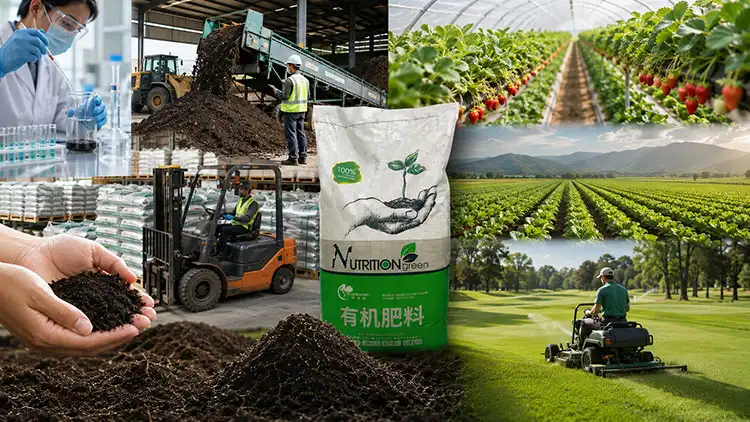
There is real-world proof that shows how certified organic fertilizer works in a variety of settings. Greenhouse owners who use liquid formulas that are dissolved by enzymes say that strawberry yields go up by 15 to 20 percent, and drip lines don't get clogged as often. Farmers who fix saline-alkaline soils with biochar and high-matter granules report that the pH drops from 8.7 to 7.2 in just two growing seasons, bringing back land that wasn't useful before. When golf course superintendents use slow-release pellets, they can keep the grass's density constant while cutting down on mowing by 30%. This saves a lot of money on maintenance work.
Environmental and Business Benefits of Partnering with Certified Organic Fertilizer Suppliers
Corporate Sustainability Goal Achievement
Partnering with certified Organic fertilizer suppliers advances business environmental promises through quantifiable soil health measures. Long-term buildup of biological matter removes carbon from the air, which helps meet climate change goals. Controlled-release formulas protect watershed quality by lowering the amount of nutrients that run off. This helps the government meet water quality guidelines. Documenting the use of organic inputs improves sustainability reporting for ESG investors and meets the needs of buyers further down the supply chain who want to see proof of sustainable practices.
Market Differentiation and Brand Reputation Enhancement
Agricultural businesses that use approved organic fertilizers have an edge when selling high-end fruits and vegetables. Verified organic approval for crops brings 20–40% more money to stores where customers want chemical-free production methods. Certified organic fertilizer brands have dealers and wholesalers who set their products apart in a crowded market. This helps them draw growers who care about the environment and want to use reliable inputs. Millennial and Gen-Z agricultural businesses value regenerative practices like it when brands are associated with soil health care.
Long-Term Economic Resilience Through Soil Investment
Even though certified organic fertilizers may cost more per unit than synthetic options at first, a full economic study shows that they are more profitable in the long run. Adding organic matter to the soil improves its structure, which means that 15–25% less watering is needed, which lowers the cost of pumping energy. Increasing the biology of the soil kills soil-borne bacteria, which lowers the need for fungicides and the number of crop losses. Microbial nutrient cycling efficiency lets you gradually lower the amount of fertilizer you use while keeping yields the same. For example, businesses that regularly use certified organic products see their input costs drop by 10–15% after three to five years as the soil's fertility improves.
Conclusion
A qualified Organic fertilizer supplier is an investment in the long-term health of your farm and the efficiency of your operations. Certification standards make sure that products are safe, that quality standards are met, and that regulations are followed. This takes away any uncertainty in the supply chain. Certified organic fertilizers restore the biological health of the soil while providing controlled nutrition that matches the needs of crops. Reliable suppliers give businesses in the production, transportation, and retail sectors competitive advantages through openness, expert help, and care for the environment. Choosing to buy certified organic fertilizer through partnerships sets up businesses for long-term profits as the market grows in demand for farming goods that are grown in a responsible way.
FAQ
Which Certifications Should I Verify When Selecting an Organic Fertilizer Supplier?
If you're selling to people in North America, give priority to Organic fertilizer suppliers who are listed with the Organic Materials Review Institute (OMRI). This will show that they follow the USDA NOP. European organic standards are met by ECOCERT approval. State-specific filings show that the product meets area labeling and heavy metal limits. For independent confirmation, ask for up-to-date certification papers that include the contact information for the awarding body. Genuine certified organic fertilizer suppliers value openness and offer batch-specific Certificates of Analysis that show the product's makeup and the results of contaminant tests.
Can Certified Organic Fertilizers Perform Effectively Across Diverse Soil Types?
If you choose the right quality approved organic fertilizers, they can work with a wide range of soil conditions. Compost-based goods help clay soil drain better, while high-organic-matter formulas work best on sandy soils that need to hold more water. Products that are high in humic acids are good for saline-alkaline soils because they lower the pH and raise the cation exchange capacity. For the best results, talk to suppliers who can help you match the right fertilizer formulas to the results of a soil test and the specific nutrient needs of your crops.
How Do I Manage Bulk Shipment Logistics for Large-Scale Operations?
Reliable certified Organic fertilizer suppliers arrange shipping to match operating scales and application time. Set up delivery times that work with planting windows to make sure that products are available when the soil temperature is right for microbes to grow. Check to see if the supplier has enough store space to keep the quality of the product during long periods of time. Talk about terms that cover keeping things dry during shipping and getting help unloading bulk orders. When international suppliers send container loads, they need to plan for customs paperwork and coordinating inland transportation.
Partner with Sciground for Certified Organic Fertilizer Solutions
Sciground is a reputable Organic fertilizer supplier that offers certified goods created by farm scientists with years of experience in soil health. Professor Liang Dejun, who is our top expert, has been researching organic fertilizers for more than 20 years and makes sure that all of our products meet strict quality standards. Our 6,000-square-meter factory in Hanzhong City makes specialized organic fertilizers from peat moss, straw powder, and animal dung that have been through controlled fermentation and high-temperature cleaning. We have a patent because we are the only company in China that does both research and production of organic fertilizers specifically made for medical plants.
Our product line includes water-soluble fertilizers with multiple elements, bulk organic fertilizer pellets, and organic amino acid fertilizer mixtures that can be used for a variety of tasks. Each batch goes through a lot of tests to make sure it meets heavy metal standards, gets rid of pathogens, and has the right C: N ratios. Sciground offers professional advice and quick help throughout the whole procurement process, whether you run business greenhouses that need liquid fertigation products, turf facilities that need slow-release pellets, or need to fix up problematic soil conditions.
Contact our team at [email protected] to talk about your soil health goals and get personalized quotes. As a company that wants to support organic farming, we offer reasonable prices for large orders and flexible shipping options that work with seasonal application plans. Find out how working with a certified Organic fertilizer supplier and manufacturer can improve the health of the land and the success of crops while also helping you reach your sustainability goals. You can look at our whole line of products at www.sciground.com, where you can also find technical information that will help you make smart purchasing choices.
References
1. Gaskell, M., & Smith, R. (2017). Organic Fertilizer Materials and Their Properties. University of California Agriculture and Natural Resources Publication 8033.
2. Hargreaves, J. C., Adl, M. S., & Warman, P. R. (2008). A review of the use of composted municipal solid waste in agriculture. Agriculture, Ecosystems & Environment, 123(1-3), 1-14.
3. Liang, D., Chen, Y., & Wang, H. (2019). Advances in Organic Fertilizer Technology for Medicinal Crop Production. Chinese Agricultural Science Press.
4. Marschner, P. (2012). Mineral Nutrition of Higher Plants (3rd ed.). Academic Press.
5. U.S. Department of Agriculture. (2021). National Organic Program Handbook: Guidance and Instructions for Accredited Certifying Agents. USDA Agricultural Marketing Service.
6. Zhen, Z., Liu, H., Wang, N., Guo, L., Meng, J., & Ding, N. (2014). Effects of manure compost application on soil microbial community diversity and soil microenvironments. Soil Biology and Biochemistry, 70, 245-252.
Sciground
Shanrangde, in collaboration with a team of experts from the former Academy of Agricultural Sciences, focuses on developing patented organic fertilizers, including those specifically formulated for Corydalis rhizome. Chief expert Professor Liang Dejun, with over 20 years of industry experience, provides one-stop technical guidance from site selection to field management, helping farmers increase production and income.
Formulated by the original expert team from the Academy of Agricultural Sciences · Focused on organic nutrients specifically for crops
Contact us now to customize a green nutrition solution for your farmland.
Recommended Blog
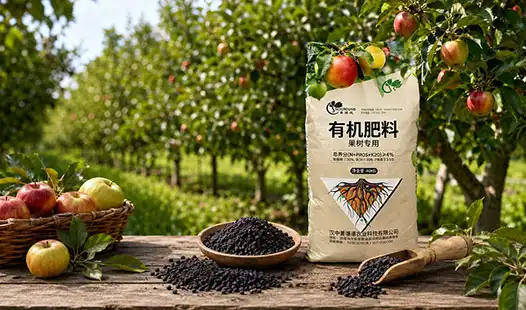
How to Source Quality Wholesale Fruit Tree Organic Fertilizer?
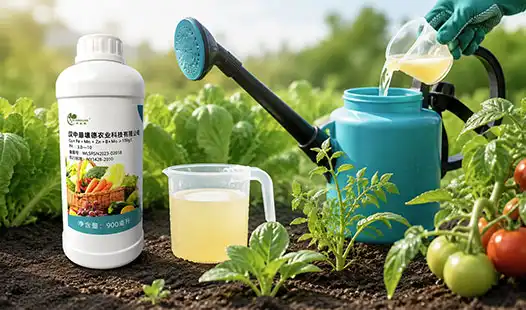
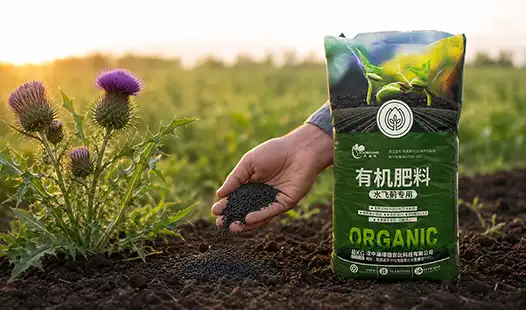
How to Select the Right Organic fertilizer for thistle Supplier?
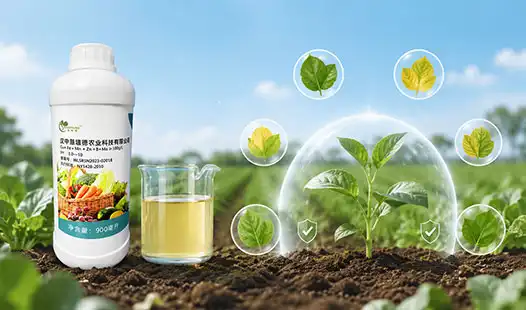
Can Micronutrients Water-soluble Fertilizers Prevent Nutrient Deficiencies?
Does Fruit Tree Organic Fertilizer Work for Citrus and Apple Trees?