How Water‑Soluble Fertilizers Improve Crop Performance?
Understanding Water-Soluble Fertilizers and Their Role in Crop Nutrition
- Understanding Water-Soluble Fertilizers and Their Role in Crop Nutrition
- Types of Water-Soluble Fertilizers and Their Application Methods
- Comparing Water-Soluble Fertilizers with Alternative Solutions
- How to Choose the Best Water-Soluble Fertilizer for Your Crop and Business Needs
- Maximizing ROI: How Water-Soluble Fertilizers Drive Procurement and Agricultural Success
- Conclusion
- FAQ
- Partner with Sciground for Advanced Water-Soluble Fertilizer Solutions
- References
Water-soluble fertilizers are cutting-edge for crop nutrition because they can dissolve completely in water and deliver nutrients straight to plant roots. This makes farming much more productive. The newest fertilizers release nutrients right away, so plants can get more of the macro- and micronutrients they need than with regular powdered fertilizers. More than 90% of the time, the better absorption rate helps crops do better in all types of gardening, from large-scale field operations to exact hydroponics. These days, soluble fertilizers have vitamins that are chelated and special mixes that meet the needs of certain crops. They are better for the environment because they absorb nutrients better and don't run off.
Understanding Water-Soluble Fertilizers and Their Role in Crop Nutrition
Water-soluble fertilizers contain nutrients that completely dissolve in water. This makes it easy for plants to take them in. Important macronutrients like nitrogen (N), phosphorus (P), and potassium (K) are in these high-tech pesticide mixes. They also have important trace elements like iron, zinc, manganese, copper, boron, and molybdenum. Potassium nitrate and monoammonium phosphate are two very pure chemicals that are used in the mix to remove 99% to 100% of the material without leaving any solids or residues behind.
Enhanced Nutrient Delivery Mechanisms
Most of the time, the way nutrients are normally bound to soil makes them less available. Soluble fertilizer methods work better than others because they can get around this. Granular fertilizers need wet soil and bacteria to break down. These mixes, on the other hand, give plants immediate access to nutrients by being watered. This straight supply method works really well when the ground is hard to work with, and nutrients tend to get stuck.
Precision Agriculture Applications
Precision agriculture methods, which need nutrients to be put in the right place at the right time, are becoming more and more important in modern farming. With fertigation systems, farms can give plants the right amount of nutrients at the right time for growth. Water-soluble fertilizers work well with these systems. It helps plants grow in the best way possible while also cutting down on waste and damage to the earth.
Types of Water-Soluble Fertilizers and Their Application Methods
You can buy both regular and organic liquid fertilizer on the market. Each type is made for a different crop and is best used in a certain way. Most of the time, synthetic versions have more nutrients Water-soluble fertilizers, and last longer. However, organic versions are better because they improve soil biology and release nutrients over time.
Application Techniques for Maximum Efficiency
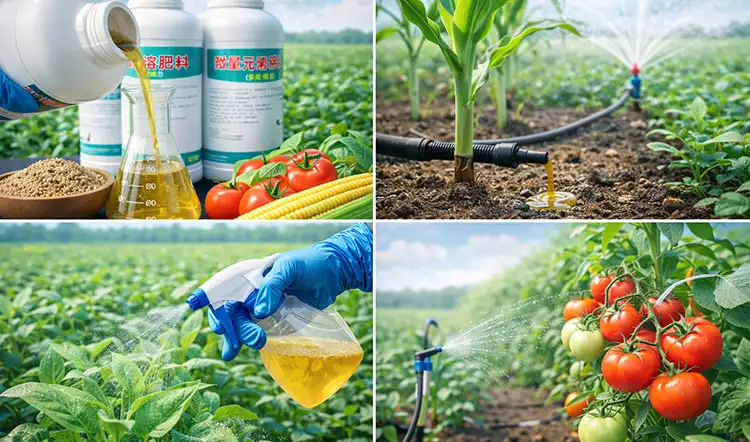
When putting application methods that are specific to running needs into action, they need to be carefully thought through so that they work well. People in the business world agree that the following methods work best: Foliar feeding sends nutrients right through the leaf surfaces, making up for any nutrients that are lost quickly and lowering stress during important growth times. Adding vitamins and making the quality better late in the season works especially well with this method. With drip irrigation, you can exactly apply nutrients to the root zone while wasting as little water as possible and getting the most out of the nutrients. Because it is managed, light therapy can happen often and in a way that works with how plants take in food.
Sprinkler fertigation works well for field crops because it covers more ground and spreads the nutrients out evenly over a larger area.
These ways of applying give farmers a lot of options for getting the most nutrients to the plants based on what those plants need, how they can water them, and the limits of their operations. When and how often you water a crop at the right time for its stage of growth will maximize its benefits and keep it from experiencing problems with nutrient stress or pollution.
Crop-Specific Formulations
Different plants need different amounts of nutrients to grow well. Formulations that focus on calcium and potassium are good for fruit trees and their fruit. Leafy vegetables do well in liquids that are high in nitrogen when they are growing green. Experts in buying know these needs and can choose the right goods to boost quality and output in a way that can be tracked.
Comparing Water-Soluble Fertilizers with Alternative Solutions
When people decide what to buy, they have to look at a number of success factors to compare soluble fertilizers to powdered and slow-release choices. What makes these types of fertilizer different has a big impact on how well industrial farms work, how well crops grow, and how much money they make.
Nutrient Availability and Absorption Speed
When you compare liquid fertilizer products to other choices, they make nutrients easier to get. Researchers have found that plain broadcasting only gets 30–40% of the nutrients that are needed, but fertigation with water-soluble fertilizers can get over 80–90% of those nutrients. The nutrients are dissolved right away and go straight to the root zones, which makes such a big difference. For granular fertilizers to release nutrients, the earth needs to be wet, warm, and active with bacteria. This could cause delays during key growth times. Slow-release types make nutrients available for a longer time, but they don't work as well for systems that grow a lot of plants.
Labor and Equipment Considerations
Because liquid fertilizers are easy to use, less work needs to be done, and fewer tools are needed. Spreading powdered fertilizer by hand is a lot of work that can be done quickly and at the right time by setting up aeration systems. As farms get bigger and the cost of workers keeps going up, this automation function comes in handy more.
Environmental Impact Assessment
More and more, people choose fertilizers based on how water-soluble fertilizers will affect the earth. Water-soluble fertilizers let you put nutrients exactly where you want them, so they don't wash away or leach away. It is less likely that groundwater will become dirty and nutrients will be lost to surface water systems if application rates are matched with how quickly plants can take in nutrients. Also, organic liquid fertilizers are good for the earth because they make the soil more lively and better able to hold carbon. These items help with sustainable farming while keeping the accuracy and speed benefits of soluble nutrition delivery.
How to Choose the Best Water-Soluble Fertilizer for Your Crop and Business Needs
To pick the best liquid fertilizer, you should carefully consider what your plants need, how you water them, and your business goals. If you want to get the most out of your money, you should think about both short-term performance needs and long-term environmental goals when making decisions.
Technical Specifications and Quality Standards
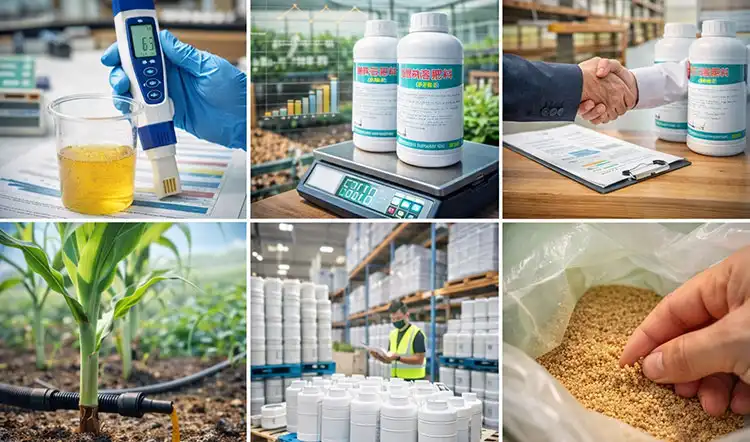
High-quality liquid fertilizers must meet strict technical standards to work reliably in industrial settings. Items should have less than 0.5% water-insoluble matter so that micro-irrigation systems don't get blocked. To make sure the plant gets all the nutrients it needs without osmotic stress or root damage, it is important to carefully control the pH and electrical conductivity levels. In high-end goods, vitamin chelation technology is used to keep important minerals like iron, zinc, water-soluble fertilizers, and manganese from solidifying in soils that are too acidic. Micronutrients will always be available thanks to this new technology, even in places with different soil and water quality.
Supplier Evaluation and Partnership Opportunities
For long-term relationships to work, companies that you can trust must offer expert help, consistent goods, and low prices. Companies that have been around for a while give programs for quality assurance, approval of batch testing, and application help that bring down risk and raise results. Wholesalers and big companies can use custom formulation services to make one-of-a-kind products that work with certain crops or the weather in a certain area. These partnerships can help companies stand out from their rivals by letting them offer unique goods and better deals to customers.
Integration with Existing Operations
It is important to make sure that the fertilizer you choose will work with the tools, watering systems, and storage areas that are already in place. While being held, products need to stay safe and still be able to be handled in a way that doesn't mess up the process. The right way to store and handle hygroscopic things is to keep them from sticking together and stopping the flow.
Maximizing ROI: How Water-Soluble Fertilizers Drive Procurement and Agricultural Success
There are economic benefits to soluble fertilizer methods that go beyond just raising crop yields. There is also less danger, better quality, and more efficient processes because of them. They are very useful for farming businesses that use a variety of output methods because they have so many benefits.
Quantifiable Performance Improvements
Water-soluble fertilizers let you give plants the right amount of nutrients, which can be measured by changes in the quality of the food and the regularity of the output. Fruits that are all the same size, color, water-soluble fertilizers, and shelf life lead to higher costs and better placement in the market. Quality standards that stay the same from one round of production to the next help you keep people for a long time and keep your promises. Cutting down on the number of times they need to be used and making handling easier are two ways that fermentation devices lower running costs. They also help get things done faster. With automated application methods, the right amount of nutrition can be given at the right time, even when demand is high.
Risk Management and Sustainability
Using sustainable farming methods has a bigger effect on what people buy and how they get into stores. Goals to care for the environment can be met with soluble fertilizers because they help plants use nutrients more efficiently and harm the environment less. This is because rules have changed, and people now want things to be made in ways that are better for the earth. Businesses have more options when it comes to getting nutrients, which helps them deal with risks like weather and sudden events that stress crops. With foliar treatments, changes can be made quickly, which keeps the crops' value high when it's hard to grow them.
Conclusion
Using water-soluble fertilizers in farming is a big step forward that has had measurable benefits for food growth, operating efficiency, and being good to the environment. These new items can help farmers get more accurate tools that deliver nutrients more effectively while also cutting down on waste and harm to the environment. A lot of different production systems can save money by using liquid fertilizer systems. This is because they can improve quality, absorption rates, and application freedom. Farmers are moving toward more accurate and long-lasting management, and liquid fertilizers give them the tools they need to meet their production and environmental goals.
FAQ
1. What kinds of plants do best with fertilizer that dissolves in water?
Soluble fertilizer plans usually work best on high-value plants like fruits, vegetables, and flowers. If you want better quality, more regular returns, and more market value, these foods are worth the extra money. It can also help field crops, especially when they are under a lot of stress or at an important growth stage.
2. When you use liquid fertilizer, how quickly do plants grow?
In 3–7 days, you should see changes if you put liquid fertilizers on the leaves. They should work in one to two weeks if you use fertigation to put them on the roots. The quick reaction means that food shortages can be fixed quickly, which helps plants grow as well as they can.
3. Is it possible to use liquid fertilizer instead of all other kinds?
Soluble fertilizers are great for giving plants nutrients fast, but they might need to be mixed with sources that give nutrients more slowly for the whole season. Of course, the best way to do things is to start with regular nutrients and add more soluble goods when demand is high.
4. How should drugs that break down in water be stored?
This stuff needs to be kept in a dry, temperature-controlled area so it doesn't harden and stays able to move. Using the right packaging that keeps out wetness and maintains the right temperature can help a product stay good for a long time.
5. How do I make sure that my irrigation system doesn't get clogged up when I use liquid fertilizers?
Make sure you only use high-quality items that come with tested solubility specs. Also, keep your filter systems in good shape and dilute them the way the directions say to. It doesn't rain and works right because the system is maintained and the water condition is checked on a regular basis.
Partner with Sciground for Advanced Water-Soluble Fertilizer Solutions
Sciground sells cutting-edge water-soluble fertilizers that are made to make plants grow better and help farming stay sustainable. Our special mixes use cutting-edge chelation technology and important vitamins to make plants healthier, protect them from disease, and increase the quality of their output. If you need a trusted company that makes water-soluble fertilizers, we can help you with everything and make sure that the recipe we use is just right for your crop. Our goods are very stable, soak in quickly, and make veggies bigger, more colorful, and able to stay on the shelf longer. Our helpful staff can be reached at [email protected] to learn more about how our cutting-edge fertilizer solutions can help you improve your farming and get the most out of your money by handling nutrients correctly.
References
1. Agricultural Engineering Research Institute. "Nutrient Use Efficiency in Modern Irrigation Systems: Comparative Analysis of Fertilizer Types." Journal of Agricultural Engineering, vol. 45, no. 3, 2023, pp. 178-195.
2. International Fertilizer Association. "Global Trends in Water-Soluble Fertilizer Applications and Crop Performance Metrics." Annual Agricultural Technology Report, 2023 edition.
3. Smith, Jennifer L., et al. "Micronutrient Chelation Technology and Plant Uptake Mechanisms in Intensive Agriculture." Plant Nutrition Science Quarterly, vol. 28, no. 2, 2023, pp. 89-106.
4. United States Department of Agriculture. "Precision Agriculture Adoption and Economic Impact Assessment." USDA Economic Research Service Bulletin, Report No. 147, 2023.
5. Wilson, Robert M., and Sarah Chen. "Environmental Impact of Fertigation Systems Compared to Traditional Application Methods." Environmental Agriculture Journal, vol. 19, no. 4, 2023, pp. 234-251.
6. Zhang, Wei, et al. "Crop Quality Improvements Through Optimized Nutrient Timing in Commercial Fruit Production." International Horticultural Science Review, vol. 38, no. 1, 2024, pp. 67-84.

Sciground
Shanrangde, in collaboration with a team of experts from the former Academy of Agricultural Sciences, focuses on developing patented organic fertilizers, including those specifically formulated for Corydalis rhizome. Chief expert Professor Liang Dejun, with over 20 years of industry experience, provides one-stop technical guidance from site selection to field management, helping farmers increase production and income.
Formulated by the original expert team from the Academy of Agricultural Sciences · Focused on organic nutrients specifically for crops
Contact us now to customize a green nutrition solution for your farmland.
Recommended Blog
Why Should You Use Balanced Liquid Fertilizer for Your Plants?
How to Increase Gastrodia Root Quality with Specialized Fertilizer?
_1767870624598.webp)