How Often Should You Fertilize Fruit Trees Organically?
Understanding Organic Fertilizer for Fruit Trees
- Understanding Organic Fertilizer for Fruit Trees
- How Often Should You Fertilize Fruit Trees Organically?
- Choosing the Right Organic Fertilizer for Your Fruit Trees
- Implementing Organic Fertilizer Programs in Commercial Orchards
- Conclusion
- FAQ
- Partner with Sciground for Premium Organic Fertilizer Solutions
- References
When planning large-scale fruit production or handling commercial farms, the question of how often to apply Organic fertilizer for fruit trees becomes very important for making money and staying in business. Based on our extensive field study and work with farming experts, I suggest that fruit trees get organic fertiliser two to three times a year. The best times are early spring before the buds break, late summer when the fruit grows, and after the harvest in the autumn. This time frame works with the tree's phenological stages and makes sure that nutrients are available when the trees need them the most. The exact frequency varies on the type of soil, the age of the trees, their species, and the mixture you choose. These are all things we'll talk about in detail to help you make smart decisions about what to buy.
Understanding Organic Fertilizer for Fruit Trees
Organic fertilisers are a big change in how sustainable orchards are managed, especially for businesses that want to get certified or sell to high-end customers. Compost from animal waste, plant leftovers, bone meal, seaweed extracts, and results of bacterial fermentation are all natural sources. Chemical amendments give quick but short-lived nutrition boosts, but organic amendments work slowly through biological processes to feed both the tree and the soil environment.
Composition and Natural Origin
The different kinds of ingredients that go into good organic fertilisers are what make them work. Animal faeces that have been composted offer appropriate macronutrients and good bacteria. Plant-based products, such as lucerne meal, provide nitrogen and triacontanol, which help plants grow. Microbial fermentation fertilisers are the latest innovation in bioengineering. They contain helpful bacterial strains like Bacillus subtilis and Trichoderma species that colonise root zones and make it easier for plants to take in nutrients. At Sciground, our special fruit tree mixture goes through strict fermentation and high-temperature sterilisation to make sure it can't be used with pathogens and keeps the good microbes.
Environmental and Regulatory Advantages
Around the world, regulations are becoming more and more supportive of healthy agriculture. Organic fertilisers help businesses follow strict environmental rules by lowering the risk of groundwater pollution and leaving smaller carbon footprints than industrial nitrogen production. Because organic matter breaks down slowly, nutrients don't wash away when it rains a lot. This stops eutrophication problems that happen with standard farming. Companies that want to sell their goods abroad or get organic certification find that using organic fertiliser in a way that can be proven makes compliance checks easier and lets them charge higher prices. Organic practices show care for the environment, which also boosts a brand's image among customers and business buyers who are becoming more eco-conscious.
Forms and Application Versatility
Managers in charge of buying things should know how different types of products work in real life. Granular organic fertilisers, which are usually between 2 and 4 mm in size, can be spread with motorised tools and work for months. Liquid concentrates allow exact fertigation through drip devices, giving bio-stimulants right away during key growth times. Some modern versions have both solid bases and water-soluble layers that work together to speed up the initial response while keeping the ability to feed for a long time. Which form to use depends on your current equipment, the number of workers you have access to, and the size of your crop.
How Often Should You Fertilize Fruit Trees Organically?
To find the best fertilisation regularity, you have to look at a lot of different factors that change as the growth season goes on. Working with business crops in a range of conditions has taught me that general advice doesn't always work—successful programs need to take into account how things are done in each specific case.
Tree Species and Age Considerations
Young trees that are still getting established need different kinds of food than farms that are already producing fruit. For new plants, smaller treatments of Organic fertilizer for fruit trees made more often—maybe every three weeks during the growing season—help roots grow quickly without overburdening systems that aren't fully developed yet. Because their roots are so big and good at removing nutrients, mature citrus groves may only need to be fertilised every other year or two. Because stone fruits like peaches and cherries grow so quickly, they do well with intense spring feeding followed by repair after harvest. Apples and other pome fruits do very well with split treatments that provide nutrition for both vegetative growth and fruit filling.
Soil Testing as Foundation
Today, managing a farm means making choices based on data. If you look at the soil and see that it has enough phosphorus but not enough potassium, you might want to lower how often you apply it and change the amounts of the ingredients. Soils with a lot of organic matter release nutrients more slowly, which could mean that you don't have to apply as often. On the other hand, sandy soils that don't hold onto nutrients well may need smaller doses more often to keep them from being lost. I think that full soil tests should be done at least every two years, and tracking should be done once a year for heavy activities. Leaf tissue analysis in the middle of the growing season gives real-time information on the nutritional status of the tree, allowing quick changes that stop yield losses caused by deficiencies.
Seasonal Growth Cycles and Timing
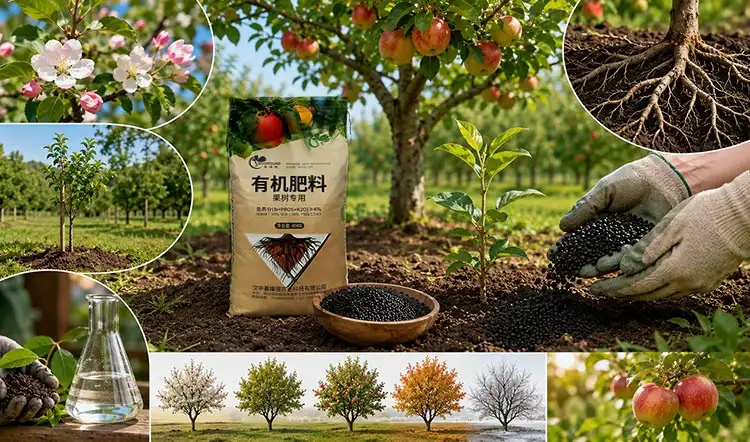
The return on fertiliser spending is highest when the timing is perfect. The early spring treatment, which is given 3–4 weeks before the buds open, helps the plant make flowers and start growing leaves when root activity starts up again. This important time sets the stage for the season and decides the crop load that could be grown. The application in late summer, when the fruit is still growing, has a direct effect on its size, sugar buildup, and storing quality, all of which are factors that decide its market value. People often forget to feed their trees after the harvest in the autumn, but it's important for restoring the nutrients they lost while growing, making them more resistant to cold, and getting the flower buds ready for next year. This method of "confinement feeding" is similar to how trees naturally move nutrients around.
Slow-Release Versus Fast-Acting Products
Learning about release kinetics can help you make the best use of application plans. Slow-release organic fertilisers have complex protein structures and high carbon-to-nitrogen ratios. They release nutrients slowly over 3 to 6 months as microbes break them down. These work well for fall basal applications where longer response times are more important than quick ones. Fast-acting liquid versions with enzymatically hydrolysed proteins and soluble humates provide nutrition within days. This makes them perfect for treating shortages in the middle of the season or helping the fruit filling stages. Sciground's microbial fermentation technology creates intermediate-release profiles that balance instant bio-stimulation with long-term feeding. This means that less treatment is often needed without affecting the tree's performance.
Choosing the Right Organic Fertilizer for Your Fruit Trees
Procurement decisions carry long-term implications for orchard productivity and operational costs. Evaluating suppliers and formulations requires moving beyond price-per-ton comparisons to assess total value delivered across multiple performance dimensions.
Evaluating Product Specifications
Good organic fertilisers have certain technical traits that can be used to guess how well they will work in the field. For real soil health effects, the organic matter level should be higher than 45%. Having less than 20% moisture stops caking while it's being stored and makes sure that the right amount is used. The carbon-to-nitrogen ratio should be between 15:1 and 20:1. This combines the need for nitrogen right away with the need for long-term soil building. Products with more than 10% humic acid by weight improve cation exchange capacity, which means they keep nutrients in trouble soils longer. Trace element profiles are very important. For example, chelated forms of zinc, boron, and iron stop physiological problems like cork spot and bitter pit that make it impossible to sell high-quality fruit.
Liquid Versus Granular Formulations
Each structure has its own specific practical benefits for Organic fertilizer for fruit trees. Granular goods work well for large-scale mechanical applications and can be easily combined with aerial spreaders or sub-surface banding equipment that is already in use. Because they are concentrated, they are cheaper to move per unit of nutrients, which is very important for businesses that are far from manufacturing sites. Stability in storage over multiple seasons lets you buy in bulk when prices are low. Precision fertigation systems work best with liquid formulas because they allow split treatments timed to crop growth stages without any extra work. They allow for flexible feeding on the leaves during times of stress when root uptake slows down. A lot of advanced farms use both granular and liquid feed, with grain being used for basic yearly feeding and liquid for crop-specific treatments.
Supplier Reliability and Certification
Setting up reliable supply lines is just as important as choosing the right products. Check with providers to see how consistent their production is. Nutrient differences between batches can throw off carefully planned food programs. Buyers from other countries should check that the certifications are valid for the markets they are interested in, such as USDA organic standards for U.S. businesses, EU organic rules for shipping to Europe, or JAS certification for markets in Japan. Biosecurity problems can be avoided by showing proof that pathogens can be killed at the right temperatures for burning. As part of our study relationship with farm science schools, Sciground has strict quality control methods that make sure every batch meets the required standards. Our ability to get patents for specialised formulas shows that we are committed to technical leadership and innovation.
Implementing Organic Fertilizer Programs in Commercial Orchards
Translating fertilizer selection into field results requires systematic implementation protocols that address practical application challenges while maximizing product effectiveness.
Preparation and Application Techniques
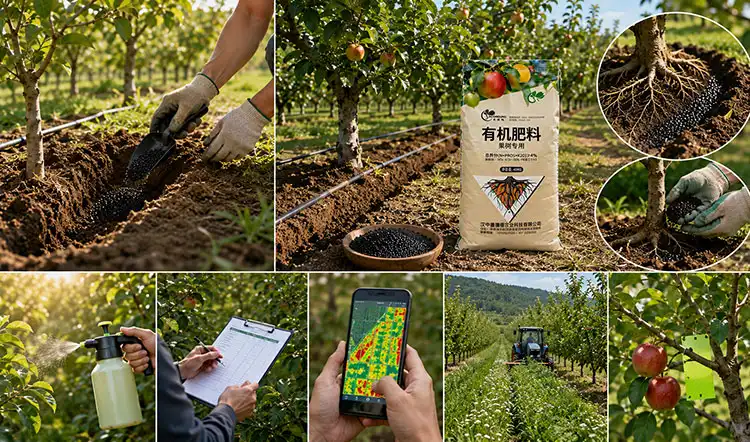
When prepared correctly, organic fertiliser works even better. When applied to grown trees, granular materials work best when radial trenching is done at the drip line, which means digging paths 15-20 cm deep where parent roots gather. This placement makes sure that the roots touch the ground directly, and the dirt on top keeps the roots wet so that microbes can work. Spreading across the surface works well for young trees with short root systems, but the nitrogen needs to be mixed in right away, or the plants will lose it through volatilisation. For fertigation systems to work, liquid formulas need to be pre-filtered so that emitters don't get clogged. Foliar treatments should happen in the early morning or late evening, when stomata are still open, and temperatures are low enough to avoid burns. Application rates need to take into account the size of the trees, how close they are to each other, and the basic richness of the soil. Applying too much can waste resources and could pollute the environment.
The unique bacterial fermentation fertiliser that Sciground created has unique benefits for Organic fertilizer for fruit trees in several different situations. When setting up an orchard, adding our product with native soil in planting pits speeds up root growth thanks to its high humic acid content. This makes it more likely that transplants will survive even in tough soil conditions. The complete nutritional balance helps with all stages of growth, from breaking dormancy to fruit maturity, so you don't have to buy a bunch of different goods. The disease-fighting qualities of our mixture come from the presence of helpful microbes that keep harmful fungi out, which lowers the need for chemical fungicides.
Monitoring and Adaptive Management
Organic fertilisation plans that work well use feedback loops to see how the trees are responding and make changes as needed. Mid-season leaf tissue analysis shows if applied nutrients hit target amounts in plant tissues. This shows if limitations in uptake mean that formulations need to be changed or more applications need to be made. Visually checking for signs of shortage, like chlorosis, reduced shoot growth, and early leaf drop, lets you fix the problem quickly before it hurts the yield. Testing the soil once a year keeps track of changes in pH and the amount of organic matter that builds up. These changes affect long-term plans for managing fertility. Modern operations use remote sensing technologies more and more to find nutritional stress through patterns in the canopy's reflection. This lets focused variable-rate applications work best in a variety of fields by improving input efficiency.
Integration with Holistic Management
Organic fertilization achieves maximum effectiveness when coordinated with comprehensive orchard management practices. Pest management programs should account for the disease suppression provided by beneficial microbes in quality organic amendments, potentially allowing reduced pesticide use. Irrigation scheduling must ensure adequate soil moisture for microbial activity that drives nutrient mineralization—dry soils essentially shut down organic fertilizer function. Cover cropping between tree rows synergizes with organic feeding programs by adding nitrogen through legume fixation and building soil structure through root biomass. Pruning intensity affects nutrient demand—heavily pruned trees require adjusted feeding rates to balance vegetative regrowth against fruiting objectives.
Conclusion
Strategic organic fertilization represents both an environmental imperative and a sound business decision for modern fruit production operations. The optimal frequency- typically two to three applications annually timed to tree phenology- depends on soil conditions, tree characteristics, and product formulations. Quality microbial fermentation fertilizers like those developed by Sciground deliver comprehensive nutrition while improving soil health and disease resistance, addressing the complex challenges facing intensive orcharding. Successful implementation requires systematic approaches encompassing proper application techniques, continuous monitoring, and integration with holistic management practices. As regulatory pressures intensify and consumer preferences shift toward sustainably produced food, establishing robust organic fertilization programs positions operations for long-term competitiveness and profitability.
FAQ
Can organic fertilizers completely replace synthetic inputs in commercial production?
Certified organic operations successfully achieve commercial yields using exclusively organic inputs, though the transition period typically requires 3-5 years for soil biology restoration. Conventional orchards adopting hybrid approaches—combining organic base fertility with strategic synthetic supplements—often see improved nutrient use efficiency, with organic amendments enhancing synthetic fertilizer effectiveness by 20-30% through reduced leaching and fixation. The decision depends on market positioning, certification goals, and willingness to invest in the biological soil development that underpins organic system productivity.
Does organic fertilizer application risk root damage or seedling burn?
Quality products processed through proper composting or fermentation eliminate burn risks associated with raw manure. Sciground's formulation undergoes controlled microbial fermentation with germination index testing exceeding 85%, confirming safety for direct root zone application. Immature products containing unstable organic compounds or excessive soluble salts can cause damage, underscoring the importance of supplier quality verification and product maturity indicators.
How do organic fertilizers impact fruit storage and shipping characteristics?
Organic nutrition programs typically enhance post-harvest quality through balanced calcium and boron delivery in bioavailable forms. These elements strengthen cell wall structure, reducing breakdown during storage and mechanical damage during shipping. Fruit from organically fertilized trees often displays improved flavor profiles and secondary metabolite content—attributes increasingly valued in premium markets despite potentially smaller size compared to aggressively fed conventional fruit.
Partner with Sciground for Premium Organic Fertilizer Solutions
Sciground brings two decades of agricultural research expertise to practical fruit production challenges. Our specialized organic fertilizer for fruit trees, developed in collaboration with Northwest Academy of Agricultural Sciences experts, delivers proven results across diverse orchard systems. The microbial fermentation technology we've pioneered provides comprehensive nutrition, enhanced disease resistance, and improved soil structure—addressing the complete spectrum of orchard fertility needs. As a dedicated organic fertilizer for fruit trees supplier, we offer flexible bulk purchasing arrangements, customized formulation consultations, and comprehensive technical support from site selection through harvest. Contact our team at [email protected] to request product samples, discuss your specific orchard requirements, or explore partnership opportunities. Our commitment to scientific innovation and sustainable agriculture aligns with the long-term success of your operation.
References
1. Smith, J.R., and Thompson, M.L. (2021). Organic Nutrient Management in Perennial Fruit Systems. Academic Press, New York.
2. Chen, W., and Rodriguez, P. (2020). "Microbial Consortia Effects on Fruit Tree Nutrition and Soil Health." Journal of Sustainable Agriculture, 45(3), 278-294.
3. Anderson, K.T. (2022). Commercial Orchard Fertilization: Principles and Practices. CAB International, Wallingford, UK.
4. Martinez, L., et al. (2019). "Comparative Analysis of Organic and Synthetic Fertilizers in Apple Production Systems." Horticultural Science, 54(8), 1342-1355.
5. Williams, D.E., and Zhang, H. (2023). Soil Microbiology in Fruit Production. Springer Nature, Switzerland.
6. Peterson, R.A., and Kumar, S. (2021). "Economic and Environmental Assessment of Organic Fertilization in Citrus Groves." Agricultural Economics Review, 32(2), 167-183.

Sciground
Shanrangde, in collaboration with a team of experts from the former Academy of Agricultural Sciences, focuses on developing patented organic fertilizers, including those specifically formulated for Corydalis rhizome. Chief expert Professor Liang Dejun, with over 20 years of industry experience, provides one-stop technical guidance from site selection to field management, helping farmers increase production and income.
Formulated by the original expert team from the Academy of Agricultural Sciences · Focused on organic nutrients specifically for crops
Contact us now to customize a green nutrition solution for your farmland.
Recommended Blog
Can Multi Element Foliar Spraying Fertilizer Reduce Fertilizer Waste?
How to Apply Micronutrient Fertilizers Effectively?
Why Is Fertilizer Important for Cordydalis Tubers?
Can Cordydalis Tuber Organic Fertilizer Prevent Nutrient Deficiency?