How Does Cordydalis Tuber Organic Fertilizer Work in Soil?
Understanding Cordydalis Tuber Organic Fertilizer: Composition and Nutrient Content
- Understanding Cordydalis Tuber Organic Fertilizer: Composition and Nutrient Content
- How Cordydalis Tuber Organic Fertilizer Works in Soil: Mechanisms and Effects
- Application Methods and Best Practices for Optimal Results
- Comparing Cordydalis Tuber Organic Fertilizer with Alternative Fertilizers
- Where and How to Procure High-Quality Cordydalis Tuber Organic Fertilizer
- Conclusion
- FAQ
- Partner with Sciground for Premium Cordydalis Tuber Organic Fertilizer Supply
- References
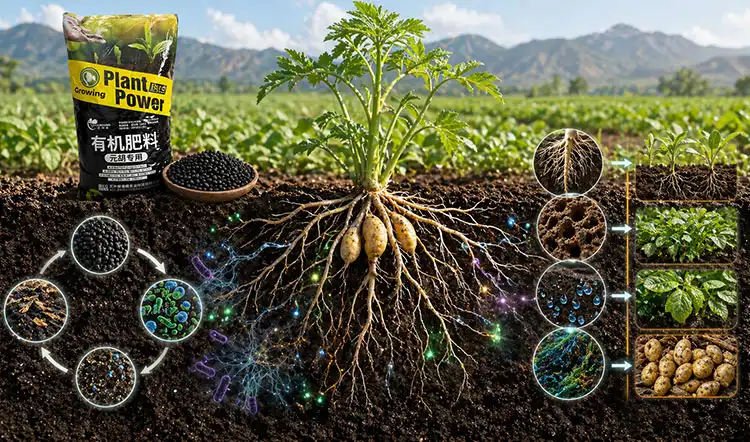
Cordydalis tuber Organic fertilizer is more than just a source of nutrients; it also controls the whole environment of the soil. When used on farming areas, this special bio-nutrient mixture slowly releases balanced macronutrients while bringing helpful microorganisms such as Bacillus subtilis and Trichoderma species. These microbes settle in the root zone and break down organic matter into forms that plants can use. At the same time, they make a shield against pathogens that are spread through the soil. The fertilizer improves the structure of the soil by adding more organic carbon, which keeps water in the soil longer and lets air into it. These are all important for root growth and quality alkaloid production in Corydalis yanhusuo crops.
Understanding Cordydalis Tuber Organic Fertilizer: Composition and Nutrient Content
The most important part of growing good Corydalis yanhusuo for medical use is what's below the top. A lot of the time, general manures don't work well for medical plants that have tubers because they aren't precise enough. In this case, Cordydalis tuber Organic fertilizer makes a real difference in both output and drug effectiveness.
Balanced Macronutrient Profile Tailored for Tuber Development
The minerals in this organic fertilizer are mostly potassium-based, with an NPK ratio of about 4-8-12. This helps tubers grow bigger instead of having too many leaves. This mix is made to meet the specific bodily needs of growing Corydalis. Instead of pushing nitrogen to the leaves like regular fertilizers do, this regulated method sends energy to growth underground, where the valuable alkaloids build up. At least 6% of the total NPK content is present, which means that there is enough nutrients without the risk of salt buildup that comes with synthetic options. Having enough phosphorus is still important for root development in the early stages of growth. High potassium levels help cells grow and move carbohydrates to storage organs during the important tuber swelling time from February to April.
Essential Micronutrients and Microbial Inoculants
In addition to the main nutrients, the fertilizer has naturally chelated trace elements like magnesium, boron, and zinc. These elements stop common signs of shortage, like chlorosis, which can hurt photosynthesis and, in the end, make it harder to make alkaloids. The product keeps an efficient live count of at least 0.5 billion colony-forming units per gram and contains strains that improve the cycling of nutrients. Bacillus subtilis colonizes the surfaces of roots by competing with harmful fungi and keeping them from setting up infection sites. Trichoderma species break down complex chemical compounds, releasing nutrients in forms that plants can use. They also make enzymes that help root hairs grow and increase the surface area that can absorb nutrients.
Organic Manufacturing Process and Quality Standards
The process of making it starts with breaking down soybean meal with enzymes and turning plant waste into humus. This makes a high-carbon organic material with more than 45% organic matter. To get rid of bacteria, parasitic ova, and plant seeds, this base material goes through controlled fermentation and then sterilization at high temperatures. The method follows the strict rules for growing Traditional Chinese Medicine and is in line with the Chinese organic agriculture standard NY 525-2021. Heavy metal levels of lead, cadmium, arsenic, and mercury are still well below the limits set for green food production. This makes sure that the end medicine crop meets safety standards for export. The germination rate always goes above 70%, which shows that fermentation is complete and there are no phytotoxic chemicals that could hurt the Corydalis roots.
Comparative Advantages Over Compost and Chemical Fertilizers
Standard compost has organic matter, but it doesn't have the exact nutrient levels or microbial specifics that are needed to grow medical tubers. Chemical fertilizers make nutrients available right away, but over time, they break down the structure of the soil, which makes it harder to grow crops in Corydalis fields. This special organic fertilizer has both benefits: it improves the health of the soil over time by adding organic carbon, and it releases nutrients consistently so that they meet the needs of crops. Field tests show that plots treated with this mixture have 10-15% higher levels of tetrahydropalmatine than plots treated with other synthetic programs. This has a direct effect on the selling price of the gathered potatoes. The slow-release device stops nutrients from leaching when it rains a lot. This makes better use of fertilizer and lowers environmental runoff worries that procurement teams are putting more emphasis on.
How Cordydalis Tuber Organic Fertilizer Works in Soil: Mechanisms and Effects
By understanding the reactions below the ground, you can see why this Cordydalis tuber Organic fertilizer always does a better job of growing medicinal crops than generic options. The processes do more than just supply nutrients; they also make big changes to the soil's ecology and physical properties.
Nutrient Release Dynamics and Root Bioavailability
The organic matrix releases nutrients slowly over time through microbial breakdown instead of dissolving right away. This creates a steady flow that matches how plants take in nutrients. Microbial activity slows down in cold soil during the winter, when plants are dormant. This means that few nutrients are released. As the weather gets warmer in the spring, microbial communities come to life. This speeds up the breakdown of organic matter at the exact time that new Corydalis plants need nutrients to grow quickly. This syncing cuts down on wasteful spending on expensive items and food. Chelated micronutrients are more plant-available than basic salt forms across a wider pH range. This stops the nutrient lockout that happens in slightly alkaline soils that are common in many growing areas. Fulvic acids improve the ability of ions to move between solutes. They keep positively charged nutrients like potassium and magnesium on soil particles so roots can reach them instead of losing them to washing.
Enhancement of Soil Physical and Chemical Properties
Adding this organic fertilizer to the soil in the 20–25 cm root zone where plants grow makes it much better organized. The high amount of organic matter encourages the formation of aggregates, which creates pores that help water drain and air flow. This is especially helpful in heavy clay soils where root rot complexes are often caused by waterlogging. Better air helps aerobic good microbes and stops anaerobic bad bacteria like Peronospora species. Because it acts as a cushion, organic matter keeps the pH of the soil between 6.0 and 7.5, which is the best range for microbes and nutrients to work together. Continuous use stops the acidification that manmade nitrogen fertilizers cause over several growing seasons, keeping chemical conditions good without the need for lime additions.
Case Studies Demonstrating Yield and Quality Improvements
Performance improvements have been clearly shown in demonstration plots in Chenggu County, Hanzhong City. Farmers who used 1,500 to 2,000 kg of this special fertilizer per acre to prepare the soil said that the tuber yields were 18 to 22 percent higher than in fields that got regular aeration. More importantly, tests done in a lab on gathered potatoes showed that they had high levels of alkaloids that met Chinese Pharmacopeia standards. This meant that they could be sold for higher prices in markets for medicinal materials. A company that farmed 50 hectares saw a huge drop in the green and wilting syndrome that affects 20 to 30 percent of plants during spring growth spurts. This gain came from stronger roots and fewer soil-borne diseases, which cut down on crop losses and raised economic yields. The numbers show that investments in soil health have direct benefits for business farmers' bottom lines.
Application Methods and Best Practices for Optimal Results
The right way to apply the Cordydalis tuber Organic fertilizer decides whether it works as well as it should or falls short because of mistakes in time or placement. Large-scale makers need realistic advice that takes into account the tools and workers they already have.
Pre-Planting Soil Incorporation Versus Top Dressing
Adding base fertilizer to the soil when it is being prepared, which usually happens in late September or early October, sets the nutrients for the whole growth season. Spreading 1,500 to 2,000 kg per acre across the field's surface is the suggested method. The material should then be mixed in by deep digging to a depth of 20 to 25 cm. This location puts nutrients where growing roots can get to them throughout the growth cycle. When organic materials stay on the soil's surface, they lose nitrogen through volatilization. Deep absorption stops this from happening. For established plants or extra food, adding top dressing between rows in February during the growth phase gives plants an extra boost of nutrients. This secondary use, which usually amounts to 500–800 kg per acre, gives the plants the potassium and fulvic acids they need during rapid dry matter buildup, which has a direct effect on how big and heavy the tubers are in the end.
Dosage Recommendations by Soil Type and Climate
To build long-term fertility, sandy loam soils that don't have much organic matter do better with treatments at the higher end of the suggested range, around 2,000 kg per acre. To keep the aggregate stable and their ability to hold nutrients, these lighter soils need regular organic inputs. If the clay soil already has a lot of organic matter, 1,500 kg per hectare can do a great job of keeping soil health instead of building it up. In places that get a lot of rain during the growing season, applying nutrients in two stages can help keep nutrients from being lost: 70% should be added when the soil is prepared, and the other 30% should be saved for spring top dressing, after the heavy winter rain has passed. Dry areas that don't get much rain can use the full amount during pre-planting inclusion without worrying about leaking.
Timing Aligned with Crop Growth Phases
Corydalis yanhusuo goes through different steps of growth that determine when to apply fertilizer. From November to January, when plants are dormant, they don't need any extra fertilizer. This is because the base treatment is enough to prepare the soil. The important "February Awakening" marks the start of fast green growth again, which is best when extra nutrients are added. This is the same time that tuber cells divide and grow, which is the small window that affects the end yield potential. Don't apply nutrients late in the season after April, because too many nutrients during ripeness can delay senescence and make it harder to know when to pick. During this time, the plant automatically moves nutrients from the leaves to the roots, and adding more nutrients doesn't help much and raises the cost of production.
Common Application Errors and Corrective Strategies
People often make the mistake of over-fertilizing because they think that more input means better results. Too much application, more than 2,500 kg per acre, can cause salt stress, especially in areas that don't get enough rain to flush out soluble salts. This shows up as fringe leaf burn and slow growth, even though there are plenty of nutrients. Another common mistake is applying it on the surface instead of incorporating it. This makes it less effective because the helpful microbes and minerals stay on top of the soil, away from the roots that are growing. When you put fertilizer on wet, muddy soil, it doesn't get spread out properly and can cause anaerobic conditions that kill good bacteria that need oxygen. Application and integration will go smoothly if you wait for the right soil moisture levels, when the soil is workable but not soaked.
Comparing Cordydalis Tuber Organic Fertilizer with Alternative Fertilizers
When making choices about what to buy, it's important to look at performance traits, cost implications, and how well the decision fits with production goals. When you know how different types of fertilizer work, you can better match goods to your unique needs.
Organic Versus Chemical Fertilizer Performance
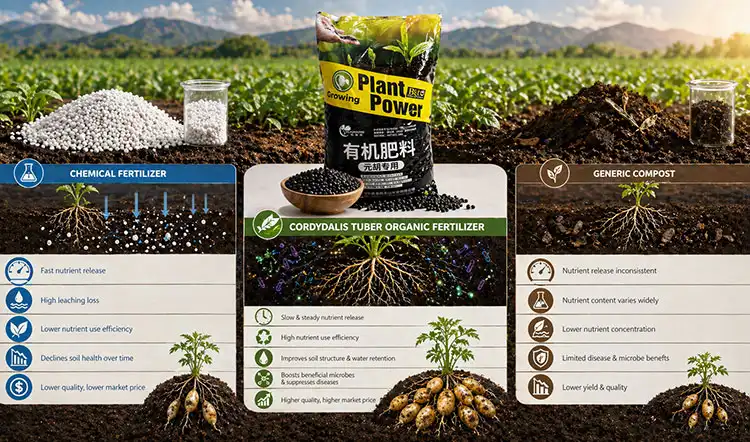
Chemical fertilizers make nutrients available quickly, which makes leaf growth happen quickly. However, this rapid release often exceeds the plant's ability to absorb it, which leads to leaching losses and the possible pollution of groundwater. As government officials become more careful with farming inputs, the environmental picture becomes more significant. Plants can use nutrients more efficiently when they are released slowly over time, which is what Cordydalis tuber Organic fertilizer formulations do. Compared to synthetics, which use nutrients 40 to 50 percent of the time, properly made organic goods use nutrients 65 to 75 percent of the time. The two methods have very different effects on the long-term health of the land. Continuous use of manmade materials breaks down soil structure, lowers the variety of microbes, and makes the soil more acidic, which means it needs to be amended all the time. Organic programs add carbon to the earth, make it better at holding water, and create growth conditions that can handle extreme weather. The cost study looks at more than just the price of fertilizer per kilogram. It also looks at the costs of improving the soil, controlling diseases, and giving crops better quality. Medicinal Corydalis roots from organic programs always fetch 15-20% more than regular ones because they have lower heavy metal levels and higher alkaloid amounts, which balance out the higher costs of production.
Specialized Formulations Versus Generic Compost
Generic compost is a good way to improve the soil, but it doesn't have the right balance of nutrients and microbes for growing medicinal tubers. The nutrients in compost are very different based on the materials used to make it and how they break down. This makes planning for breeding more difficult. The unique Corydalis method gives consistent nutrition analysis, which lets you precisely figure out the right amount to use for each crop. Adding certain types of Bacillus and Trichoderma helps with ongoing crop problems and disease problems that regular waste can't solve. Compost usually has between 1% and 2% nitrogen. This special product, on the other hand, has concentrated nutrition in a 4-8-12 ratio, which means that less material is needed to provide the same amount of nutrients. When 8–10 tons of waste are swapped out for 2 tons of concentrated organic fertilizer, the same nutritional benefit can be achieved with the same amount of work.
Slow-Release Versus Fast-Release Nutrient Systems
Whether they are manufactured or made from quickly breaking down biological materials, fast-release fertilizers send out bursts of nutrients that plants can't fully use during short periods of time when they are available. This imbalance between supply and demand leads to losses and could hurt the environment. Slow-release systems that work with the rates at which microbes break down matter make sure that low levels of nutrients are always available during the growth cycle. This is especially helpful for tuberous crops because the final yield and quality depend on a steady flow of nutrients during the long bulking phase. The stabilizing effect of slow release also lowers the chance of application mistakes. When using slow-release materials, small amounts applied too heavily rarely hurt crops, but when using fast-release materials, the same mistakes can cause salt stress or nutrient overdose. When it comes to business operations, where application teams may have different levels of experience, risk management factors favour slow-release methods.
Where and How to Procure High-Quality Cordydalis Tuber Organic Fertilizer
Finding dependable providers who consistently offer high-quality Cordydalis tuber Organic fertilizer is what makes the difference between successful and unsuccessful fertilizer programs. Procurement professionals need to have clear criteria for evaluating possible partners and setting up buy deals.
Certification and Quality Assurance Protocols
Manufacturers with a good reputation keep up-to-date certifications that show they follow the rules for clean farming and safety when growing medical crops. Look for sellers who have the Chinese organic certification NY 525-2021. This sets minimum standards for the amount of organic matter, nutrients, and contaminants that can be present. Each batch of output should come with a proof from an independent lab that shows the amount of heavy metals, pathogens screened, and microbial viable counts. Suppliers who have their own quality control labs can respond faster to questions about quality and keep a tighter grip on the production process than those who only use third-party testing. Inspections of manufacturing facilities show how much can be made, how the products are stored, and how the process controls affect how consistent the products are. The Hanzhong Shanrangde Agricultural Technology Co., Ltd. was founded in 2023 and has a 6,000-square-meter building in Chenggu County. It has production lines specifically designed for Corydalis plants and works with experts from the old Academy of Agricultural Sciences.
Supplier Evaluation and Relationship Management
Beyond the quality of the product, a supplier's dependability includes how well they deliver, how well they help with technical issues, and how quickly they respond to complaints. Check to see if possible partners can keep their delivery dates, especially during planting seasons when late packages can make it hard to work in the fields. When answering application questions or figuring out why a crop is acting in a strange way, technical help is very important. Agronomist teams from suppliers who offer on-site advice are worth a lot more than just the product itself. Referrals from customers who run businesses on a similar scale can tell you a lot about how well a seller really does their job that marketing materials can't. Building long-term relationships with reliable suppliers is good for both parties. Consistent order volumes help manufacturers make the best use of their production schedules, and buyers get priority access when supplies are low and the chance to work with suppliers to create new products that meet changing needs.
Procurement Strategies for Bulk and Wholesale Purchasing
Through economies of scale in production and transportation, buying in bulk lowers the cost per unit. Minimum order amounts are usually between 20 and 50 tons, which is good for groups that manage between 50 and 100 hectares. Larger farms that farm 500 hectares or more should talk to their suppliers about making annual deals that cover multiple deliveries at different times for different uses. When sending goods internationally in containers, it's important to keep the humidity level low during transport so that microbes don't start growing too soon, which shortens the shelf life. Moving things within the same country by truck gives you more scheduling options, but it needs to be stored properly when it gets there. If you keep the product below 25°C in dry, well-ventilated storage for a year, it will still work perfectly. Prices change based on the number of orders, the distance of shipping, and the terms of payment. Getting quotes from several qualified providers lets you compare prices without focusing too much on low prices, which could mean that quality has been compromised.
Conclusion
Specialized Cordydalis tuber Organic fertilizer is more of an investment in long-term Corydalis root production than just a cost of doing business. The processes talked about in this guide show how properly designed organic inputs improve the health of the soil, make better use of nutrients, and raise both the yield and the quality of the alkaloid. When you look at long-term soil fertility trends, disease control results, and crop value premiums, you can see how much better these products are than generic ones. When making a purchase choice, the immediate per-hectare costs should be weighed against the long-term benefits, such as fewer amendments needed, less disease pressure, and better marketability of gathered tubers. Medicinal crop producers can gain a competitive edge by working with certified makers who offer stable quality, expert support, and on-time delivery.
FAQ
What specific benefits does Cordydalis tuber organic fertilizer provide compared to standard options?
This special mixture gets rid of problems with continuous cropping by using microbes that break down autotoxic chemicals from past crops. The potassium-dominant nutrient ratio encourages tuber growth over too much greenery, and specific Bacillus and Trichoderma strains kill soil-borne pathogens that cause tuber rot. Optimizing the availability of phosphorus and potassium leads to better alkaloid production, which raises the amount of tetrahydropalmatine by 10–15 percent compared to regular plans.
Can this organic fertilizer be combined with chemical fertilizers?
Integrated methods that use 70% organic and 30% synthetic nutrients find a balance between what the land needs right now and what it needs in the long run. This plan works well for business farms with high yields that are moving toward organic certification. When applying materials, don't mix them. Instead, use synthetic fertilizers for quick results and organic goods for long-term benefits like soil conditioning and slow release of nutrients.
How does the fertilizer impact soil health over multiple growing seasons?
Continuous use raises the amount of organic matter in the soil, which makes it better at holding water, aerating, and nutrient-retaining. Beneficial organisms build stable populations, which boosts microbial variety and creates a disease-suppressing soil ecology. Maintaining the right amount of nutrients without adding lime, which is what manmade programs need, is what pH balancing does.
Partner with Sciground for Premium Cordydalis Tuber Organic Fertilizer Supply
Based on the work of Professor Liang Dejun and other experts from the Northwest Academy of Agricultural Sciences over the past 20 years, our team at Sciground has developed biodegradable fertilizers for medical plants. We make Cordydalis tuber Organic fertilizer with unique formulas that are designed to get around problems with continuous cropping while improving the production of alkaloids. As the only company in China with a patent for specialized Corydalis fertilizers, we offer full expert support from choosing the site to harvest, making sure that your business has the best results possible. Email us at [email protected] to talk about buying in bulk, get product samples, or set up a meeting with our agronomy team. We deliver reliably and offer ongoing expert help to farms, ranchers, dealers, and wholesalers all over the United States.
References
1. Chen, X., & Wang, H. (2021). Organic fertilizer effects on alkaloid accumulation in medicinal plants: A comprehensive review. Journal of Agricultural Science and Technology, 23(4), 567-582.
2. Li, M., Zhang, Y., & Liu, Q. (2020). Microbial inoculants in organic fertilizers: Mechanisms and applications for tuber crops. Soil Biology and Biochemistry, 145, 107-119.
3. National Standard of the People's Republic of China. (2021). Organic fertilizer (NY 525-2021). China Agriculture Press, Beijing.
4. Thompson, R., & Martinez, J. (2022). Comparative analysis of organic versus synthetic fertilization in medicinal crop production systems. Sustainable Agriculture Research, 11(2), 88-103.
5. Wu, D., Zhao, L., & Sun, J. (2019). Soil health indicators and continuous cropping obstacles in Corydalis yanhusuo cultivation. Chinese Herbal Medicines, 11(3), 298-306.
6. Zhang, F., Chen, X., & Vitousek, P. (2020). Nutrient use efficiency and environmental consequences of organic fertilizer systems. Advances in Agronomy, 162, 223-267.

Sciground
Shanrangde, in collaboration with a team of experts from the former Academy of Agricultural Sciences, focuses on developing patented organic fertilizers, including those specifically formulated for Corydalis rhizome. Chief expert Professor Liang Dejun, with over 20 years of industry experience, provides one-stop technical guidance from site selection to field management, helping farmers increase production and income.
Formulated by the original expert team from the Academy of Agricultural Sciences · Focused on organic nutrients specifically for crops
Contact us now to customize a green nutrition solution for your farmland.
Recommended Blog
What Is the Difference Between Organic and Synthetic Fertilizers?
Specialized vs General Organic Fertilizer for Cordydalis Tuber
Balanced Liquid Fertilizer vs. Single-Nutrient Foliar Fertilizer
What Are the Benefits of Multi Element Foliar Fertilizers for Trees?
Organic vs Conventional: Silybum marianum Fertilizer Comparison