How Does a Fruit Tree Organic Fertilizer Manufacturer Improve Yield?
Understanding the Role of a Fruit Tree Organic Fertiliser Manufacturer
- Understanding the Role of a Fruit Tree Organic Fertiliser Manufacturer
- Core Manufacturing Processes That Enhance Fertiliser Quality and Effectiveness
- How to Choose the Best Fruit Tree Organic Fertiliser Manufacturer for Your Business
- Best Practices for Using Organic Fertiliser to Maximise Fruit Tree Yield
- Future Trends and Innovations in Fruit Tree Organic Fertiliser Manufacturing
- Conclusion
- FAQ
- Partner with Sciground for Superior Organic Fertiliser Solutions
- References
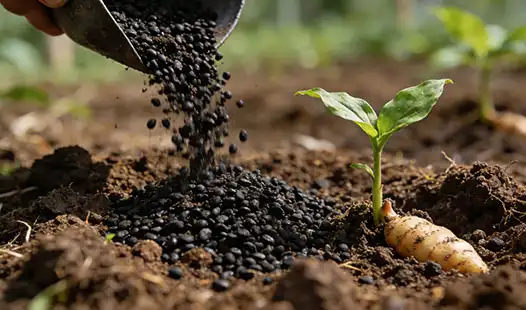
When growers face declining fruit quality and exhausted soils, the expertise of a reputable Fruit Tree Organic Fertiliser Manufacturer becomes invaluable. These specialised producers engineer bioactive soil amendments that synchronise nutrient release with tree phenology—from bud break through harvest. By combining scientifically composted organic matter with beneficial microbial consortia and chelated trace elements, a skilled manufacturer addresses Soil Exhaustion Syndrome while enhancing Cation Exchange Capacity. This holistic approach not only boosts fruit Brix levels and shelf-life stability but also restores long-term orchard vitality through improved rhizosphere health and balanced nutrient availability.
Understanding the Role of a Fruit Tree Organic Fertiliser Manufacturer
Organic fertiliser producers do more than compost. A skilled manufacturer customises nutrient-rich, ecologically friendly solutions for perennial fruit-bearing trees including citrus, stone fruits, pome fruits, and tropical kinds. Scale, certification criteria, and production methods differ across these manufacturers, affecting commercial orchard product dependability and efficacy.
Raw Material Selection and Sourcing
Quality starts with ingredients. Compost, cattle and poultry dung, peat moss, and straw powder are main feedstocks for established producers. The finest manufacturers ensure Cadmium stays below 1.5 mg/kg and test raw materials for Arsenic, Lead, Chromium, and Mercury according to EU laws and local organic certifications. Fruit crop contamination is prevented by rigorous selection, safeguarding producer reputation and customer health.
Organic vs. Chemical Fertiliser Impacts
Organic formulations boost soil health by supporting microbial activity and progressive nutrient release, unlike synthetic choices. This sustainable biological method promotes root growth and nutrient uptake. Soil microbes improve soil structure, water retention, and disease control by breaking down organic materials into plant-available forms. Healthy trees with greater natural defences and more predictable seasonal harvests result.
Biological Mechanisms That Drive Yield
By understanding these items' biology, procurement professionals may make better selections. Organic fertilisers distribute Bacillus subtilis and Trichoderma species to colonise root zones, control infections, and solubilise nutrients. Fulvic and humic acids chelate minerals, inhibiting fixation and improving cellular transport. This provides an active rhizosphere where plants effectively obtain nutrients, improving fruit set, size, and sugar content.
Core Manufacturing Processes That Enhance Fertiliser Quality and Effectiveness
The production journey from raw materials to finished product involves sophisticated processes that determine fertiliser performance in the field. Advanced Fruit Tree Organic Fertiliser Manufacturers employ rigorous quality controls at every stage to ensure nutrient stability and bioavailability.
Controlled Fermentation and Composting Techniques
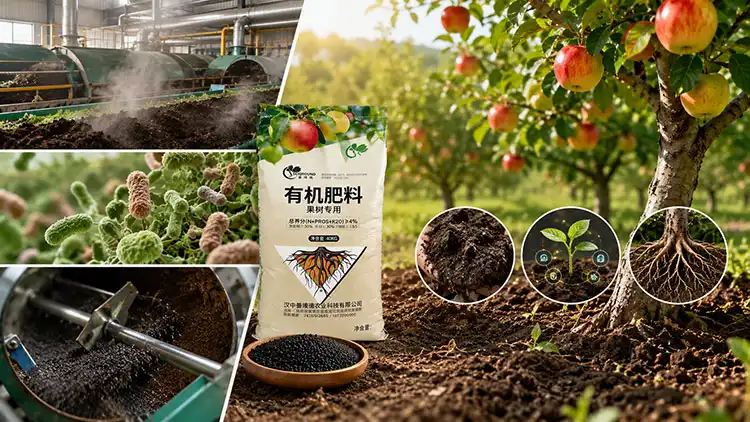
Composting at 55-70°C for five to seven days kills diseases such as faecal coliforms and Salmonella and destroys weed seeds. To minimise caking and pathogen growth, producers keep moisture levels below 20%. The Carbon-to-Nitrogen ratio is optimised between 15:1 and 20:1, assuring nitrogen availability without nitrogen theft, which may restrict tree growth during key development. Modern facilities use aerobic fermentation systems with motorised rotation to guarantee consistent breakdown. This regulated environment creates stable organic matter with high germination indices—typically over 85%—ensuring it is completely ripe and safe for root zone contact. Quality producers need maturity testing because immature compost emits ammonia and organic acids that damage feeder roots.
Microbial Inoculants and Enzyme Enhancements
Innovative producers use microbial inoculants to improve nutrient release. After application, these beneficial organisms break down organic debris and produce phosphorus and potassium-solubilising enzymes. Some producers use enzyme complexes to promote humification and create stable humic compounds that increase soil structure and nutrient retention. Formulations may meet fruit species' nutritional needs. Tropical stone fruits have differing nutritional demands and calcium-to-potassium ratios than citrus. Based on crop needs and soil conditions, manufacturers with research collaborations may tailor NPK ratios such as balanced 5-5-5 or high-potassium 4-3-8 for fruit filling.
Quality Assurance Through Certification and Testing
Reputable makers keep certificates, such as those for organic standards and ISO approval, which show that they are committed to quality. They test their goods regularly for physical factors like granule hardness (minimum 10N) to make sure the materials can handle being mechanically worked on without breaking down into dust. Chemical testing shows that the organic matter content is higher than 45%, and the levels of minor elements are just right for plants without posing any health risks. These companies help growers get the most out of their application rates and time by offering guarantees and technical support after the sale. Professional providers are different from commodity makers in this service dimension. It makes sure that business-to-business customers get not only goods but also full solutions that improve yields and support the health of orchards in the long run.
How to Choose the Best Fruit Tree Organic Fertiliser Manufacturer for Your Business
Selecting the right supplier requires evaluating multiple factors beyond price per ton. Smart procurement decisions consider ingredient transparency, production capacity, and logistical capabilities to ensure reliable, quality supply from a Fruit Tree Organic Fertiliser Manufacturer.
Ingredient Transparency and Product Quality
Ask for a full explanation of where the ingredients come from and a nutritional breakdown. Good makers give specific information like the amount of organic matter, the NPK ratios, the humic acid content (at least 10%), and the quantities of chelated micronutrients. They are happy to share heavy metal, virus, and age index test reports from a third party. This openness builds trust and lets you check that you're meeting the requirements for your organic certification or your own quality standards.
Production Capacity and Supply Chain Reliability
Check to see if the maker can regularly meet the number of orders you place. Facilities with at least 3,500 square meters of production space and declared capital of more than 10 million yuan usually show that they are committed to and able to provide a stable supply. Ask about ways to keep track of supplies, wait times, and backup plans for when demand is high during the busy season. Problems in the supply line can ruin planting plans, so dependability is just as important as quality.
Certifications and Sustainability Initiatives
Verified certifications signal adherence to industry standards and regulatory compliance. Beyond basic organic certification, look for manufacturers with documented sustainability practices including energy-efficient production equipment and waste recycling systems. Companies partnering with agricultural research institutions bring scientific rigour and innovation capacity that translate into superior products and technical support.
Best Practices for Using Organic Fertiliser to Maximise Fruit Tree Yield
Even premium products deliver suboptimal results without proper application techniques. Understanding how to integrate organic fertilisers into your orchard management program ensures maximum return on investment.
Application Timing and Dosage Strategies
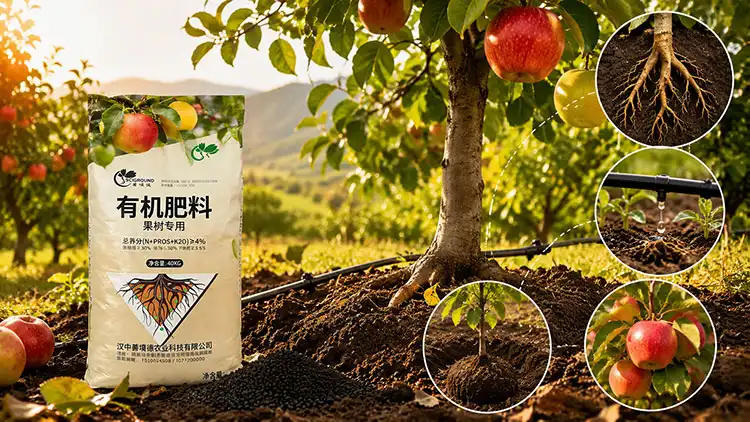
Applying nutrients at the right time for a tree's growth stage maximises their uptake and effect on yield. After the harvest, applications in the autumn act as "confinement fertiliser," recharging energy stores that were used up while the fruit was being grown. Apply using horizontal ditches or circle furrows at the dripline, and add 15 to 25 kg per grown tree, based on its size and the state of the soil. By putting nutrients in this way, busy feeder roots will be able to get to them during the winter root flush. In filling holes that are 30 to 40 cm deep, mix organic fertiliser with local soil to help the tree grow. The high humic acid content speeds up the growth of root hairs, which lowers transplant shock and increases the chances of survival. Using fertigation to apply liquid mixtures to existing trees during the fruit growth stages gives them instant peptides and potassium without raising the soil's salt stress, which is important for growing size and sugar content when it's hot or dry.
Integrating with Complementary Agricultural Practices
Proper watering management and combined pest management work well with organic fertilisation. Adding organic matter to the soil improves its structure, which makes it easier for water to soak in and stay there. This means that plants don't need to be watered as often. Trees that are healthier and have a healthy diet are naturally less likely to be attacked by pests, which means that less help is needed and the fruit is better when it's finished. To figure out how much to use, test the soil first to see what nutrients are already there and what the pH level is. Organic fertilisers help keep the soil's pH from changing too quickly, but knowing the baseline conditions keeps you from applying too much. A lot of makers offer technical advice services to help you understand soil tests and make feeding plans that are perfect for your crop and your yield goals.
Real-World Performance Evidence
Commercial growers that use special organic formulas say that they use nutrients 20 to 30 per cent more efficiently than regular programs. Case studies show that delivering the right amount of calcium and boron to fruit increases its Brix level, extends its shelf life after harvest, and lowers the risk of bodily diseases like Bitter Pit and Cork Spot. These changes in quality directly lead to higher prices on the market and higher profits. Environmental benefits go beyond the edges of the farm. Organic fertilisers keep chemicals from running off into waterways, which is good for ecological health and helps companies meet their green goals, which are becoming more important to customers and institutional buyers. This connection to caring for the environment improves the brand's image and creates new market possibilities in organic and sustainably grown food, which sell for more money.
Future Trends and Innovations in Fruit Tree Organic Fertiliser Manufacturing
The industry continues evolving rapidly as new technologies and regulatory pressures reshape production standards and product capabilities. Staying informed about these trends helps procurement professionals anticipate opportunities and maintain competitive advantages.
Emerging Bio-Fertilizer Technologies
Next-generation goods use carefully chosen groups of microbes that are designed to do specific jobs, like fixing nitrogen, dissolving phosphate, or making phytohormones. Nanotechnology can be used to make nutrient coating and controlled-release systems better, so that release rates are more closely matched to tree demand curves. These new ideas make it easier for plants to take in nutrients while also reducing damage to the environment. This helps both environmental and economic goals for a Fruit Tree Organic Fertiliser Manufacturer. Precision agriculture integration lets you change the rate of application based on tracking the dirt and keeping an eye on how strong the trees are. When manufacturers create recipes and application methods that work with each other, they place themselves as strategic partners instead of just providers of goods. They do this by making technology easier to use and providing data-driven support for agriculture.
Regulatory Drivers and Market Demands
Manufacturers are still having to meet higher standards for quality and eco-labelling. Products that meet stricter approval requirements can get into more expensive markets and get special buying treatment from big companies that care about the environment. This change in regulations challenges small makers who can't meet higher standards and rewards big companies that invest in quality systems and clear supply lines. More and more people, especially in foreign markets, want food that is grown without waste and in a way that doesn't harm the environment. Growers who sell through these outlets need fertiliser partners with proven organic credentials and regular quality. This change in the market gives producers chances to make money by focusing on tracking, licensing, and caring for the environment throughout their entire process.
Collaboration Opportunities for OEM Partners
Custom formulation capabilities allow manufacturers to develop private-label products tailored to specific regional conditions or crop specialties. These partnerships create product differentiation advantages and strengthen supply chain integration. Manufacturers with research partnerships and formulation flexibility offer strategic value beyond standard catalogue products, enabling distributors and large growers to build proprietary nutrition programs that differentiate their operations and market offerings.
Conclusion
For modern fruit production to keep getting higher yields, it needs to work together with producers who have science knowledge, quality control, and the ability to come up with new ideas. The right organic fertiliser provider gives farmers more than just goods; they also offer agricultural knowledge, stable quality, and quick support that helps them get the most out of their feeding programs and reach their profit goals. As the industry moves forward with new technologies and stricter environmental standards, it becomes more important than ever to choose producers who have a track record of controlled production, thorough testing, and working with customers. This planned way of getting fertiliser helps with both short-term growth goals and long-term crop health, and it meets the needs of markets and communities that expect environmentally responsible behaviour.
FAQ
1. Can organic fertilisers completely replace synthetic options in commercial orchards?
Certified organic operations must rely entirely on approved organic inputs. Conventional orchards often achieve optimal results through Integrated Nutrient Management combining both approaches. Quality organic fertilisers improve synthetic nutrient use efficiency by 20-30% through enhanced soil biology and reduced leaching, allowing reduced chemical application rates while maintaining yields.
2. How do I verify a manufacturer's quality claims?
Request third-party laboratory test results for heavy metals, pathogens, and germination index. Reputable producers willingly share certification documents and nutrient analysis reports. Visiting production facilities when possible allows direct assessment of composting processes, quality control systems, and production capacity claims.
3. What storage requirements ensure product quality maintenance?
Store in cool, dry, ventilated warehouses away from direct sunlight and moisture sources. Typical shelf life extends two years under proper conditions. Hygroscopic organic materials can cake or experience microbial reactivation if exposed to humidity, degrading quality and application performance. Sealed packaging and climate-controlled storage preserve bioactive ingredient viability.
Partner with Sciground for Superior Organic Fertiliser Solutions
Sciground stands ready to support your orchard nutrition needs with scientifically formulated organic fertilisers backed by over two decades of research expertise. Our facility in Hanzhong City combines traditional agricultural knowledge with modern production technology to deliver consistent, certified products meeting international quality standards. As a dedicated Fruit Tree Organic Fertiliser Manufacturer and fruit tree organic fertiliser supplier, we understand the complex nutritional demands of perennial crops and the importance of reliable supply partnerships. Our team, led by Professor Liang Dejun with 20+ years of organic fertiliser development experience, provides comprehensive technical support from soil analysis through harvest, ensuring you maximise the return on your fertiliser investment. We offer customised formulations tailored to your specific crop requirements and soil conditions, supported by rigorous quality testing and transparent ingredient disclosure. Contact our team at [email protected] to discuss how our specialised organic fertilisers can enhance your orchard productivity while supporting your sustainability objectives. Let us help you build a nutrition program that delivers measurable yield improvements and long-term soil health.
References
1. Chen, J. (2021). Organic Matter Dynamics in Fruit Tree Nutrition: Impacts on Soil Health and Productivity. Agricultural Sciences Press.
2. Rodriguez, M., & Thompson, K. (2022). "Microbial Inoculants in Organic Fertilisers: Mechanisms and Field Performance in Perennial Crops." Journal of Sustainable Agriculture, 47(3), 312-329.
3. Williams, R. (2020). Certification Standards and Quality Assurance in Organic Fertiliser Manufacturing. International Organic Agriculture Federation.
4. Zhang, L., Wang, F., & Liu, H. (2023). "Comparative Analysis of Nutrient Release Kinetics in Organic vs. Synthetic Fertilisers for Fruit Trees." Soil Science and Plant Nutrition, 69(2), 145-158.
5. Patterson, D. (2022). Strategic Procurement in Agricultural Inputs: A Guide for Commercial Growers. Farm Business Management Institute.
6. Kumar, S., & Martinez, A. (2021). "Emerging Technologies in Bio-Fertilizer Production: Nanotechnology and Precision Agriculture Applications." Advances in Agronomy, 168, 89-124.
Sciground
Shanrangde, in collaboration with a team of experts from the former Academy of Agricultural Sciences, focuses on developing patented organic fertilizers, including those specifically formulated for Corydalis rhizome. Chief expert Professor Liang Dejun, with over 20 years of industry experience, provides one-stop technical guidance from site selection to field management, helping farmers increase production and income.
Formulated by the original expert team from the Academy of Agricultural Sciences · Focused on organic nutrients specifically for crops
Contact us now to customize a green nutrition solution for your farmland.
Recommended Blog
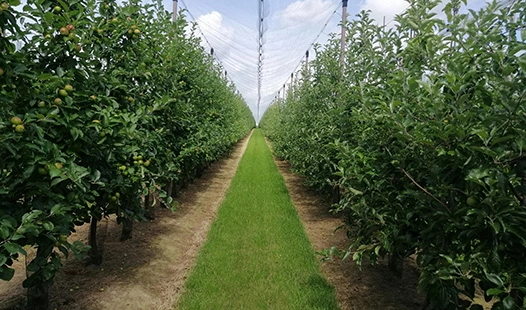
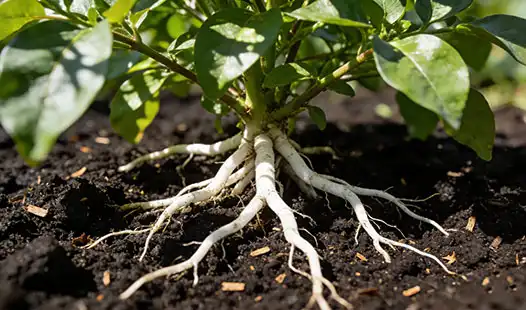
How Do Organic Fertilizers Benefit Soil Health and Plant Growth?
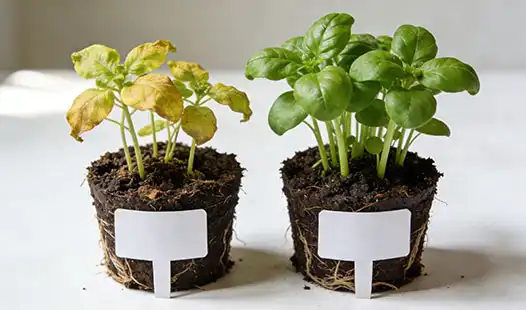
Why Should You Use Balanced Liquid Fertilizer for Your Plants?
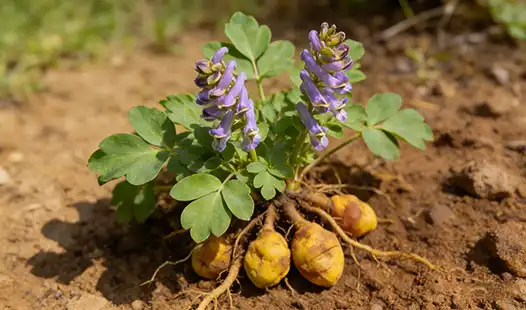
How to Increase Gastrodia Root Quality with Specialized Fertilizer?
_1767870624598.webp)