Fruit Tree Organic Fertilizer Manufacturer for Sustainable Farming
Understanding Fruit Tree Organic Fertilizer and Its Benefits
- Understanding Fruit Tree Organic Fertilizer and Its Benefits
- Key Factors in Choosing a Fruit Tree Organic Fertilizer Manufacturer
- Comparing Top Fruit Tree Organic Fertilizer Manufacturers
- Procurement Best Practices for Fruit Tree Organic Fertilizer
- Sustainable Farming with Fruit Tree Organic Fertilizer: Future Outlook
- Conclusion
- FAQ
- Sciground: Your Trusted Partner for Premium Organic Fertilizer Solutions
- References
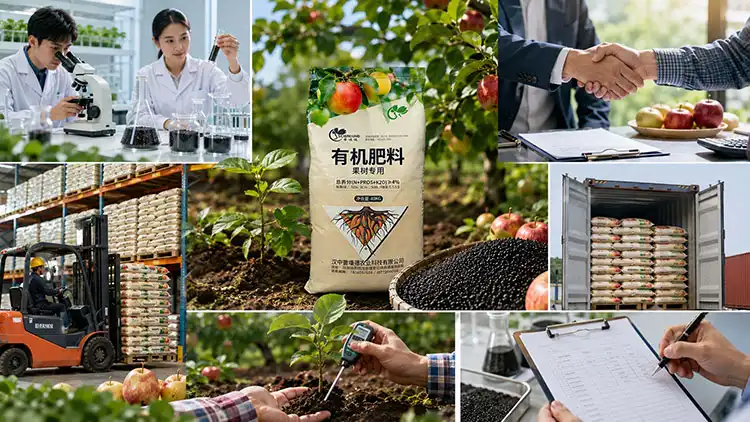
Choosing the right Fruit Tree Organic Fertilizer Manufacturer can transform your orchard's productivity and sustainability. As farmers, ranchers, and agricultural dealers, we face mounting pressure to deliver quality fruit while protecting soil health and meeting environmental standards. Partnering with a reliable manufacturer ensures access to scientifically formulated organic solutions that restore depleted soils, enhance fruit quality, and support long-term orchard viability through bioactive, eco-friendly inputs.
Understanding Fruit Tree Organic Fertilizer and Its Benefits
Fruit tree organic fertiliser is a bioactive soil addition for perennial fruit-bearing trees including citrus, stone fruits, and pomaceous kinds. Organic fertilisers function with natural soil processes rather than providing fast nitrogen spikes and degrading soil structure. Made from composted animal manure, plant leftovers, and mineral-rich organic matter, these products are fermented and sterilised at high temperatures to kill pathogens and preserve beneficial bacteria.
How Organic Fertilizers Enhance Soil Structure and Microbial Activity
Orchards thrive on biologically active soil. Organic fertilisers exceeding 45% humified organic matter form stable aggregates that strengthen soil. This physical change improves water infiltration and retention, reducing commercial irrigation by 30%. Premium formulations include beneficial bacteria like Bacillus subtilis and fungi like Trichoderma that colonise the rhizosphere, prevent root rot pathogens, and break down organic matter into plant nutrients. Continuous organic fertiliser application increases soil microbial biomass by 50–80% in three growing seasons, creating a disease- and stress-resistant soil ecosystem.
Nutrient Release Dynamics and Fruit Quality Improvement
Organic fertilisers match fruit tree phenology for nutrition delivery. Slow nitrogen release following dormancy break supports bud development without vegetative growth. Microbial mineralisation makes phosphorus and potassium available when plants bloom and fruit. This constant flow prevents fertiliser leaks after heavy rains and assures availability throughout the growing season. Excellent organic fertilisers raise fruit Brix by 1.5 to 3 degrees. Calcium and boron strengthen cell walls, reducing post-harvest disintegration and increasing shelf life by 7-14 days for supply chain merchants and dealers.
Key Factors in Choosing a Fruit Tree Organic Fertilizer Manufacturer
Selecting a manufacturing partner requires careful evaluation beyond price considerations. The Fruit Tree Organic Fertilizer Manufacturer's technical capabilities, quality control systems, and commitment to sustainable practices directly impact the performance consistency and reliability of the fertilizer products you purchase.
Certifications and Quality Standards That Matter
Reliable manufacturers have tight compliance certifications. Certified organic raw materials are synthetic-free. ISO 9001 and ISO 14001 demonstrate quality and environmental management. Premium products contain cadmium below 1.5 mg/kg, lead below 50 mg/kg, and mercury below 1 mg/kg. Check suppliers' heavy metal contamination testing processes. Full fermentation requires an 80% Germination Index test, which measures product maturity. Manufacturers lacking third-party lab reports or certifications should instantly be concerned about quality and food safety.
Research and Development Capacity
Continuous innovation is needed for quality production. Ag experts build crop-specific formulations for regional soil challenges in progressive manufacturers' R&D facilities. Advanced manufacturers evaluate product efficacy via field testing and soil science investigations with agricultural research groups. We design NPK ratios for fruit tree species and growth stages using our expertise. For intensive orchard crops like pecans, apples, and citrus, specialists develop zinc, boron, and iron formulations. Read manufacturers' technical teams' credentials, published research, and agronomic support after delivery.
Production Scalability and Supply Chain Reliability
Agricultural merchants and orchards require consistent product supply throughout seasonal application. Peak demand supply disruptions are avoided by manufacturers with appropriate production capacity and inventory management. Evaluate storage, manufacturing, and facility size. Manufacturers with over 3,000 square meters of fermentation, granulation, and climate-controlled warehousing are committed. Initial conversations should include minimum order quantities, lead times, and logistics. Reliable providers offer flexible spring and autumn application dates and appropriate storage to maintain product freshness.
Comparing Top Fruit Tree Organic Fertilizer Manufacturers
Selecting a manufacturing partner requires careful evaluation beyond price considerations. The Fruit Tree Organic Fertilizer Manufacturer's technical capabilities, quality control systems, and commitment to sustainable practices directly impact the performance consistency and reliability of the fertilizer products you purchase.
Ingredient Quality and Formulation Sophistication
Premium manufacturers employ superior ingredients and formulations. Complex organic matrices with different nutritional profiles are made from composted animal manures, plant meals, leonardite, and biochar in high-quality goods. Formulations with humic acid > 10% and fulvic acid increase nutrient chelation and cellular transport. The carbon-to-nitrogen ratio is carefully optimised between 15:1 and 20:1 to ensure nitrogen availability without immobilisation that might starve plants. Improved formulations include enzymatic hydrolysis and amino acids for root development and stress resistance. Fertigation-compatible liquid concentrate producers deliver accurate fertiliser using drip irrigation systems in orchard management.
Customer Experience and Technical Support
Customer service distinguishes companies beyond product excellence. Top suppliers' account managers oversee B2B buying and seasonal planning. Beyond order fulfilment, technical assistance includes soil testing interpretation, application rate recommendations, and orchard performance troubleshooting. Farmers can utilise fertiliser properly using webinars, field days, and cultivation guides from certain manufacturers. Customer reviews from established distributors and orchard managers show manufacturing reliability, product consistency, and quality.
Procurement Best Practices for Fruit Tree Organic Fertilizer
Strategic procurement maximizes value while minimizing supply chain risks. Experienced buyers implement systematic evaluation processes and relationship-building strategies that secure advantageous terms and reliable product access.
Conducting Manufacturer Due Diligence
Requesting precise product parameters, including nutritional analysis, organic matter content, moisture levels, and physical qualities like granule size dispersion, starts thorough scrutiny. Request the latest manufacturing batch certificates of analysis instead of generic marketing materials. Visit facilities when possible to examine manufacturing, quality control, and storage. Check fermentation control, pathogen eradication, and contamination avoidance throughout these visits. Manufacturers with clean, organised facilities and recorded SOPs indicate operational maturity and quality. Ask similar-sized customers for references to evaluate product performance, delivery dependability, and technical support.
Negotiating Terms and Building Strategic Partnerships
Effective negotiating includes payment arrangements, volume discounts, and value-added services beyond unit cost. Clarify minimum order amounts and consider customised formulations to suit soil deficiencies or crop needs found by soil testing. Discuss letters of credit, advance payment discounts, and longer terms for existing partnerships. Consider partnerships where manufacturers provide soil testing, agronomic advising, or cooperative marketing to retail dealers. Strong manufacturer ties may lead to preferential allocation during supply limitations and early access to novel formulations.
Quality Assurance and Performance Monitoring
Receiving inspection processes should check that product specs meet purchase agreements. Check moisture, granule integrity, and foreign elements upon arrival. Keep sample archives from each batch for quality investigations if field application performance concerns arise. Log application outcomes to show tree vigour, fruit output, and quality increases. This performance data guides future purchases and gives Fruit Tree Organic Fertilizer Manufacturer evidence-based input, boosting collaborative progress. To avoid subpar product delivery, establish return procedures and quality assurances before procurement agreements.
Sustainable Farming with Fruit Tree Organic Fertilizer: Future Outlook
The agricultural industry continues evolving toward environmentally responsible practices driven by regulatory requirements, consumer preferences, and ecological necessity. Organic fertilizer adoption represents a fundamental shift toward regenerative farming systems that rebuild natural resources while maintaining economic viability.
Environmental Advantages Over Chemical Alternatives
Organic fertilisers improve the ecology beyond orchards. Eutrophication from chemical fertilisers pollutes streams and causes aquatic dead zones. Instead, organic formulations deliver nutrients slowly to match plant absorption and reduce leaching. Organic matter boosts soil microbial communities, which absorb atmospheric carbon in stable soil organic molecules, mitigating climate change. Organic fertilizer-maintained orchards had 40-60% greater soil organic carbon levels than conventionally treated ones. Enhancing soil structure and moisture retention reduces irrigation and enhances drought resistance, which is crucial as climatic unpredictability increases.
Emerging Technologies and Innovation Trends
Manufacturing advances improve organic fertiliser efficacy and application. Specific bacterial and fungal strains for phosphorus solubilisation, nitrogen fixation, and disease suppression are used in microbial inoculants. Biochar increases cation exchange capacity and builds long-lasting carbon structures that retain nutrients for decades. Some pelletised formulations include controlled-release coatings that limit nutrient availability without synthetic polymers. Variable-rate fertility management based on soil mapping and tree needs is becoming possible using digital precision agricultural technologies. These technologies put manufacturers' customers at the forefront of sustainable agriculture and optimise operating efficiency and resources.
Conclusion
Working with a competent Fruit Tree Organic Fertiliser Manufacturer is a smart investment in orchard output. Farmers and dealers may satisfy rising expectations for ecologically responsible fruit production while meeting economic goals with manufacturers delivering high-quality products, technological skills, and trustworthy supply chains. Certifications, R&D capability, ingredient quality, and customer support assist in identifying firms offering value beyond competitive cost. Progressive procurement professionals gain competitive advantages by partnering with innovative manufacturers that advance organic fertiliser technology and provide comprehensive technical support to customers as sustainable agriculture practices grow worldwide.
FAQ
1. How long does it take to see results after applying organic fertilizer to fruit trees?
Visible improvements typically emerge within 6-8 weeks following application, though the timeline varies depending on soil condition, tree age, and application timing. Trees receive immediate benefits from improved soil moisture retention and microbial activity stimulation. Nutrient uptake increases progressively as organic matter decomposes and becomes plant-available. Measurable yield and quality improvements generally become evident in the subsequent growing season after initial application, with cumulative benefits increasing over three to five years of consistent use as soil health fundamentally improves.
2. What certifications should I verify when evaluating manufacturers?
Essential certifications include organic certification confirming compliant ingredient sourcing, ISO 9001 demonstrating quality management systems, and ISO 14001 indicating environmental management commitment. Request third-party laboratory reports verifying heavy metal levels, pathogen absence, and nutrient content accuracy. Manufacturers should provide Germination Index test results exceeding 80%, confirming complete fermentation. Patents or research collaborations with agricultural institutions indicate innovation capacity and technical credibility beyond basic manufacturing capabilities.
3. Can organic fertilizers be used alongside chemical fertilizers?
Integrated nutrient management combining organic and chemical inputs offers practical advantages for conventional orchards transitioning toward sustainable practices. Organic fertilizers improve nutrient use efficiency of chemical fertilizers by 20-30% through enhanced soil structure and microbial activity. This approach reduces total chemical fertilizer requirements while progressively building soil health. Certified organic operations must exclusively use approved organic inputs, but conventional farmers benefit from hybrid strategies that balance immediate nutrient delivery with long-term soil improvement until complete transition becomes feasible.
Sciground: Your Trusted Partner for Premium Organic Fertilizer Solutions
Sciground emerges as a distinguished Fruit Tree Organic Fertilizer Manufacturer specializing in scientifically formulated organic fertilizers for fruit trees and specialty crops. Our company combines rigorous research expertise with practical agricultural experience to deliver products that solve real orchard management challenges. Professor Liang Dejun, our chief expert with over 20 years in organic fertilizer development, leads our technical team in creating specialized formulations addressing soil exhaustion syndrome and nutrient deficiency disorders common in intensive fruit production. Our manufacturing facility in Hanzhong incorporates energy-efficient processing equipment producing granular and liquid organic fertilizers from carefully selected livestock manure, peat moss, and plant residues. Products undergo controlled high-temperature fermentation, eliminating pathogens while preserving beneficial microorganisms essential for soil health restoration. We provide comprehensive technical guidance supporting farmers from orchard establishment through harvest, including soil testing interpretation, application timing recommendations, and integrated pest management strategies. Whether you operate commercial orchards requiring bulk quantities or serve agricultural dealers seeking reliable suppliers, Sciground delivers consistent quality backed by scientific expertise and responsive customer service. Contact our team at [email protected] to discuss your specific requirements and receive customized recommendations for your fruit tree fertilization program.
References
1. Chen, J. H. (2023). "Organic Fertilizers and Their Effects on Soil Properties and Crop Productivity." Advances in Agronomy, Volume 178, Academic Press.
2. Gomez, A. R., & Martinez, L. P. (2024). "Sustainable Orchard Management: Organic Amendment Strategies for Fruit Production." Journal of Sustainable Agriculture, 48(3), 215-238.
3. National Organic Standards Board. (2023). "Guidance on Organic Fertilizer Materials and Production Standards." United States Department of Agriculture.
4. Thompson, R. B., & Stevens, K. J. (2024). "Microbial Dynamics in Organic Fertilizer Systems: Implications for Fruit Tree Nutrition." Soil Biology and Biochemistry, 189, 108-125.
5. Wang, L., & Zhang, M. (2023). "Comparative Analysis of Organic versus Synthetic Fertilizers in Commercial Orchards." HortScience, 58(7), 823-836.
6. Wilson, D. A. (2024). "Procurement Strategies for Agricultural Inputs: A Guide for Commercial Farmers and Dealers." Agricultural Business Management Quarterly, 12(1), 45-67.
Sciground
Shanrangde, in collaboration with a team of experts from the former Academy of Agricultural Sciences, focuses on developing patented organic fertilizers, including those specifically formulated for Corydalis rhizome. Chief expert Professor Liang Dejun, with over 20 years of industry experience, provides one-stop technical guidance from site selection to field management, helping farmers increase production and income.
Formulated by the original expert team from the Academy of Agricultural Sciences · Focused on organic nutrients specifically for crops
Contact us now to customize a green nutrition solution for your farmland.
Recommended Blog

How to Choose the Right Organic Fertilizer for Your Fruit Trees?
How Does Silybum marianum Specialized Organic Fertilizer Improve Yield?