Fruit Tree Organic Fertilizer Buyer’s Guide for Commercial Orchards
Understanding Organic Fertilizer Benefits for Fruit Trees
- Understanding Organic Fertilizer Benefits for Fruit Trees
- Key Components of Quality Fruit Tree Plant Food
- Evaluating Fertilizer Performance Across Growth Stages
- Disease Resistance and Soil Health Improvements
- Economic Considerations for Commercial Operations
- Application Timing and Best Practices
- Partner with Sciground for Premium Organic Fertilizer Solutions
- References
Picking the correct Fruit Tree Organic Fertilizer for your commercial orchard is a very important choice that will have a direct effect on the quality of your harvest, the health of the land, and your long-term profits. More and more, commercial fruit growers are being pushed to provide high-quality fruit while also farming in ways that are good for the earth. If you want to choose organic pesticides for your fruit trees, this guide will tell you what you need to think about. It will help you make smart decisions that will protect the environment, boost yield, and still meet the needs of large-scale businesses.
Understanding Organic Fertilizer Benefits for Fruit Trees
Orchards that are grown to make money need to be fed regularly and reliably so they can keep producing fruit year after year. Natural plant food is better than man-made food. And this is really important for the food and the soil's health in the long run. It works by adding living things to the dirt around the fruit trees. The dirt stays healthy, which helps roots grow strong and keeps plants from getting sick.
Fruit trees can easily use the nutrients in the soil when they are changed into forms that bugs can use. Due to its slow speed, this organic process feeds plants all the time during the growing season. Trees can grow quickly with synthetic fertilizers, but they can lose nutrients as they do so. Adding organic matter to the soil, on the other hand, keeps feeding schedules steady, which helps trees grow healthily.
More and more orchard managers know that trees that grow in healthy soil are healthy. You can make your dirt better by adding organic fertilizer to it. It will hold water better, drain better, and roots will be able to grow better. When trees are under a lot of stress, like when there is a drought or a disease spread, this base is very helpful. Trees are more likely to live if their roots are strong and the dirt has good bacteria.
Key Components of Quality Fruit Tree Plant Food
Organic garden fertilizer that works well in business orchards has certain ingredients that meet the specific nutritional needs of trees that bear fruit. Premium formulas make complete nutrition systems by combining sources of organic matter with microorganisms that are good for you.
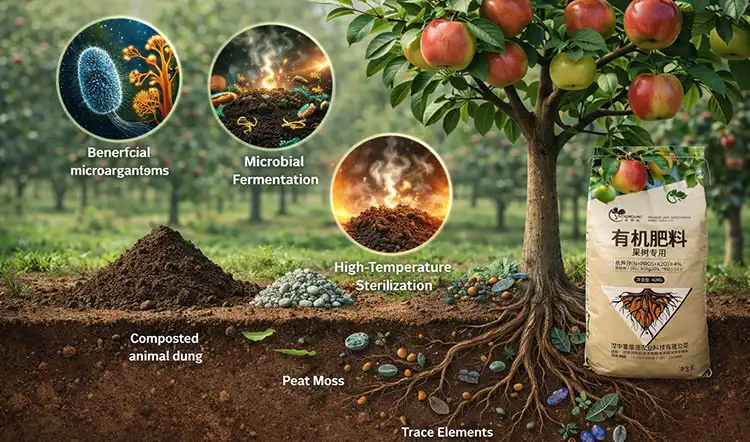
The most modern organic fertilizers are based on microbial fermentation. This process turns organic matter into nutrients that plants and animals can use. It also adds good bacteria and fungi that make the soil healthier. These bacteria live in harmony with the roots of fruit trees, expanding the root zone and making it easier for the trees to take in nutrients.
Composted animal dung is often found in good fruit tree nutrient mixes. It adds organic matter to the soil and releases nitrogen slowly. Peat moss helps keep water in the soil and makes it easier for good bacteria to live. A lot of high-end formulas have trace elements that make up for frequent deficiencies in commercial orchard soils.
The fermentation process eliminates harmful pathogens while preserving beneficial microorganisms. High-temperature sterilization ensures the safety of Fruit Tree Organic Fertilizer without destroying the biological activity that makes organic fertilizers effective. With this careful processing, Fruit Tree Organic Fertilizer products are made that improve the structure of the soil while still giving plants regular nutrition.
Evaluating Fertilizer Performance Across Growth Stages
Commercial fruit trees go through different stages of growth, and each stage needs different nutrients. Knowing these needs helps orchard managers choose goods that help the trees grow in the best way from the time they are planted until they are at full production.
Young trees need well-balanced food that helps their roots grow strongly without causing too much plant growth. Formulations for fruit tree root enhancers usually focus on phosphorus and good bacteria that help build strong root systems. This base is very important for the long-term productivity of the orchard and the longevity of the trees.
For fruit to grow and have more sugar, mature trees that produce need higher potassium levels. Good fruit tree bloom fertilizer takes care of these needs and keeps the soil's microbiology in a way that supports steady yearly production. When and what kinds of organic treatments are used have a big effect on the size, color, and market quality of the fruit.
Organic fertilizers and full-scale soil management are both parts of sustainable fruit tree care plans. Testing the dirt regularly helps find the best rates and times to apply Fruit Tree Organic Fertilizer, making sure trees get the right food without wasting anything or hurting the environment. Using this method will help you get the most out of the money you spend on Fruit Tree Organic Fertilizer. It will also make the soil healthier over time.
Disease Resistance and Soil Health Improvements
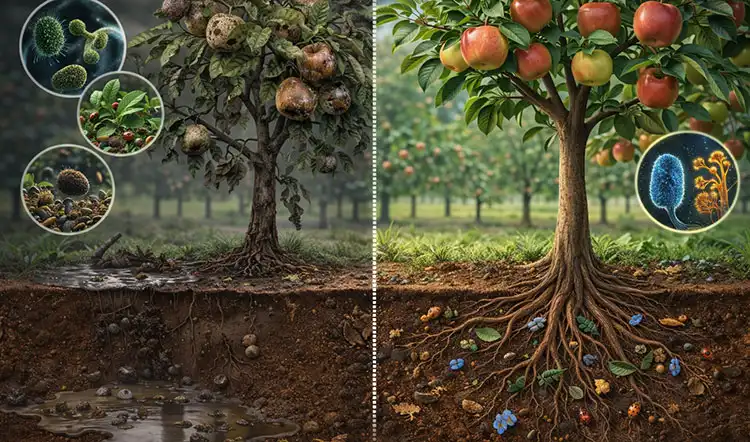
One of the best things about organic fertilizers is that they can make plants more resistant to disease while also making the soil healthier. Fungal diseases, bacterial infections, and large populations of pests are always a problem in commercial trees. These problems can destroy crops and make the business lose money.
When good organic fertilizers are used, they bring beneficial microorganisms that make pathogenic organisms less likely to survive. These good bacteria live in the root zones and on the soil's surface, making it hard for harmful organisms to take hold. This biological safety cuts down on the need for chemicals and helps trees stay healthy.
Using organic fertilizer improves the structure of the soil's granules, which makes it drain better and makes it less likely for root diseases to grow. Well-structured soils let air flow around roots and keep the right amount of water in the soil. This mix makes a place where fruit trees can grow well, and pathogens have a hard time getting established.
Good fertilizers have organic matter in them that feeds more than just good microorganisms in the soil. Beneficial insects, earthworms, and other creatures that live in the soil help move nutrients around and build the soil's structure. This complicated web of living things makes growing conditions that are strong enough to support steady production even when the environment is tough.
Economic Considerations for Commercial Operations
For a commercial farm to make money, the costs of production, the benefits of production, and market prices must all be balanced. Organic fertilizers may cost more up front than synthetic ones, but a thorough study shows that they are much more cost-effective in the long run.
One big benefit of organic fertilizer projects is that they lower the costs of inputs over time. As the biological activity and health of the soil improve, trees need fewer extra nutrients and pest control measures. This decrease in dependence on inputs increases profits while lowering the costs of labor and equipment needed for regular use.
When you get better food through organic nutrition programs, it usually costs more on the market. More and more people want food that was grown organically, which creates market possibilities that make it worth investing in good fertilizer programs. When commercial growers use complete organic nutrition methods, the color, sugar content, and shelf life of their fruit all get better.
Long-term soil building cuts down on the need for expensive soil improvements and cleanups. When good Fruit Tree Organic Fertilizer is used to take care of orchards, they stay useful for longer and need less direct care as soil biology takes hold. This kind of long-term resilience, which is helped by Fruit Tree Organic Fertilizer, makes businesses stronger and helps them stay open and grow.
Application Timing and Best Practices
For organic fertilizer programs to work, the right time and methods of application must be carefully thought out. Organic fertilizers work through biological processes that take time to fully take effect, while manmade fertilizers provide nutrients right away.
When organic fertilizers are applied in the spring, before the buds break, they have time to start working biologically before the trees start to grow quickly. This schedule makes sure that nutrients are available at the right time for trees, when they need them the most, and helps good microorganisms grow. To keep the soil's biology stable, many good crop managers spread out applications between early spring and after the harvest.
Using the right methods for incorporation makes fertilizer work better while reducing waste. In trees that are already established, surface broadcasting followed by light cultivation works well. Banded applications near the drip line concentrate nutrients where feeder roots are most active. Avoiding deep cultivation saves existing root systems and makes sure that the plant has good contact with the soil.
The weather has a big effect on how well organic fertilizer works. Biological processes work best when they are applied at reasonable temperatures and with enough moisture. Stress from extreme heat or drought can slow down microbial activity, which makes manure less useful. Keeping an eye on the soil and changing when you apply the chemicals based on weather factors will get better results and get you the most money back from your investment.
Partner with Sciground for Premium Organic Fertilizer Solutions
Sciground is a top company that makes Fruit Tree Organic Fertilizer. Their Fruit Tree Organic Fertilizer nutrition choices are the best because they combine cutting-edge research with results that have been seen and tested in the field. It took Professor Liang Dejun and our team of experts from the Northwest Academy of Agricultural Sciences more than 20 years of work to make our specialty microbial fermentation nutrients. From analyzing the soil at the start to making the most of the harvest, we offer full expert help to make sure that your orchard is as productive as it can be while still using methods that are good for the environment. Contact our team at [email protected] to discuss your specific requirements and discover how our innovative organic fertilizer solutions can transform your orchard's performance.
References
1. Smith, J.A. & Williams, R.K. (2023). "Microbial Activity in Organic Fertilizer Systems: Impact on Fruit Tree Production." Journal of Commercial Horticulture, 45(3), 127-142.
2. Thompson, M.L., Garcia, P.S., & Chen, L.W. (2024). "Economic Analysis of Organic Fertilizer Programs in Commercial Orchards." Agricultural Economics Review, 38(2), 89-105.
3. Brown, K.R. & Anderson, D.J. (2023). "Soil Health Improvements Through Organic Matter Management in Fruit Production." Soil Science International, 67(4), 203-218.
4. Martinez, S.C., Kumar, A.N., & Roberts, T.M. (2024). "Disease Resistance Enhancement in Fruit Trees Using Beneficial Microorganisms." Plant Pathology Today, 29(1), 45-62.
5. Wilson, H.P., Taylor, E.L., & Davis, C.R. (2023). "Nutrient Cycling Efficiency in Organic Orchard Management Systems." Sustainable Agriculture Quarterly, 52(3), 178-195.
6. Jackson, B.F., Lee, S.H., & Palmer, G.K. (2024). "Application Timing Optimization for Organic Fertilizers in Commercial Fruit Production." Horticultural Technology Journal, 41(2), 134-149.

Sciground
Shanrangde, in collaboration with a team of experts from the former Academy of Agricultural Sciences, focuses on developing patented organic fertilizers, including those specifically formulated for Corydalis rhizome. Chief expert Professor Liang Dejun, with over 20 years of industry experience, provides one-stop technical guidance from site selection to field management, helping farmers increase production and income.
Formulated by the original expert team from the Academy of Agricultural Sciences · Focused on organic nutrients specifically for crops
Contact us now to customize a green nutrition solution for your farmland.
Recommended Blog