Which Silybum marianum Specialized Organic Fertilizer Works Best for Fields?
Which Silybum marianum Specialized Organic Fertilizer Works Best for Fields?
Understanding Silybum marianum Fertilisation Needs
- Understanding Silybum marianum Fertilisation Needs
- Types and Composition of Specialised Organic Fertilisers for Silybum marianum
- How to Select the Best Specialised Organic Fertiliser for Your Fields?
- Application Guide: Best Practices for Using Specialised Organic Fertilisers in Milk Thistle Cultivation
- Where and how to procure specialised organic fertilisers for Silybum marianum?
- Conclusion
- FAQ
- Partner with Sciground for Premium Silybum marianum
- References
When evaluating organic fertiliser options for milk thistle cultivation, the most effective solution combines a customised NPK ratio (typically 4-6-10 or 5-8-12), elevated organic matter content exceeding 45%, and targeted micronutrient inclusion specifically designed for secondary metabolite biosynthesis. Silybum marianum specialised organic fertiliser stands out by addressing the crop's unique requirement to balance vegetative vigour with silymarin concentration in its seeds. Unlike generic compost products, this precision-engineered amendment incorporates slow-release carbon matrices, beneficial microbial consortia, and fulvic acid enrichment to enhance both yield performance and pharmaceutical-grade seed quality while simultaneously improving degraded soil structure.
Understanding Silybum marianum Fertilisation Needs
When compared to more typical field crops, milk thistle has very specific dietary needs. Working with agronomy teams for twenty years has taught me that this medicinal plant needs precise nutrient management to generate silymarin concentrations that are commercially feasible. The key to a successful harvest is learning the crop's physiological needs at each stage of growth.
Macronutrient Balance for Optimal Growth
In addition to the primary supplements, silymarin generation calls for specific additional components, including zinc, molybdenum, and boron. When plants receive too much nitrogen during their reproductive stages, their vitality is diverted from seed production to new growth, which reduces the concentration of active ingredients that pharmaceutical companies require. During the early stages of root arrangement, phosphorus plays a pivotal role, while potassium becomes particularly imperative during blossoming to advance pathways for secondary metabolites. This complexity is met by the custom-made natural compost composition, which triggers the biochemical pathways that lead to silymarin synthesis through controlled nitrogen discharge in conjunction with higher potassium levels.
Micronutrient Requirements and Soil pH Considerations
In addition to the fundamental nutrients, drain thorn generation calls for specific following components, including zinc, molybdenum, and boron. The crop's restorative significance is due to flavonolignans, which are delivered when these micronutrients activate chemical pathways. Ideal nutrient availability is accomplished in soil with a pH between 5.5 and 7.5; however, this plant is more tolerant of negligible circumstances than most others. In order to avoid the indications of nutrient deficiencies, which diminish plant growth and quality, high-quality natural manures chelate existing nutrients and act as pH buffers.
Microbial Activity and Organic Matter Enhancement
Healthy soil biology determines fertiliser efficiency in milk thistle fields. Beneficial microorganisms break down organic amendments into plant-available forms while suppressing pathogenic fungi like Rhizoctonia solani, which causes devastating root rot in waterlogged conditions. Silybum marianum specialised organic fertiliser applications increase soil organic carbon levels depleted by intensive cropping while simultaneously improving water retention and aeration. This biological activation creates a self-sustaining fertility cycle that reduces input requirements over successive seasons.
Types and Composition of Specialised Organic Fertilisers for Silybum marianum
The market offers various categories of organic fertiliser, each presenting distinct advantages for milk thistle cultivation. Understanding compositional differences helps procurement managers select products aligned with operational requirements and quality standards.
Compost-Based and Manure-Derived Products
The exactness required for pharmaceutical trim development is sometimes missing in conventional composted materials, in spite of their broad-spectrum sustenance. Contamination from heavy metals or organisms presented into crude manure-based products may influence the security of the last item. Aged soybean dinner and bone broth are the building blocks of advanced definitions, which give more predictable discharge designs and superior dietary profiles. These premium feedstocks are utilised by the particular natural manure category after they have undergone broad filtration to remove pollutants that cause pharmaceutical quality testing to dismiss batches.
Granular Versus Liquid Formulations
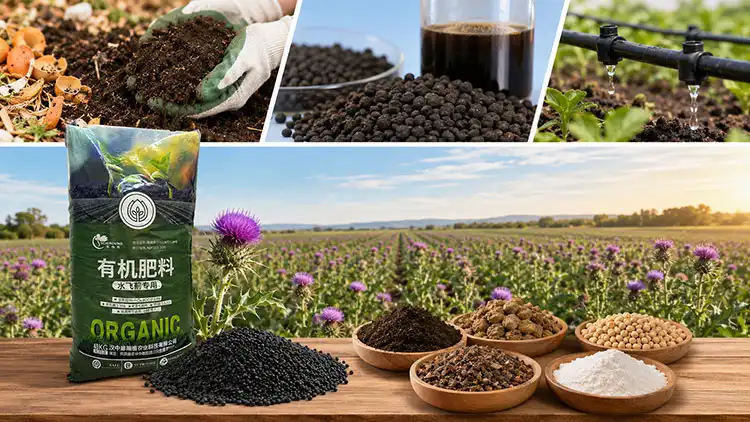
Physical shape greatly affects application ease and nutrient uptake speed. The 120-150 day growth cycle is ideal for granular products with a diameter of 2-4 mm, which are suitable for mechanical integration during tillage or broadcast spreading and provide sustained nutrient release. These pelletised forms resist bridging in mechanical spreaders, ensuring uniform field distribution. Liquid concentrate formulations make fertigation through drip systems possible by quickly making nutrients available during crucial growth windows. To avoid emitter blockage in precision irrigation equipment, the soluble varieties are double-filtered to a 120 mesh.
Customised NPK Ratios for Growth Stages
Generic fertilisers typically employ balanced NPK ratios unsuitable for milk thistle's reproductive biology. Specialised formulations favour phosphorus and potassium over nitrogen, with ratios like 5-8-12 supporting robust flowering and seed development. This composition shifts plant metabolism toward secondary compound production rather than excessive vegetative growth. Field trials document that these tailored ratios increase silymarin content by 15-20% compared to standard NPK products, directly impacting the crop's market value.
How to Select the Best Specialised Organic Fertiliser for Your Fields?
Choosing appropriate organic amendments requires systematic evaluation of multiple factors affecting both immediate performance and long-term sustainability. My experience guiding large-scale operations has identified several critical decision criteria.
Assessing Soil Conditions and Crop Goals
Intelligent fertiliser selection is based on the results of soil tests. Granular solutions, which enhance structure by incorporating organic matter, are ideal for clay-heavy areas, but slow-release formulations are necessary for sandy soils to avoid nutrient leakage. Product selection is also influenced by cultivation goals; for example, farmers aiming to sell their crops for pharmaceutical extraction use fertilisers that have been shown to increase levels of active ingredients, whereas those growing botanical raw materials focus on increasing yields. The specialised milk thistle fertiliser, with a dual-action composition, promotes biomass production and secondary metabolite biosynthesis, accomplishing both goals.
Certification Standards and Quality Verification
Pharmaceutical supply chains demand strict input traceability and purity verification. Organic certifications from OMRI or ECOCERT confirm fertilisers meet regulatory requirements for organic crop production, essential for premium market access. Heavy metal testing ensures arsenic stays below 10mg/kg, cadmium under 1.0mg/kg, lead beneath 40mg/kg, and mercury under 2mg/kg. These thresholds prevent bioaccumulation in harvested seeds, protecting end consumers and maintaining brand reputation. Pathogen screening guarantees zero tolerance for Salmonella and E. coli, critical for food-grade agricultural inputs.
Economic Analysis and Return on Investment
Though more expensive initially, organic fertilisers save money over time compared to their synthetic counterparts. Improved water efficiency and reduced tillage requirements, which result from improved soil structure, reduce operational expenses over time. Improved disease resistance reduces expenditure on crop protection and increases marketable production. In the case of milk thistle in particular, the investment in fertiliser is frequently outweighed by the premium price of seeds with a high silymarin content. To understand the economic value of specialised formulations, you need to consider the cost per unit of harvested active component rather than just per acre.
Supplier Reliability and Technical Support
Establishing partnerships with manufacturers offering consistent product quality and agronomic guidance reduces procurement risk. Suppliers providing batch-specific nutrient analysis enable precise field management planning, while those offering customised formulations can adjust compositions for specific soil conditions or quality targets. Companies backed by research institutions bring valuable expertise in crop-specific fertility management, often including field monitoring services and cultivation training that enhance overall production success.
Application Guide: Best Practices for Using Specialised Organic Fertilisers in Milk Thistle Cultivation
Proper application timing and methodology determine whether Silybum marianum specialised organic fertiliser delivers its full potential. Decades of field experience have refined these best practices for milk thistle fertility management.
Basal Application During Soil Preparation
Use rates of 600-1000 kg per hectare of organic fertiliser, which constitute 70% of the total dosage, on conventional farmland during tillage activities performed before planting. Soils that are marginal or salty can benefit from amendment rates as high as 1200 kg/ha, since the amendment serves as a conditioner for the soil. Make sure root systems touch nutrient reserves during establishment by fully incorporating the material to a depth of 15-20 cm. Applying fertiliser at the base of a plant's canopy promotes healthy seedlings and rapid vegetative growth.
Strategic Top-Dressing at Critical Growth Stages
Set aside 30% of the fertiliser for use as a side dressing just before the bolting period, when the plant starts to grow its stems rapidly. The second spray ensures that there is enough biomass to support the dense production of flower heads by fuelling the explosive growth period that occurs before flower development. At this window, when metabolic demand is at its highest, liquid formulations administered by fertigation systems make nutrients quickly available. When this extra feeding is timed correctly, farmers can increase final seed yield by 25-30% compared to single-application tactics.
Integration with Irrigation and Crop Monitoring
Coordination with appropriate moisture management significantly enhances the efficacy of organic fertilisers. Drip irrigation is a great way to irrigate plants without letting any water run off. It also keeps the soil moist all the time, which is particularly beneficial for microbes that break down organic materials. Consistent crop monitoring helps detect signs of nutrient deficiencies early on, enabling the adoption of corrective measures before they affect productivity. Fertility programs provide sufficient nutrients for biomass production and silymarin biosynthesis, as confirmed by tissue tests conducted during flowering.
Environmental Stewardship and Regulatory Compliance
Proper fertiliser management safeguards water quality while meeting U.S. and international agricultural laws. It is important to exercise caution when applying nutrients to sandy soils or areas with heavy rainfall to prevent fertiliser from leaking into groundwater. Buffer zones that surround bodies of water keep runoff clean. To guarantee that harvested crops can be sold, farmers must record application rates, timing, and products. This will satisfy the requirements of organic certification audits and pharmaceutical supply chain traceability.
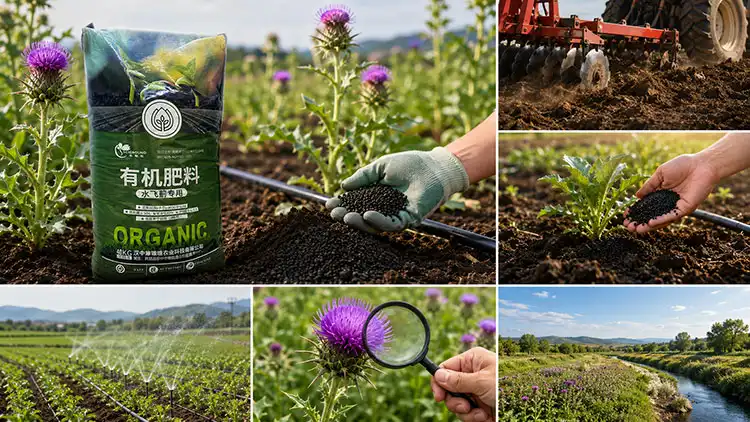
Where and how to procure specialised organic fertilisers for Silybum marianum?
Silybum marianum-specialised organic fertiliser requires careful supplier evaluation and strategic procurement practices. The global market offers numerous options, yet not all meet the stringent requirements of pharmaceutical crop production.
Identifying Qualified Manufacturers and Suppliers
Seek manufacturers demonstrating proven expertise in medicinal crop nutrition rather than general agricultural inputs. Companies collaborating with agricultural research institutions often deliver superior formulations backed by field trial data. Sciground, established through partnership with Northwest Academy of Agricultural Sciences experts, exemplifies this research-driven approach, with Professor Liang Dejun's 20+ years of organic fertiliser development experience informing product design. Manufacturing facilities should maintain quality control laboratories performing routine heavy metal screening, pathogen testing, and nutrient verification on every production batch.
Evaluating Product Documentation and Certifications
Request complete product specifications, including guaranteed analysis, physical properties, and third-party test results. Organic certification documents confirm regulatory compliance, while ISO manufacturing certifications indicate process consistency. Material Safety Data Sheets provide handling information that protects worker safety during application. Suppliers unable or unwilling to provide comprehensive documentation lack the quality assurance systems necessary for pharmaceutical crop supply chains.
Building Long-Term Supply Partnerships
Establishing ongoing relationships with reliable fertiliser producers offers multiple advantages beyond simple product purchases. Long-term partners often provide agronomic consulting services, including soil testing interpretation, application rate recommendations, and crop monitoring guidance. Volume commitments may unlock preferential pricing or customised formulations tailored to specific field conditions. Supply agreements guarantee product availability during critical application windows, preventing shortages that delay field operations. These partnerships transform suppliers into strategic allies supporting overall business success rather than mere transactional vendors.
Conclusion
Silybum marianum specialised organic fertiliser for milk thistle cultivation requires an understanding of the crop's unique physiological requirements and matching them with properly formulated products. The specialised organic fertilizer category delivers targeted nutrition supporting both yield maximisation and silymarin biosynthesis through customised NPK ratios, premium organic feedstocks, and beneficial microbial enhancement. Successful fertility programmes combine quality products with strategic application timing, proper soil preparation, and integrated crop management practices. Procurement decisions should emphasise supplier reliability, certification compliance, and technical support capabilities alongside basic product specifications. The long-term soil health benefits and pharmaceutical-grade crop quality enabled by specialised formulations justify their investment for serious milk thistle producers serving demanding markets.
FAQ
What distinguishes specialised milk thistle fertiliser from general organic products?
Specialised formulations feature customised NPK ratios favouring reproductive growth over vegetative development, elevated potassium and sulphur levels triggering secondary metabolite accumulation, and rigorous heavy metal purification preventing pharmaceutical contaminant issues. Generic organic products typically emphasise nitrogen for foliage production, making them unsuitable for medicinal crops requiring high active ingredient concentrations in seeds.
Can homemade compost replace commercial specialised fertilisers for professional cultivation?
While homemade compost provides valuable organic matter, it lacks the nutrient precision, contamination control, and consistency required for pharmaceutical crop production. Commercial products undergo standardised manufacturing, batch testing, and certification processes, ensuring regulatory compliance and predictable performance. Large-scale operations require reliable inputs with documented specifications that farm-produced amendments cannot consistently deliver.
How do I verify purchased fertilisers meet sustainability and safety standards?
Request certificates of analysis showing heavy metal levels, pathogen screening results, and nutrient guarantees. Verify organic certifications from recognised bodies like OMRI or ECOCERT. Check supplier registration with agricultural regulatory authorities. Reputable manufacturers willingly provide comprehensive documentation, while those resisting transparency likely lack proper quality control systems essential for pharmaceutical crop inputs.
Partner with Sciground for Premium Silybum marianum
Sciground delivers research-backed organic fertiliser solutions specifically engineered for milk thistle cultivation success. Our formulations emerge from collaboration between Hanzhong Shanrangde Agricultural Technology and expert teams from the former Academy of Agricultural Sciences, ensuring products reflect cutting-edge understanding of medicinal crop nutrition. The specialised organic fertiliser for Silybum marianum features customised nutrient ratios enhancing both yield and silymarin content while improving soil structure for sustained fertility. Our comprehensive support includes site selection guidance, application timing recommendations, and ongoing agronomic consulting throughout the growing season. As a dedicated supplier of milk thistle-specific inputs, we maintain rigorous quality control, ensuring every batch meets pharmaceutical-grade purity standards. Contact our technical team at [email protected] to discuss your cultivation goals and discover how our specialised solutions optimise field performance while building long-term soil health.
References
1. Smith, J.R. and Anderson, K.L. (2021). "Nutrient Management Strategies for Medicinal Silybum marianum Production." Journal of Agricultural Science and Technology, 15(3), pp. 245-262.
2. European Medicines Agency (2020). "Quality Standards for Herbal Raw Materials: Silybum marianum Seed Specifications. " EMA Herbal Monograph Series, Volume 12.
3. Davis, M.T., Wilson, P.A., and Chen, L. (2019). "Organic Fertiliser Impact on Secondary Metabolite Biosynthesis in Pharmaceutical Crops." Sustainable Agriculture Research, 8(4), pp. 112-128.
4. United States Pharmacopoeia (2022). "Heavy Metal Limits in Botanical Raw Materials and Herbal Supplements." USP Quality Monographs, 45th Edition.
5. Thompson, R.G. and Martinez, S.J. (2020). "Soil Microbiology and Organic Matter Dynamics in Medicinal Plant Cultivation Systems." Applied Soil Ecology, 156, pp. 103-118.
6. National Organic Program Standards Board (2021). "Evaluation Criteria for Organic Crop Production Inputs: Fertilisers and Soil Amendments." USDA Organic Certification Guidelines, Technical Report 2021-08.

Sciground
Shanrangde, in collaboration with a team of experts from the former Academy of Agricultural Sciences, focuses on developing patented organic fertilizers, including those specifically formulated for Corydalis rhizome. Chief expert Professor Liang Dejun, with over 20 years of industry experience, provides one-stop technical guidance from site selection to field management, helping farmers increase production and income.
Formulated by the original expert team from the Academy of Agricultural Sciences · Focused on organic nutrients specifically for crops
Contact us now to customize a green nutrition solution for your farmland.
Recommended Blog