Are Water-soluble fertilizers Suitable for Drip Irrigation Systems?
Understanding Water-soluble Fertilisers and Drip Irrigation Systems
- Understanding Water-soluble Fertilisers and Drip Irrigation Systems
- How do water-soluble fertilisers work in drip irrigation systems?
- Comparison and Decision-Making: Water-Soluble Fertilisers vs Other Fertiliser Types in Drip Irrigation
- Procurement Insights for Bulk Buyers and Distributors
- Troubleshooting and Optimising Fertiliser Use in Drip Irrigation
- Conclusion
- FAQ
- Partner with Sciground for Advanced Fertigation Solutions
- References
Water-soluble fertilisers are exceptionally suitable for drip irrigation systems, providing seamless integration and superior nutrient delivery. These fertilisers dissolve completely in water, leaving minimal residue that could clog emitters or disrupt flow rates. When applied through fertigation, they deliver precise nutrition directly to root zones, achieving nutrient use efficiency rates exceeding 85%, compared to conventional broadcasting methods. The compatibility stems from their engineered formulation—high-purity raw materials and controlled particle size ensure smooth passage through micro-irrigation networks while maintaining system integrity and crop health.
Understanding Water-soluble Fertilisers and Drip Irrigation Systems
What Makes Water-Soluble Fertilisers Unique?
Water-soluble fertilisers represent a significant advancement in agricultural nutrient management. Unlike traditional granular products, these formulations dissolve completely, creating nutrient solutions with less than 0.5% insoluble matter. The chemical composition includes high-purity compounds like potassium nitrate, monoammonium phosphate, and chelated micronutrients. Our formulations at Sciground contain essential micronutrients—including iron, zinc, manganese, and boron—that improve plant health and resistance through enhanced absorption. These micronutrients remain stable across diverse pH ranges, ensuring consistent availability regardless of soil conditions.
How Drip Irrigation Systems Function
Through a system of pipes, valves, and emitters, drip irrigation technology provides dissolved nutrients and water straight to the root zone. By carefully monitoring soil moisture levels, this precision agricultural method reduces water loss due to evaporation and runoff. The system can distribute evenly across large field areas since it runs under controlled pressure, usually between 10 and 30 psi. The crop needs, soil type, and topography can all be taken into account while adjusting the flow rates and spacing of the emitters. Drip irrigation systems become advanced fertigation platforms when soluble fertiliser products are used. These platforms may spoon-feed nutrients based on phenological stages, weather patterns, and the actual needs of the crop at any given moment.
Compatibility Factors Between Technologies
Several technological factors determine whether soluble nutrition items and drip technology are compatible. For the purpose of avoiding root burn and osmotic stress, it is imperative that electrical conductivity (EC) stays within reasonable limits, usually below 2.5 dS/m. Since the ideal nutrient uptake range for most crops is in the slightly acidic range of 5.5 to 6.5, pH buffering becomes critical. The main operational concern is preventing emitter blockage, which is achieved by ensuring complete dissolution and controlling particle size. Especially in hard water situations with high magnesium or calcium concentrations, chelation technology in premium formulations prevents micronutrients from precipitating. Formulations designed to maximise plant responsiveness while maintaining system purity have been created by our team at Sciground, headed by Professor Liang Dejun, who has over 20 years of research experience.
How do water-soluble fertilisers work in drip irrigation systems?
Nutrient Delivery Mechanisms
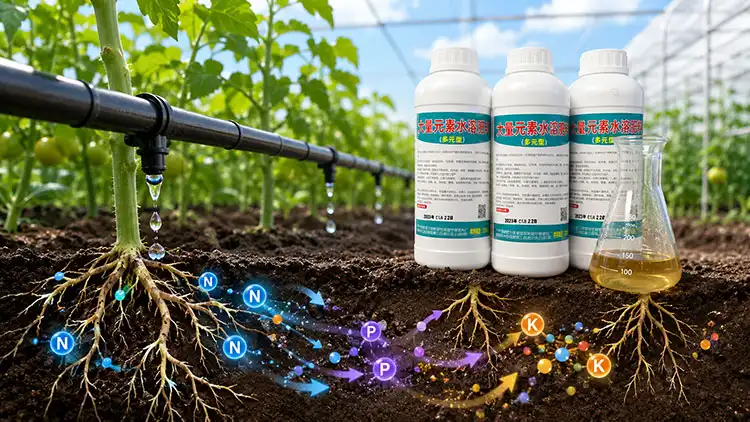
In a uniform nutrient solution, soluble fertiliser products dissolve in irrigation water and make their way through the distribution network. The most efficient uptake of nutrients happens in the active root zone, and this fertigation method makes sure that nutrients reach that zone. Through capillary action and mass flow, the dissolved ions—nitrogen as nitrate or ammonium, phosphorus as phosphate, and potassium as K⁺—move through the pores of the soil. Nutrients can be absorbed by plant roots through active transport pathways as well as passive diffusion. Our formulations keep micronutrient chelates shielded from soil interactions, which avoids the lock-up that happens to sulphate forms in acidic environments. Thanks to this shield, the bioavailability is higher, and the physiological reaction is quicker.
Concentration Management Best Practices
Businesses have seen incredible results from using fertigation with high-quality soluble solutions. Typically, electric pumps or venturi injectors are used to inject concentrated stock solutions into the irrigation line at ratios ranging from 1:100 to 1:200. Our micronutrient solutions promote rapid absorption, which boosts plant growth without the dangers of salt buildup that come with over-application. When crops are in their vegetative stages, they need more nitrogen, and when they are in their flowering and fruiting stages, they need more phosphorus and potassium. When combining different sources of nutrients, it is important to conduct a jar test before doing a large-scale mixing to ensure compatibility.
Real-World Performance Data
Businesses have seen incredible results from using fertigation with high-quality soluble solutions. When compared to granular application methods, greenhouse tomato production research in California in 2021 showed a 32% increase in yield and a 40% decrease in fertiliser costs. Drip systems that delivered chelated micronutrient solutions helped citrus groves in Arizona overcome iron chlorosis in calcareous soils, leading to a 28% improvement in fruit quality scores. The monetary worth of crops is directly proportional to their practical advantages, which include bigger and thicker leaves, better flowering and fruiting, and larger and more colourful fruits. The initial investment in fertigation infrastructure and premium fertiliser products is justified by the concrete advantages of uniform fruit size, smooth fruit surfaces, and extended shelf life.
Comparison and Decision-Making: Water-Soluble Fertilisers vs Other Fertiliser Types in Drip Irrigation
Evaluating Fertiliser Options
The fertigation system nutrient selection process presents agricultural experts with a number of options. The main groups and what they stand for are as follows:
Traditional solid fertilisers, such as granular fertilisers, have a long dissolving time and frequently leave residues. Their incomplete solubility poses the possibility of emitter clogging, yet they are cost-effective per pound of nutrition. Most granular goods (about 60%) have fillers and anti-caking chemicals that aren't beneficial for micro-irrigation. Broadcast application using traditional irrigation systems is where these compositions are most effective.
Chemically altered or polymer-coated goods release nutrients slowly over a period of weeks or months; this process is known as a slow-release formulation. Even while they make injections less of a hassle, they are difficult to dissolve and provide you with little control over when they release their effects. They aren't the best choice for drip systems that need responsive nutrient management because of their increased cost per application and incompatibility with precision fertigation timing.
Concentrates in Liquid Form: Nutrient solutions that have already been mixed do not require further processes to dissolve. Because of their heavier weight during delivery, they are more expensive per unit of nutrition than crystalline water-soluble fertilisers, with which they compete head-on. Compared to dry goods that users dilute on-site, there are some formulation limits that restrict nutrient concentrations and require higher storage conditions.
Considerations for the decision matrix should include the following: solubility performance, compatibility with systems, cost-effectiveness, ease of handling, and needs particular to crops. At Sciground, we have multifunctional plant growth enhancers that not only increase plant resistance to diseases but also supply plants with necessary micronutrients. This entire nutrition is unmatched by products that only contain macronutrients.
Application-Specific Considerations
Fertiliser selection is greatly affected by crop type and growth conditions. Hydroponic operations necessitate utmost cleanliness, devoid of any insoluble substances, to safeguard recirculating systems. Because chelated micronutrients are stable regardless of pH changes, they are useful for outdoor field crops grown in a wide variety of soil types. Tailored nutrient ratios that satisfy specific physiological demands throughout the growth cycle are necessary for speciality crops, such as Corydalis yanhusuo, which is the focus of our research and development activities. To keep up with their rigorous production schedules, greenhouses prioritise ease of application and quick absorption. Working in tandem with the Northwest Academy of Agricultural Sciences, we are able to provide tailored solutions that precisely suit these diverse situations.
Procurement Insights for Bulk Buyers and Distributors
Supplier Evaluation Criteria
Soluble fertiliser products are essential for commercial operations, but procuring them requires careful consideration of several criteria. Reliability of suppliers is critical; well-known producers use reliable quality control and tracking methods. Certifications ensure that products meet the quality and regulatory requirements in their respective regions. Laboratory analysis validates heavy metal screening results, guarantees nutritional content, and confirms solubility standards. Certificates of Analysis (CoAs) are provided by reputable vendors and should include documentation of ICP-OES elemental assays, verification of chelation degree, and insolubles testing below 0.1%. Differentiating high-quality EDDHA iron products from those of lower quality, the ortho-ortho percentage shows that the products will remain available over time even in soils with a high pH.
Commercial Packaging and Logistics
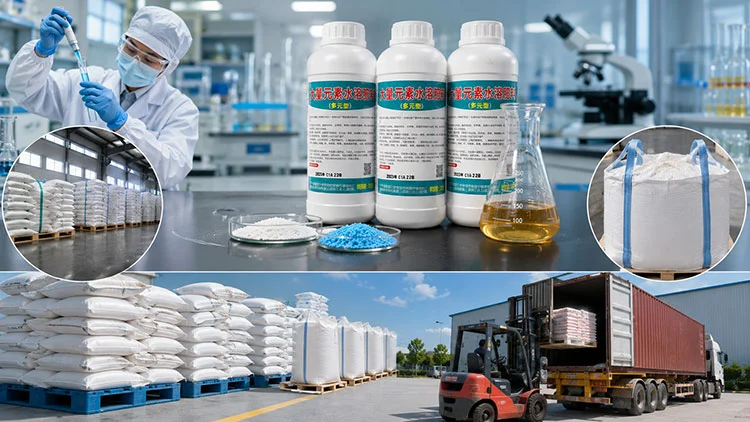
Formats for bulk packaging must strike a compromise between protection and ease of handling for purchasers. Bags ranging from 25 kg with a liner that resists moisture to 500 kg giant bags designed for automated handling and one-tonne supersacks for massive operations are all available as standard choices. To avoid caking, hygroscopic materials must be stored in airtight containers in a regulated environment. Humidity levels above 60% ruin the product. Our 6,000-square-metre facility, located in Hanzhong City, Chenggu County, features specialised storage that we maintain in ideal conditions. Product density, paperwork required for foreign trade, and availability as a result of seasonal demand swings are all factors in shipping logistics. To maintain ongoing operations, it is important to establish ties with reliable providers of water-soluble fertilisers.
Pricing Dynamics and Value Optimisation
Market pricing for soluble nutrient products reflects raw material costs, manufacturing complexity, and competitive positioning. Chelated micronutrient formulations command premium prices justified by superior performance and reduced application rates. Volume commitments typically unlock 15-25% discounts, while long-term contracts provide price stability against commodity fluctuations. Total cost of ownership includes not just purchase price but also application labour, system maintenance savings, and yield improvements. A comprehensive evaluation reveals that premium formulations often deliver better return on investment despite higher per-kilogram costs. Our technical support team provides agronomic consultation, helping buyers match product specifications to operational needs, optimising both performance and budget allocation.
Troubleshooting and Optimising Fertiliser Use in Drip Irrigation
Preventing and Addressing System Issues
Emitter clogging represents the most common fertigation challenge, resulting from precipitates, biological growth, or particulate matter. Regular filtration using 120-mesh screens removes physical contaminants before injection. Flushing procedures at the end of each fertigation cycle clear residual nutrients from lines. Maintaining proper pH prevents calcium-phosphate precipitation—a jar test simulating tank mix conditions identifies incompatibilities before field application. Our fully chelated micronutrient formulations minimise precipitation risks, even in hard water conditions. Chemical compatibility awareness prevents issues like mixing calcium nitrate with sulphate products in stock tanks, which forms gypsum deposits.
Nutrient Balance and Monitoring
Achieving optimal plant nutrition requires monitoring both input concentrations and soil/plant tissue status. EC meters track total dissolved salts in irrigation water and fertiliser solutions. Soil testing every 4-6 weeks during the growing season identifies accumulation or depletion trends. Plant tissue analysis reveals hidden deficiencies not visible through symptom observation. Modern sensor technologies—including soil moisture probes and nutrient-specific electrodes—enable real-time feedback loops. This data-driven approach allows dynamic adjustments to fertigation recipes, matching supply precisely with crop demand. Our easy-to-apply formulations support flexible scheduling, allowing growers to respond quickly to changing conditions without complex recalculations.
Regulatory Compliance and Sustainability
Environmental stewardship and regulatory compliance form integral components of modern fertigation management. Properly managed systems dramatically reduce nutrient leaching compared to broadcast applications—studies show 50-70% reductions in groundwater nitrate contamination. Adherence to local regulations regarding nutrient management plans, buffer zones, and application timing protects both operations and ecosystems. Our development process emphasises environmental responsibility through efficient formulations that minimise waste. Energy-saving manufacturing equipment at our facility reduces the carbon footprint of production. The integration of organic matter sources with mineral nutrients—a core principle in our special organic fertilisers—improves soil structure and biological activity, creating sustainable production systems that enhance rather than degrade agricultural resources.
Conclusion
The integration of water-soluble fertilisers with drip irrigation systems represents a proven technology that delivers measurable improvements in nutrient efficiency, crop quality, and environmental stewardship. Complete solubility, precise nutrient ratios, and chelated micronutrient protection ensure system compatibility while maximising plant response. Successful implementation requires attention to concentration management, application timing, and proactive system maintenance. The comparative advantages over traditional fertiliser types—particularly regarding clogging prevention and nutrient availability—justify their adoption for commercial operations seeking competitive advantages through precision agriculture practices.
FAQ
Can micronutrient formulations damage drip systems?
Quality chelated micronutrient products pose minimal system risks when applied correctly. Fully chelated forms remain soluble and compatible with standard fertigation equipment. A mandatory jar test before large-scale mixing confirms compatibility, particularly when combining with calcium sources. Non-chelated sulphates may react with calcium, forming gypsum precipitates that clog emitters. Our chelated formulations avoid these reactions, maintaining system cleanliness throughout the irrigation season.
When should I apply nutrients relative to crop growth stages?
Nutrient timing dramatically affects crop response and resource efficiency. Vegetative growth phases demand higher nitrogen ratios supporting leaf expansion and stem development. Reproductive stages benefit from increased phosphorus and potassium, promoting flowering, fruit set, and enlargement. Micronutrient applications prove most effective during rapid growth periods when metabolic demands peak. Early morning or late evening applications avoid heat stress and optimise foliar absorption when used as supplemental sprays. Our technical guidance services help growers synchronise nutrient delivery with phenological stages for maximum efficiency.
What distinguishes EDTA from sulphate micronutrient forms?
Sulphate micronutrients offer lower initial costs but suffer rapid soil fixation, becoming unavailable to plants in many soil conditions. EDTA chelation protects nutrients from precipitation and oxidation, ensuring availability across diverse pH ranges. Though EDTA products cost more per kilogram, they deliver superior return on investment through enhanced uptake efficiency and reduced application rates. EDDHA chelates provide even greater stability in highly alkaline soils, with ortho-ortho isomer percentages above 4.8% indicating premium quality and prolonged effectiveness.
Partner with Sciground for Advanced Fertigation Solutions
Sciground delivers specialised water-soluble fertilisers engineered specifically for fertigation applications across diverse agricultural environments. Our micronutrient-enhanced formulations provide essential elements that increase leaf size and thickness, promote flowering and fruiting, enhance fruit enlargement and colouration, and extend shelf life—functional benefits that directly impact your bottom line. Backed by over 20 years of research expertise from our team at the Northwest Academy of Agricultural Sciences, we offer comprehensive technical support from site selection through harvest optimisation. As a certified water-soluble fertiliser manufacturer holding multiple patents for speciality crop nutrition, we maintain rigorous quality control, ensuring every batch meets international standards for purity and performance. Contact our agronomy specialists at [email protected] to discuss bulk procurement options, obtain product specifications, and develop customised fertigation programmes tailored to your operational needs.
References
1. Bar-Yosef, B. (1999). Advances in Fertigation. Advances in Agronomy, 65, 1-77.
2. Hagin, J., & Lowengart, A. (1995). Fertigation for Minimising Environmental Pollution by Fertilisers. Fertiliser Research, 43(1-3), 5-7.
3. Kafkafi, U., & Tarchitzky, J. (2011). Fertigation: A Tool for Efficient Fertiliser and Water Management. International Fertiliser Industry Association and International Potash Institute.
4. Papadopoulos, I. (1999). Chemigation: Principles and Applications. FAO Soils Bulletin, 77, 1-145.
5. Thompson, R. B., Martínez-Gaitán, C., Gallardo, M., Giménez, C., & Fernández, M. D. (2007). Identification of Irrigation and N Management Practices that Contribute to Nitrate Leaching Loss from an Intensive Vegetable Production System. Agricultural Water Management, 89(3), 261-274.
6. Zhang, H., Chi, D., Wang, Q., Fang, J., & Fang, X. (2011). Yield and Quality Response of Cucumber to Irrigation and Nitrogen Fertilisation Under Subsurface Drip Irrigation in Solar Greenhouse. Agricultural Sciences in China, 10(6), 921-930.

Sciground
Shanrangde, in collaboration with a team of experts from the former Academy of Agricultural Sciences, focuses on developing patented organic fertilizers, including those specifically formulated for Corydalis rhizome. Chief expert Professor Liang Dejun, with over 20 years of industry experience, provides one-stop technical guidance from site selection to field management, helping farmers increase production and income.
Formulated by the original expert team from the Academy of Agricultural Sciences · Focused on organic nutrients specifically for crops
Contact us now to customize a green nutrition solution for your farmland.
Recommended Blog


Can Silybum marianum Organic Fertilizer Improve Plant Resistance?