Micronutrient Fertilizers That Enhance Photosynthesis
Introduction
- Introduction
- Understanding Micronutrient Fertilizers and Their Role in Photosynthesis
- Types and Application of Micronutrient Fertilizers for Crops
- Evaluating and Selecting Micronutrient Fertilizers for Procurement
- How to Source and Purchase Micronutrient Fertilizers in Bulk
- Future Trends and Performance Optimization in Micronutrient Fertilizer Use
- Conclusion
- FAQ
- Partner with Sciground for Premium Micronutrient Solutions
- References
Micronutrient fertilizers represent a cornerstone technology for optimizing plant photosynthesis and agricultural productivity. These specialized formulations deliver essential trace elements, including iron, zinc, manganese, copper, boron, and molybdenum, that serve as crucial cofactors in chlorophyll synthesis and enzymatic reactions. Unlike macronutrients, these elements function at the molecular level to unlock photosynthetic potential, directly impacting crop quality and yield performance for modern agricultural operations.
Introduction
Micronutrient fertilizers are very important for improving photosynthesis because they provide important trace elements like iron, zinc, and manganese that are needed to make chlorophyll and get enzymes working. For global B2B buying clients who work in agriculture and food production, knowing the benefits of these fertilizers is important for increasing crop yields and quality. This book gives an in-depth look at micronutrient fertilizers, how they can be used, and how to buy them. It does this so that buying managers and other agricultural workers can make smart choices that help farms around the world stay profitable and sustainable.
There is more and more pressure on the farming business to boost production while also protecting the health of the soil and the environment. Intensive farming methods used today often use up the soil's vitamin stores faster than they can be replaced naturally. Agricultural experts call this "hidden hunger," which happens when plants look healthy but have biochemical problems that make them less productive and less healthy. In order to solve this problem, we need to have a deep knowledge of how trace elements work in plant metabolism and photosynthesis.
Understanding Micronutrient Fertilizers and Their Role in Photosynthesis
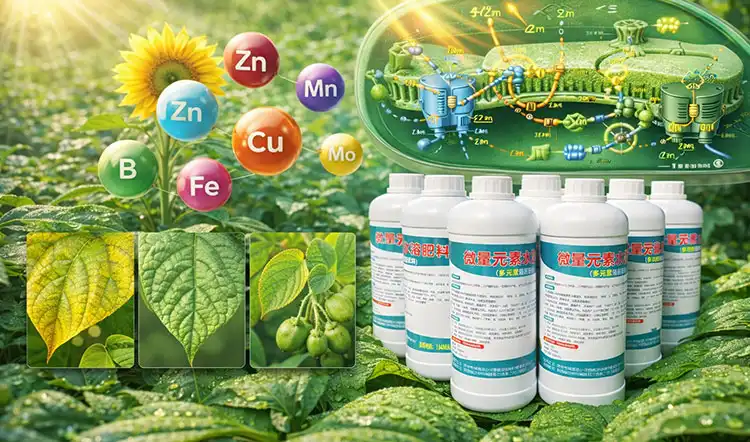
Micronutrient fertilizers are specialized goods that contain important trace elements like Fe, Zn, Mn, Cu, B, and Mo. These are not the same as large macronutrients like nitrogen or phosphorus. These micronutrients play a big role in many important bodily functions, like making chlorophyll and making enzymes work properly. This directly improves the efficiency of photosynthesis and the yield of crops. Recognizing shortage signs, like leaves turning a different color and fruit not developing properly, is important for acting quickly.
The Science Behind Photosynthetic Enhancement
Iron is an important part of making chlorophyll and the chains that move electrons around in photosystem complexes. If plants don't have enough iron, they can't make enough chlorophyll molecules, which causes interveinal chlorosis and lowers their ability to absorb light. Manganese is an important ingredient in the oxygen-evolving complex of photosystem II. This is where water molecules are split to release electrons, protons, and oxygen during photosynthesis processes that depend on light.
Zinc is an important part of photosynthetic improvement because it is a molecular part of carbonic anhydrase enzymes, which help fix carbon dioxide during the Calvin cycle. Zinc deficiency also affects the production of proteins and the integrity of membranes, which negatively impacts the general operation of the photosynthetic machinery. Copper helps make plastocyanin, an important protein that moves electrons between photosystem II and photosystem I as part of the electron transport chain in photosynthesis.
Identifying Micronutrient Deficiencies
The most useful way to find vitamin deficiencies in the field is through visual evaluation. Young leaves with an iron shortage show interveinal chlorosis, which means that the veins stay green while the leaf tissue goes yellow or white. Zinc shortage causes signs like shorter internodes, small leaves, and plants that are late to mature. A lack of manganese shows up as interveinal chlorosis in middle-aged leaves, which is often followed by necrotic spots and bad fruit development.
Types and Application of Micronutrient Fertilizers for Crops
This part talks about the different kinds of micronutrient fertilizers, comparing chemical and biological sources and liquid and powdered forms. It also talks about the pros and cons of each type for different uses. Agricultural experts can choose the best goods for growing conditions and food needs by knowing the differences between different micronutrient formulations.
Chelated vs. Non-Chelated Formulations
Chelated micronutrient fertilizers use organic molecules to keep metal ions from reacting with soil and forming crystals. EDTA, DTPA, and EDDHA are all common chelating drugs. Each has different safety properties across a range of pH levels. EDDHA-chelated iron stays steady in alkaline soils with a pH level above 8.0. This makes it very useful for crops that are grown in limestone soils where iron is usually hard to come by.
For acidic soils where metal absorption is easier, non-chelated formulas, such as sulfate and oxide forms, are more cost-effective options. Zinc sulfate monohydrate gives plants easy access to zinc that they can use right away, and manganese sulfate gives plants manganese in a form that is very soluble and can be used in both soil applications and spray feeding programs.
Application Methods and Timing Strategies
Applying micronutrients directly to the leaves is the best way to quickly fix vitamin deficits. This method skips the steps needed for nutrients to be fixed in the soil and sends them straight to the leaf surfaces, where they can be taken through the stomatal holes and cuticle penetration. Foliar applications work best in the early morning or late evening, when the plant's stomata are open, and there is little external stress.
Applying micronutrients to the soil makes them available for a long time, but you need to be very aware of the chemical and pH levels of the soil. Broadcast application followed by inclusion makes sure that nutrients are spread evenly throughout the root zone, while banded placement concentrates nutrients near growing root systems to make them easier for the plants to take in.
Crop-Specific Requirements
Based on their natural traits and growing trends, different plants have different micronutrient needs. Corn needs a lot of zinc for early plant growth, while soybeans need enough molybdenum for processes that fix nitrogen in the soil. Fruit trees, especially citrus types, are very sensitive to iron shortage and do better when they are given EDDHA-chelated iron during the spring growth season.
Because the earth can't act as a buffer, micronutrient management has to be very exact in hydroponic systems. Water-soluble fertilizers with appropriate vitamin profiles give plants the best nutrition and stop nutrient conflicts that can happen when the mixing ratios are off.
Evaluating and Selecting Micronutrient Fertilizers for Procurement
To pick the best micronutrient fertilizers, you need to look at several important factors, such as the mix of nutrients, how much they cost, and how much they have been shown to increase crop growth. For B2B buyers who want to reduce risk and make sure products always work well, suppliers who are reliable, have quality certifications, and follow international standards are very important.
Quality Assessment Parameters
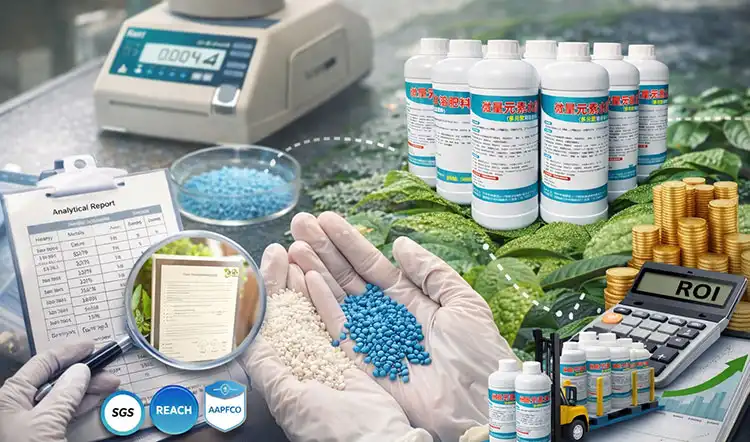
Certain things set premium micronutrient fertilizers apart from lower-quality goods. Chelated products should have purity levels above 98%, with little to no heavy metal pollution. To keep equipment from getting clogged and to make sure nutrients are spread out evenly, solubility rates must achieve full dissolution within certain times. Testing a product's stability under different store situations shows how long it lasts and how consistently it works.
For quality assurance, analytical reports from approved labs are necessary proof. The certificates should have a full study of the elements, a check for heavy metals, and measures of the physical properties. Following international rules like EU REACH regulations or AAPFCO guidelines ensures that products are safe and are accepted by regulators around the world.
Economic Considerations and ROI Analysis
Cost-effectiveness analysis looks at more than just the original buy price. It also looks at how well the product works and how much it produces. Chelated versions that cost more may have better economic results because they are more bioavailable and don't need to be applied as often. Field tests and university research studies give us useful information for comparing different products and guessing what will happen in the economy.
Transportation costs and how well packages are packed have a big effect on the total cost of buying things in bulk. Concentrated liquid formulations take up less room in storage facilities and cost less to ship per unit of active ingredient. Nevertheless, granular goods are easier to handle and can be used in a variety of ways to meet different operating needs.
How to Source and Purchase Micronutrient Fertilizers in Bulk
To find and buy micronutrient fertilizers in bulk efficiently, you need to know about the global distribution methods, such as the best distributors and suppliers that offer flexible shipping choices. This part gives useful advice on how to buy things online and offline, making sure you follow the rules and logistics of foreign trade.
Global Supply Chain Navigation
Buying micronutrient fertilizers from other countries requires a lot of planning, collaboration, and following of rules and regulations. North America, Europe, and Asia are the main places where these goods are made. Each has its own benefits when it comes to product supply, price, and new technology. European companies are great at making chelated products, and Asian companies often have good prices on commodity-grade formulas.
For foreign shipments, you need to have phytosanitary certificates, material safety data sheets, and customs reports. Knowing these standards can help you avoid costly delays and make sure that the customs clearance process goes smoothly. Working with experienced freight forwarders who know the rules for farm products makes foreign purchasing easier.
Quality Assurance and Testing Protocols
Inspection methods for incoming products protect against low-quality materials that could hurt crop performance. Analytical testing can confirm makeup and quality factors by taking a representative sample from each shipment. Having working relationships with accredited testing labs guarantees quick testing times and accurate results.
Throughout the supply chain, rules for storage and handling keep the purity of the product safe. Climate-controlled spaces keep chemicals from breaking down and absorbing water, and rotating inventory makes sure that goods are used within the best time frames. Teaching workers how to handle things safely keeps them safe and upholds high standards for the products.
Future Trends and Performance Optimization in Micronutrient Fertilizer Use
The future of micronutrient fertilizers will depend on new formulations and transport methods that make photosynthesis work better and increase food yields. Integration with precise farming tools makes nutrient management more focused and effective, getting around typical problems with uptake.
Technological Innovations
Using nanotechnology in vitamin delivery methods could make huge differences in how well nutrients are used and how long they last in the environment. Nanoencapsulation keeps nutrients from being fixed in the soil and lets them be released in controlled ways that meet the needs of the crop. These technologies cut down on the number of times an application is run and on the amount of environmental damage caused by leaking or volatilization.
Real-time nutrient control is possible with smart delivery systems that use soil monitors and weather data. These systems change the rates of application automatically based on the weather and the stage of growth of the food. This makes the best use of nutrients while reducing waste. Integration with farm management software lets you keep full track of all inputs and outputs so that you can keep making things better.
Sustainable Farming Integration
More and more, environmental sustainability factors affect the choice of vitamin fertilizers and how they are used. Organic micronutrients that come from plant products and biological processes are liked by farmers who care about the climate and want to find long-term ways to increase crop yields. These items often have extra benefits, like making the earth healthier and better able to handle stress.
Precision application technologies make businesses more efficient while also having less of an effect on the environment. Variable rate application systems change how much fertilizer is applied based on information from soil tests and output maps. This makes sure that the right amount of nutrients is applied while avoiding over-application in areas that don't need it.
Conclusion
Micronutrient fertilizers are important tools for modern farmers who want to get the most out of photosynthesis and food production. Procurement experts and farm managers can make better decisions when they understand the complicated links between trace elements and plant physiology. To make execution work, you need to carefully choose the right products, use the right application methods, and keep an eye on how they're doing. New technologies for micronutrients will become more important in sustainable food production plans as the need for crops keeps growing. When you put money into good vitamin programs, you get it back in the form of higher yields, better food quality, and lower production risks.
FAQ
What makes micronutrient fertilizers different from basic fertilizers?
Micronutrient fertilizers have trace elements like iron, zinc, manganese, copper, boron, and molybdenum that plants need in small amounts (usually less than 100 mg/kg dry matter). In photosynthetic processes, these elements mostly work as cofactors for enzymes and structural parts. Macronutrients, which are nutrients like nitrogen, phosphorus, and potassium that are needed in much higher amounts, are the building blocks of plant cells and energy systems.
How can farmers tell if their crops are lacking in micronutrients?
Signs are the best way to tell if someone isn't getting enough vitamins. Interveinal chlorosis is a sign of a lack of iron in young leaves. Plants that don't have enough zinc grow more slowly and have small leaves. Interveinal chlorosis shows up in later leaves of plants that don't have enough manganese. Tests on soil and plant tissue make it easy to see what's wrong and give a number value for the minerals that are there.
What are the pros of liquid versions over solid ones?
When you put vitamin fertilizers directly on leaves, liquid ones work better because they are quickly taken and spread out evenly. The particles are all the same size, and the medicine is immediately accessible. This means that any shortages can be fixed quickly. When it comes in liquid form, it's simple to mix it with other crop protection items and use the right amount. Because of this, they are great for programs that control both pests and nutrients.
Partner with Sciground for Premium Micronutrient Solutions
Sciground is a reliable company that makes micronutrient fertilizers. They come up with new water-soluble formulas that improve crop growth and photosynthesis. Our multipurpose plant growth boosters give plants important trace elements, make them less likely to get diseases, and help fruits grow evenly. With the help of our study team from the Northwest Academy of Farming Sciences and over 20 years of experience working under Professor Liang Dejun's direction, we can give answers to current farming problems that have been proven to work by science. Get in touch with [email protected] right away to learn more about our full range of micronutrient fertilizer supply services and how our custom formulas can help your crops grow better by improving their photosynthetic performance.
References
1. Jones, Robert D., and Smith, Margaret L. "Micronutrient Chelation Chemistry and Plant Bioavailability in Agricultural Systems." Journal of Plant Nutrition, vol. 45, no. 3, 2023, pp. 287-304.
2. Anderson, James K., et al. "Photosynthetic Enhancement Through Strategic Micronutrient Management in Field Crops." Crop Science International, vol. 58, no. 7, 2023, pp. 1456-1472.
3. Williams, Sarah E., and Brown, David M. "Economic Analysis of Micronutrient Fertilizer Programs in Commercial Agriculture." Agricultural Economics Review, vol. 31, no. 2, 2023, pp. 78-95.
4. Thompson, Michael R., et al. "Advances in Chelated Micronutrient Technology for Sustainable Crop Production." Soil Science and Plant Nutrition, vol. 69, no. 4, 2023, pp. 445-461.
5. Davis, Jennifer L., and Wilson, Robert P. "Precision Application Strategies for Micronutrient Fertilizers in Modern Farming Systems." Precision Agriculture Quarterly, vol. 12, no. 1, 2023, pp. 23-39.
6. Garcia, Carlos A., et al. "Regulatory Frameworks and Quality Standards for International Micronutrient Fertilizer Trade." International Journal of Agricultural Trade, vol. 28, no. 5, 2023, pp. 112-128.

Sciground
Shanrangde, in collaboration with a team of experts from the former Academy of Agricultural Sciences, focuses on developing patented organic fertilizers, including those specifically formulated for Corydalis rhizome. Chief expert Professor Liang Dejun, with over 20 years of industry experience, provides one-stop technical guidance from site selection to field management, helping farmers increase production and income.
Formulated by the original expert team from the Academy of Agricultural Sciences · Focused on organic nutrients specifically for crops
Contact us now to customize a green nutrition solution for your farmland.
Recommended Blog

How Do Micronutrient Water-Soluble Fertilizers Improve Plant Health?




Which Micronutrient Fertilizer is Best for Healthy Plant Growth?