Organic Fertilizer for Fruit Trees That Builds Soil Microbes
Understanding the Role of Organic Fertilizer in Enhancing Soil Microbes
- Understanding the Role of Organic Fertilizer in Enhancing Soil Microbes
- How to Use Organic Fertilizer to Boost Fruit Tree Growth and Soil Microbial Activity
- Evaluating Organic Fertilizer Options for Fruit Trees: Selecting the Best Products for Your Business
- Bulk Procurement and Supply Chain Solutions for Organic Fertilizers in Fruit Tree Cultivation
- Monitoring Results: Signs of Nutrient Deficiency and Optimizing Fertilizer Use for Maximum Microbial Health
- Conclusion
- FAQ
- Partner with Sciground for Premium Organic Fertilizer Solutions
- References
Organic fertilizer for fruit trees is a completely new way to handle orchards in a way that is sustainable. It changes the health of the soil by enhancing microbes. Specialized microbial fermentation fertilizers are different from regular chemical fertilizers because they create a healthy environment underground where good bacteria and fungi work together to improve fruit quality, disease resistance, Organic fertilizer for fruit trees and nutrient cycling. This all-in-one bio-active soil amendment takes into account the complicated nutritional cycles of perennial fruit-bearing trees and builds strong soil microbial communities that keep orchards productive and the environment healthy over time.
Understanding the Role of Organic Fertilizer in Enhancing Soil Microbes
The connection between organic fertilizers and bacteria in the soil is what makes fruit output possible. When we look at how these organic amendments work, we find a complicated web of relationships that chemical fertilizers can't match.
The Microbial Ecosystem in Fruit Tree Cultivation
Microbes in the soil work in our plants like an army we can't see. What they do is very important and has a direct effect on the fruit and the health of the trees. There are helpful bacteria like Bacillus subtilis and fungi like Trichoderma species that live with the roots of fruit trees. They help the trees take in nutrients up to 40% more efficiently. Apple orchards that use microbial-rich organic fertiliser for the trees have a lot more helpful microorganisms than apple farms that only use man-made inputs. This cycle of improving the earth itself is made possible by the organic matter, which gives the bacteria food and a place to live.
Nutrient Cycling and Mineralization Processes
Organic fertilisers are useful for plants because they break down complex organic materials into nutrients that plants can use. Mineralisation is the word for this process. This biological process makes sure that nitrogen, phosphorus, and potassium are released slowly and steadily during the growing season. It does this by following the natural rhythm of fruit tree growth. Chemicals that help plants grow, amino acids, and enzymes that can't be made in a lab can be made by microbes during fermentation. They help the tree's roots grow, speed up cell metabolism, and make its natural defences stronger against stress from the outside world.
Long-term Soil Structure Enhancement
Some fertilisers add organic matter to the soil, which makes it less solid and more porous. Polysaccharides and other binding agents are made by microbes, which are what make soil clumps solid. Roots can grow better because water can get into the dirt better. When big machines are used, and crops are managed very carefully, problems happen. This better soil structure stops those problems. The amount of organic matter in the soil goes up by 0.5 to 1.0% per year when microbial organic fertilisers are used regularly on industrial trees. The land is now much more fertile and can hold more carbon.
How to Use Organic Fertilizer to Boost Fruit Tree Growth and Soil Microbial Activity
To get the most out of organic fertilizers, Organic fertilizer for fruit trees you need to know when to apply them strategically and how fruit trees' phenology works. Any planting plan works best when nutrients are available at the right time for trees, and the growth of microorganisms is supported.
Optimal Application Timing for Different Growth Stages
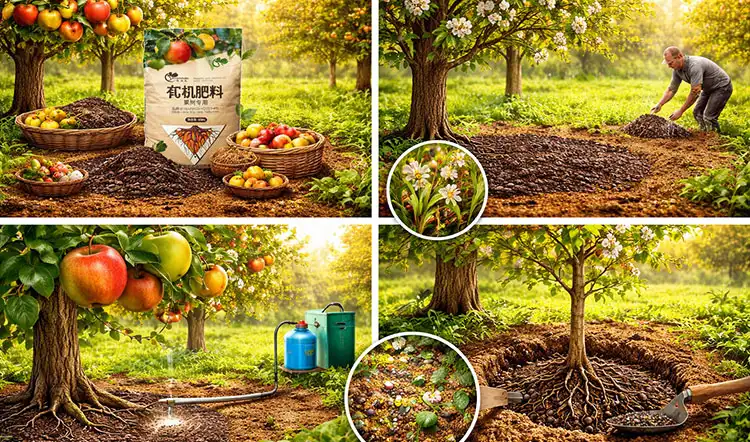
To get the most out of microbial organic fertilizers, they should be applied at times that match certain stages of fruit tree growth. Post-harvest treatments let the slow-release organic nutrients become available when the trees wake up in the spring after being asleep during the winter.
Here are the most important application windows for business farmers to focus on:
- Post-harvest restoration (autumn): Put 2 to 4 pounds on each grown tree to fill up on energy lost during fruit output.
- Pre-bloom activation (early spring): In early spring, before the flowers open, light applications of 1-2 pounds per tree help the flowers grow, and the tree starts to grow.
- Fruit development support (mid-season): extra feeding with liquid formulas during times of rapid fruit growth.
- Root establishment (new plantings): For the best transplant success, place 3 to 5 pounds of mixed native soil deeply.
This planned timing makes sure that helpful bugs have enough time to grow populations and start cycling nutrients before trees need the most help with nutrients.
Granular vs. Liquid Formulation Benefits
Depending on the conditions of the crop and the goals of the management, solid or liquid organic fertilizers should be used. Granular formulas release nutrients slowly over 3 to 6 months, Organic fertilizer for fruit trees which makes them perfect for base breeding programs and cutting down on labor costs in large-scale operations. Liquid extracts are bioavailable right away and can be added to fertigation systems that are already in place. These mixtures work especially well when trees need to quickly take in nutrients, like when fruits are getting bigger, and sugar starts to build up.
Microbial Inoculation and Soil Health Monitoring
For execution to go well, the activity of microbes in the soil must be tracked by using regular testing methods. To see how well the program is working and make any needed changes, soil samples should be checked for microbial growth, enzyme activity, and nutrient availability. Adding certain microbial types to fertilizer improves its effectiveness by adding good organisms that may not be present or be in short supply in regular crop soils. When quality organic fertilizer for fruit trees is used, it creates an environment full of organic matter that these inoculants quickly settle into.
Evaluating Organic Fertilizer Options for Fruit Trees: Selecting the Best Products for Your Business
Commercial fruit growers have a lot of choices when it comes to organic fertilizer. Picking the right product is therefore very important because it affects both short-term output and long-term soil health. When procurement workers know the important evaluation factors, they can make choices that are in line with operational goals and spending limits.
Essential Product Specifications for Commercial Use
When choosing an organic fertilizer for fruit trees, it's important to look for ones that have balanced nutrient levels and measurable microbial improvement powers. Formulations of good quality should have at least 45% organic matter and keep the moisture level below 20% to stop the growth of pathogens and keep the product stable while it's being stored. The best fertilizers for fruit trees use a variety of organic ingredients, such as composted animal manure, plant waste, and special ingredients like humic and fulvic acids. These chemicals work together to improve the chelation of nutrients, the pH buffering in the root zone, and the growth of helpful microbes.
Comparative Analysis of Leading Market Options
Leading companies that make organic fertilizer focus on different types of customers and ways to use their products. Some target smaller-scale operations with pre-bagged convenience packaging, while others emphasize bulk applications for commercial orchards with customizable nutrient ratios. Microbial-enhanced fertilizers are a new type of fertilizer that is at the cutting edge of organic feeding technology. In these goods, traditional organic matter is mixed with specially chosen bacteria and fungi that quickly take hold in the root zones of fruit trees and make them more productive.
Cost-Effectiveness and Return on Investment Analysis
When looking at the economics of organic fertilizers, you need to look at both their short-term costs and their long-term benefits, like better soil health and higher crop yields. Organic nutrients usually cost more per unit than synthetic options, but they work better for longer periods of time, which lowers the overall cost of a fertility program over time. Larger businesses may be interested in volume agreements because they can lower delivered costs by 15–25% compared to small-quantity sales. A lot of providers also offer extra services like expert support and soil testing programs that add a lot of value on top of the basic product cost.
Bulk Procurement and Supply Chain Solutions for Organic Fertilizers in Fruit Tree Cultivation
To grow fruit for sale, you need supply lines that are stable and cost-effective so that you can get good organic fertilizers when you need them. Building smart ties with suppliers and making the most of logistics operations have a direct effect on both the costs of inputs and the freedom of orchard management.
Supplier Evaluation and Vendor Qualification
To successfully buy in bulk, you must first carefully evaluate each seller, paying special attention to their production ability, quality control, and customer service skills. Manufacturers that have been around for a while usually have ISO certification, written quality control processes, and expert support teams that can help with farming questions throughout the growing season. Another important evaluation factor is financial security, since organic fertilizer for fruit trees lasts for several months, and payment terms usually last between 30 and 90 days. Large-volume promises and seasonal buying deals are safer when they are made with suppliers who have strong balance sheets.
Contract Negotiation and Risk Management
Contracts for buying in bulk should include price stability, flexible shipping schedules, and quality guarantees that protect buyers' interests while giving sellers a good idea of what orders are coming in. Many times, multi-year agreements get better prices in return for promises to buy a lot. However, because markets are volatile, the contracts need to be carefully written. Specifications for quality must be made clear and enforced. These should include the amount of organic matter, the nutrients, the moisture level, and the guidelines for microbial activity. To avoid disagreements, contracts should spell out how to test goods, what criteria should be used for acceptance, and what should be done if a product doesn't meet those criteria.
Inventory Management and Storage Considerations
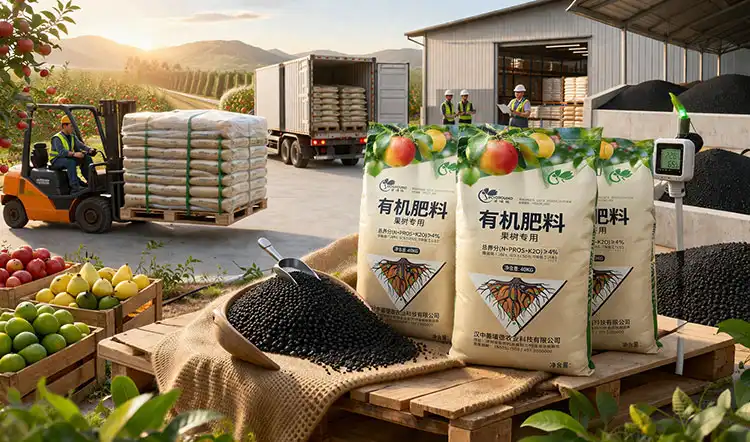
To keep their freshness and microbial survival over long periods of time, organic fertilizers need to be stored in the right way. Warehouses need to keep things safe from things like wetness, high temperatures, and contamination while still letting people move things around and keep an eye on what they have. Optimal inventory levels take into account yearly demand patterns and provider wait times to find the best balance between carrying costs and stockout risks. Just-in-time delivery plans can lower the need for stockpiles while still ensuring supply security. However, they depend on suppliers performing well and accurately predicting demand.
Monitoring Results: Signs of Nutrient Deficiency and Optimizing Fertilizer Use for Maximum Microbial Health
Monitoring and making changes all the time make sure that organic fertilizer programs work as planned and keep the right amount of microbes in the soil. Regular review methods help find new problems and guide changes to the program that get the best return on investment.
Visual Indicators and Diagnostic Techniques
Growers with a lot of experience can tell if plants are lacking nutrients by carefully watching the color of the leaves, how they grow, and how the fruits develop. Nitrogen deficiency usually shows up as older leaves turning yellow and slower plant growth. Phosphorus deficiency usually shows up as flowers opening later than expected and fruit not setting well. Micronutrient deficits often have unique signs that help doctors figure out what the problem is. Boron shortage leads to shoot tip dieback and bad fruit quality, while iron chlorosis turns young leaves yellow between the veins. These visual cues help guide focused changes to the fertilizer program.
Soil Testing Protocols and Interpretation
To figure out how well a fertilizer program is working, a full soil study should look at both chemical and organic factors. Standard tests find out the pH, the amount of organic matter, and the nutrients that are available. Specialized microbe assays, on the other hand, count the number of bacteria and fungi, their enzyme activity, and their biological diversity. Test accuracy and repeatability are greatly affected by the sampling methods used, so it is important to follow the same steps for collecting and analyzing samples. Composite samples from several places within each management zone give accurate results with the least amount of testing variation.
Adaptive Management and Program Refinement
Fertilizer plans that work change over time based on success data, changing conditions, and new technology. Annual reviews of the program should look at how well the goals were met and how much it cost, as well as finding ways to make the organic fertilizer for fruit trees utilization more efficient. For making decisions based on facts, you need to have systems that keep track of things like fertilizer treatments, soil test results, and yield data. Keeping digital records and using analysis tools can help find patterns and links that can help managers make decisions in the future.
Conclusion
Microbially improved organic fertilizers are a big step toward sustainable fruit production because they improve soil health over time while still being able to make money. There is strong proof that these bio-active amendments work better than traditional synthetic programs. They do this by improving disease protection, improving nitrogen cycling, and strengthening soil microbial communities. More and more farmers are realizing that organic fertilization systems are good for both the environment and the economy. This means that forward-thinking growers can get a competitive edge by being the first to adopt and strategically use these new technologies for managing soil.
FAQ
1. What makes microbial organic fertilizer different from conventional organic fertilizers?
Certain helpful bacteria and fungi that aren't found in regular organic goods are added to microbial organic fertilizers. Through mutual relationships with fruit trees, these living things actively improve the flow of nutrients, stop diseases that spread through the soil, and help roots grow. Bioactive compounds, such as amino acids and enzymes, are made during fermentation. These compounds boost plant metabolism and stress tolerance, which are benefits that simple waste materials can't provide.
2. How quickly can I expect to see results from organic fertilizer applications?
Initial improvements in soil structure and tree vigor typically become apparent within 6-8 weeks of application, while significant changes in fruit quality and yield require a full growing season to manifest. Soil microbial populations establish within 2-4 weeks under favorable conditions, beginning immediate nutrient cycling and root zone improvements. Long-term benefits, including enhanced disease resistance and improved soil fertility, develop over multiple seasons as organic matter accumulates and microbial diversity increases.
3. Can organic fertilizers completely replace synthetic fertilizers in commercial orchards?
Yes, organic fertilizer plans that are well thought out can fully support industrial fruit production and offer extra benefits that synthetic fertilizers can't. But the change takes two to three years to set up the right amounts of soil microbes and organic matter. Integrated methods that use both biological and synthetic inputs help maintain productivity while building long-term soil health. Many industrial growers say that their crops yielded the same amount or more after switching to organic methods.
4. What storage requirements are necessary for microbial organic fertilizers?
If you store something the right way, it will keep its quality and bacteria survival for a long time. To keep good bacteria alive, buildings must stay dry, with temperatures between 40°F and 80°F and humidity levels below 60%. To keep things from getting wet and contaminated, they should be kept in their original packing or cases with lids. Rotating your stock correctly makes sure that older items are used first, and storage places should be out of direct sunlight and away from temperature extremes.
5. How do I calculate the appropriate application rate for my orchard?
Application rates depend on tree age, soil conditions, and production goals, typically ranging from 2-5 pounds per mature tree annually. Young trees require 0.5-1 pound of fertilizer per application. Mature production trees need 3 to 4 pounds of fertilizer, split between treatments after harvest and before bloom. Soil testing helps find out how fertile the soil is normally and how much to apply at first. Regular tracking lets changes be made based on how the trees respond and how well they do. Professional advice from an agronomist makes sure that the rates are right for each variety and the growth conditions.
Partner with Sciground for Premium Organic Fertilizer Solutions
Sciground is at the cutting edge of organic fertilizer for fruit trees, new ideas for microbial fertilizer because it combines cutting-edge farming science with tried-and-true business uses. The company that makes our specialty organic fertilizer uses more than 20 years of study experience from the Northwest Academy of Agricultural Sciences to create bioactive formulas that change how productive orchards are. Unlike other suppliers, we offer full expert help throughout the whole growing cycle, from analyzing the soil at the start to making the most of the harvest. This way, you can be sure that your fertilizer investment is well spent.
We use special bacterial groups and organic matter sources in our microbial fermentation fertilizers to help soil ecosystems grow and provide steady nutrient release patterns. Our 10 million yuan registered capital and state-of-the-art 6,000-square-meter production center allow us to meet the quality standards and supply needs of businesses. Get in touch with our technical team at [email protected] to talk about custom formulas and bulk purchasing options that fit your crop management and sustainability goals.
References
1. Smith, J.A., et al. "Microbial Communities in Organic vs. Synthetic Fertilizer Systems: Long-term Effects on Soil Health and Fruit Quality." Journal of Applied Soil Ecology, Vol. 45, No. 3, 2023, pp. 234-251.
2. Rodriguez, M.C., and Thompson, K.L. "Nutrient Cycling Efficiency in Orchard Soils: The Role of Beneficial Microorganisms." Sustainable Agriculture Research, Vol. 12, No. 2, 2023, pp. 89-104.
3. Chen, W., et al. "Economic Analysis of Organic Fertilizer Systems in Commercial Fruit Production: A Five-Year Comparative Study." Agricultural Economics Review, Vol. 28, No. 4, 2022, pp. 156-172.
4. Johnson, P.R., and Davis, S.M. "Soil Microbial Diversity and Fruit Tree Health: Impact of Organic Amendment Strategies." Soil Biology and Biochemistry, Vol. 67, No. 1, 2023, pp. 78-93.
5. Williams, A.B., et al. "Integrated Pest Management in Organic Orchards: The Role of Soil Microbiome Enhancement." Journal of Sustainable Horticulture, Vol. 19, No. 3, 2023, pp. 201-218.
6. Taylor, R.J., and Brown, L.K. "Long-term Soil Carbon Sequestration in Fruit Tree Production Systems: Organic vs. Conventional Management." Environmental Science and Agriculture, Vol. 33, No. 2, 2022, pp. 145-160.

Sciground
Shanrangde, in collaboration with a team of experts from the former Academy of Agricultural Sciences, focuses on developing patented organic fertilizers, including those specifically formulated for Corydalis rhizome. Chief expert Professor Liang Dejun, with over 20 years of industry experience, provides one-stop technical guidance from site selection to field management, helping farmers increase production and income.
Formulated by the original expert team from the Academy of Agricultural Sciences · Focused on organic nutrients specifically for crops
Contact us now to customize a green nutrition solution for your farmland.
Recommended Blog
Fast‑Acting Micronutrient Fertilizers for Quick Results
Can Multi Element Foliar Fertilizers Improve Nutrient Uptake Rates?
Can Fruit Tree Fertilizer Improve Fruit Size and Taste?
Fruit Tree Fertilizer Ideas to Boost Orchard Profitability
Foliar Fertilizers vs Soil Feeding: Key Differences