Best Multi Element Foliar Spraying Fertilizer for High-Value Crops
How Multi-Element Foliar Spraying Fertiliser Supports Crop Nutrition
- How Multi-Element Foliar Spraying Fertiliser Supports Crop Nutrition
- Best Growth Stages for Foliar Nutrient Application
- Practical Guidelines for Effective Foliar Spraying
- Foliar vs. Soil Fertilisers
- Key Factors When Choosing a Reliable Fertilizer Supplier
- Why Sciground Supports Commercial Crop Nutrition
- Conclusion
- FAQ
- Call to Action
- References
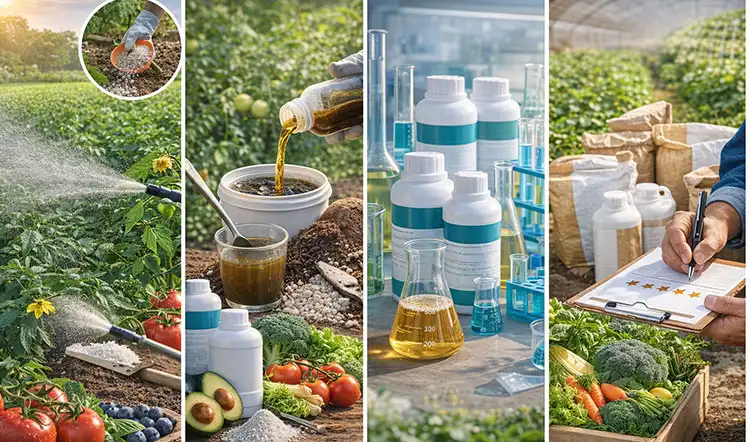
Do your plants still show signs that they aren't getting enough nutrients even though you fertilise the soil a lot? The quality of a plant's crops changes over time if their leaves turn yellow. They don't grow well, flower well, form fruit well, or set fruit well. it could mean that they aren't getting enough nutrients at the right time. Multi Element Foliar Spraying Fertilizer puts nutrients right on the leaf surfaces, which makes it easier for plants to get to important nutrients at important growth stages.support.
Leaf nutrition is being used more and more as part of an integrated fertilisation scheme for high-value crops like fruit trees, veggies, nursery crops and industrial field crops. It can help plants grow evenly, make nutrients work better, and help growers keep crop performance stable in a variety of growing conditions if it is made and used correctly.
How Multi-Element Foliar Spraying Fertiliser Supports Crop Nutrition
You can use multi-element foliar spraying fertiliser on plants at any stage of their growth because it has both trace elements and important macronutrients.
The nutrients stay on the leaves instead of being spread out on the ground when you water plants this way. This lets the plants eat food through the leaf cells. The earth can't fix nutrients all the time, the pH level is off, or plants are stressed out and can't take in nutrients. You might be able to get around these problems with this method.
Minerals that have more than one element are often used in spray recipes.
Zinc (Zn), copper (Cu), manganese (Mn), and iron (Fe)
Everything on Earth helps plants grow in some way. Plants need N to grow leaves and green stems. K+ helps plant roots grow and flower petals open. Potassium changes how good food tastes, how much water your body has, and how well you can deal with stress. It's important for enzymes and plants to have small amounts of elements like zinc, iron, and manganese.
By mixing different nutrients into one spray manure, commercial growers can feed their plants more efficiently and easily. When plants need a lot of food at once, this is what they do.

Best Growth Stages for Foliar Nutrient Application
When you fertilise leaves with Multi Element Foliar Spraying Fertilizer at the right time, it works best. Food plants need different amounts of minerals at different times of growth.
Vegetative Growth Stage
Putting N-based fertilisers on young plants' leaves helps them make chlorophyll and build their tops.
When the leaves are healthy, flowers and fruits can grow later in fields where leaf area directly affects yield.
Flowering and Fruit Setting Stage
Right now, plants need to eat well to grow and make food.
Some vitamins, potassium, and calcium may be able to help plants stay healthy during this tough time. Taking care of nutrients the right way can be very important for high-value foods whose market value depends on how much and how well they make food.
Fruit Development and Maturity Stage
People often choose formulas that are high in potassium to help veggies keep their size, quality, and amount as they grow.
They are also used by many growers when things are hard, like when the weather changes, there is a drought, or the roots aren't working as hard. This is because the plants might not have enough food in the dirt right now.
Practical Guidelines for Effective Foliar Spraying
To get the right results, you have to enter in the right way. If you don't use the right tools, the right way, or the right amount of fertiliser, it might not work very well.
Select the Right Spraying Time
This is when you should spray most of the time:
-
6 to 8 AM
-
6–8 PM
The air is cooler, and there is less flow at these times than in the middle of the day most of the time.
Sometimes it's hard for plants to take in nutrients when they are in direct sunlight, very hot, it rains a lot, or they dry out quickly. That's why farmers shouldn't spray now.
Choose Suitable Application Equipment
For some types of food development, the spraying gear might need to be different:
Fruit trees:
Sprayers that blast air
Indoor plants are:
Electric sprayers
Fruits should be ripened in the field:
Sprayers on booms
Most of the time, it's better to spread the leaves out more evenly than to pour more. How nutrients get to different parts of a plant depends on the spray tips, how much is used, and how they are held.
Foliar vs. Soil Fertilisers
| Factor | Foliar Fertilizer | Soil Fertilizer |
|---|---|---|
| Nutrient response speed | Faster | Slower |
| Application target | Leaves | Root zone |
| Stress correction | Strong | Moderate |
| Long-term nutrition | Limited | Better |
| Deficiency correction | Suitable | Moderate |
Most farms that are used for business use both ways at the same time, instead of moving between them.
Foliar spraying helps plants get the nutrients they need in the short term and helps them get extra nutrients quickly during important growth times. Fertilising the soil makes it possible for nutrients to be available for a long time.
For better nutrition control and to respond to different growth conditions, growers can use a combination method with Multi Element Foliar Spraying Fertilizer.
Key Factors When Choosing a Reliable Fertilizer Supplier
It's not just about price when it comes to choosing the right multi-element foliar spraying fertilizer supplier for agricultural brands, commercial growers, and distributors. A reliable supplier should offer stable quality, technical support, and solutions that can be changed to meet the needs of different crops.
B2B buyers should think about the following things when examining suppliers:
Nutrient Formulation and Product Quality
A reputable provider should be able to give you clear details about:
information about nutrients, minor elements, how to use the product, what it's made of, and how to test its quality.
Nutrient mixtures may need to be different for different crops and growing conditions. Formulation-capable suppliers can help customers make goods that can be used on fruit trees, veggies, garden crops, and other high-value farming tasks.
Manufacturing Capability and Batch Consistency
Distributors and farming businesses need to make sure that the quality of their products stays the same.
Manufacturers you can trust should have:
-
standard production methods,
-
strict quality control systems,
-
stable sources of raw materials,
-
skilled technical teams.
Customers can keep their application results consistent and protect their market image by making sure that the nutrients in each batch are the same.
OEM, ODM, and Private Label Services
Instead of standard goods, many farming brands need customized fertilizer solutions.
A good supplier can help with:
-
OEM production,
-
ODM formulation development,
-
private label packaging, customized nutrient ratios,
-
bulk supply options are all things that we can do for you.
With these services, wholesalers can make goods that meet the needs of local crops and meet the tastes of customers.
Technical Support and Export Experience
Often, agricultural goods need more than just being delivered. Professional providers should be able to help foreign customers with application advice, product paperwork, and contact.
For buyers around the world, shipping knowledge, dependable transportation management, and full product paperwork can lower the risks of buying and make the supply chain more stable.
Why Sciground Supports Commercial Crop Nutrition
Sciground creates spray-feeding options for high-value food output and industrial farming.
With a focus on making fertilizers that are specific to crops, Sciground offers solutions for:
-
Fruit trees,
-
veggies,
-
crops grown in greenhouses,
-
industrial field crops.
This is how the company helps its farming partners:
-
We offer OEM/ODM production.
-
customised formulas,
-
private label services,
-
bulk fertilizer supply,
-
expert advice.
Sciground helps customers make nutrition plans that are right for different crops, growth stages, and growing conditions by combining experience in product development with real-world agricultural uses of Multi Element Foliar Spraying Fertilizer.
Growers and distributors who want to work together for a long time may find it more valuable to choose a supplier with formulation skills, quality management, and quick technical support than to choose products based only on price at first.
Conclusion
Now, spraying multielement fertilizer on top of valuable crops is a good way to make sure they get the right amount of nutrients. Foliar fertilizers, which feed plants directly through their leaves, can help get rid of short-term nutrient deficiencies. This keeps food fresh during important stages of growth and helps plants grow.
You can use fertiliser on the leaves, but that's not the only reason it works. It's important to have the right time, the right tools for watering, the right nutrients, and reliable service help.
To make sure that the quality of their goods stays high and that they get the nutrients they need, business owners, marketers, and farm brands can work with professionals who make fertilizer. If you use Multi Element Foliar Spraying Fertiliser the right way, it can help you feed many plants at once. It might make plants grow better and keep the amount of food made steady.
FAQ
1. Why do plant fertilizers work better than those that are put on the soil?
Foliar fertilizers get nutrients to roots straight through the leaf surfaces, getting around soil limits and root uptake hurdles. When applied to dirt, this straight transport method achieves uptake rates of 30 to 50 percent, but this method gets rates of 80 percent or higher. Having nutrients available right away is especially helpful during times of worry, when root function may be affected.
2. How often should I put fertilizer on the leaves of my plants?
How often you apply it relies on the type of food, its stage of growth, and the weather. During busy growth times, most high-value crops do better when they are fertilized every 14 to 21 days. Pre-flowering, fruit set, and times of external stress are all examples of critical timing. Testing the soil and looking at plant tissue help figure out the best times to apply chemicals.
3. Is it possible for spray chemicals to hurt plants?
Foliar fertilizers are safe and good for plant health as long as they are used correctly. Phytotoxicity risks happen when amounts are too high, application is done at the wrong time, or the environment is bad during application. Plant damage is less likely to happen if you follow the manufacturer's instructions for dilution rates and don't apply the product when it's very hot outside.
4. What kinds of weather are best for applying fertilizer to leaves?
Temperatures between 18°C and 25°C, humidity levels above 60%, and wind speeds below 10 km/h are the best conditions. Applying in the early morning or late evening gives the substance more time to absorb before external stress levels rise. Do not use products when there is a lot of direct sunlight or right before it rains.
Call to Action
With our cutting-edge Multi-Element Foliar Spraying Fertilizer options, Sciground is ready to change the way you farm. Our professional staff offers one-on-one meetings to help you figure out the best feeding plan for your crops and growing situations. As a top company that makes Multi-Element Foliar Spraying Fertilizer, we can offer you low prices, high-quality products, and full expert help to make sure you succeed. Our farming experts can be reached at [email protected] to get product samples, technical details, or choices for unique formulations.
References
1. Smith, J.R., and Anderson, K.L. "Foliar Nutrition in Modern Agriculture: Principles and Applications." Journal of Agricultural Science, vol. 45, no. 3, 2023, pp. 123-145.
2. Chen, M., et al. "Comparative Analysis of Nutrient Uptake Efficiency in Foliar vs. Soil Applications for High-Value Crops." International Journal of Plant Nutrition, vol. 28, no. 7, 2023, pp. 289-307.
3. Rodriguez, P.A. "Economic Impact of Foliar Fertilization on Commercial Fruit Production." Agricultural Economics Review, vol. 15, no. 4, 2023, pp. 78-95.
4. Thompson, R.K., and Davis, S.J. "Environmental Factors Affecting Foliar Nutrient Absorption in Field Crops." Plant Physiology and Biochemistry, vol. 112, 2023, pp. 45-62.
5. Williams, L.M. "Quality Control and Standardization in Foliar Fertilizer Manufacturing." Journal of Agricultural Technology, vol. 33, no. 2, 2023, pp. 156-174.
6. Kumar, A., et al. "Sustainable Agriculture Practices: Integration of Foliar Nutrition in Organic Farming Systems." Environmental Agriculture Today, vol. 19, no. 6, 2023, pp. 201-220.

Sciground
Shanrangde, in collaboration with a team of experts from the former Academy of Agricultural Sciences, focuses on developing patented organic fertilizers, including those specifically formulated for Corydalis rhizome. Chief expert Professor Liang Dejun, with over 20 years of industry experience, provides one-stop technical guidance from site selection to field management, helping farmers increase production and income.
Formulated by the original expert team from the Academy of Agricultural Sciences · Focused on organic nutrients specifically for crops
Contact us now to customize a green nutrition solution for your farmland.
Recommended Blog


Which Micronutrient Fertilizer is Best for Healthy Plant Growth?

Is Micronutrient Water-Soluble Fertilizer Better Than Granular Fertilizer?