Why Farmers Prefer Water-Soluble Fertilizers Today
Understanding Water-Soluble Fertilizers and Their Benefits
- Understanding Water-Soluble Fertilizers and Their Benefits
- Why Water-Soluble Fertilizers Are Preferred Over Traditional Fertilizers
- Application Methods and Best Practices for Water-Soluble Fertilizers
- Choosing and Procuring the Right Water-Soluble Fertilizer for Your Needs
- Future Trends and Industry Insights on Water-Soluble Fertilizers
- Conclusion
- FAQ
- Partner with Sciground for Premium Water-Soluble Fertilizer Solutions
- References
Farmers today have to deal with issues that have never been seen before, such as water-soluble fertilizers, weather that changes, and higher standards for crop quality. Farmers all over the world use water-soluble fertilizers because their crops do better, they absorb nutrients quickly, and they are easy to control how much to use. Regular granular fertilizers can't feed plants the way that the advanced nutrient delivery systems can. This is because they never dissolve in water. A big change in how we take care of crops is using soluble nutrients instead of insoluble nutrients. Modern farming needs improvements that can be measured in quality, yield, and how well resources are used.
Understanding Water-Soluble Fertilizers and Their Benefits
They dissolve completely in water and don't leave any residues or solids behind. A novel method of feeding plants is using water-soluble fertilizers. In order to get solubility rates of 99% to 100%, these mixtures use pure ingredients such as potassium nitrate, monoammonium phosphate, and chelated micronutrients.
Chemical Composition and Formulation Types
The carefully balanced chemical makeup of a water-soluble fertilizer is what makes it work. This type of fertilizer doesn't have any fillers or binders like most granular products do. Instead, it only has active nutritional components. Chemical formulations use man-made compounds that have been designed to be as bioavailable as possible. Some natural alternatives are mineral salts that have been mined and proteins that have been broken down by enzymes. Different types of customers and certification needs call for different kinds of substances. Synthetic formulations are great for a lot of different growing conditions because they always work the same way and have the right amounts of nutrients. There are rules for organic certification that natural formulas made from processed organic materials must follow. These formulas still have the fast-release properties that make this type of product special.
Rapid Nutrient Absorption and Crop Performance Enhancement
The best thing about soluble fertilizers is that plants can use them right away. When nutrients are put on the leaves or through irrigation systems, they get into the plant tissues within hours. Granular nutrients, on the other hand, need days or weeks to work. During important stages of growth, plants respond better because of this fast uptake. A crop that does better can show up in several different ways. These nutrients help plants grow bigger and thicker leaves, flower and fruit more quickly, and make their fruits bigger and more colorful. To get better market grades and last longer, fruits should be all the same size and have a smooth surface. This is because they all get the same amount of nutrients.
Environmental Sustainability and Resource Efficiency
Water-soluble fertilizers are a big part of sustainable farming because they help plants use nutrients more efficiently. Traditional broadcasting only gets 30–40% of the nutrients that are needed. But fertigation with soluble water-soluble fertilizer products gets over 80–90% of the nutrients that are needed. This efficiency doesn't hurt the environment as much because it means fewer nutrients run off and the groundwater gets dirtier. The structure of the soil stays the same, and salt doesn't build up too much when inert carriers and binding agents are taken away. Because of these traits, the soil stays healthy over time, and crops don't need as much fertilizer to grow well.
Why Water-Soluble Fertilizers Are Preferred Over Traditional Fertilizers
Traditional granular and slow-release fertilizers from the past have some issues that make them less useful in today's farming systems. It's bad for the environment and the economy when nutrients are lost through volatilization and leaching. Not being able to change how it is used also makes it hard to feed crops precisely, which is needed for intensive crop production.
Overcoming Traditional Fertilizer Limitations
Granular fertilizers can't be watched as they release nutrients, so they don't always give plants what they need. Release rates can be hard to predict because they depend on things like weather, soil moisture, and microbial activity. This leads to times when there are too many nutrients and times when there aren't enough. Water-soluble fertilizers get rid of these problems by delivering nutrients only when they are needed. It is harder to do precision farming because of how granular products are made. On a field level, differences in nutrients are caused by uneven distribution patterns, differences in particle size, and limitations in the equipment used for application. This changes how uniform the crops are and how much they can produce.
Targeted Application Methods and Improved Efficiency
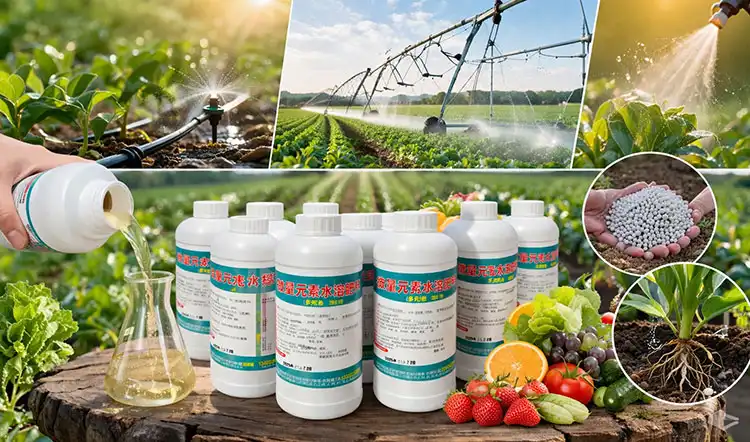
There are three main ways to use soluble fertilizers so that plants can get the most out of them. When you fertilize with drip or sprinkler systems, nutrients are sent straight to the root zones. This is a mix of watering and fertilizing. There are dry places where this method works really well for managing water and getting nutrients to plants at the same time. Foliar feeding quickly fixes nutritional problems that come up because of stress or not getting enough nutrients. A lot of soluble formulas have surfactants and adjuvants in them that help nutrients get into the stomata through the leaf surfaces. When you soak the soil, you can precisely control how many nutrients get to the roots and when they get there.
Real-World Performance Comparisons
It is always better for crops when commercial farms switch from granular to soluble fertilizers. Farmers can get 15–25% more vegetables from their crops while using 20–30% less fertilizer when they use fertilizer systems. The places that grow fruit trees have better fruit quality parameters, like more sugar, better color development, and better storage qualities. A study of economics shows that water-soluble fertilizers are worth the extra money because they increase crop yields, improve quality grades, and require less work to use. It's valuable to be able to change nutrient programs during the growing season so that crops grow at the best time.
Application Methods and Best Practices for Water-Soluble Fertilizers
The way soluble fertilizers are used must match the needs of the crop and the way it is grown in order for them to work well. If you know how each delivery method works technically, you can be sure that the nutrients are absorbed correctly and that there are no issues with system compatibility or phytotoxicity.
Fertigation Systems and Implementation
Fertilization, which uses water-soluble fertilizers and irrigation systems to get nutrients to the right places, is the most advanced way to apply nutrients. For drip irrigation systems not to get clogged and for the solution to be spread out evenly, it is important that the emitters connect to each other and that the concentration of the solution is correct. The best way for pressure-compensated emitters to work is for the solutions to be filtered so that the levels of electrical conductivity stay below the levels needed for each crop. Automated injection systems that use electronic dosing equipment or Venturi pumps can be useful for large-scale operations. With these systems, you can set up feeding times that work with your plants' growth stage and the weather. Parts that stop backflow, filter parts, and monitoring gear are all important parts of a well-designed system that keeps working well.
Foliar Application Techniques and Timing
Feeding plants through their leaves is a quick way to make up for lost vitamins and minerals and help them when they are stressed out. It's very important what time you apply. Adding nutrients early in the morning or late at night is best because the leaves won't be burned. For most crops, concentration rates should be between 0.2% and 0.5%, but this can change based on the crop's type and the weather. Adding important micronutrients to foliar formulations can help fix hunger problems that are hard to find in the soil.
Soil Drenching and Root Zone Management
Concentrated nutrient solutions are sent straight to the root zones when the soil is saturated. This helps plants take them up right away and builds up the soil's nutrient reserves. With this method, it's easy to keep track of the nutrients that high-value plants need over long growing seasons. When you soak the soil, you need to know where the roots grow and how fast the water soaks in. The right amount and concentration of application must be found between what the plants need at the moment and what the soil can do to keep salt from building up or causing osmotic stress.
Choosing and Procuring the Right Water-Soluble Fertilizer for Your Needs
To pick the best water-soluble fertilizers, you should carefully consider what the plant needs, how well the product meets quality standards, and how good the supplier is. It's important to make decisions that match the product's features with the business's goals because there are so many formulations to choose from.
Crop-Specific Nutrient Requirements Analysis
Different plants need different amounts of food at different times during their growth cycles. During the vegetative growth phase, high-value vegetable crops need more micronutrients and balanced NPK ratios. They need formulations that are higher in potassium as the fruit grows. For the roots to grow, the flowers to bloom, and the fruit to ripen, tree fruit farms need certain mixes. The availability of micronutrients is a very important selection factor, especially for plants that are grown in alkaline soils or media that don't have soil. EDTA, DTPA, or EDDHA technology is used to chelate micronutrients. This keeps nutrients from locking up and makes sure they are always bioavailable, even in a variety of growing conditions.
Quality Standards and Certification Requirements
Water-soluble fertilizers made for professionals must meet strict standards for how pure they are and how well they dissolve in water. Things should have less than 0.5% matter that doesn't dissolve in water, so that irrigation systems don't get clogged and the pH level stays steady. Electricity standards make sure that the product can be used with delicate plants and growing medium. The best formulas have special crystallization processes and anti-caking agents that keep the product's flow while it's being stored and keep it from sticking together when it gets wet.
Supplier Evaluation and Procurement Strategies
Suppliers you can trust offer a wide range of technical support, such as advice on what products to use, how to use them, and how to fix problems. Companies that have been around for a while can offer reliable supply chains, high-quality products, and helpful customer service that keeps things running smoothly. You can save money and make sure you have enough stock during growing seasons when you buy in bulk. When you need to ship a lot of containers or time deliveries to fit the seasons, you need to think about your shipping options and how to get everything in order.

Future Trends and Industry Insights on Water-Soluble Fertilizers
The progress made in water-soluble fertilizers is a sign of bigger changes in agriculture that are making it more sustainable and able to be managed more precisely. For the next generation of crop nutrition products, you need advanced formulations with technologies that work better and biological activity promoters.
Technological Advancements and Innovation
In new research, controlled-release mechanisms are being added to matrices in which water-soluble fertilizers dissolve in water. This makes nutrients more available for a longer time while still letting the body take them in quickly at first. Nanoencapsulation technologies are better at helping cells take in nutrients because they keep nutrients that are sensitive from breaking down. Bio-enhancers, such as good bacteria and enzyme systems, improve the health of the soil and speed up the cycle of nutrients. Synthetic nutrition and biological soil management work together in these new ideas to help plants now and in the future.
Regulatory Evolution and Market Adaptation
Laws that protect the environment are pushing people to use nutrients in ways that hurt the environment the least. Water-soluble fertilizers work better and hurt the environment less than traditional broadcast applications, which is in line with these trends. In sustainable agriculture certification programs, soluble fertilizers are preferred because they can be used precisely and produce less waste. These market factors make it likely that adoption will continue in many agricultural areas.
Strategic Implications for Agricultural Operations
Spending money on fertigation infrastructure and precise application tools is a long-term choice to take care of crops with more advanced methods. Businesses that use these technologies get an edge over their competitors because they improve crop quality, lower input costs, and take better care of the environment. People who work with complicated systems for injecting fertilizer have to go through training. This can help them get better at their jobs and make the business run more smoothly. Suppliers need to keep learning new ways to help their customers because modern soluble fertilizer programs are so hard to understand.
Conclusion
Moving toward water-soluble fertilizers in the farming world shows how useful these items are for many farming tasks. Using this method of applying fertilizer is clearly better than the old ones because crops do better, the fertilizer is applied more accurately, and the nutrients are absorbed faster. Getting nutrients to plants at the right time for their stages of growth makes farming more efficient and better for the environment. A lot of the time, farmers need nutrition solutions that can be used in different situations and still work. Soluble fertilizers are a key part of running a successful farming business.
FAQ
1. What makes water-soluble fertilizers more effective than granular alternatives?
Water-soluble fertilizers can use 80–90% of their nutrients, while granular products can only use 30–40%. This is because water-soluble fertilizers can be applied at the right time, and nutrients can be used right away. It is possible for targeted delivery to happen during important growth stages when inert carriers are completely broken down.
2. Can water-soluble fertilizers be mixed with other agricultural inputs?
It depends on how the product is made and who is mixing it in the tank. Because of the chance of precipitation, phosphate or sulfate-based fertilizers should not be mixed with calcium-based solutions. Do a small test of your water source and mix partners in a jar before you use it on a large scale.
3. How do storage conditions affect water-soluble fertilizer quality?
These things need to be kept in cool, dry places with their original packaging still on because they soak up a lot of water. Wet things tend to stick together and dissolve more slowly. A product's quality stays the same even after being stored for a long time if it is kept in a climate-controlled space with moisture barriers.
Partner with Sciground for Premium Water-Soluble Fertilizer Solutions
Sciground sells high-tech water-soluble fertilizers that dissolve in water and help plants grow better while using less water. Micronutrients that are important for plants' health are mixed into our specially made mixes. These micronutrients help plants grow faster and make better fruit. Since the Northwest Academy of Agricultural Sciences has been doing research for more than 20 years, we know just what nutrients farms need to do well. Send us an email at [email protected] to learn more about how our services as a provider of water-soluble fertilizer can help you make your crop production systems work better.
References
1. Agricultural Research Council. "Nutrient Use Efficiency in Modern Crop Production Systems." Journal of Agricultural Sciences, vol. 45, no. 3, 2023, pp. 234-251.
2. International Fertilizer Association. "Water-Soluble Fertilizers: Global Market Analysis and Application Trends." IFA Technical Publication, 2023.
3. Precision Agriculture Research Institute. "Comparative Study of Fertilizer Application Methods in Intensive Crop Production." Precision Farming Quarterly, vol. 18, no. 2, 2023, pp. 67-89.
4. Sustainable Agriculture Foundation. "Environmental Impact Assessment of Soluble versus Granular Fertilizer Systems." Environmental Agriculture Review, vol. 12, no. 4, 2023, pp. 156-173.
5. Crop Nutrition Technology Center. "Micronutrient Delivery Systems in Modern Agriculture: Performance and Efficiency Analysis." Plant Nutrition Science, vol. 29, no. 1, 2023, pp. 45-62.
6. Global Agricultural Innovation Network. "Future Trends in Fertilizer Technology and Sustainable Crop Management." Agricultural Technology Review, vol. 31, no. 2, 2023, pp. 112-128.

Sciground
Shanrangde, in collaboration with a team of experts from the former Academy of Agricultural Sciences, focuses on developing patented organic fertilizers, including those specifically formulated for Corydalis rhizome. Chief expert Professor Liang Dejun, with over 20 years of industry experience, provides one-stop technical guidance from site selection to field management, helping farmers increase production and income.
Formulated by the original expert team from the Academy of Agricultural Sciences · Focused on organic nutrients specifically for crops
Contact us now to customize a green nutrition solution for your farmland.
Recommended Blog

How Do Leaf Application Fertilizers Enhance Absorption?