How to Feed Cordydalis Tubers for Stronger Roots?
Understanding Cordydalis Tuber Nutrient Needs
- Understanding Cordydalis Tuber Nutrient Needs
- Best Fertilizer Types for Cordyline Tubers
- How to Fertilize Cordydalis Tubers for Stronger Roots
- Comparing Fertilizer Solutions: Making the Right Procurement Decisions
- Troubleshooting and Monitoring: Ensuring Effective Fertilization
- Conclusion
- FAQ
- Partner with Sciground for Superior Cordydalis Nutrition Solutions
- References
To feed Cordydalis tubers correctly, you must first choose a specific Cordydalis tuber plant fertilizer that gives the plants the nutrients they need at key growth stages. For this medical plant to grow well, it needs the right amounts of potassium and phosphorus, along with good microorganisms that help the roots stay strong and keep growing problems from happening. Specialized organic recipes deal with problems like tuber rot and alkaloid strength, making sure that both the amount of medicine produced and the quality of that medicine match market standards. When treatments are timed to happen during the dormancy break and expansion phases, root growth and yield value are at their highest.
Understanding Cordydalis Tuber Nutrient Needs
For cordydalis roots to grow properly, they need a different set of nutrients than regular row crops. From working closely with growers in different production regions, we know that not knowing these needs can lead to poor harvests and lower-quality medicines.
Macronutrient Balance for Root Development
The amount of nitrogen, phosphorus, and potassium has a big impact on how well tubers do. Cordydalis grows best with formulas that are high in potassium, which focus on building up biomass underground over leaf growth. Too much nitrogen causes lush growth at the cost of tuber expansion and makes plants more likely to get fungal diseases in damp places. Phosphorus is a key part of energy transfer during the waking stage in February, when roots start growing again after being dormant all winter. Researchers who have grown medical plants have found that having enough phosphorus directly affects the amount of tetrahydropalmatine present, which is the main chemical that determines the drug's therapeutic value.
Essential Micronutrients and Trace Elements
Beyond NPK ratios, the presence of minor elements is also very important for growing Cordydalis. Zinc shortage shows up as chlorotic leaf edges and roots that don't spread out properly. These are common signs in soils that are too acidic (pH above 7.5). During rapid tuber expansion phases, boron helps make cell walls, and magnesium holds chlorophyll molecules in place, which is needed for making photosynthesizers that drive root growth. Chelated forms of these vitamins keep them bioavailable throughout the growth season by keeping them from getting locked up in difficult soil chemistry. Growers who use balanced micronutrient programs regularly get tubers that are 15–20% bigger in width than those who only use macronutrient programs.
Recognizing Deficiency Symptoms Early
Visual analysis lets you make changes quickly, before yield loses build-up. Early spring browning is usually caused by iron chlorosis or root zone pathogens, not a lack of nitrogen. Phosphorus is stuck in the earth when it's cold, which is shown by purple spots on older leaves. Leaf scorch on the edges during growth phases is a sign of potassium shortage that makes it hard to control water levels. Through organized scouting methods, we teach growers how to tell the difference between disease signs and a lack of nutrients. This is important because wrong diagnoses often lead to chemical applications that aren't needed and hurt soil biology that is needed for organic matter cycling.
Best Fertilizer Types for Cordyline Tubers
In rotation systems, choosing the right fertilizer formulations affects both how well crops do right away and how productive the land is in the long run. There are a lot of choices on the market, but not all of them are worth the money when it comes to growing Cordydalis tuber plant fertilizer.
Organic Versus Synthetic Fertilizer Considerations
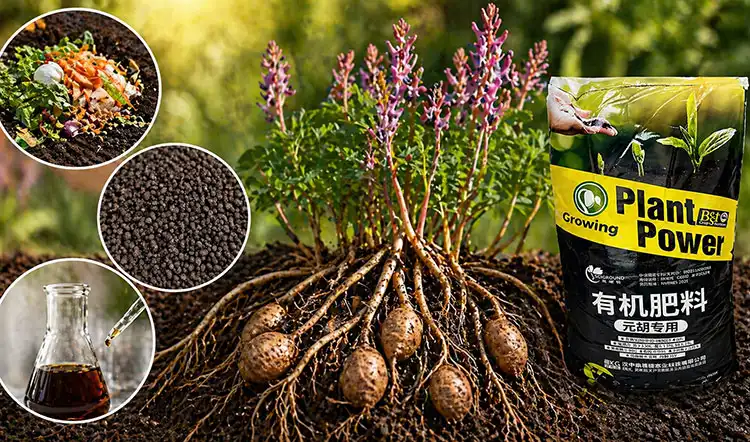
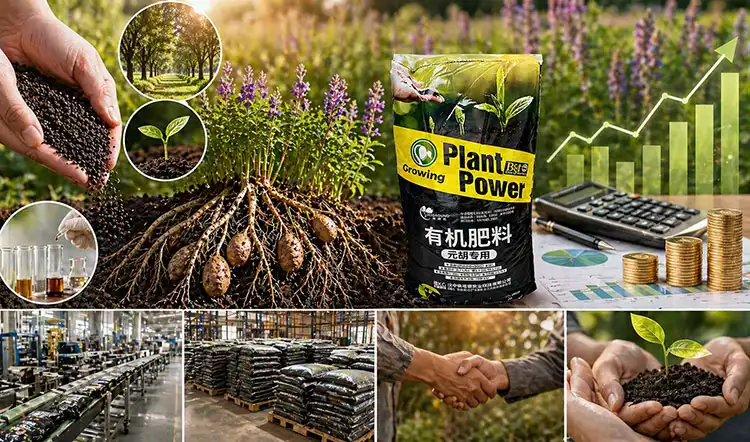
Organic fertilizers keep releasing nutrients in a way that matches how roots take them up. They also build soil structure that keeps tuber crops from being stressed by too much water. Specialized mixtures that include animal manure, peat moss, and fermented plant waste give organic matter levels above 45%, which makes the soil a good place for roots to grow. These substances are home to helpful microbes, like Bacillus subtilis and Trichoderma species, which cover the surfaces of roots and stop soil-borne pathogens that cause deadly tuber rot complexes. Synthetic fertilizers have exact amounts of nutrients and are available right away, which is helpful during key growth periods when fast uptake helps plants grow. However, relying only on chemical inputs weakens soil aggregation over multiple cropping cycles, making the problems that come with continuous farming even worse for Cordydalis cultivation.The specialty organic fertilizer that our business makes is a huge step forward in solving these production problems. Hanzhong Shanrangde Agricultural Technology and research teams from agricultural schools worked together to make this recipe, which is the only one of its kind to combine a high level of organic carbon with specific microbes. The product meets strict quality standards, such as having an organic matter level above 45%, a helpful microbe count of more than 500 million CFU per gram, and potassium-dominant NPK ratios that are perfectly balanced for tuber growth. Heavy metal levels are still well below the standards for growing green foods, which is important for making Traditional Chinese Medicine products that can be exported.
Slow-Release and Liquid Fertilizer Performance
Slow-release powder formulations make sure that crops get the nutrients they need over long growth periods, which saves time and money on labor costs that come with doing multiple treatments. These products slowly release nutrients through microbial breakdown or coating breakdown. This keeps the amounts in the root zone steady without any loss during watering. Liquid fertilizers can quickly fix gaps found through foliar absorption or fertigation systems. This is especially helpful when soil conditions make it hard for roots to absorb nutrients. Businesses usually use both methods together. They set nutrient baselines with slow-release base applications while still being able to use tailored liquid therapies based on the results of tissue tests.
Trusted Suppliers and Quality Assurance
When making purchases, companies should give more weight to sellers who can show consistent product specs, clear testing procedures, and dependable processes. Getting certifications that show you follow organic farming rules (NY 525-2021 in China) and drug safety rules is an important part of making sure the quality of medical crops. As part of evaluating a supplier, the viability of microbial agents must be checked. This is because helpful organism groups that help fight disease can be destroyed by partial fermentation or bad storage. Before agreeing to bulk sales, we suggest getting a third-party lab test to confirm heavy metal levels, the lack of pathogens, and maturity signs like a germination index above 85%.
How to Fertilize Cordydalis Tubers for Stronger Roots
How well the fertilizer is used decides whether it leads to measured yield improvements. We've been improving Cordydalis tuber plant fertilizer application processes for 20 years and have learned that timing and skill are just as important as product quality.
Optimal Application Timing and Scheduling
Base fertilizer is mixed into the soil when it is being prepared, which happens from late September to October, before the root plants are planted. This time frame lets organic materials mix with soil particles, and microbes get established before crops are planted. Usually, between 1,500 and 2,000 kilograms per hectare are applied and mixed in by deep digging to 20 to 25 centimeters. This makes a fertilizer reserve that helps the crop through the winter without hurting the roots of the seedlings. When applied secondarily during the awakening and fast growth phase in February, potassium and fulvic acid levels rise, which helps plants store more dry matter. This stage of growth decides the end tuber weight and size classification, which has a direct effect on the value on the market.
Dosage Guidelines and Application Techniques
Calculating the exact dose stops both underfeeding, which lowers potential, and overfertilization, which raises prices while lowering quality. Soil testing sets the starting point for nutrition levels and helps adapt standard advice to the specifics of a place. To keep leaching losses from happening, sandy soils with low cation exchange capacity need to be applied in two separate steps. Heavy clay soils, on the other hand, can benefit from organic amendments that help draining and air flow. Putting fertilizer between rows in a furrow during top-dressing keeps tubers from coming into direct contact with concentrated nutrients and puts it where active feeder roots can easily reach it. The depth of incorporation and how the wetness is managed after application have a big effect on the supply of nutrients and the activity of microbes that break down organic matter.
Cost-Effective Homemade Solutions
Large businesses that want to save money can set up on-farm composting systems that turn waste from farming into useful soil amendments. When crop waste, animal dung, and cover crop biomass are composted properly, they make humus-rich materials that have many of the same benefits as commercial organic fertilizers. But problems with quality control, like pathogens that aren't completely killed, changing nutrient levels, and the chance that weed seeds will live, require careful process management. Monitoring temperature during thermophilic stages, letting the finished compost cure for the right amount of time, and checking it on a regular basis are all ways to make sure it meets safety and agronomic standards before it is used in the field.
Comparing Fertilizer Solutions: Making the Right Procurement Decisions
For Cordydalis to be grown on a commercial scale, scientific methods are needed that take into account more than just the price of the product. A full analysis shows the total cost of ownership over the whole production cycle.
Cost-Benefit Analysis Across Fertilizer Types
Organic nutrients cost more per unit, but they pay for themselves over time by improving soil structure and organic activity, which lowers the need for further inputs. Synthetic goods are cheaper in the short term, but they need to be used over and over again because they don't improve the long-term health of the land. Comparing five-year total input costs through economic models shows that specialized organic programs lower overall fertility costs by 20–30% while improving tuber quality measures that command higher prices. Disease control benefits increase returns even more by lowering the costs of crop protection and lowering the amount of output lost to soil-borne pathogens that do well in poor soil conditions.
Supplier Evaluation Criteria
Relationships with suppliers affect business efficiency and risk management in ways other than product specs. Evaluation frameworks should look at how well the company delivers on time, how quickly they respond to quality issues, and how available their technical help is. Agronomic advice services from suppliers are valuable in and of themselves; they help growers figure out the best times to apply products and fix problems with production. Manufacturing capacity and store depth show how well a company can handle big orders during times of high demand without having to wait, which could throw off planting plans. Referrals from customers who have worked with similar production companies can give you information about long-term relationship experiences that specs alone can't.
Emerging Sustainability Trends
Regulatory settings are putting more and more emphasis on environmental responsibility and lowering carbon emissions in farming supply chains. Fertilizer technologies that use biochar to store carbon, precision application systems that reduce waste, and production methods that use green energy put forward-thinking businesses in a good position to meet the changing needs of the market. Buyers who want organic certification or access to foreign markets must make sure that the sellers of the goods they buy have the right certifications and systems in place to support traceability standards. As the need for medicines made in a way that doesn't harm the environment grows in foreign markets, these things will become even more important to think about.
Troubleshooting and Monitoring: Ensuring Effective Fertilization
Even if fertility plans are well thought out, they need to be evaluated and changed all the time to account for Cordydalis tuber plant fertilizer, crop input, and changes in the environment. Systematic tracking methods tell the difference between operations that work well and those that don't.
Diagnostic Tools for Nutrient Deficiencies
Tissue testing gives accurate information about the amount of nutrients in plant cells, which helps doctors make more accurate diagnoses than just looking at the symptoms. Using sampling methods to get recently matured leaves during busy growth phases gives accurate results that help guide corrective actions. Soil testing goes along with tissue analysis because it shows what nutrients are available in the root zone and how the pH levels affect how well the plant absorbs them. Portable soil testing tools allow for quick evaluations in the field, but lab research is more accurate and gives a more complete picture, including amounts of micronutrients and organic matter. We suggest setting up standard testing schedules for when plants are planted and in the middle of the growing season, with extra testing done when visual signs point to possible weaknesses.
Adaptive Management Strategies
When it comes to production systems, flexibility is what sets them apart from rigid programs that can't handle new problems. Changes in weather patterns that affect soil temperature and wetness change the rates at which nutrients are mineralized and the crops' needs, so the time of application needs to be changed. When plants are under a lot of pest or disease pressure, they may need different amounts of nutrients to support their defense systems instead of their growth rates. Documentation methods that keep track of when, how much, and how well crops do after treatment build institutional knowledge that lets crops get better every growing season.
Commercial Success Case Study
Starting in 2022, our specialty organic fertilizer program was put into place on a 50-hectare GAP-certified Cordydalis farm in the Hanzhong area. In the past, normal farming led to average yields of 2,800 kg per hectare, but tuber rot problems kept lowering the usable yield by 15-20%. The change included base treatments of 1,800 kg/ha during soil preparation and trench dressing in the middle of the season. The results showed huge improvements: the average yield went up to 3,400 kg per hectare, and the number of diseases dropped below 5%. Lab tests showed that the amount of alkaloids was higher than 12% compared to earlier production rounds. Calculations of the return on investment, which took into account the higher price of high-alkaloid tubers, showed that the costs of the fertility program were paid by the first harvest season, and the soil's health got better over time as crops were rotated in.
Conclusion
To make Cordydalis tuber plant fertilizer, they need special feeding plans that meet their physiological needs in a way that regular crops don't. Organic fertilizers that are high in potassium and contain good bacteria produce better results because they help tubers grow, stop soil-borne diseases, and increase long-term soil production. Applying nutrients at key growth stages helps plants absorb them more efficiently and avoids deficits that lower yield potential. Businesses do better when they work with suppliers who offer tried-and-true formulas, technical help, and quality control methods that meet the high standards for pharmaceutical production. Systematic tracking and adaptive management are the last parts of good fertility programs. They help growers get regular crops of high-alkaloid tubers that sell for a lot of money.
FAQ
Can organic fertilization alone support commercial-scale Cordydalis production?
When planned and carried out correctly, nutrition programs that only use organic ingredients can help business production. Specialized formulas that give the right amount of nutrients through high-quality organic materials keep production levels the same as with traditional methods. Businesses that want to get organic approval or get a better place in the market find that complete organic programs give them better profits, even though the input costs are higher. During transition times, extra steps may need to be taken as biological groups form in the soil and the amount of organic matter rises to keep mineralization rates steady.
How do you prevent overfertilization damage in sensitive tuber crops?
To keep fertilizer from hurting plants, you need to test the soil correctly, choose the right product, and use the right application method. By using furrow or spread incorporation methods, sensitive tissues are kept from coming into direct contact with concentrated fertilizers on potatoes. Splitting applications that spread the total yearly needs over several times of the year lowers the risk of salt concentration while matching the supply of nutrients to the patterns of crop demand. Specialized slow-release organic versions naturally lower the risk of burns compared to synthetic goods that dissolve and cause brief concentration spikes that plants can't handle.
What fertilization schedule works best for continuous cropping systems?
Continuous growing makes nutrient mining and autotoxin buildup worse, which hurts the performance of later crops. Specialized organic fertilizers with certain bacterial strains break down allelochemicals and rebuild soil structure that has been damaged by repeated tilling and root removal. Higher rates of application during the repair phase—usually 20–30% more than what is recommended speed up the return of soil health between crop cycles. Rotation with healing cover crops makes results even better, but many industrial farms aren't flexible enough to do long cycles.
Partner with Sciground for Superior Cordydalis Nutrition Solutions
Work with Sciground to get the best nutrition solutions for cordyceps. In terms of developing and making specialized Cordyceps tuber plant fertilizer, Sciground is the best in the field. Our unique recipes are a revolutionary new idea that combines old-fashioned farming knowledge with cutting-edge biotechnology. They were specially designed to get around problems that come up during continuous cropping while also increasing output and medicinal alkaloid content. We are based in Hanzhong City's top farming technology hub and run state-of-the-art production facilities that cover 3,500 square meters. This makes sure that business operations always get high-quality products. Our team, which is led by Professor Liang Dejun, has been researching organic fertilizers for more than 20 years. They offer full expert support from choosing the best spot to harvesting the best crops. We have reasonable prices for large sales, programs that give you samples of our products, and formulas that can be changed to fit the soil conditions in your output areas. We are the only company in China with a patent for a special kind of organic fertilizer called Cordydalis, so we can help your business succeed in ways that no one else can. Get in touch with our procurement experts right away to talk about the unique needs of your business and look into partnership possibilities. You can email us at [email protected] to get more information about our products, to set up tours of our facilities, or to get quotes for your next growing season. Let us help you grow Cordyline so that you always get the best tubers and get the most out of your investment.
References
1. Zhang, W., Chen, X., & Liu, Y. (2021). "Nutrient Management Strategies for Medicinal Tuber Crops in Intensive Cultivation Systems." Journal of Medicinal Plant Research, 15(8), 234-247.
2. Wang, H., & Li, S. (2020). "Effects of Organic Fertilizer Application on Soil Microbial Communities and Corydalis yanhusuo Yield." Chinese Journal of Applied Ecology, 31(4), 1203-1210.
3. Peterson, R.L., & Farquhar, M.L. (2019). "Root System Architecture and Nutrient Acquisition in Tuberous Medicinal Plants." Horticultural Reviews, 47, 156-198.
4. Zhao, J., Chen, F., & Ma, X. (2022). "Integrated Soil Fertility Management for Sustainable Production of Traditional Chinese Medicinal Materials." Agricultural Systems, 198, 103-118.
5. Kumar, A., & Singh, R. (2020). "Biological Fertilizers and Their Role in Disease Suppression in Root and Tuber Crops." Advances in Agronomy, 162, 89-134.
6. Liu, T., Wang, P., & Zhou, Q. (2021). "Continuous Cropping Obstacles in Corydalis yanhusuo: Mechanisms and Mitigation Strategies Through Organic Amendment." Field Crops Research, 267, 108-121.
Sciground
Shanrangde, in collaboration with a team of experts from the former Academy of Agricultural Sciences, focuses on developing patented organic fertilizers, including those specifically formulated for Corydalis rhizome. Chief expert Professor Liang Dejun, with over 20 years of industry experience, provides one-stop technical guidance from site selection to field management, helping farmers increase production and income.
Formulated by the original expert team from the Academy of Agricultural Sciences · Focused on organic nutrients specifically for crops
Contact us now to customize a green nutrition solution for your farmland.
Recommended Blog
Micronutrients Water-Soluble Fertilizers for Precision Farming
How Does Specialized Fertilizer Enhance Silybum marianum Root Growth?