Micronutrients Water-Soluble Fertilizers for Precision Farming
Understanding Micronutrients and Water-Soluble Fertilizers
- Understanding Micronutrients and Water-Soluble Fertilizers
- Identifying and Correcting Micronutrient Deficiencies in Precision Farming
- Choosing the Right Water-Soluble Micronutrient Fertilizer
- Optimizing Procurement for Micronutrient Water-Soluble Fertilizers
- Future Trends and Innovations in Micronutrient Water-Soluble Fertilizers
- Conclusion
- FAQ
- Partner with Sciground for Superior Micronutrient Solutions
- References
Micronutrients Water-soluble Fertilizers are a big step forward in precisely farming methods when it comes to crop nutrition. By adding these very pure mixes to water or putting them on the leaves, plants get important trace elements like iron, zinc, manganese, copper, boron, and molybdenum. Water-soluble ones, on the other hand, dissolve completely, so they are quickly absorbed and don't get stuck in drip irrigation systems. Even though NPK inputs are enough, outputs are still limited by "hidden hunger." Different kinds of things make it possible to customize treatments that increase output and support environmentally friendly farming methods in a number of growth areas.
Understanding Micronutrients and Water-Soluble Fertilizers
The Essential Trace Elements Your Crops Need
To make plants' metabolism go faster, micronutrients turn on enzymes and support molecular processes that decide how plants grow and react to stress. Chlorophyll is made of iron, and proteins and auxins are made with zinc. Manganese starts photosynthesis and nitrogen metabolism, boron helps cells take in calcium and build reproductive structures, and molybdenum fixes nitrogen. Copper makes cell walls tougher. Lack of even one element can set off Liebig's Law of the Minimum, which limits returns no matter how much food is available. This law is measured in parts per million instead of pounds per acre.These trace elements are mixed into irrigation water or spray solutions with Micronutrients Water-soluble Fertilizers technology. This makes it easier for plants to take them in. Grainy sulfates or oxides, on the other hand, must slowly break down in wet soil and often take on shapes that roots can't use before they break down. NPKs get into the xylem hours after they are sprayed instead of days or weeks because they break down quickly.
Chemical Advantages of Chelated Formulations
For example, EDTA, DTPA, and EDDHA are organic chemicals that are linked to metal ions in new vitamin products that dissolve in water. Micronutrients that are mobile don't stick to clay particles or harden in alkaline soils because of these man-made complexes. They stay in forms that plants can use across a pH range. It works best for EDTA chelates when the pH level is normal to slightly acidic. Calcium-rich soils with pH levels above 8.0, on the other hand, keep EDDHA forms steady. This is often a problem in rangelands and vineyards in the western United States.The stable constant of chemicals tells us how long they stay in soil solution. When the ortho-ortho isomer percentage of EDDHA-Fe is high, it stays available for longer, which cuts down on the number of times it needs to be used and the cost of the work. Because of this scientific accuracy, more of the micronutrients that are sprayed get into plant tissue and don't get washed away or lost in the dirt.
Identifying and Correcting Micronutrient Deficiencies in Precision Farming
Visual Diagnosis and Tissue Testing Protocols
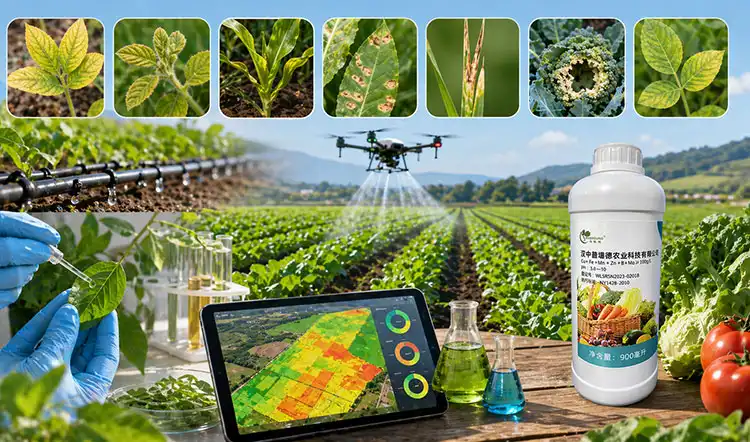
You have to pay close attention to lack signs because they look different for each element and crop species. Iron chlorosis is shown by green veins in new growth. Oranges and soybeans make this very clear. Not getting enough zinc makes the stems of corn and nuts short and the leaves small and wrinkled. If grain leaves don't get enough manganese, they get tan spots. If wheat tips die back, it means they don't get enough copper. If brassica plants don't get enough boron, their fruits don't set as well and have hollow centers. When legumes don't get enough molybdenum, their leaves turn pale and thin, making it look like they aren't getting enough nitrogen. By measuring the amounts of nutrients in newly formed leaves that were taken during active growth stages, tissue analysis gives us clear proof. Data are compared to well-known sufficiency levels to figure out what needs to be fixed. That's why soil study is important because it shows how pH levels and the amount of organic matter in the soil affect the vitamins that are available in root zones.
Application Methods Optimized for Precision Systems
Precision watering systems work great with Micronutrients Water-soluble Fertilizers. Because they send nutrients straight to the roots with little waste, drip lines are a great way to feed valuable fruit and vegetable crops. By matching the pumping rates to the flow of water, the spread is the same everywhere, getting rid of the differences that come with radio spreading. Sprays on the leaves can quickly fix problems that happen when the roots can't keep up with what the plant needs during important growth times. The leaves won't get burned if you use weak solutions early in the morning or late at night. The stomata will let more water into the plant. Most of the time, 20 to 50 gallons of spray are used per acre, and 0.5 to 1.5 grams of vitamins are found per liter. There are different stages for each crop based on how sensitive it is and how severe the lack is. On a farm in Missouri, zinc was put on the leaves of grape plants, and the amounts went up by 18% compared to plants that weren't treated. Also, the berries were bigger and had more sugar. In the same way, adding chelated iron to the soil repaired chlorosis in California almond fields in three weeks. This allowed the plants to make food again and stopped nuts from falling off while the seeds were still growing.
Choosing the Right Water-Soluble Micronutrient Fertilizer
Matching Formulations to Crop and Soil Conditions
To pick the right things, you must first know what each crop needs and what the soil's chemistry can't do. Using balanced Micronutrients Water-soluble Fertilizers mixes with all six essential elements can help veggie growers get more food from their plants. Tomato, pepper, and onion growers can use these mixes. Iron, zinc, and boron are important for apple, peach, and cherry farms because they help the plants flower, set fruit, and keep their quality over time. For hydroponic and garden systems to work, the recipes must be very clean and not leave any waste. This keeps the vents from getting stuck and makes sure that the nutrients are always sent out. How well micronutrients break down and how freely plants can use them depend on the pH of the soil. When the earth's pH goes above 7.5, iron, manganese, and zinc quickly change into hydroxides that can't be broken down. To make this work, we need chelated forms that are very stable. Metals are naturally released by soils with a pH below 6.0, but too much manganese or aluminum can be bad for plants, so they need to be closely watched. Soils that are sandy and don't hold many cations do better with regular fertigation treatments that aren't as strong. Soils that have a lot of clay may keep nutrients for longer, but they may need acidifying additions to make it easier for plants to take them in.
Evaluating Suppliers and Product Certifications
A buyer doesn't just choose based on price per ton; they also look at how reliable the seller is, how much expert help they can provide, and how well they follow the law. Spec sheets from reliable manufacturers will give you a lot of information, like the amount of heavy metals, the type of chelate, the percentage of water absorption, and a proven analysis. If a product meets the quality management standards of ISO 9001, it means that the production process is consistent. Activities that are allowed by OMRI are also guaranteed to be friendly to nature. Big buyers should ask the seller if they can make mixes that fix issues with the soil in their area or that fit the needs of each crop. To add value, a service provider who gives agronomic advice should suggest treatment rates based on the results of tissue tests and the growth goals. Also, knowing how to handle logistics is important. Moisture-proof packaging protects the product while it's being shipped, and reliable shipping plans keep apps from being held up during important growth stages. Professor Liang Dejun has been studying organic fertilizers for more than twenty years to make products that solve specific farming problems. He joined Sciground two years ago with help from the Northwest Academy of Agricultural Sciences. Our team can help farmers with every part of the process, from getting the land ready to harvesting and making sure the plants get the right nutrients at the right time.
Optimizing Procurement for Micronutrient Water-Soluble Fertilizers
Strategic Sourcing and Cost Management
When you buy a lot of Micronutrients Water-soluble Fertilizers, you have to weigh the lower prices right away against the space they take up and the time they last. Buyers can get high prices without having to commit to too much inventory if they work together with dealer networks or farming groups to place orders. Because prices change with the seasons, it's best to buy early in the season. Putting things away in cool, dry places with relative humidity below 60% is the best way to keep them from getting wet and caking, though. People who work in buying can plan for problems with supply better when they know how markets work. The prices of expensive goods are changed by changes in the markets for EDDHA, a chelating agent, and other fuel derivatives. If you keep an eye on how much vitamin ore is being made and processed around the world, you can tell early on when prices are going to change, giving you time to stock up while prices are low.
Customization and Blending Services
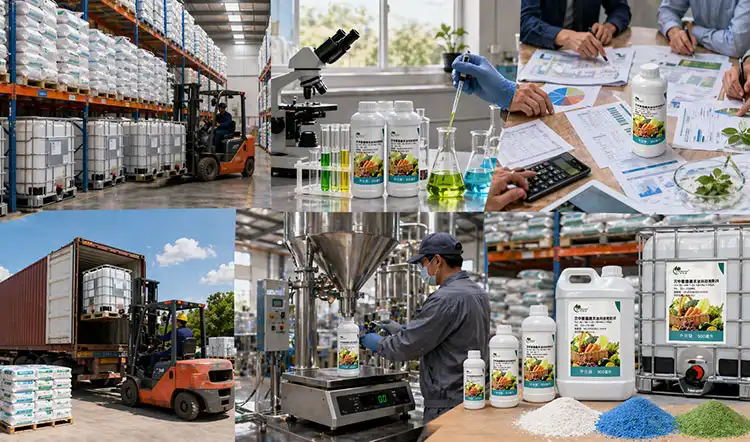
When it comes to fixing specific patterns of shortage, customized mixes of micronutrients work better than general ones. In Texas, a cotton farm might need more zinc, while in the Pacific Northwest, copper and manganese are more important to wheat farmers. Custom mixing from service providers lets you change the amounts of elements and chelates to match soil tests and the rate at which plants take nutrients up. You should also think about the different ways that the goods can be packed. Large companies with their own storage should use large totes because they cost less per unit. On the other hand, smaller bags are better for sellers who need to meet the needs of many customers. You can keep track of your merchandise better and keep your goods clean with water-soluble packing materials. This is especially important for controlled markets where goods need to be easy to find.
Future Trends and Innovations in Micronutrient Water-Soluble Fertilizers
Digital Integration and Precision Application Technologies
These days, digital tools that get data in real time from sensors, drones, and satellite pictures are being used more and more to control nutrients in farming. Variable-rate fertigation methods change how many Micronutrients Water-soluble Fertilizers are injected, depending on where in the field the soil is different or how fast the plants are growing. This is the best way to use the keys. When is the best time to use something so that it is taken by the body and the environment is hurt the least? Cloud-based decision support tools use tissue tests and the weather to figure this out. Controlled-release technologies are another new idea. These put vitamins that dissolve in water inside organic covers that change based on the temperature or moisture level of the soil. By making nutrients available throughout the growing season, these new ideas cut down on how often they need to be used and how much work needs to be done. Plants still have regular access, though.
Sustainability and Organic Certification Trends
People who care about the environment want vitamin products that come from natural sources or are made in ways that don't harm the environment. In allowed production methods, organic chelates bound with lignosulfonates or amino acids are used instead of synthetic EDTA. These chelates, on the other hand, cost more and don't last as long in soil. Getting vitamins from recycled industrial trash makes mines less stressed, which makes them appealing to companies that want to cut down on their carbon footprint. Heavy metals that are found in fertilizer sources are getting more attention from regulatory systems. Cadmium, lead, and arsenic rules make sure that products can be sold in other countries. These rules also protect the soil's health, which keeps it useful for farming in the long term. We at Sciground are committed to cleaning and farming in ways that are good for the environment. These new rules will allow us to follow them and support farming methods that are good for the environment.
Conclusion
Micronutrient water-soluble fertilizers are now important parts of precision farming because they help with hidden hunger and unlock genetic yield potential across a wide range of planting systems. Farms and hiring workers can get the most out of their nutrients while having the least impact on the environment if they understand the biochemistry of trace elements, can spot the signs of shortage, and choose the right chelated formulas. When you use the knowledge and customization skills of providers to deal with the unique farming problems in each area, strategic buying finds the best balance between price and quality. Businesses that keep up with new technologies can stay competitive and strong in global markets for a long time. This is because the need for sustainability and digital integration is changing how farming products are used.
FAQ
What advantages do water-soluble micronutrient fertilizers offer over granular alternatives?
Formulations that dissolve in water completely break down in irrigation water. It is now possible to feed them exactly with fertigation systems, and the leaves quickly take them in. They work faster than granular goods and keep drip sprinklers from getting stuck. Granular goods take longer to dissolve in soil. Chelated forms keep nutrients available even when the pH changes, while sulfate or oxide pellets can't do this because they settle down too quickly.
How do I determine the appropriate micronutrient blend for my operation?
A full soil test tells you how much pH, organic matter, and micronutrients are already in the soil, which sets a bar for how much is available. Some problems need to be fixed when plant tissue is looked at while it is still growing. You can understand the results and find the right products for your crops by talking to agronomists or the expert teams at wholesalers. These teams will take into account the type of crop, your yield goals, and how the plants are growing.
Which certifications ensure product quality and regulatory compliance?
When a product is listed with OMRI, it means that it can be used with organic materials and that the production standards are always met. It's easy to understand when lab results show boundaries on heavy metals, rates of solubility, and certain nutrient amounts. Fertilizers that follow the rules in the countries where they are going make sure that trade across borders is possible.
Partner with Sciground for Superior Micronutrient Solutions
You need more than just general inputs to get the most out of your crops. You also need to know about agronomy, adjust diet, and have strong supply lines. Sciground makes Micronutrients Water-soluble Fertilizers for precision farming systems by mixing preparation methods based on research with tips from experts in the field. Our plant growth boosters do more than one thing. They give plants important trace elements that make their leaves bigger, help them bloom and fruit, make them less likely to get diseases, and make food better by making it regular in size and lasting longer. We are a well-known company that makes vitamin water-soluble fertilizers. Our team can make a mix that will work with your soil and help you grow the crops you want. During the growth season, we can also give you tips from our experience. We promise that your goods will be clean, delivered on time, and an agronomic success whether you run a large ranch, grow a lot of different veggies, or work with farm sellers. Mail us at [email protected] if you want to buy in bulk, get free samples of our products, or talk about how our new recipes can help your business make more money and be more efficient.
References
1. Alloway, B.J. (2008). Micronutrient Deficiencies in Global Crop Production. Springer Science, London.
2. Fageria, N.K., Baligar, V.C., and Clark, R.B. (2002). Micronutrients in Crop Production. Advances in Agronomy, Volume 77, Academic Press.
3. Marschner, H. (2011). Mineral Nutrition of Higher Plants, Third Edition. Academic Press, San Diego.
4. Mortvedt, J.J., Cox, F.R., Shuman, L.M., and Welch, R.M. (1991). Micronutrients in Agriculture, Second Edition. Soil Science Society of America, Madison, Wisconsin.
5. Shivay, Y.S., Kumar, D., and Prasad, R. (2016). Relative Efficiency of Zinc Oxide and Zinc Sulphate-Coated Urea in Rice-Wheat Cropping System. Communications in Soil Science and Plant Analysis, 47(2), 259-270.
6. Zhang, F., and Römheld, V. (2001). Strategies for Efficient Acquisition of Iron in Higher Plants. Plant and Soil, 231(1), 1-4.

Sciground
Shanrangde, in collaboration with a team of experts from the former Academy of Agricultural Sciences, focuses on developing patented organic fertilizers, including those specifically formulated for Corydalis rhizome. Chief expert Professor Liang Dejun, with over 20 years of industry experience, provides one-stop technical guidance from site selection to field management, helping farmers increase production and income.
Formulated by the original expert team from the Academy of Agricultural Sciences · Focused on organic nutrients specifically for crops
Contact us now to customize a green nutrition solution for your farmland.
Recommended Blog
Can Multi Element Foliar Fertilizers Improve Nutrient Uptake Rates?

Can Fruit Tree Fertilizer Improve Fruit Size and Taste?
Fruit Tree Fertilizer Ideas to Boost Orchard Profitability
Foliar Fertilizers vs Soil Feeding: Key Differences