Liquid vs Granular Fruit Tree Fertilizer: Which Wins?
Understanding Fruit Tree Fertilizer Types
- Understanding Fruit Tree Fertilizer Types
- Key Comparison Criteria Between Liquid and Granular Fertilizers
- Practical Application Methods and Scheduling for B2B Operations
- Evaluating Risks, Benefits, and Potential Challenges
- How to Make the Right Fertilizer Choice for Your Business
- Conclusion
- FAQ
- Partner with Sciground for Superior Fruit Tree Nutrition Solutions
- References
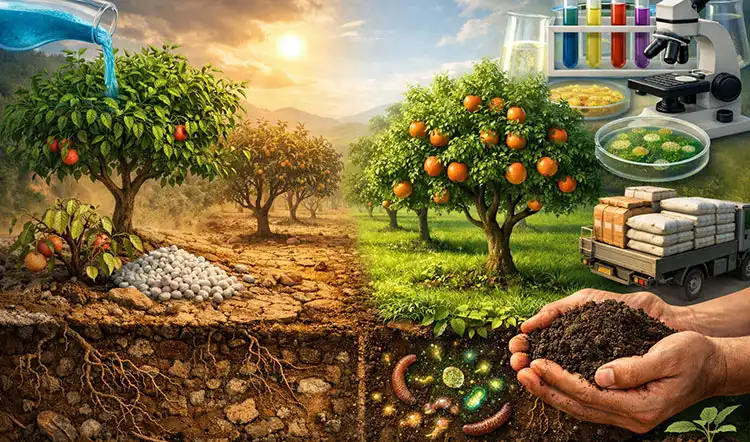
When evaluating liquid versus granular fruit tree fertilizer options, the answer depends on your specific operational needs and orchard conditions. Liquid fertilizers excel in rapid nutrient uptake and precise application through fertigation systems, making them ideal for immediate nutritional corrections and large-scale commercial operations. Granular fertilizers provide sustained nutrient release over extended periods, reducing application frequency while building long-term soil health. The optimal choice often involves integrating both forms strategically throughout your fruit tree's growth cycle to maximize yield potential and operational efficiency.
Understanding Fruit Tree Fertilizer Types
Foundational Knowledge of Liquid and Granular Fertilizers
For crop nutrition management to work well, you need to know the main differences between liquid and solid fertilizers. Liquid fertilizers are made up of nutrients that are dissolved in water. This lets plants take them in right away through their roots and leaves. These mixtures usually have nitrogen, phosphorus, and potassium that plants can use right away, along with vitamins like zinc, boron, and iron that are needed for fruit growth.
Granular fertilizers have nutrients that are solidified into pellets. The nutrients slowly break down in the soil as it gets wet, and microbes start to work. Depending on the coating technology and the climate, this controlled-release system gives you nutrition for weeks or months at a time. Standard spreading tools can be used to apply the structure precisely mechanically over large crop areas.
Essential Nutrients for Major Fruit Crops
Apple, lemon, peach, mango, and cherry trees all need different amounts of nutrients based on how they grow and how much fruit they produce. Nitrogen is what makes plants grow leaves and chlorophyll, and phosphorus helps roots grow and flowers form. Potassium improves the health of all food, makes it resistant to disease, and makes it hardier in the winter.
Even if the amounts of macronutrients are right, micronutrient deficiencies can ruin the output of a crop. Rosetting happens on peach trees when they don't get enough zinc, and iron chlorosis turns orange leaves yellow even when they get enough nitrogen. When there isn't enough boron, apples get cork spot, and stone fruits get hollow heart. These expensive production losses can be avoided by finding them early on through soil and tissue tests.
Organic Versus Chemical Options
Choosing between synthetic and organic fertilizers changes both the standards for approval and the health of the land. Fish emulsion, kelp extracts, or compost tea are some examples of organic liquid fertilizers that can be used to feed plants gently while also supporting good microbes. Synthetic liquid formulas have exact nutrient ratios for correcting specific deficiencies, but they don't have any qualities that build soil.
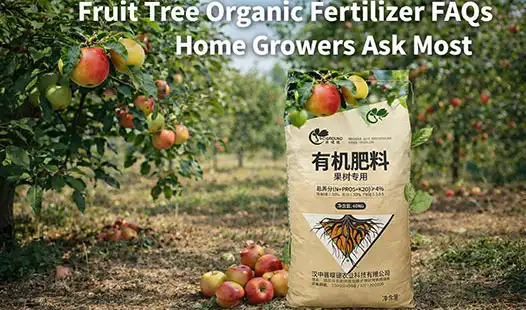
The advanced microbe-fermenting technology in Sciground's specialized organic fruit tree fertilizer fills in this gap. This new product provides complete organic nutrition through helpful bacteria that make the earth more resistant to disease and improve its structure. Bioavailable nutrients are made during the fermentation process and can be used by fruit trees at all stages of their growth, from planting to harvest.
Key Comparison Criteria Between Liquid and Granular Fertilizers
Nutrient Release Speed and Application Efficiency
The speed at which nutrients are available may be the most important difference between solid and liquid versions. Liquid fertilizers give plants instant access to nutrients, and you can see a difference in how the plants look just days after applying them. Because they are easy to get, liquid fertilizers are very helpful during important growth stages like fruit set and fast expansion, when trees need a lot of food.
Granular fertilizers slowly release nutrients over long periods of time, usually between 6 and 12 weeks, but this can change based on the weather and the covering technology used. This steady release pattern works well with the way permanent fruit trees work, making sure that the nutrients are available at the right times for the trees to take them in during the growth season. The longer release lowers the number of times the product needs to be used, which saves money on work and wear and tear on large-scale processes.
Soil Compatibility and Environmental Factors
Conditions of the soil have a big effect on how well fertilizer works and how it affects the environment. Liquid fertilizers work the same way in all types of soil, but the soil needs to be moist enough for roots to absorb them properly. Nutrient loss can happen in sandy soils that drain quickly, making fertilizer less effective and possibly polluting groundwater sources.
Granular fertilizers work better with soil particles because they are closer to them. Over time, this increases the amount of organic matter in the soil and makes it better at exchanging cations. Granular treatments help clay soils get better structure and flow over time, while organic matter builds up in sandy soils to make them better at keeping water in.
As sustainability requirements become more common in business procurement practices, choosing fruit tree fertilizer is driven more and more by environmental concerns. Organic powdered fertilizers, such as Sciground's microbial fermentation product, get rid of harmful ions while keeping the soil fertile, which helps with both environmental responsibility and production goals.
Cost Analysis and Procurement Economics
When buying in bulk, you need to look at a lot of costs, not just the price of the product itself. Liquid nutrients usually cost more per unit, but fertigation methods make it easier to control how much to use and reduce waste. For storage, you need places that keep things at the right temperature and special tools for moving things around. This makes things more difficult for big companies to run.
Granular fertilizers usually have lower costs per unit of nutrients and don't need as much extra storage space. Shipping costs are lower for granular goods because they contain less water, which makes operations more efficient for markets that are far away. But the prices of application tools and labor must be added to the total cost when comparing different ways to buy something.
Practical Application Methods and Scheduling for B2B Operations
Liquid Fertilizer Delivery Techniques
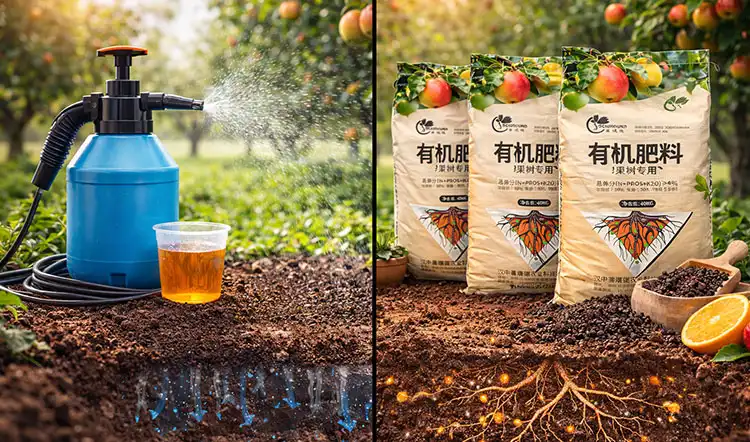
Precision fertigation systems that combine liquid fertilizers with irrigation infrastructure are becoming more and more important for modern apple businesses. This method keeps the soil at the right amount of moisture while delivering nutrients straight to active root zones. Drip watering systems give you the most exact control because they let you change the rate of application based on testing the soil and checking the tree's nutritional needs.
Applying liquid fertilizers to the leaves of plants can help with instant deficiency symptoms and add to the nutrition that is given to the soil during times of high demand. When you spray is very important if you want to keep the leaves from getting burned and get the most nutrients through stomatal absorption. Conditions are usually best early in the morning, when there is a lot of heat and not much wind.
Granular Application Methods for Orchard-Scale Operations
Broadcast spreading, which uses tools on tractors to cover big areas quickly, is still the most common way to apply granular materials to trees that are already established. Band application focuses fertilizer within the root zones, which lowers the cost of materials and increases the plant's ability to use nutrients efficiently. By making it easier for the fruit tree fertilizer to touch the soil, incorporation through cultivation or watering improves its performance.
For granular uses, the best time to use them is when growth trends and rainfall are most likely to happen. Applications in the spring help flowers grow, and early fruit form, and applications after harvest replenish tree stores that were used up by fruit production. Sciground's organic fertilizer works great when applied in the fall because it releases nutrients slowly, which helps roots grow while plants are dormant.
Equipment Selection and Operational Efficiency
Choosing what application tools to buy has a big effect on how much it costs and how well it works in the long run. Fertigation systems cost a lot to buy at first, but they give you more exact control and less work to do over time. Granular spreaders have lower start-up costs and have been shown to work reliably in a wide range of field situations.
Maintenance needs for liquid and solid application methods are very different. Fertigation equipment needs to be cleaned often so that nutrients don't build up and the system doesn't get clogged. Granular spreaders, on the other hand, need to be calibrated and have regular mechanical upkeep. These practical factors affect how procurement pros figure out the total cost of ownership.
Evaluating Risks, Benefits, and Potential Challenges
Common Pitfalls in Fertilizer Selection
If you choose the wrong fertilizer, your tree will not be profitable because of lower yields, bad fruit quality, or environmental issues. When quick-release liquid fertilizers are used too much, they may promote too much vegetative growth at the cost of fruit production. When they are used too little, they cause nutrient deficiency signs and lower-quality harvests.
Granular fertilizer has problems like being spread out unevenly and possibly building up salt in dry areas. Extreme temperatures can change release rates, making it so that trees don't get the nutrients they need at the right time. To keep orchard performance uniform, quality control is important when buying from more than one source.
Yield Impact and Soil Health Perspectives
Research shows that balanced feeding programs that use both liquid and solid fertilizers build long-term soil health and increase crop yields. Liquid fertilizers help plants get the nutrients they need at key points in their growth, while granular treatments keep the soil's vitality and organic matter levels at a healthy level.
Sciground's microbial fermentation technology improves soil health by fostering good microbial communities that help move nutrients around and keep diseases at bay. The organic matter content makes the soil's structure, ability to hold water, and ability to trade cations better. This builds a base for long-lasting farming systems.
Quality Assurance and Supplier Reliability
To set up solid supply lines, manufacturers' quality control methods and the consistency of their products need to be carefully looked at. Premium sellers are different from commodity suppliers because they offer lab analysis, different certification standards, and expert support services. Product performance that stays the same is important for managing a farm and planning finances.
When evaluating a supplier, you should look at their production capacity, their ability to distribute goods geographically, and their emergency supply plans. Long-term relationships with technically skilled sellers give you access to new technologies and agronomic knowledge that improve the performance of your garden in ways that go beyond just feeding the trees.
How to Make the Right Fertilizer Choice for Your Business
Practical Framework for Decision Making
To choose the right fertilizer, you need to carefully look at the conditions of the crop, your business goals, and the limits of your operations. Soil testing gives you an idea of the starting point for nutrient levels and helps you choose your first product. Tissue research checks the nutritional levels of trees during the growing season. These diagnostic tools let you make choices based on facts that get the most out of your fertilizer investments.
Business goals have a big impact on the choice of fertilizer between high short-term yields and long-term production that can be sustained. Organic certification rules could make it harder to use synthetic fertilizers, but they could also open up higher market possibilities. Location affects the supply of goods, the cost of moving them, and environmental rules that limit the types of fruit tree fertilizers that can be used.
Bulk Purchase Considerations
Large-scale purchasing choices are better made after a thorough evaluation of all the suppliers, including their pricing, delivery times, and expert support services. Single-supplier relationships may be better for getting volume prices, but diverse buying lowers supply chain risks during times of high demand or transportation problems.
What you can store and how easy it is to move things affect how much you can buy and when you can get it. Liquid fertilizers need to be stored at a certain temperature and handled with special tools. Granular goods, on the other hand, need to be kept dry and free of pests. These infrastructure needs change how much the whole project will cost and how it will be run.
Market Segment Optimization
When it comes to the fruit tree business, different types of customers need different ways to choose and buy fertilizer. Cost-effectiveness and compatibility with automated applications are important to commercial orchards, while certification compliance and soil-building qualities are important to organic farmers. Nurseries need recipes that are soft and help transplants grow without burning the roots.
Distribution companies have to find a way to meet the needs of their customers across a wide range of food types and production methods. This problem can be solved by Sciground's flexible organic fertilizer, which gives all-around nutrition for all stages of fruit tree growth and meets the standards for organic certification. The microbial fermentation technology makes plants more resistant to diseases and raises the quality of the fruit in a wide range of growth situations.
Conclusion
Ultimately, the choice between liquid and granular fruit tree fertilizer comes down to your unique needs, the conditions of your farm, and your business goals. Liquid fertilizers are great for precise application and quick release of nutrients, which makes them very useful for tactical nutrition control and fertigation systems. Granular fertilizers feed plants and build up the soil over time, which is good for the health and output of orchards in the long run. During the growing season, both types of nutrition are often carefully used in successful nutrition plans. Sciground's microbial fermentation fertilizer is an example of a modern organic choice that fills in the gaps left by traditional ones. It provides complete nutrition while also improving soil health and environmental sustainability. For you to make the best choice, you need to carefully consider how the product will be used, how much it will cost, and how you can be sure of its quality.
FAQ
Can organic fertilizers completely replace synthetic options for fruit trees?
Most fruit tree farms can use organic fertilizers instead of manufactured ones, especially when they use advanced formulas like Sciground's microbial fermentation product. The key is to use the right amount of nutrients at the right time, taking into account their slower release rhythms. Organic fertilizers are great at improving the health of the soil and supporting communities of helpful microbes that boost long-term production.
How do storage requirements differ between liquid and granular fertilizers?
Liquid fertilizers need to be stored at a controlled temperature to keep them from freezing and losing nutrients. They also need containers and tools that won't rust when they are being handled. To keep granular fertilizers from caking and losing their nutrients, they need to be stored in dry, well-ventilated places that are protected from moisture. When you buy a lot of granular goods, they usually last longer and are easier to store.
What application timing maximizes fertilizer efficiency for fruit trees?
When you apply it should match the stage of growth and nutritional needs of the tree. Applications in the spring help with blooming and setting fruit, while applications in the summer meet the highest nutrient needs during fruit growth. Applying slow-release powdered fertilizers after harvest is the best time to do it because it restores trees' energy stores and helps roots grow during idle periods.
How can I prevent nutrient leaching in sandy soils?
When you add organic matter to sandy soils, it helps them hold on to water and nutrients better. Granular organic fertilizers, like the one Sciground sells, slowly improve the structure of the soil while continuously feeding plants. By matching the supply of nutrients with how plants take them up throughout the growing season, split treatments lower the risk of leaching.
Partner with Sciground for Superior Fruit Tree Nutrition Solutions
Sciground combines cutting-edge microbial fermentation technology with practical orchard expertise to deliver superior fruit tree fertilizer solutions for modern agriculture. Our specialized organic fertilizer enhances disease resistance, improves soil structure, and boosts yield potential across all fruit tree varieties. Contact our team at [email protected] to discuss bulk pricing options and technical support services tailored to your operation. As a leading fruit tree fertilizer manufacturer, we provide comprehensive agronomic guidance and reliable supply chain partnerships that optimize your orchard investment and ensure consistent product performance throughout the growing season.
References
1. Smith, J.A., and Johnson, K.L. "Comparative Analysis of Liquid and Granular Fertilizer Applications in Commercial Orchards." Journal of Applied Agricultural Sciences, vol. 28, no. 3, 2023, pp. 145-162.
2. Martinez, C.R., Thompson, B.D., and Williams, P.J. "Nutrient Release Patterns and Soil Health Impacts of Organic Versus Synthetic Fruit Tree Fertilizers." Soil Science and Plant Nutrition Quarterly, vol. 45, no. 2, 2023, pp. 78-94.
3. Anderson, M.K., and Davis, L.R. "Economic Analysis of Fertigation Systems Versus Traditional Granular Applications in Modern Orchards." Agricultural Economics Review, vol. 19, no. 4, 2023, pp. 203-218.
4. Brown, T.S., Garcia, R.M., and Chen, H.W. "Microbial Fertilizer Technologies and Their Impact on Fruit Quality and Disease Resistance." International Journal of Horticultural Science, vol. 34, no. 1, 2024, pp. 56-71.
5. Taylor, N.P., and Robinson, D.K. "Integrated Nutrient Management Strategies for Sustainable Fruit Production Systems." Sustainable Agriculture Practices Journal, vol. 12, no. 3, 2023, pp. 89-107.
6. Wilson, A.J., Lee, S.H., and Kumar, V.R. "Procurement Best Practices for Agricultural Input Supply Chain Management in Fruit Tree Operations." Agricultural Business Management Review, vol. 31, no. 2, 2024, pp. 124-139.

Sciground
Shanrangde, in collaboration with a team of experts from the former Academy of Agricultural Sciences, focuses on developing patented organic fertilizers, including those specifically formulated for Corydalis rhizome. Chief expert Professor Liang Dejun, with over 20 years of industry experience, provides one-stop technical guidance from site selection to field management, helping farmers increase production and income.
Formulated by the original expert team from the Academy of Agricultural Sciences · Focused on organic nutrients specifically for crops
Contact us now to customize a green nutrition solution for your farmland.
Recommended Blog
Are Micronutrients Water-Soluble Fertilizers Worth the Investment?
How Do Multi Element Foliar Fertilizers Boost Crop Yield Fast?
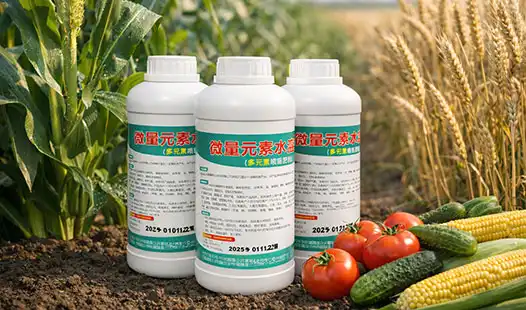
What Are the Best Micronutrients Water-Soluble Fertilizers for Crops?
Certified Organic Silybum marianum Specialized Fertilizer Solution